

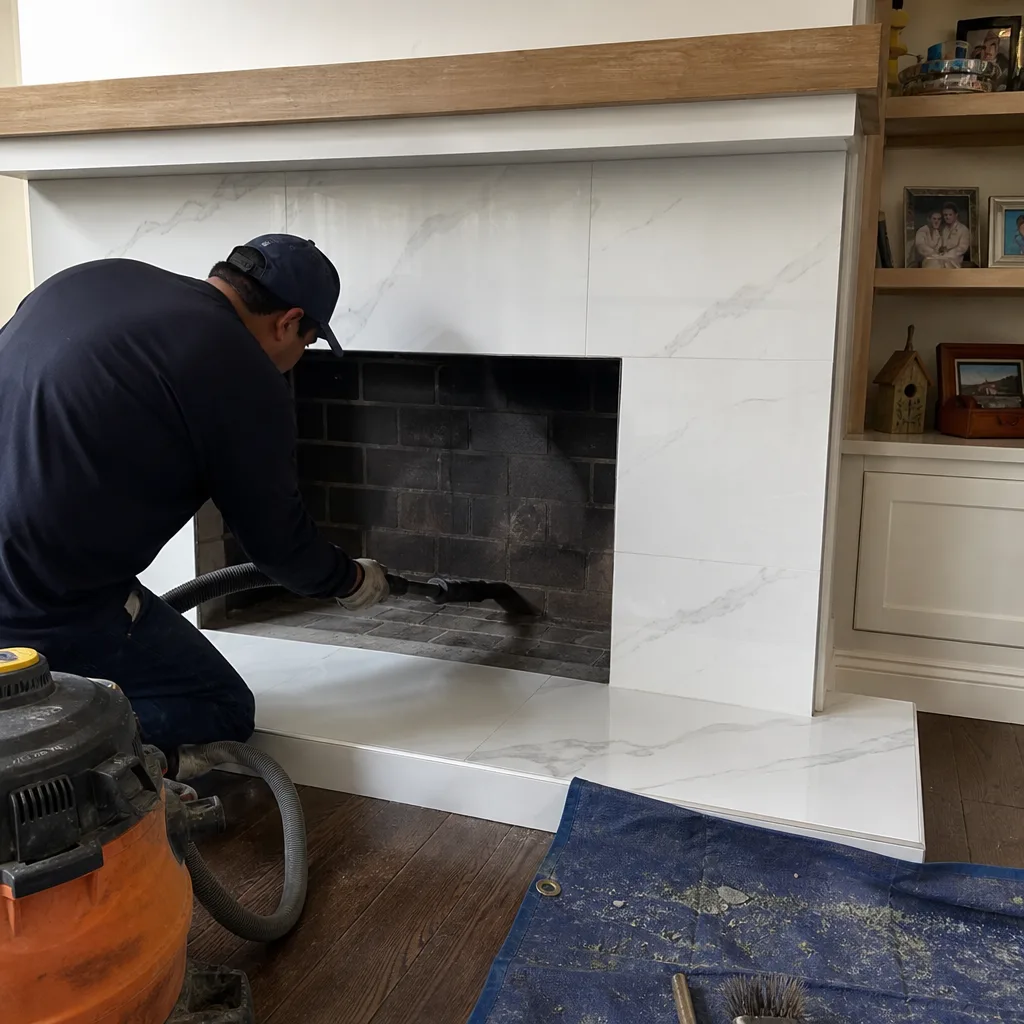
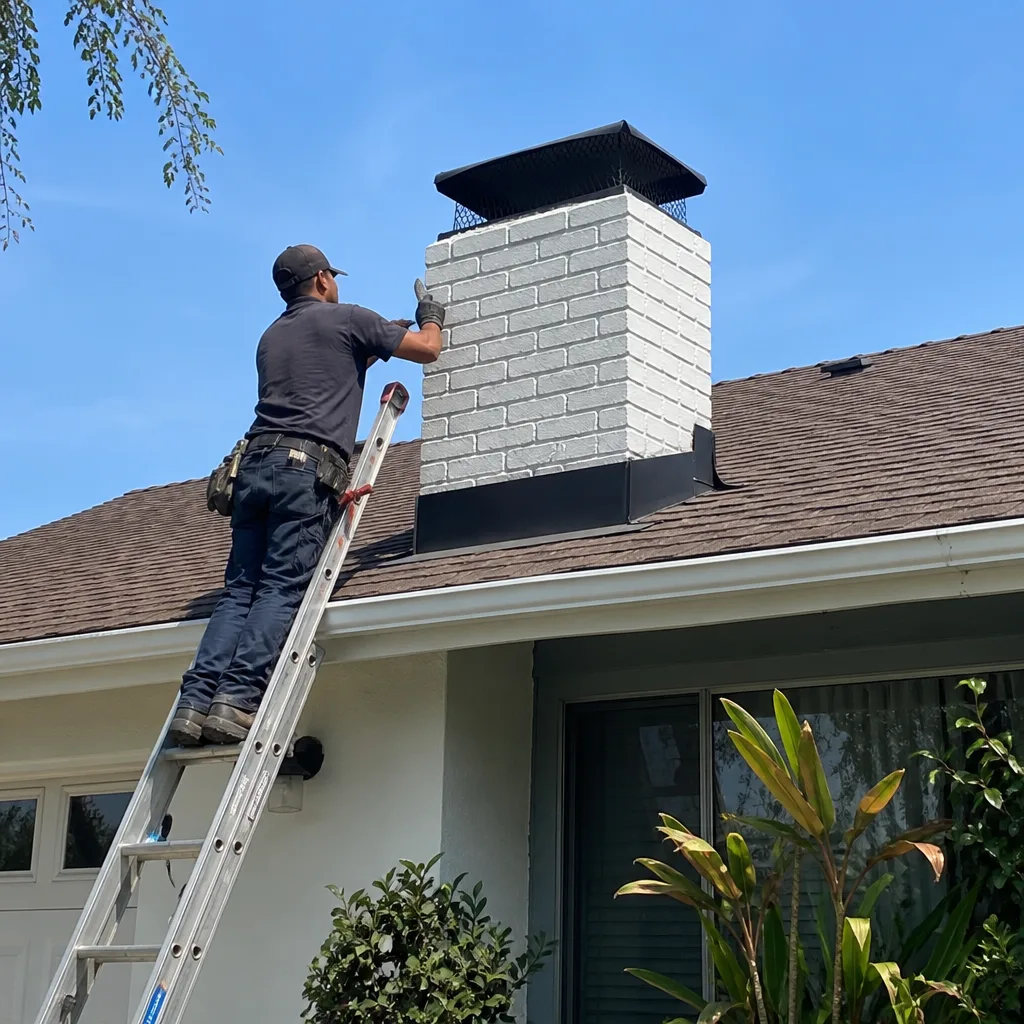
Level 1 sweep and inspection to the NFPA 211 annual standard - flue, crown, cap, and flashing checked and photographed
Chimney sweep logs do not sweep chimneys. They loosen some creosote - which then falls where a brush and vacuum still have to collect it.
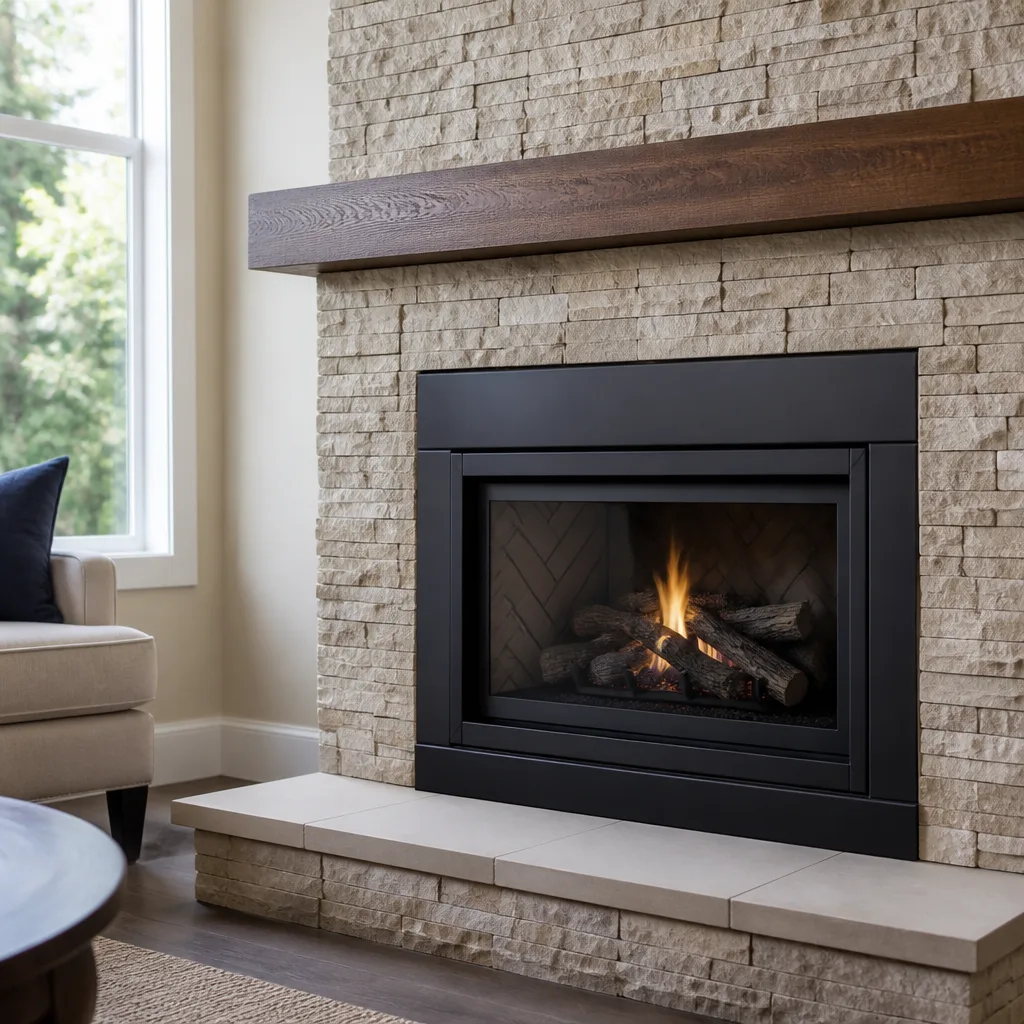
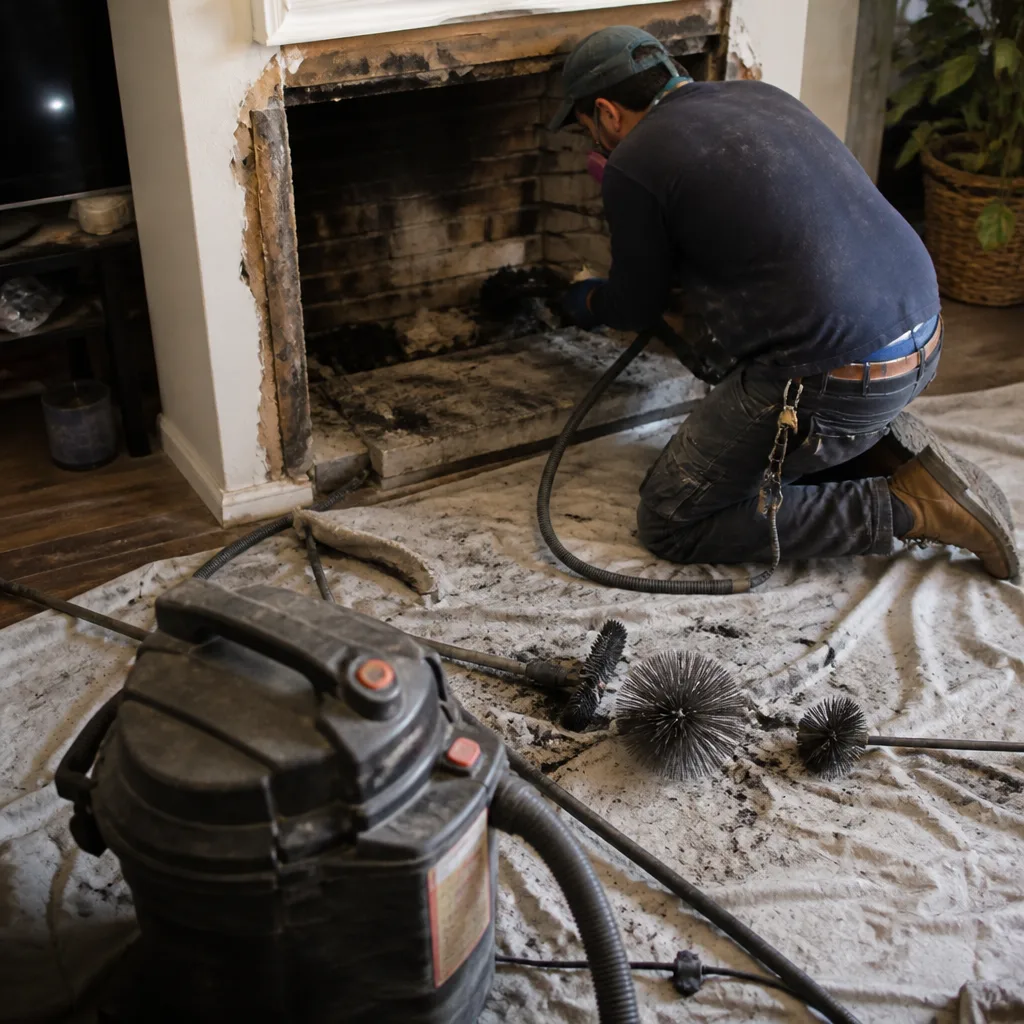 Before
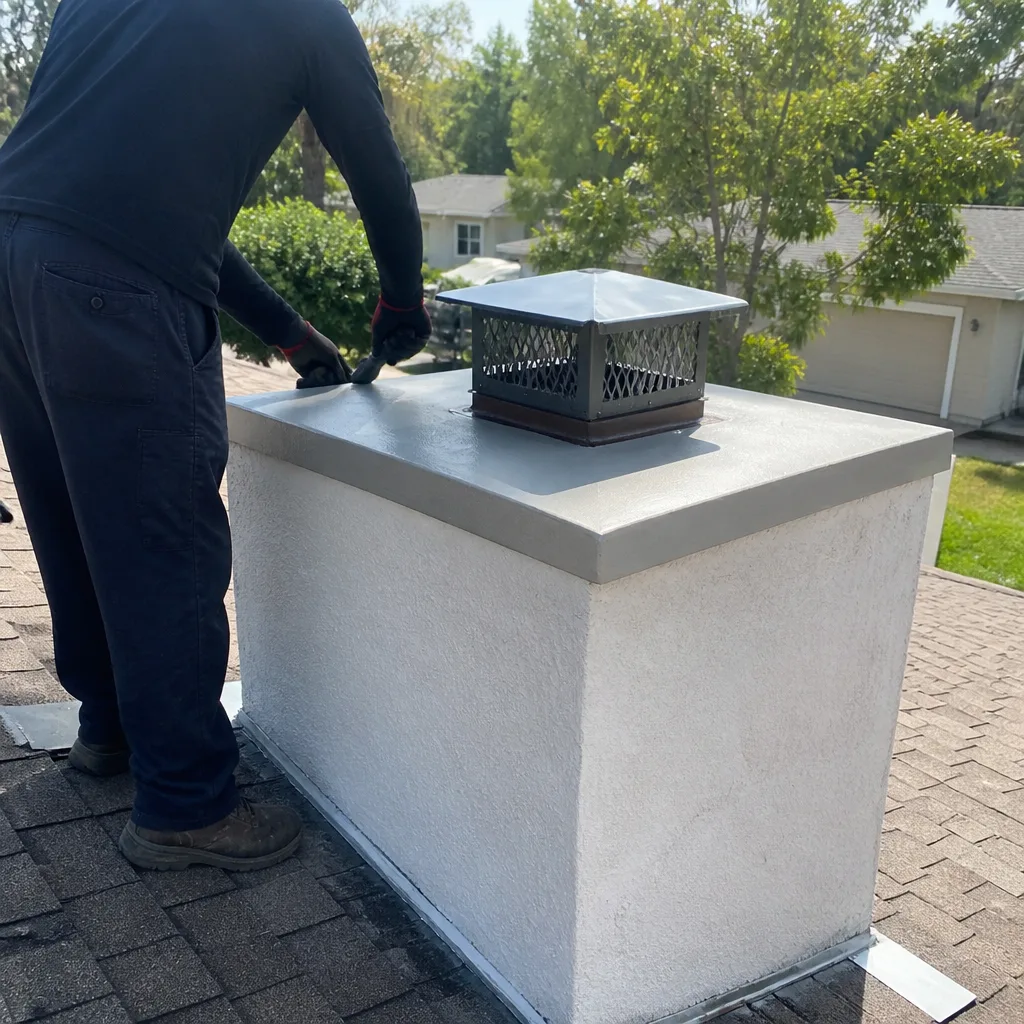 After
After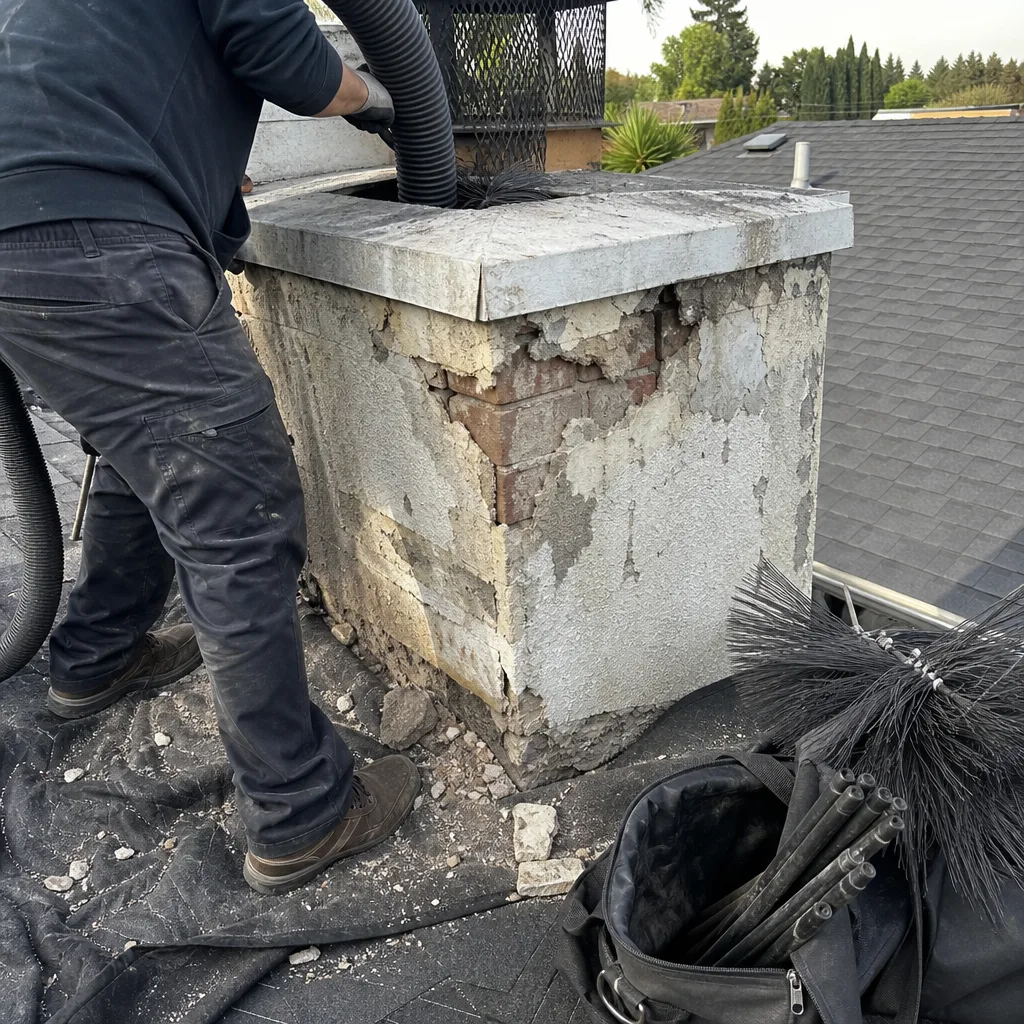 Before
 After
After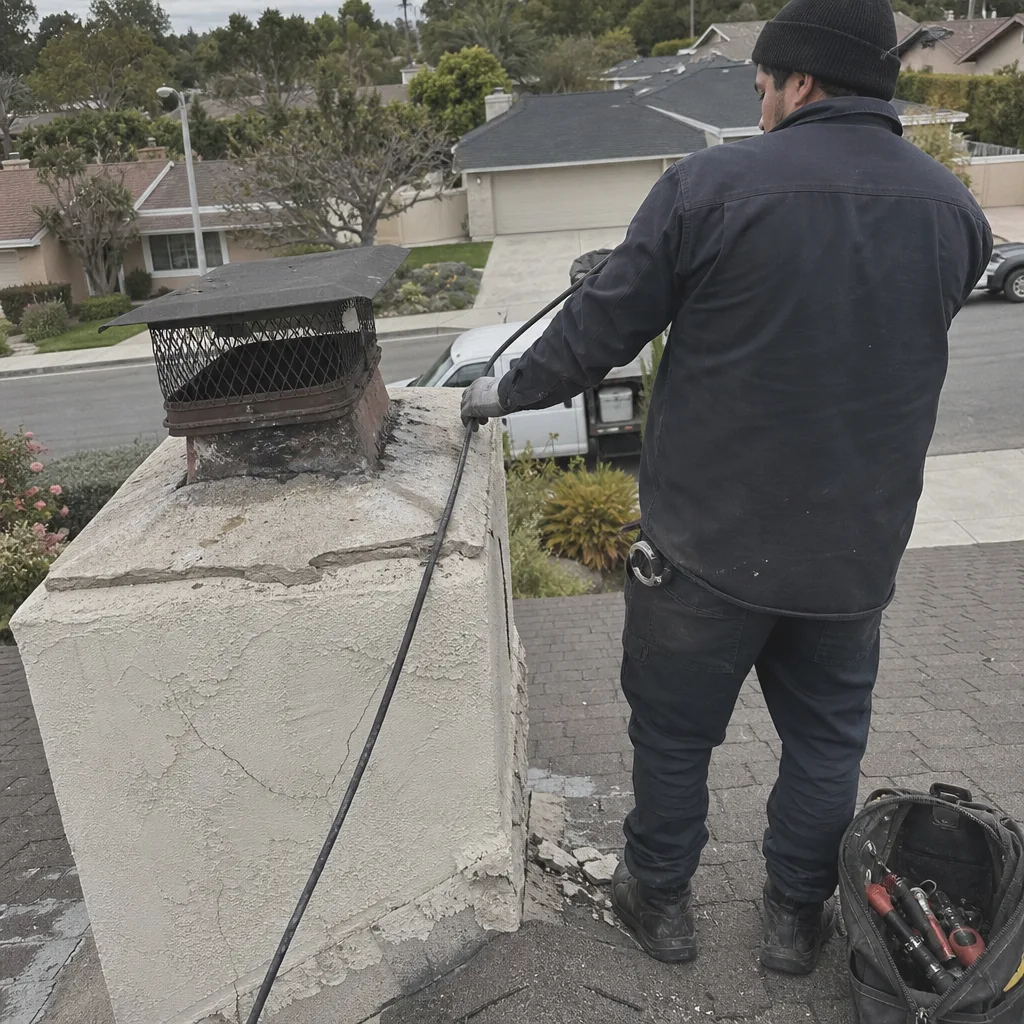 Before
 After
AfterWater Leaking Down the Chimney
What’s Happening
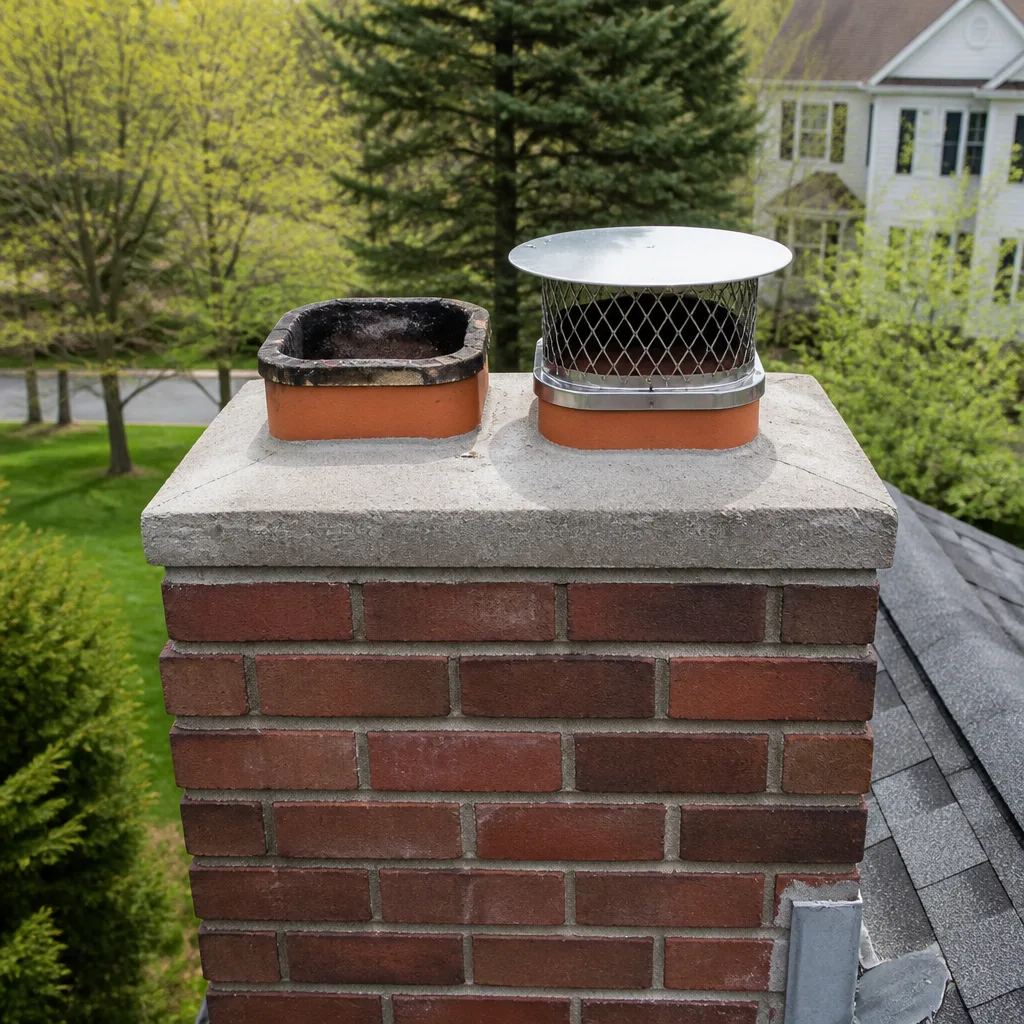
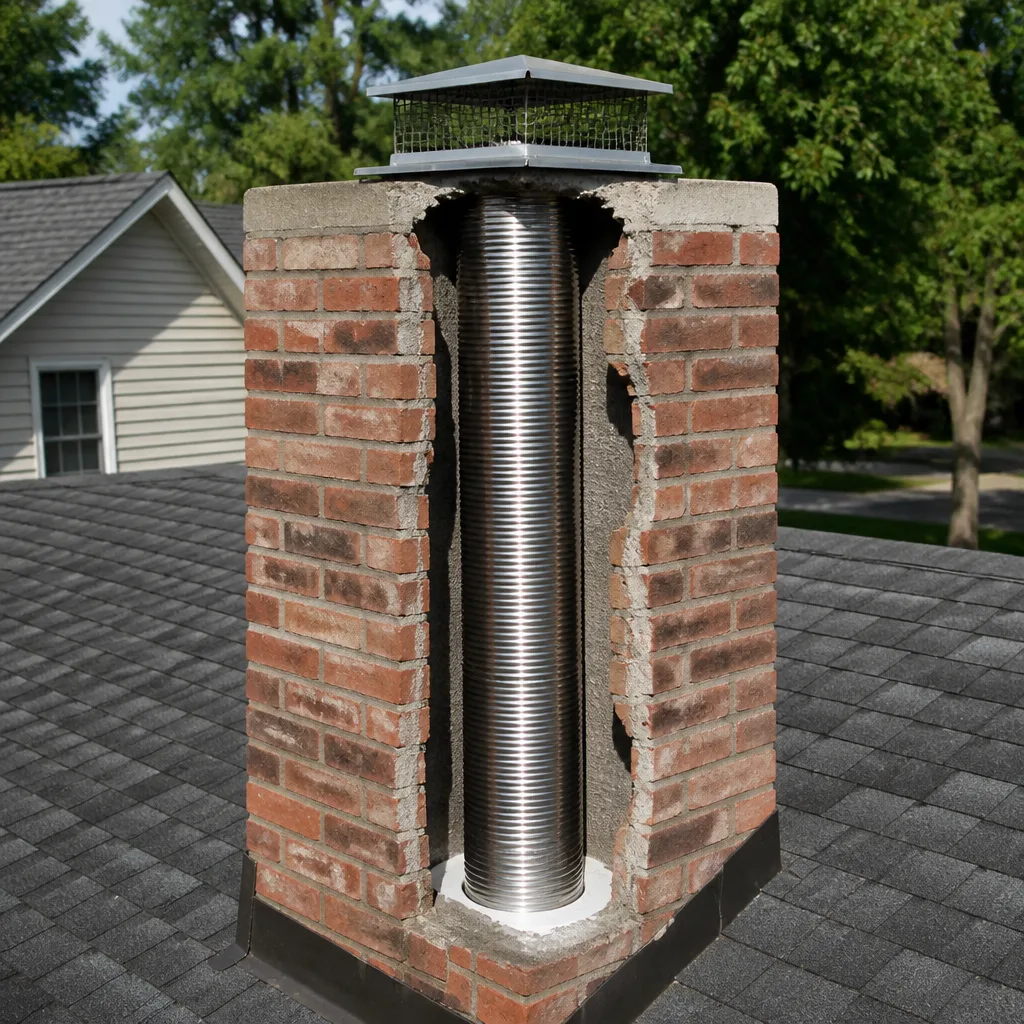
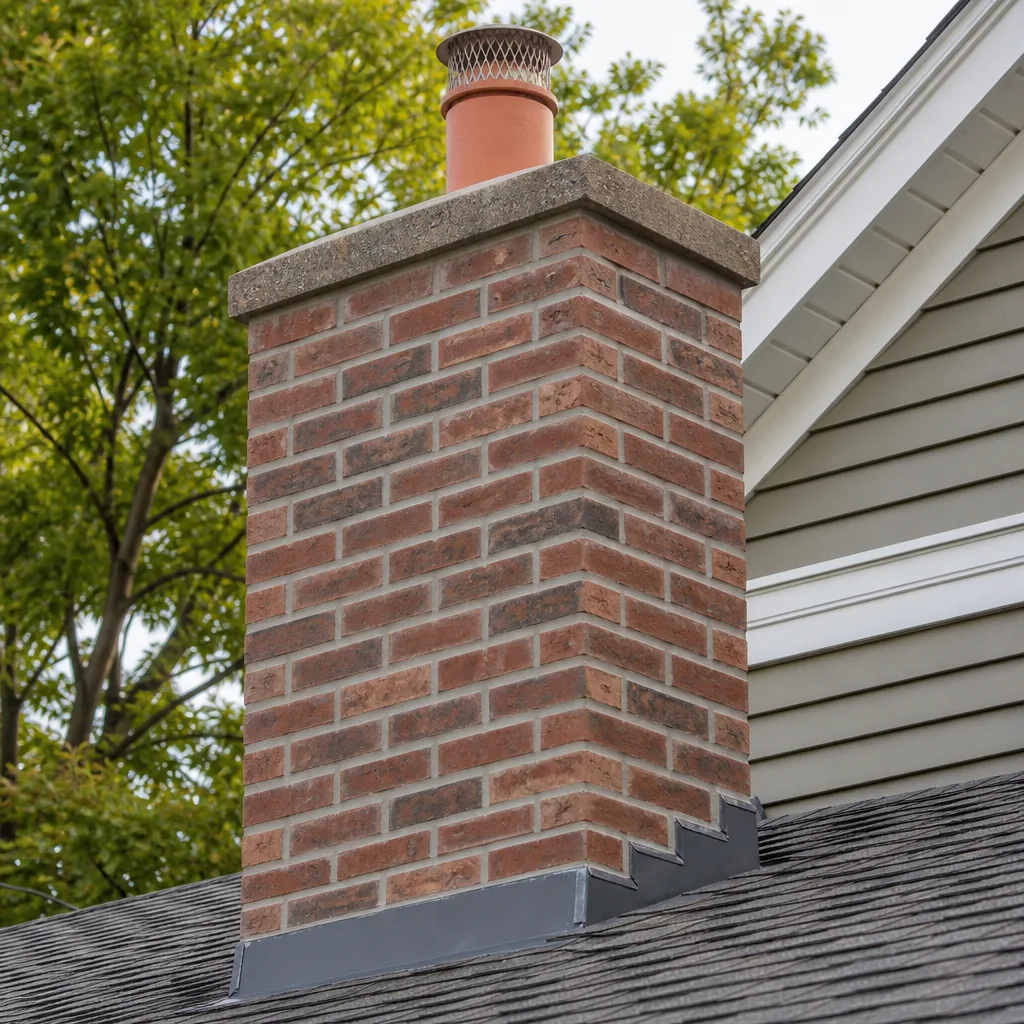
Water leaking into your chimney almost always points to a failed or missing flashing, a cracked chimney cap, or a deteriorating crown – the concrete collar that seals the top of the masonry. These are the three most common entry points, and in most cases a chimney inspection will identify the source in a single visit.
The chimney sits exposed to every storm, freeze-thaw cycle, and UV hour that hits your roof. The seals that keep water out – cap, crown, flashing, and the mortar joints between the bricks – are not permanent. They age, crack, and eventually fail. When they do, water finds the path of least resistance straight down the flue. Left alone, that moisture doesn’t just stain your firebox. It accelerates mortar erosion, corrodes the damper, and softens the liner. What starts as a slow drip can quietly set up conditions for a much more expensive repair if it goes a season or two without attention.
Why It Happens
Cracked or Missing Chimney Cap
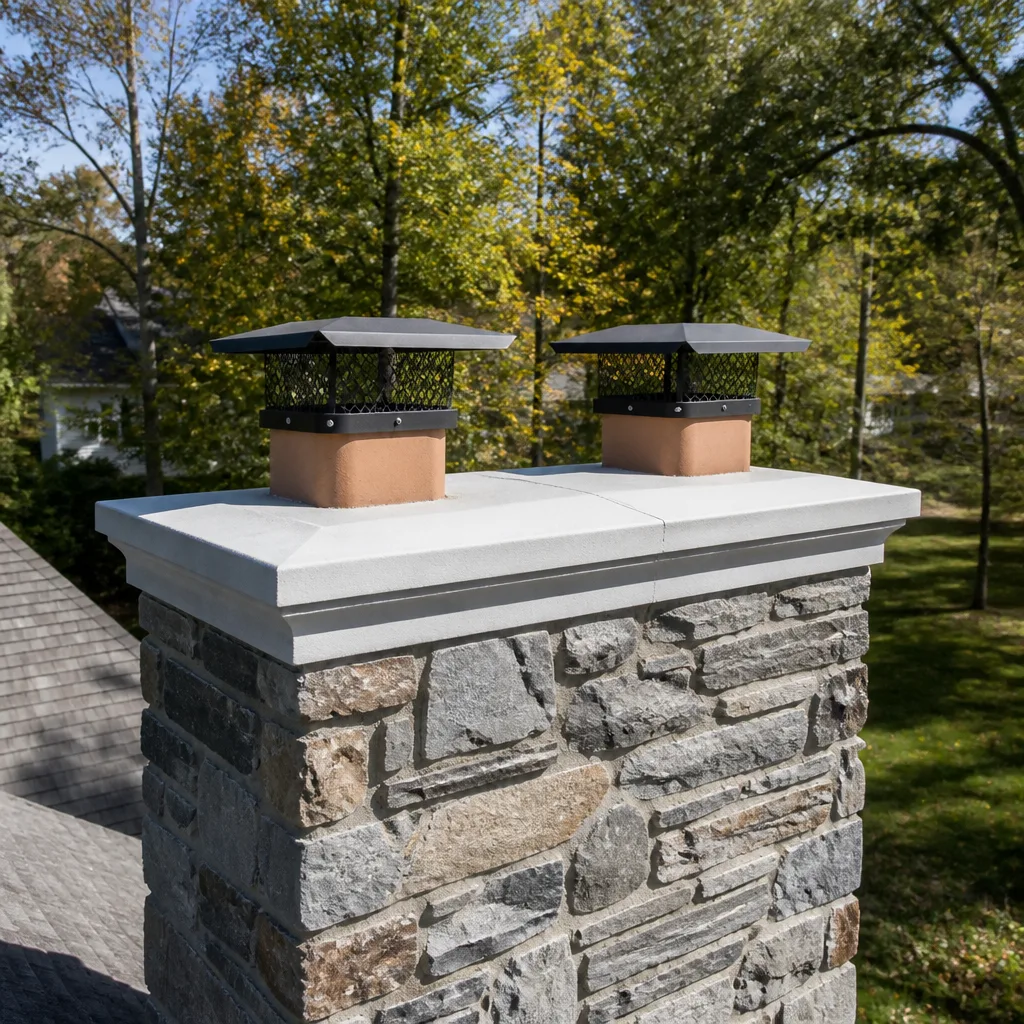
The chimney cap sits directly over the flue opening and is the first thing that takes rain, debris, and wildlife. Cast caps crack under freeze-thaw pressure; metal caps rust at the mounting points and eventually shift or blow off. If you can see daylight through the top of your fireplace, or if the leak only happens during rain and stops within an hour of a storm passing, a failed cap is often the culprit. You can sometimes spot a missing or tilted cap from the ground with binoculars.
Failed Chimney Crown
The crown is the wide concrete or mortar slab that covers the top of the chimney masonry itself, with only the flue collar poking through. It slopes outward so rain sheds away from the brick rather than pooling. Crowns crack from seasonal temperature swings – a hairline crack in spring becomes a gap by fall. A visible white mineral stain (called efflorescence) running down the outside of the chimney is a reliable sign that water is soaking through the crown and wicking into the masonry below.
Flashing That Has Pulled Away or Corroded
Flashing is the sheet metal seal where the chimney meets the roof deck. It works in two layers: step flashing woven into the shingles, and counter-flashing mortared into the brick. When the mortar joint holding the counter-flashing fails, or when the metal itself corrodes, the seal opens up. You’ll often see the leak appear at the ceiling or wall near the fireplace rather than inside the firebox itself. If the water shows up only after driving rain that hits a specific side of the roof, flashing failure is a strong candidate.
Spalling Brick and Eroded Mortar Joints
Mortar joints are softer than brick and they absorb moisture. After enough freeze-thaw cycles the mortar crumbles – a process called spalling when the brick faces themselves begin to flake. Once the mortar is porous, the entire chimney wall wicks water inward. You can spot this from the ground: look for brick faces that have popped off, dark staining in irregular patches, or mortar lines that look recessed or sandy. This is a slower leak, often showing up as general dampness inside the firebox rather than an active drip.
What to Do Right Now
- Stop using the fireplace. A wet flue liner can crack under rapid heating, and water inside the firebox can hide damage that gets worse with a fire. Leave the damper closed to reduce drafting of cold air into the house, but don’t light anything until the source of the leak is identified.
- Put a bucket or towels down and protect the floor. Sooty water stains hardwood and masonry surfaces quickly. If you have a gas fireplace insert, keep the area around it dry and don’t touch the igniter until the water source is found.
- Photograph what you can see from safe ground level. Get photos of any staining on the exterior masonry, the area where the chimney meets the roofline, and the inside of the firebox. These photos help the technician go straight to the problem and give you a visual record before anything is repaired.
- Do not climb onto the roof to inspect yourself. A wet roof combined with chimney height is a serious fall risk. Identifying and repairing the source of a chimney leak requires tools and material knowledge that make it a job for a trained technician, not a ladder and a flashlight.
- Note when and where the water appears. Write down: Does it show up only during rain, or also after a dry night? Is it inside the firebox, on the ceiling nearby, or on an adjacent wall? That information cuts diagnostic time significantly.
How We Fix It
When your local Flint Chimney Sweep technician arrives, the first step is a chimney inspection – a systematic look at the cap, crown, flashing, mortar joints, liner, and damper to find every place water is getting in. We use camera equipment where the flue needs a closer look. Before any repair starts, you get a written price. That number doesn’t move. The Garrison Code is plain on this: price in writing before any work starts, every time, no exceptions.
Depending on what the inspection finds, the repair path typically involves one or more of the following: cap replacement, crown sealing or rebuilding using materials like HeatShield or Gelco where the application fits, flashing reseal or replacement using Famco or Olympia Chimney products, or mortar joint repointing. Most single-source leak repairs are completed in one visit. More involved work – a full crown rebuild or flashing replacement – may take a half to a full day. Every repair carries the 365-Day Done Right Promise: written, valid for a full year from the service date, with a free return visit if a covered repair fails in that period.
Frequently Asked Questions
It depends on how long it has been leaking and what it is wetting. A chimney leak left through a full winter season can damage the liner, corrode the damper, erode mortar joints progressively, and – in worst cases – compromise the structural integrity of the masonry. More immediately, a wet liner increases the risk of a dangerous flue failure during a fire. We don’t say this to alarm you: a single wet season isn’t necessarily an emergency, but it isn’t something to carry into a second one either. Call (830) 251-4560 and we’ll tell you plainly what the timeline looks like once we’ve seen it.
Water damage inside the flue – particularly to the liner – can create gaps or cracks that allow combustion gases to back-draft into the house instead of venting out. That is a real risk, and it is one of the reasons we inspect the liner as part of diagnosing a water leak, not just the exterior. If you are running a gas appliance vented through a chimney that has an active water leak, it’s worth treating that as urgent. Call (830) 251-4560 and tell us what you have – we’ll help you figure out how quickly to move.
The honest answer is that it depends entirely on the source and the extent of the damage – a cap swap is a very different job from re-flashing and a crown rebuild. We don’t publish flat rates for leak repairs because a number on a webpage won’t match what your chimney actually needs. What we do give you is a written price before any work starts, specific to what the inspection finds. That price is what you pay – no additions at the door. Call (830) 251-4560 to schedule; the estimate is free.
Your local Flint Chimney Sweep team books appointments on a schedule, and availability varies by location and season. The fastest way to find out what the nearest opening looks like is to call (830) 251-4560 – a live person picks up around the clock, every day of the week. No voicemail, no callback form, no waiting until the next business day. Tell us what you’re seeing and we’ll get you on the calendar.
Get It Fixed
A chimney leak doesn’t fix itself, and the longer water sits in the masonry, the more work it creates. Call (830) 251-4560 right now – a live person answers every hour of every day. Your local Flint Chimney Sweep team will schedule an inspection, give you a written price before any work starts, and back the repair for a full year.
Written by Hank Delano, Owner at Flint Chimney Sweep, part of the Garrison Partners family of chimney service companies since 2002.
What Our Customers Say
"Sweep showed up on time, in uniform, and ran a tight job. Cleaned the flue, inspected the firebox, and gave me a short written report. Veteran-run and it shows."
- Walt R."Chimney repair on loose bricks near the top. Tuckpointed it so it matches. Looks right."
- Rosa H."Direct, no nonsense, and polite. Exactly what I wanted."
- Tina W.