

Level 1 sweep and inspection to the NFPA 211 annual standard - flue, crown, cap, and flashing checked and photographed
Chimney sweep logs do not sweep chimneys. They loosen some creosote - which then falls where a brush and vacuum still have to collect it.
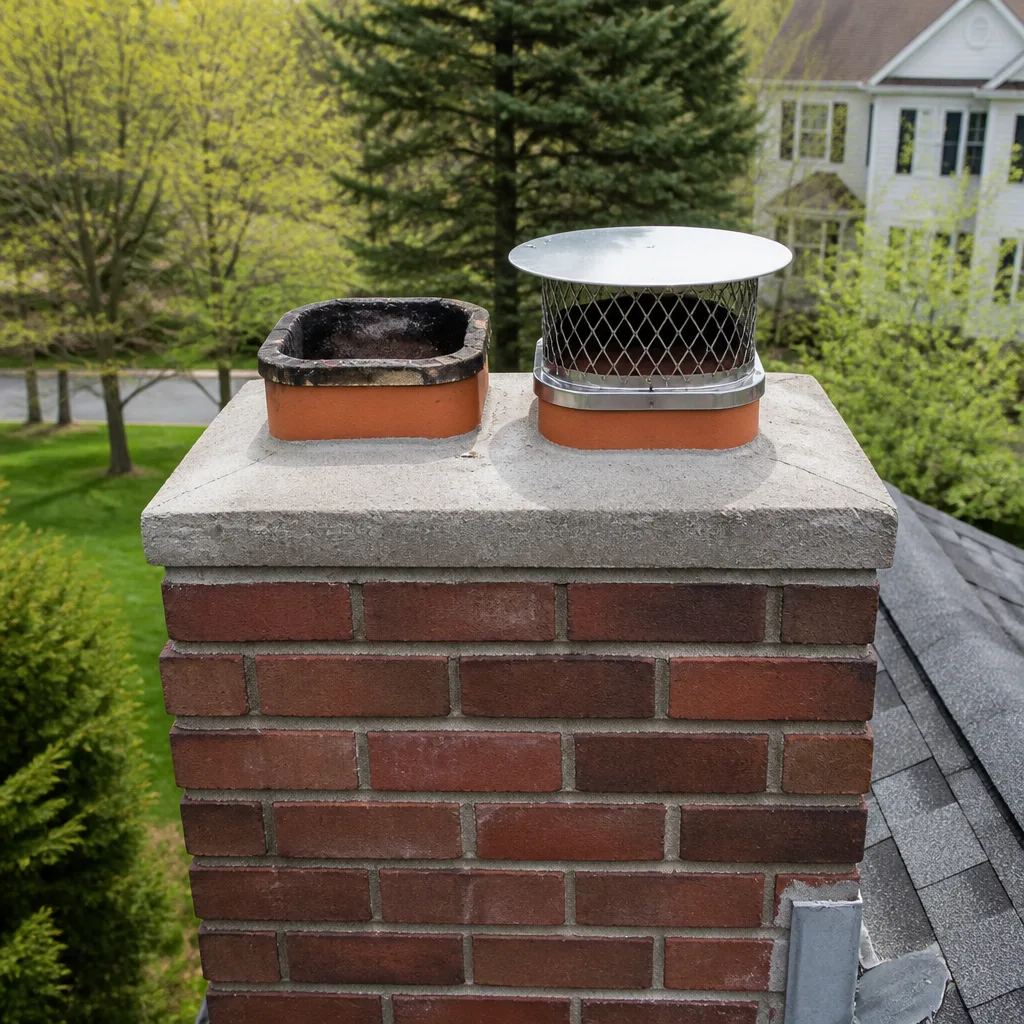
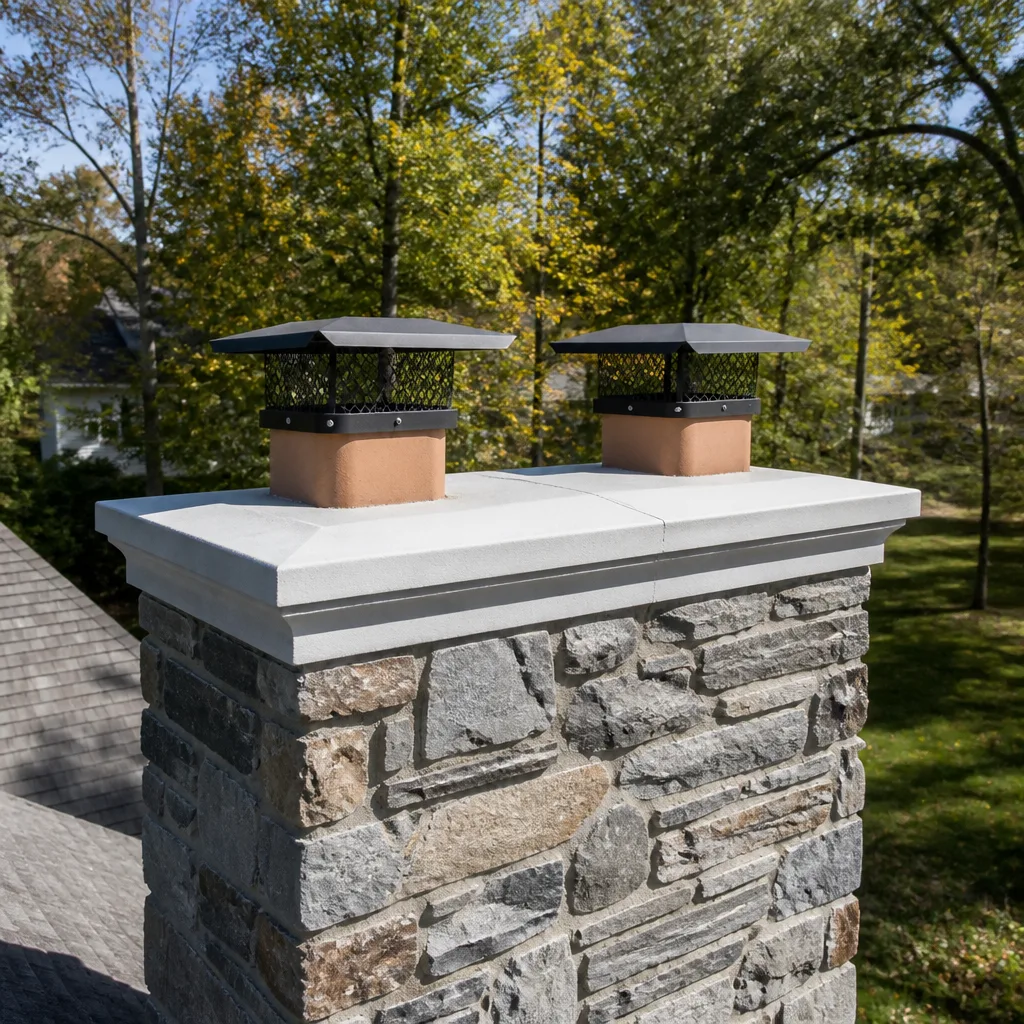
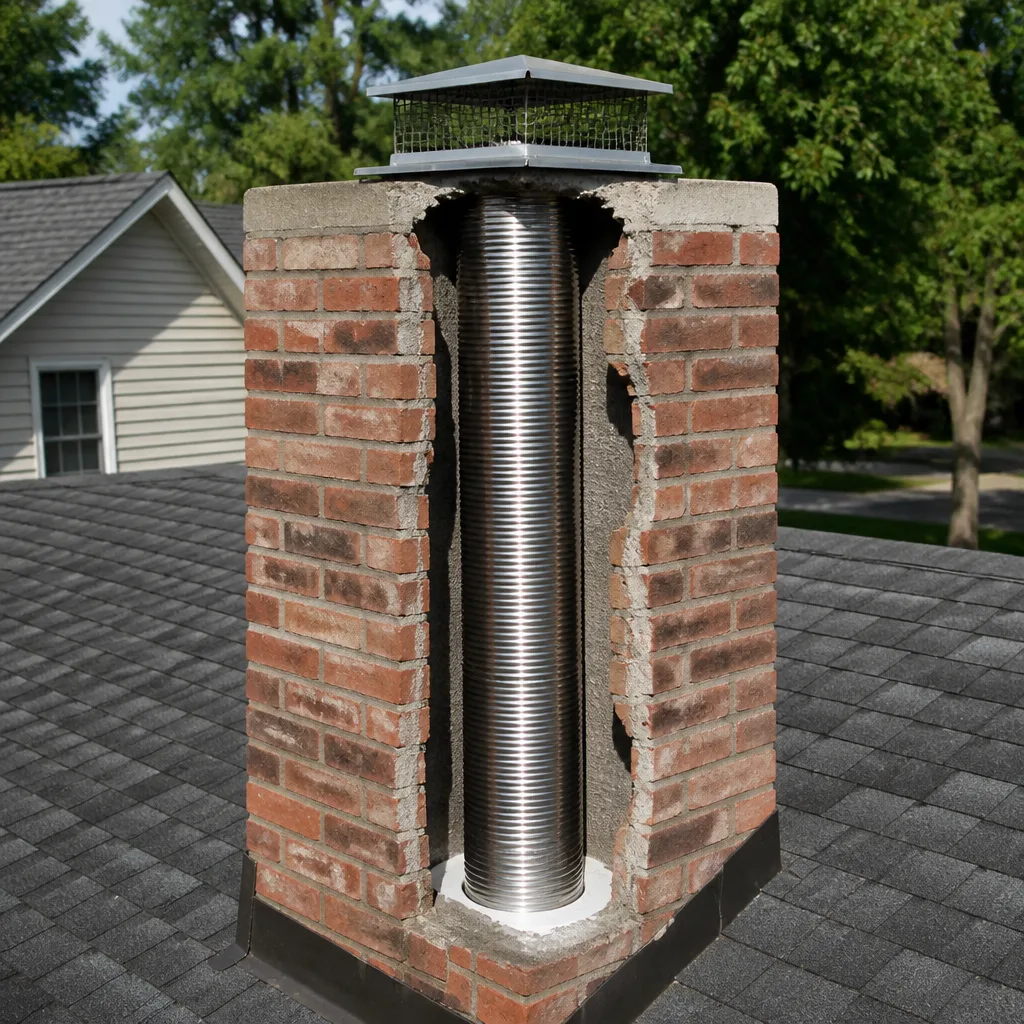
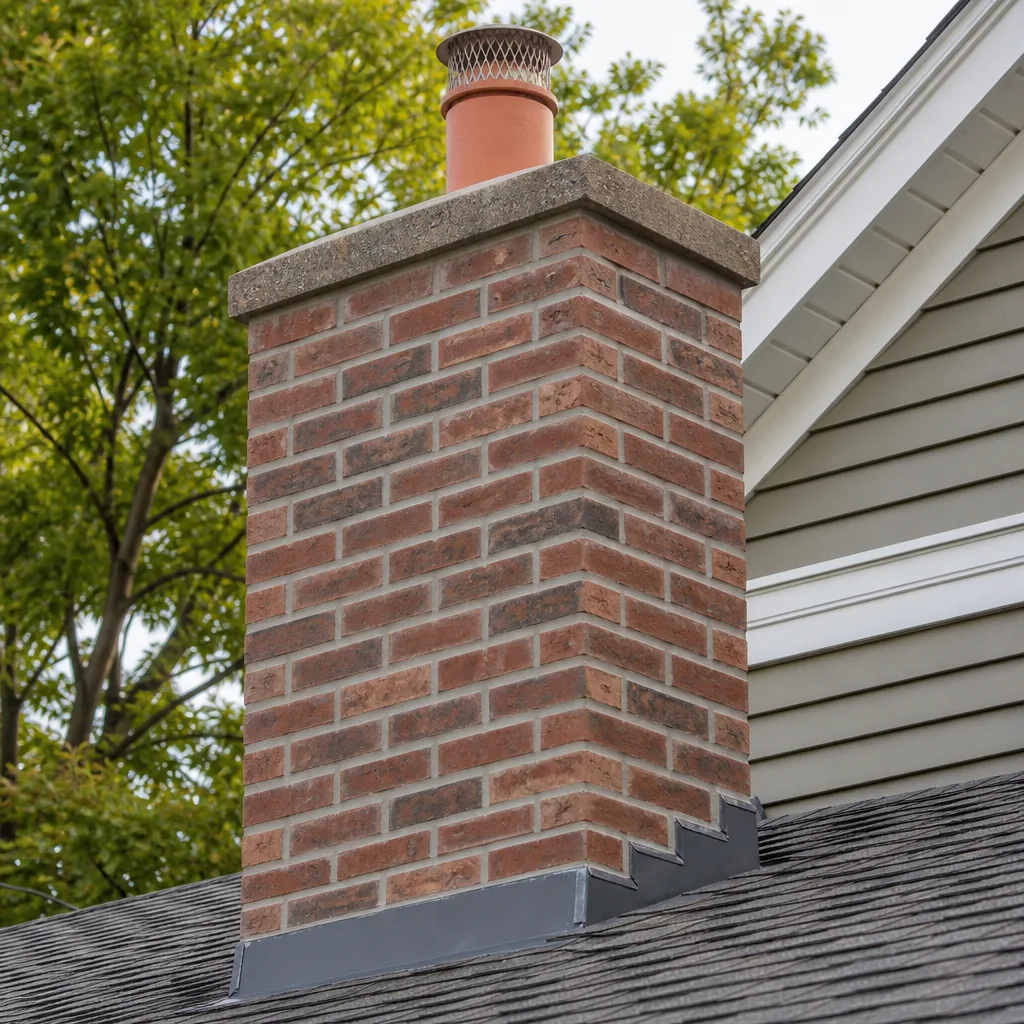
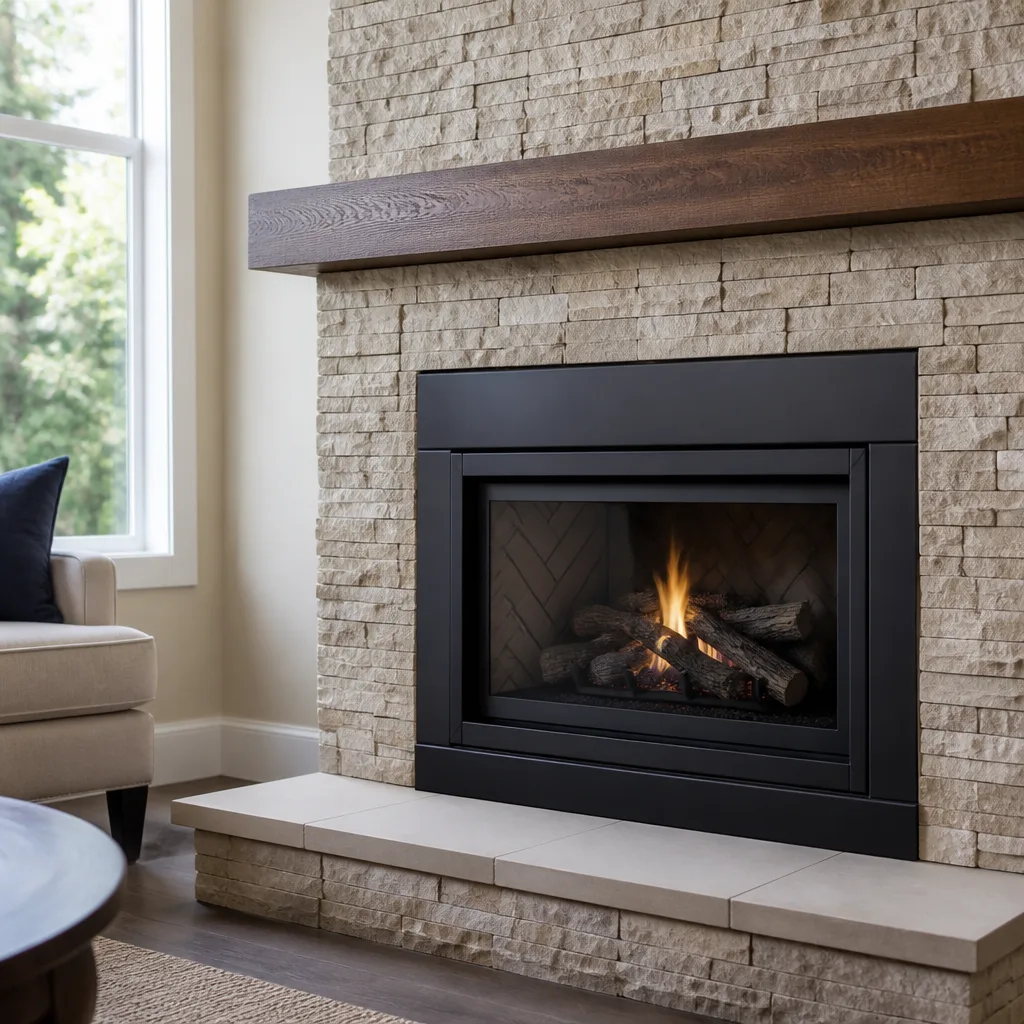
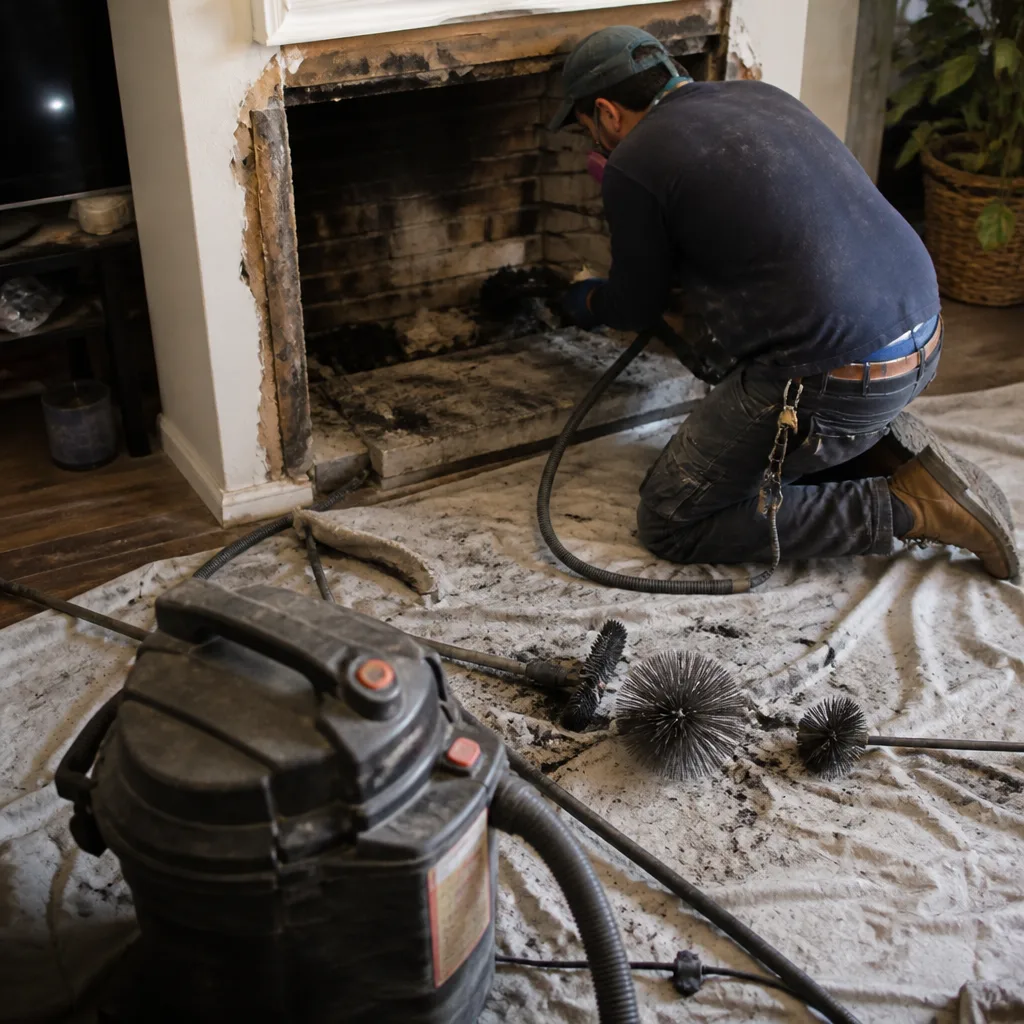 Before
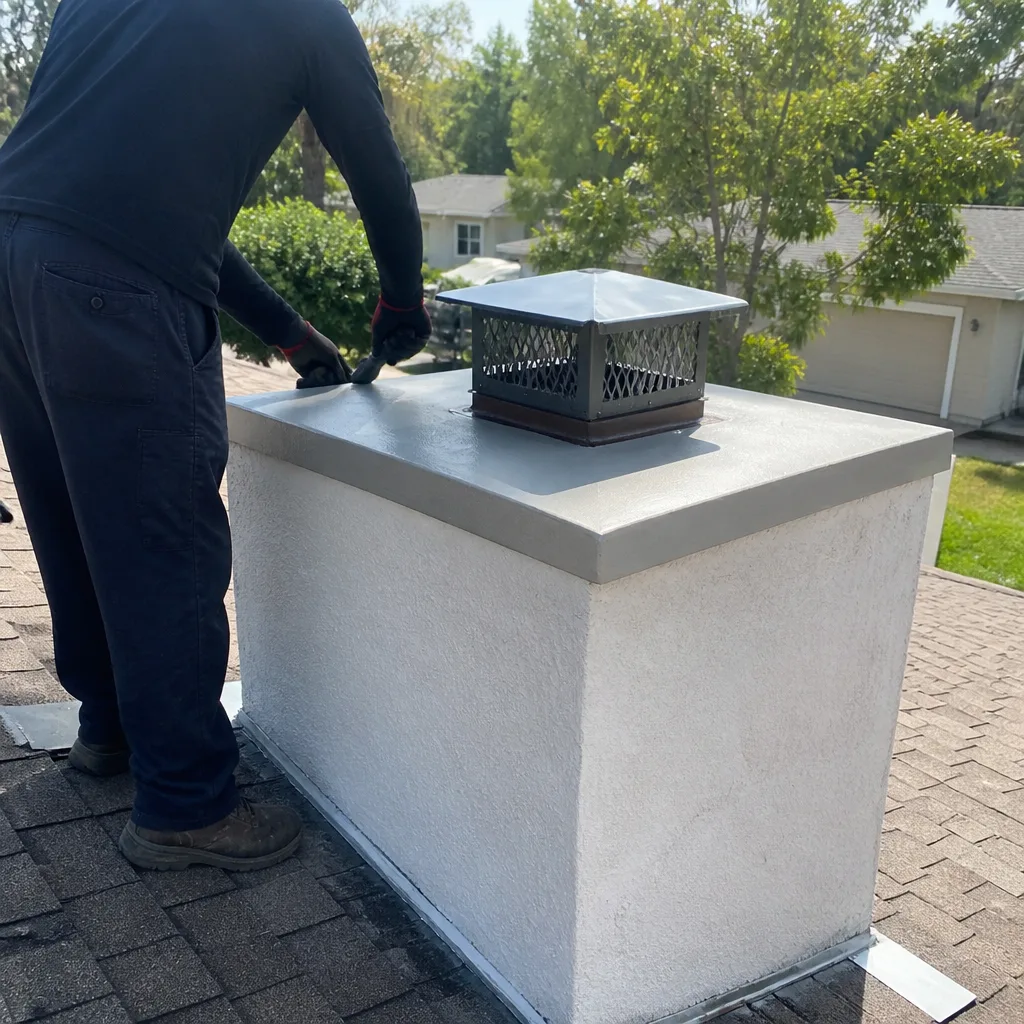 After
After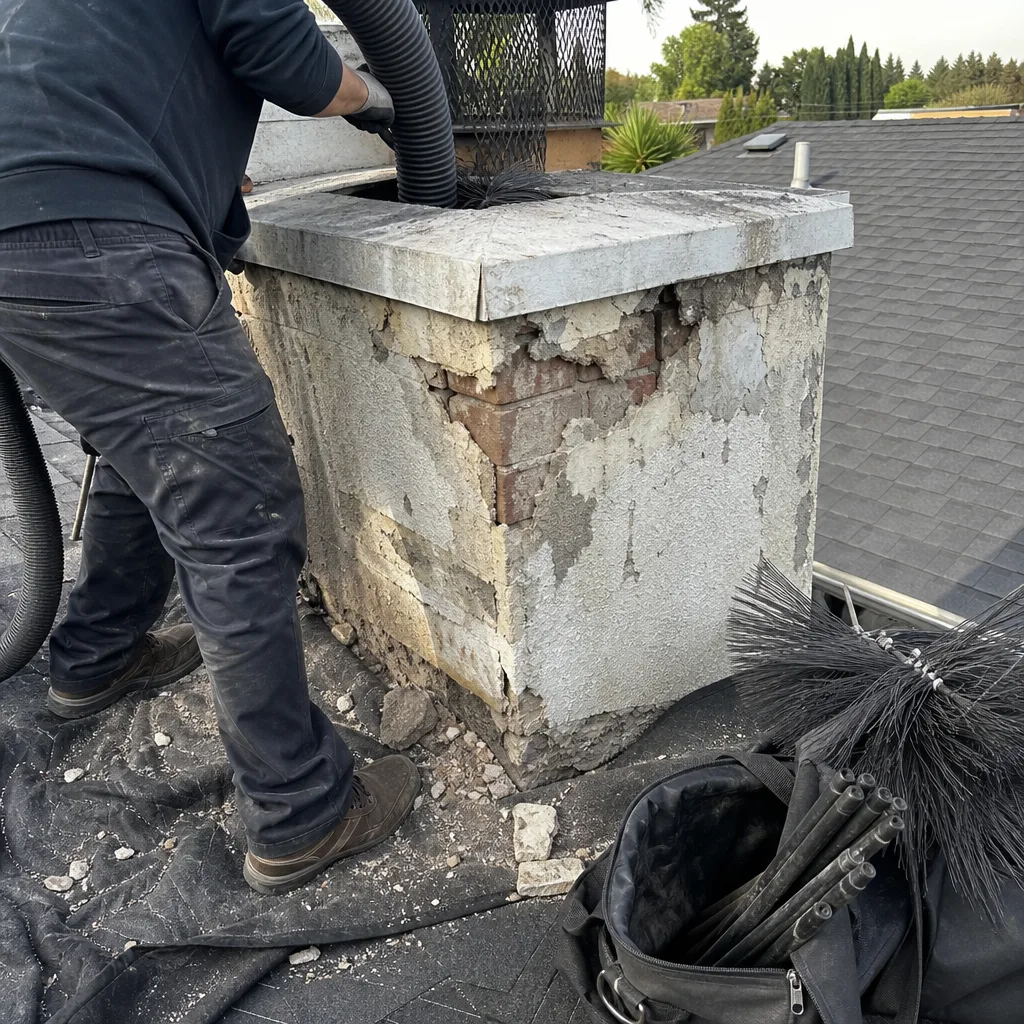 Before
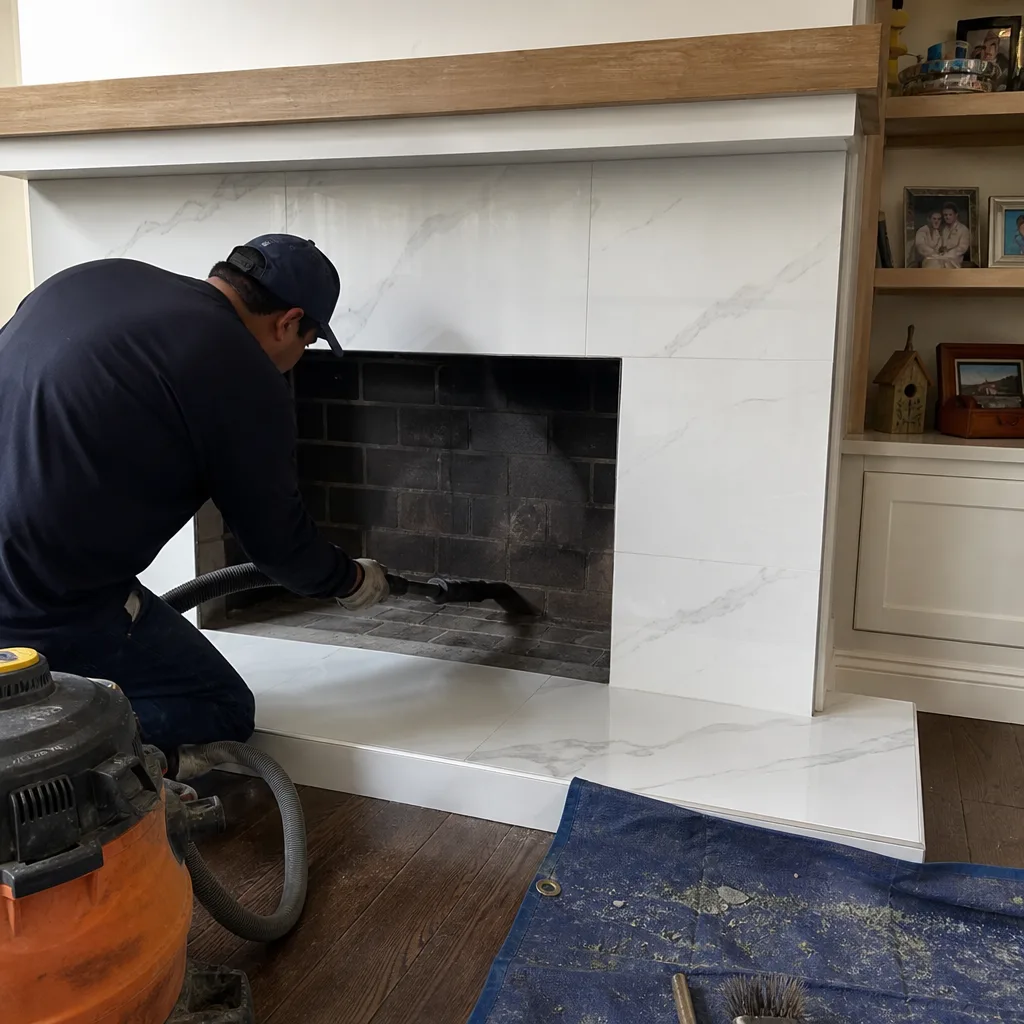 After
After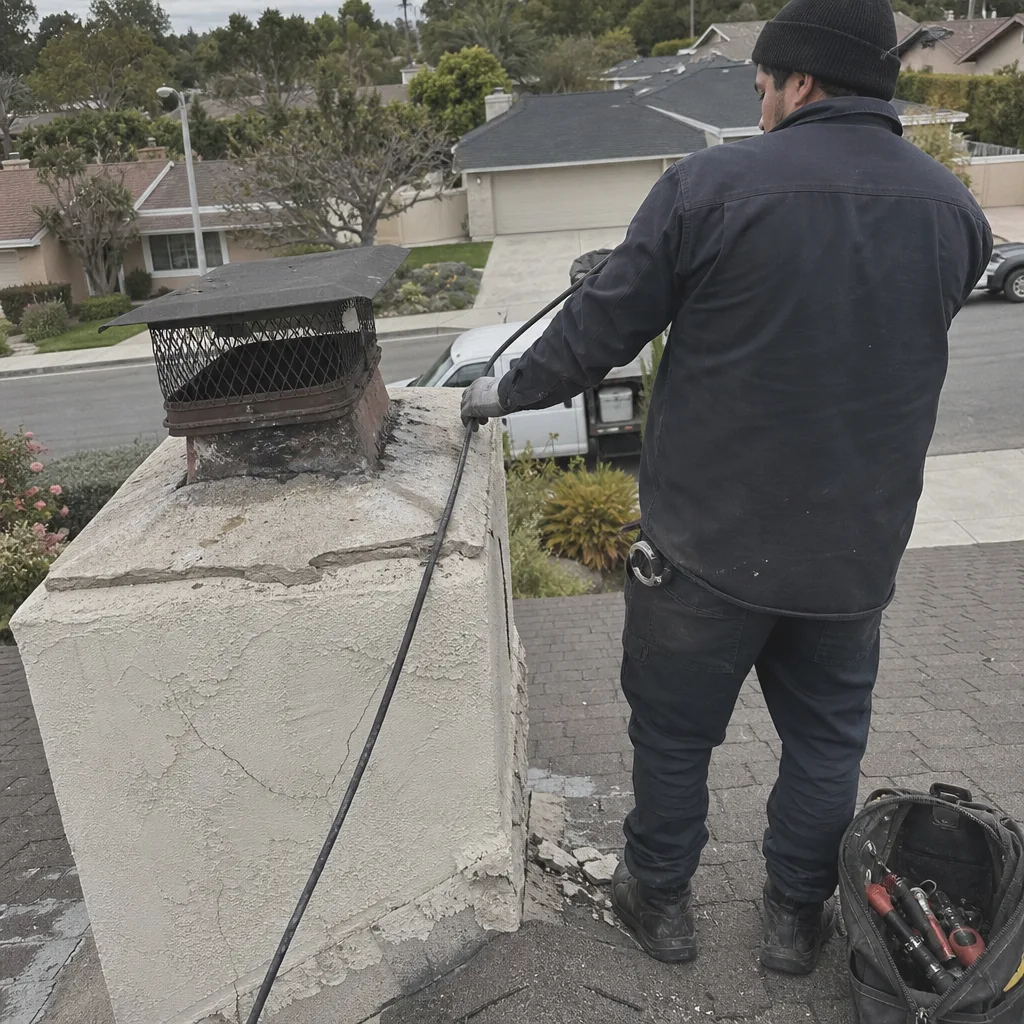 Before
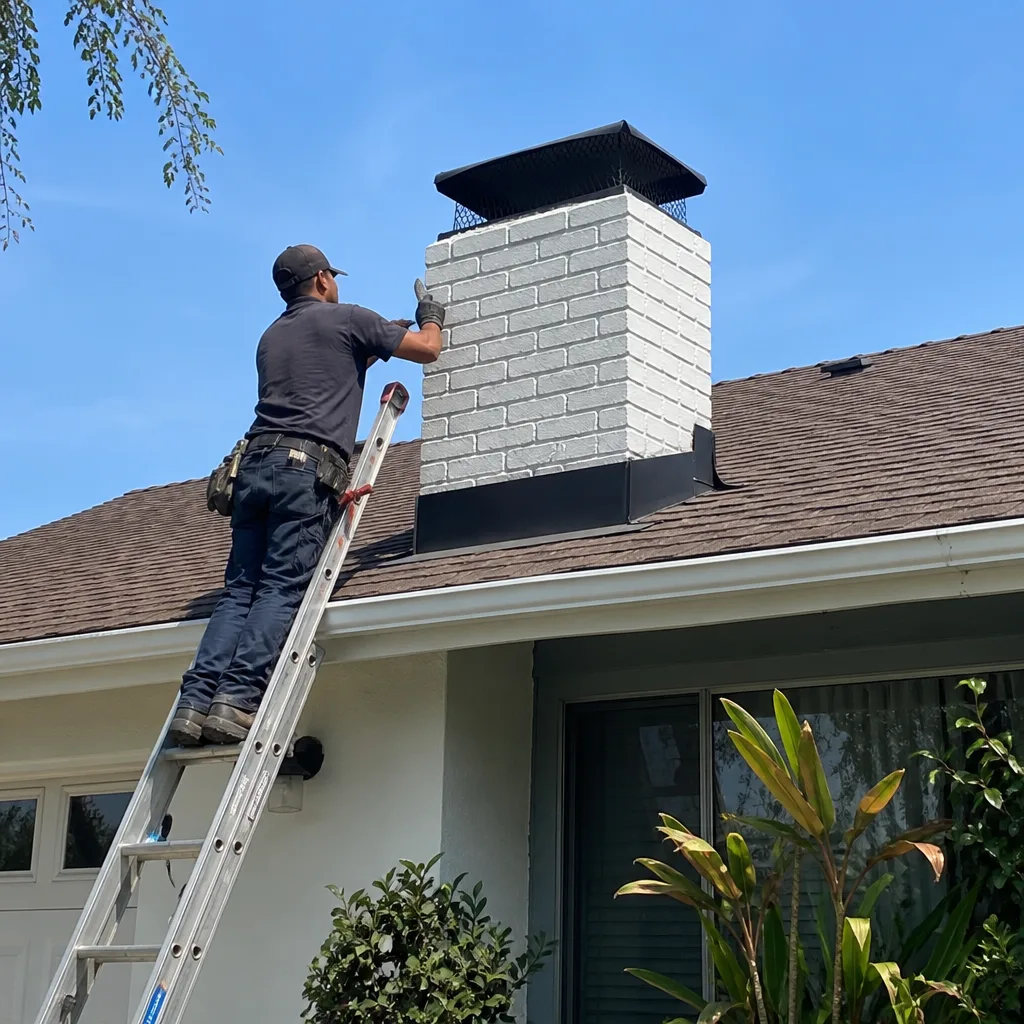 After
AfterStrong Campfire Smell Indoors
What’s Happening
A strong campfire smell inside your home almost always means combustion byproducts – smoke, creosote odor, and combustion gases – are flowing back down your chimney and into your living space instead of drafting up and out. This is called a draft failure, and it is the single most common reason a fireplace that looks fine produces an indoor smoke smell. The fix is almost always a chimney sweep, an inspection, or both.
The odor itself comes from creosote: the tar-like residue that builds up on flue walls every time you burn wood. When air flows down the chimney instead of up – for any number of reasons – it carries that creosote smell with it. A heavy, persistent campfire smell indoors is not a quirk you wait out. It is your chimney system telling you something has changed or broken down, and it is worth diagnosing before the next fire.
Why It Happens
1. Creosote Buildup in the Flue
If you have been burning regularly and skipping annual sweeps, creosote accumulates on the flue liner in layers. Even when no fire is burning, that residue off-gasses – especially on warm, humid days when air pressure pulls down through the chimney. You will notice the smell is strongest in summer or after rain, and it comes even when the fireplace has not been used in weeks. That is a classic creosote-odor pattern, and it clears up once the flue is professionally cleaned.
2. Negative Air Pressure in the House
Modern homes are tightly sealed. Exhaust fans, clothes dryers, and HVAC systems all compete for air, and if the house is depressurized, the chimney becomes a convenient inlet – pulling outside air down through the flue and carrying whatever is sitting in there with it. You can get a rough confirmation: open a window near the fireplace an inch or two. If the smell drops noticeably within a minute or two, depressurization is a strong candidate. A technician will note this during inspection and can recommend solutions.
3. Blocked or Damaged Damper
The damper sits just above the firebox and is supposed to close tightly when the fireplace is not in use. A damper that warps, rusts, or gets knocked out of alignment leaves a gap that lets flue air drop directly into the room. You can see the damper from below with a flashlight – look for visible daylight around the edges when it is supposed to be closed, or a handle that feels loose and does not seat firmly. A bent or corroded damper plate is not a DIY fix; it involves working above the firebox throat, and replacement parts vary widely by fireplace model.
4. Blockage, Debris, or Animal Nesting
Leaves, sticks, animal nesting material, or a dead animal in the flue will restrict airflow and concentrate odor dramatically. Birds and squirrels are the most common culprits, and a nest does not have to be large to choke draft significantly. If the smell came on suddenly, especially in spring or fall, and you hear or heard scratching sounds in the chimney, a blockage is the first thing a technician will look for. Do not attempt to clear a blockage or animal situation from above – a chimney cap without a spark arrestor is easy to dislodge, and working at roof height is genuinely dangerous without the right equipment and footing.
What to Do Right Now
- Stop using the fireplace. If smoke or combustion odors are flowing into the house, running another fire makes the underlying problem worse and pushes more carbon monoxide risk into your living space. Leave it cold until a technician has looked at it.
- Check whether the damper is closed. Look up into the firebox with a flashlight. If the damper plate is open or sitting at an angle when it should be closed, that is worth noting and photographing. Do not reach up and manually force a rusted or warped damper – a stuck damper under tension can drop without warning.
- Open a window near the fireplace for a few minutes. This is a diagnostic step, not a fix. If the smell decreases when you let outside air in, negative pressure is likely contributing. This information is useful for the technician.
- Photograph the firebox area. Take a clear photo of the firebox opening, the visible damper area, and any visible staining or debris from where you are standing. These images help the technician prep before the appointment and can speed up diagnosis.
- Ventilate the affected rooms. Open windows and run a fan pointing outward to clear smoke odor from the living space. If anyone in the house has a headache, nausea, or feels unusually tired, treat that as a potential carbon monoxide situation: get everyone outside and call 911 before you call us. Carbon monoxide has no smell – the campfire odor is a separate issue, but a chimney that is back-drafting can carry CO along with it.
How We Fix It
When your local Flint Chimney Sweep team arrives, the first step is always a chimney inspection – a systematic look at the firebox, damper, smoke chamber, flue liner, and cap from the bottom up. If a camera is warranted, we run it. Nothing gets recommended without something to point to.
In most campfire-smell cases, the primary service is a chimney sweep to clear the creosote and any debris, followed by a specific repair if the inspection turns up a damaged damper, cracked liner, or failing cap. We use professional-grade materials – DuraFlex, HeatShield, Gelco, Olympia Chimney, Famco, and Copperfield – specified by what the job actually calls for.
Before any work starts, you get a written price. That is not optional; it is how every Flint job works, under The Garrison Standard. A sweep and basic inspection typically takes one to two hours. If a repair is needed, we tell you what, why, and what it costs – in writing – before we touch it. All repair work is backed by the 365-Day Done Right Promise: a written guarantee valid for one full year from the service date, with a free return visit if a covered repair fails in that period.
Frequently Asked Questions
It should not wait. A chimney that is back-drafting – pushing flue gases into the house instead of out – can carry carbon monoxide along with the smoke odor, and CO is odorless and potentially lethal. The campfire smell itself is not the direct hazard, but it is a reliable sign that combustion byproducts have a path into your living space. Get it diagnosed before you use the fireplace again. Call (830) 251-4560 and we can get your local team scheduled.
Call us at (830) 251-4560 and a live person will answer – no voicemail, no callback form. Your local Flint Chimney Sweep team will give you the earliest available appointment window. We do not manufacture urgency, but we do not drag our feet either, especially when someone has an active draft problem heading into burning season.
Most campfire-smell calls end with a sweep and nothing more – once the creosote is out and any debris is cleared, the odor is gone and draft is restored. A liner repair or replacement is only recommended when inspection finds a crack, spall, or deterioration that creates a real fire or CO hazard, and we will show you the camera footage or point to the specific damage before we quote it. If the liner is fine, we say so. Nothing is recommended without evidence you can see for yourself.
The National Fire Protection Association standard is once a year for any chimney in active use, regardless of how much you burn. If you burn frequently – more than a cord of wood per season – or you burn softwoods, you may need it more often. Annual sweeping keeps creosote at manageable levels and catches blockages, damper problems, and liner wear before they turn into something more serious. It is the cheapest thing you can do for a fireplace.
Get It Fixed
Call (830) 251-4560 right now and a live person will answer. Your local Flint Chimney Sweep team will schedule the inspection, arrive inside the window we give you, put the price in writing before any work starts, and back every repair for a full year. A clean, safe chimney – that is the job.
Written by Hank Delano, Owner at Flint Chimney Sweep, part of the Garrison Partners family serving homeowners nationwide since 2002.
What Our Customers Say
"Level 2 inspection before we bought the house. Report was detailed and saved us from a bad surprise."
- Archie M."Full inspection with a camera. Found a cracked flue tile and quoted the repair clearly. Did not push."
- Lydia C."Great sweep. Only thing, the appointment window ran long and I waited. Cleanup was spotless though."
- Marge P.