
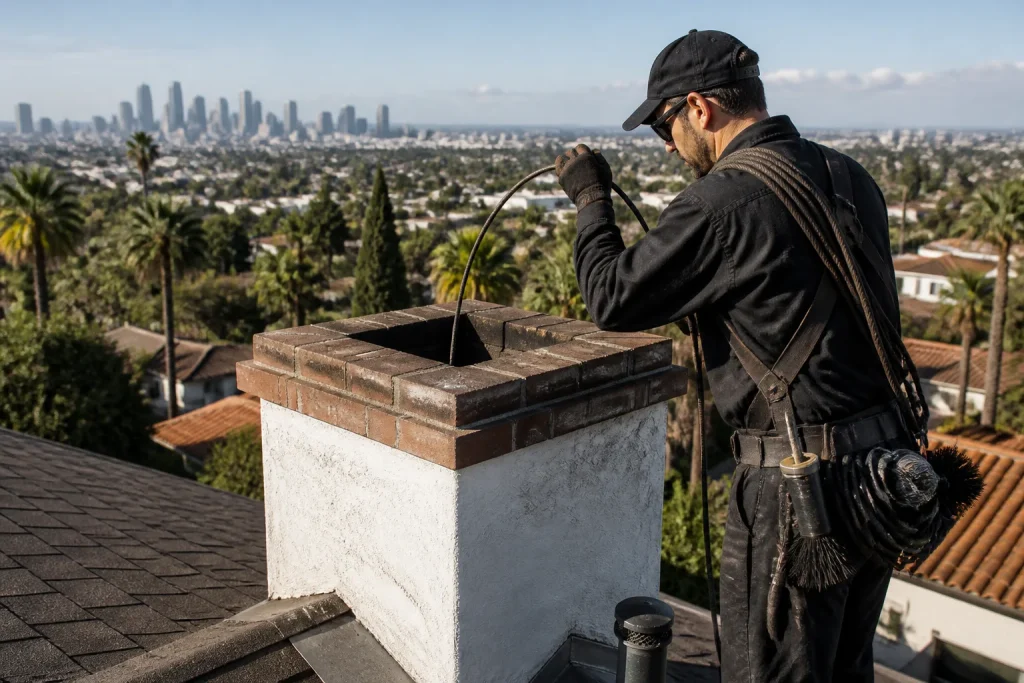
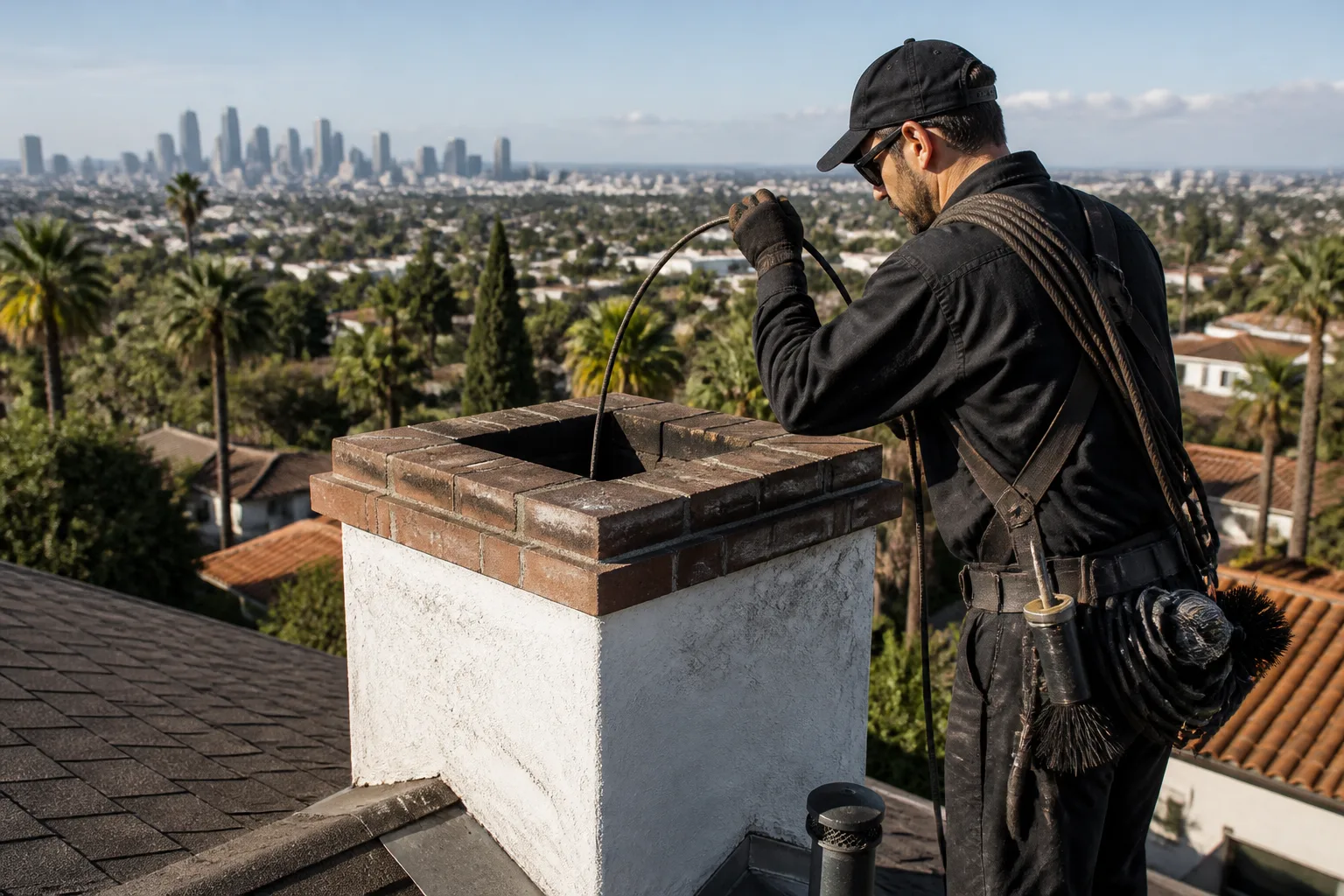
5 Mistakes to Avoid With Chimney Sweep
The five most costly chimney sweep mistakes in Los Angeles are not about picking a bad company. They are decisions homeowners make before and after the sweep that void guarantees, leave safety gaps, or expose them financially. Most of them take ten minutes to avoid, and all of them are preventable once you know what to look for. If you would rather not sort through the details, call (830) 251-4560 and we will walk you through it.
We have swept chimneys across Los Angeles, from Hancock Park to Sherman Oaks to Pasadena. The same mistakes show up every season. Here is what they cost, why they happen, and how to avoid them.
Mistake 1: Scheduling the Sweep Too Close to First Use
Scheduling a chimney sweep the week before you plan to use the fireplace is the single most common timing mistake in Los Angeles. It leaves no buffer if the inspection turns up work that must be completed before safe use, and that is not a rare outcome. In our experience, roughly one in six homes we inspect in older LA neighborhoods like Los Feliz or Eagle Rock has enough creosote buildup or a compromised flue liner that requires follow-up work.
Here is the timeline problem: a sweep takes an hour or two, but if we find a cracked flue liner, the repair is a separate appointment. HeatShield or DuraFlex liner work often requires material ordering and a cure window before the first fire. That means your “simple sweep” was actually a three-week project, and now the fireplace sits cold in December while you wait.
Give yourself a 3-week buffer minimum. In Los Angeles, fireplaces tend to get used in bursts, a handful of cold nights in November, another stretch in January, maybe a rainy February evening. Scheduling in October gives you the full season. Scheduling the week before Thanksgiving is a gamble.
What can realistically delay clearance after a sweep? A deteriorated damper, missing chimney cap, cracked crown, glazed creosote that requires chemical treatment, or a liner that fails a camera inspection. None of these are visible from the ground. All of them are common in LA homes built between 1920 and 1970.
When to call a pro: If your fireplace has not been used in two or more seasons, do not assume a quick sweep gets it ready. Book the inspection and sweep at least three weeks out. Chimney inspection in Los Angeles is where every safe fire season starts.
Mistake 2: Accepting a Verbal Quote
This one costs Los Angeles homeowners real money every single season. A company gives you a number over the phone or at the door, starts working, then the invoice comes in higher because of “unexpected complications.” The complication is usually that the verbal quote was never meant to hold.
Our rule at Flint Chimney Sweep home: every job gets a written price before any work starts. The number on the invoice is the number you approved. That is The Garrison Standard, the same code every Garrison Partners location follows. It is not a courtesy. It is the only way a homeowner can hold a chimney company accountable.
Here is the language to use when booking a sweep: “Can you send me the price in writing before the tech starts any work?”
If the company hesitates, deflects, or says the technician will “figure it out on site,” you have your answer. A legitimate chimney sweep knows what a standard cleaning costs. They know what a Level 1 inspection involves. They should quote it.
What to do if a company refuses a written quote: end the call. There are plenty of chimney companies in Los Angeles. You do not need to gamble with one that will not commit to its own number.
- A written quote should list the sweep price, the inspection level, and any anticipated add-ons (like a chimney cap replacement or damper repair).
- It should note whether the inspection is included or billed separately.
- It should state the total before tax and any fees.
If a technician finds something during the work, a written quote protects you from “while we are in there” pricing pressure. You approve additional work in writing, or you do not approve it. Simple as that.
Mistake 3: Skipping the Post-Job Report
A good chimney sweep hands you a written report when the job is done. A great one includes photos. This is not paperwork for its own sake. The post-job report is the only record you have of what was found, what was done, and what condition the system is in. Without it, you have a receipt and a memory.
What a written chimney sweep report should include in Los Angeles:
- The date, address, and technician name.
- Condition of the flue liner, damper, firebox, smoke chamber, crown, and cap.
- Creosote level found (Stage 1, 2, or 3) and what was removed.
- Any repair recommendations, with clear priority levels: safety issue now, plan for next season, monitor.
- Photos or video from the video inspection camera.
Why do photos matter? Two reasons. First, for insurance claims. If a chimney fire occurs and your insurance company asks when the chimney was last inspected, a report with dated photos shows diligence. Second, for real estate disclosure. If you sell your Los Angeles home, having a documented sweep and inspection history answers the buyer’s questions directly. We have had Realtors in Studio City and Silver Lake specifically ask for our reports during escrow.
If a company sweeps your chimney and hands you a handwritten receipt with no condition notes, that is a flag. You paid for information you did not receive. Ask for the report. A company that cannot produce one probably was not inspecting much in the first place.
Chimney repair in Los Angeles decisions should never be based on a verbal summary. You need the photos. You need to see the crack in the liner with your own eyes before you authorize a relining.
Mistake 4: Burning Wood Immediately After a Liner Repair
This mistake voids warranties and, in the worst case, ruins a brand-new liner. When a flue liner is repaired or replaced, specific materials require a cure window before the first fire. If nobody told you that, you were not set up to succeed.
Here is what the cure requirements look like for common liner materials:
- HeatShield: a cerfractory sealant product used to repair cracks and gaps in existing clay tile liners. HeatShield requires a full cure period, typically 24 to 48 hours, before the first fire. Firing too early can compromise the bond.
- DuraFlex: a flexible stainless steel liner used for relining chimneys serving gas or wood appliances. Stainless does not need a cure period the way sealants do, but the surrounding refractory insulation or connection joints may. The installer should specify before leaving.
- Gelco: a masonry repair and waterproofing product used on crowns and exterior chimney structures. Gelco materials have cure times that depend on temperature and humidity. In Los Angeles weather, that typically means 24 hours minimum, longer in damp coastal months.
Who is responsible if you were not told? The company that did the work. A proper chimney repair job includes clear written aftercare instructions: how long to wait, what temperature to start with, and what to watch for on the first burn. If the technician says “you are good to go” and does not hand you anything in writing, you are relying on a verbal promise with no documentation.
Our Done Right Promise includes a written guarantee on every repair, valid for a full year. If a covered repair fails within that period, we come back at no charge. But that guarantee assumes the homeowner was given the correct aftercare. We write it down. We also tell you to your face. Both matter.
In Los Angeles, where some fireplaces sit unused for years and then get fired hard on a cold snap, the cure window is not optional knowledge. Make sure you have it.
Mistake 5: Assuming One Sweep Covers the Whole System
A chimney is not one component. It is a system, and different parts of that system fail at different rates and require different attention. When a homeowner says “the chimney was just swept,” what they often mean is “the flue was just swept.” The firebox, damper, chimney cap, crown, and smoke chamber are separate inspection points with their own failure modes.
Here are the major components and what a proper sweep and inspection should address in Los Angeles:
- Flue liner: the inner liner that channels smoke safely out of the house. Checked for cracks, gaps, and creosote stage. This is what the sweep primarily cleans.
- Firebox: the area where the fire actually burns. Checked for cracked refractory panels, deteriorated mortar joints, and proper clearance.
- Damper: the metal plate that opens and closes the flue. Checked for rust, warping, and proper seat. A bad damper leaks conditioned air year-round in Los Angeles.
- Chimney cap: the fitted cover at the top of the flue. Checked for damage, missing mesh, and blockage. A missing cap invites birds, bats, and rain into a Los Angeles chimney.
- Crown: the concrete or mortar surface at the top of the chimney structure. Checked for cracks and spalling. A cracked crown lets water into the masonry and accelerates deterioration.
Each of these gets a specific visual or camera inspection during a proper Level 1 or Level 2 chimney inspection. A sweep that only addresses the flue is incomplete. If your previous company did not mention any of these components, they were either not inspecting or not reporting.
We specify and install professional-grade materials by job, not by margin: brands like Copperfield for caps and dampers, and DuraFlex and HeatShield for liner work. When we recommend a repair, it is because we can show you the photo that justifies it. You are never being asked to take our word on faith.
Related services in Los Angeles: if your last sweep skipped the inspection, start with a proper chimney sweep in Los Angeles that includes full written documentation and a video camera walk-through.
The Bottom Line
None of these five mistakes require special knowledge to avoid. Book your sweep with a three-week buffer. Get the price in writing. Ask for the post-job report with photos. Follow the cure window after any liner repair. And treat the chimney as a system, not a single pipe. That is it. If you are in Los Angeles and need help, Flint Chimney Sweep offers free estimates. Call (830) 251-4560 and a live person answers, any hour, any day.
Frequently Asked Questions
A standard chimney sweep in Los Angeles typically runs between $179 and $349, depending on the level of creosote buildup, the height of the chimney, and whether the inspection is included separately. A Level 1 inspection is often bundled with the sweep. Level 2 inspections, required for real estate transactions or after a chimney fire, cost more. We give every job a written price before any work starts, so the number on the invoice is the number you approved. Call (830) 251-4560 for an exact quote.
The National Fire Protection Association recommends a chimney inspection at least once a year and a sweep whenever creosote reaches 1/8 inch of buildup. In Los Angeles, where fireplaces often sit unused for months at a time, annual inspection is still the right habit. Creosote does not care how often you burn. It accumulates every time you do.
Creosote is a flammable byproduct of wood combustion. It accumulates on the flue liner wall every time you burn. If the buildup reaches Stage 2 or Stage 3, a stray ember from one fire can ignite it, creating a chimney fire that reaches temperatures over 2,000 degrees Fahrenheit. That heat can crack the flue liner, damage the surrounding masonry, and breach the chimney structure. A chimney fire in Los Angeles is entirely preventable with a routine sweep.
This is the most common question we get, and it deserves a straight answer. You should never accept a liner recommendation without seeing camera evidence. A proper inspection includes video footage of the flue interior. If the liner is cracked, spalled, or separated, you will see it in the video. If the company cannot show you the damage, do not authorize the work. When we recommend a DuraFlex or HeatShield repair, we walk you through the photos before you spend a dollar. Call (830) 251-4560 for a free estimate and ask us to show you the video.
Written by the team at Flint Chimney Sweep.
Need Chimney Cleaning Help?
Call Flint Chimney Sweep - licensed & insured, here with fast after-hours help in Los Angeles.
(830) 251-4560