
HeatShield Chimney Sweep in Los Angeles: A Homeowner’s Guide
HeatShield is not a chimney sweep service. It’s a proprietary ceramic resurfacing material used to repair deteriorated flue liners, and it only works when the damage falls within specific limits. In Los Angeles, where most homes built before 1980 have masonry chimneys with clay tile liners, HeatShield restores the flue without tearing out walls. Here’s how to know if it’s right for your chimney, what the job actually involves, and how to keep a contractor honest about the results.
What HeatShield Actually Is (and What It Isn’t)
HeatShield is a UL-listed ceramic sealant system manufactured by SaverSystems. The core product line is called Cerfractory Flue Sealant, a material that bonds to the inside of a damaged flue liner and restores a smooth, heat-resistant surface. The UL listing matters because it means Underwriters Laboratories tested the product against specific fire safety standards. For a homeowner, that’s the difference between a proven repair material and whatever goop a guy found at a supply house.
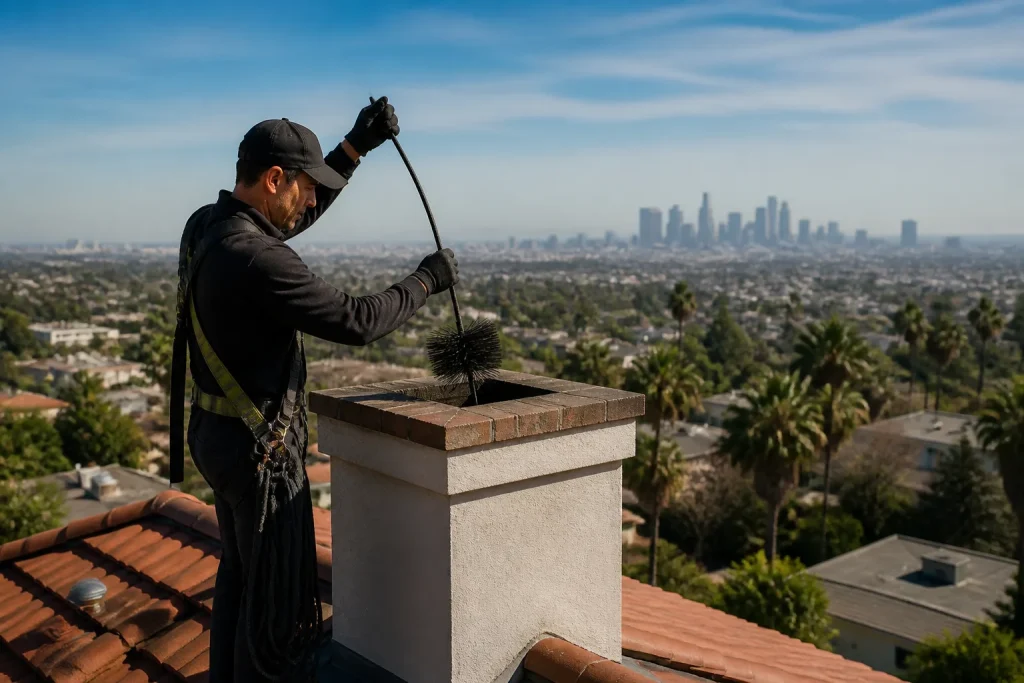
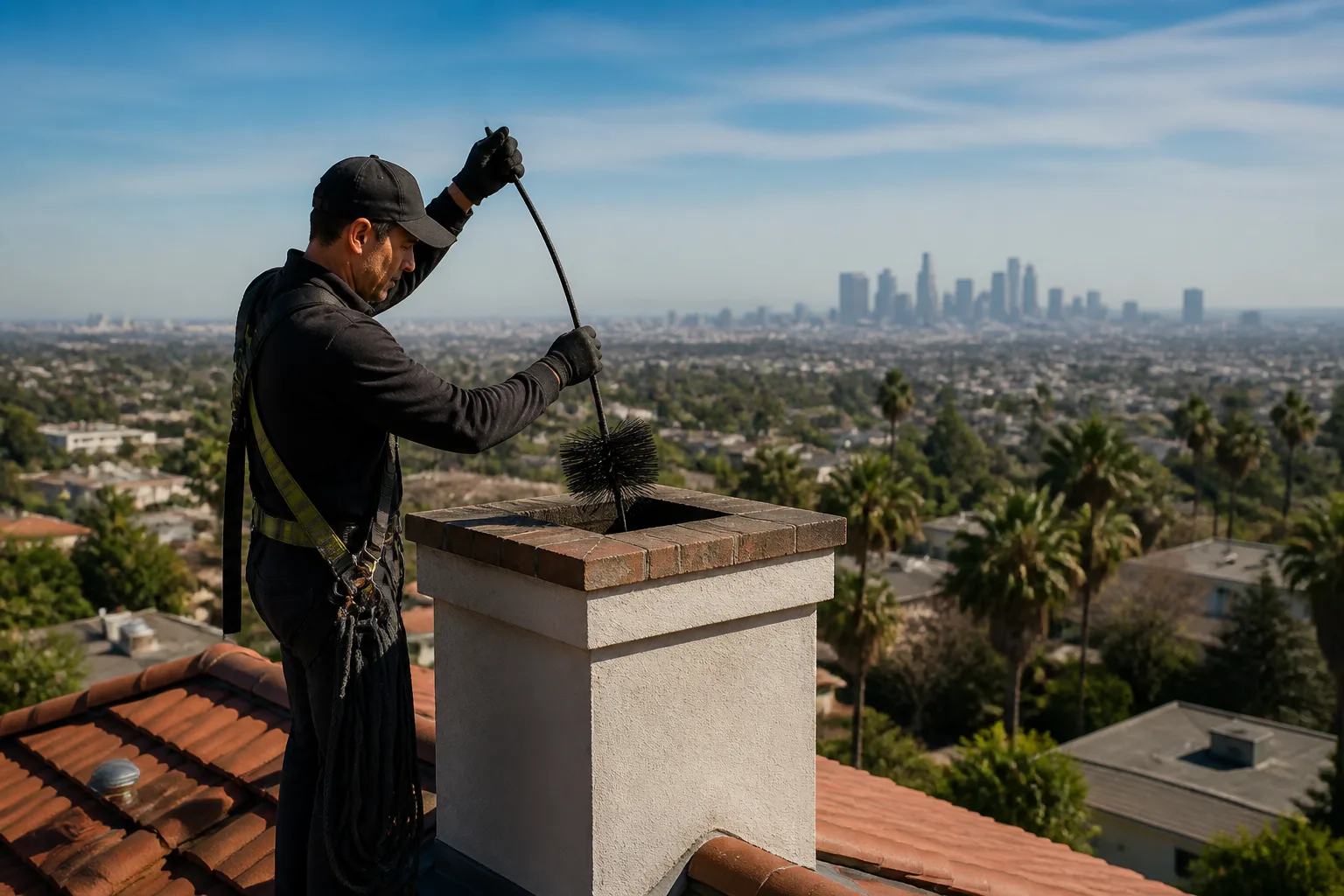
Where Los Angeles homeowners get confused is the word “sweep.” A chimney sweep in Los Angeles cleans the flue. HeatShield repairs it. Some chimney companies run ads that say “HeatShield Chimney Sweep” because it ranks well in search, but the actual HeatShield work happens after the sweep, not instead of it. Any legitimate HeatShield job starts with a full cleaning and a camera inspection. If a contractor quotes HeatShield without first putting a camera in the flue, that’s a red flag.
When HeatShield Works, and When It Doesn’t
The most common problem in older LA chimneys is spalling: clay tile liners crack and flake after decades of heating and cooling cycles. HeatShield seals those gaps, restoring a continuous surface so heat and gases can’t reach the brickwork. But the system has hard limits. The manufacturer specifies maximum gap widths, depth limits for deteriorated mortar joints, and the total surface area that can be treated. When the damage exceeds those parameters, the only code-compliant fix is a full liner replacement, usually a stainless steel system like DuraFlex.
Some contractors in Los Angeles will push HeatShield on chimneys that need a new liner because relining is more expensive and harder to sell. A $1,800 HeatShield job sounds better than a $4,500 reline, but if the flue is beyond the product’s rated parameters, you’ve paid to put a bandage on a chimney that still isn’t safe. The safeguard is simple: ask for the camera footage. You should see the damage before the repair and a clean, continuous surface after. If a company won’t hand over pre- and post-repair inspection video, walk away.
What the HeatShield Application Process Looks Like
A proper HeatShield job in Los Angeles takes one visit, usually half a day. Here’s what should happen, in order:
- 1
Level 2 camera inspection. The technician runs a video camera through the flue from top and bottom, mapping every crack, gap, and spalled section. You should see this footage yourself, not just get a verbal summary.
- 2
Full mechanical cleaning. The flue gets swept with rotary brushes to remove creosote and debris so the sealant bonds to the liner, not to soot.
- 3
Application. The technician lowers a foam applicator through the flue and pumps Cerfractory sealant into the damaged sections. The foam expands to fill cracks and coat the liner, then cures to a hard ceramic surface. Depending on the damage pattern, the tech may use the joint repair system or the full resurfacing system.
- 4
Cure time. The sealant needs a few hours to set. After it cures, the chimney should be safe to use, but the tech will give you a specific timeframe.
- 5
Post-repair camera inspection. A second video pass confirms the damaged areas are fully covered and the flue is continuous. This is what you’re paying for, and it should be part of the price, not an add-on.
One thing we tell every homeowner in Los Angeles: ask how many applicator passes the tech will run. A single pass costs less, but multiple passes build up the coating to the manufacturer’s specified thickness. That thickness is what makes the repair last.
What Documentation to Demand After a HeatShield Job
A HeatShield repair without paperwork is a story, not a repair. When the job is done, you should walk away with three things:
- Before-and-after camera footage. Photos or video of every damaged section, matched with the same sections after sealing. This is your proof the work actually happened and covered what it was supposed to.
- Product spec sheet. The HeatShield product data sheet, including batch information and the UL listing reference. You want the actual material certification, not a generic flyer.
- Warranty instructions. HeatShield offers a warranty through the manufacturer, and it requires registration. Your contractor should hand you the paperwork and explain the process. Flint Chimney Sweep also puts a written one-year guarantee on every repair, separate from the manufacturer’s coverage.
If a contractor in Los Angeles balks at any of this, the answer should be a polite no-thanks. The documentation is the difference between trusting the work and trusting the guy who says he did the work.
Why LA’s Housing Stock Makes HeatShield Common
Los Angeles has some of the oldest standing housing stock in the country outside the Northeast. Walk through Hancock Park, West Adams, Highland Park, or any pre-war neighborhood and you’ll find masonry chimneys that have been through 60, 80, sometimes 100 years of temperature swings. Now add seismic movement. Every Northridge-size shift, every small trembler, puts micro-stress on rigid clay tile liners. Cracks don’t always come from heat; in LA, they come from the ground moving under the house.
That’s why HeatShield shows up so often as a repair path here. A full reline with DuraFlex is a bigger job; it often means removing a section of the chimney interior and running new pipe from top to bottom. HeatShield can restore many of those older flues without demo, which keeps the price lower and the house intact. But it’s a repair material, not a fix for everything. A chimney with a separated liner, a structural crack, or extensive missing tile sections warrants a full relining, not a coating.
We pulled a camera out of a fireplace in Eagle Rock last month where the homeowner had been told by another company that she needed a full rebuild. The liner had three spalled sections and nothing worse. HeatShield fixed it in an afternoon. That’s the value of seeing the footage yourself before you spend four figures.
HeatShield vs. Full Relining: A Straight Comparison
Here’s the practical comparison for Los Angeles homeowners weighing options:
- HeatShield: Typically $1,500 to $2,800 depending on flue height and number of damaged sections. Restores the existing liner in place. No demolition. Warranty runs through the manufacturer and may be extended through contractor guarantees. Works best for minor spalling, joint gaps, and hairline cracks within rated parameters.
- Full relining with stainless steel (DuraFlex or similar): Typically $3,000 to $6,000 depending on flue size and access. Installs a new liner from top to bottom. More invasive, more expensive, and can extend the chimney’s life by decades. The right call when HeatShield’s thresholds are exceeded or the existing liner is structurally compromised.
The deciding factor is never price alone. It’s the depth of damage measured against the manufacturer’s ratings. That’s why the camera inspection before and after matters more than any quote you’ll get over the phone.
How to Hold a Contractor Accountable on HeatShield Work
Most complaints about HeatShield jobs come from contractors who skip a step: no pre-inspection footage, single-pass application to save material, no post-repair video, no written warranty terms. Here’s how to avoid being one of those complaints:
- Get the written price before work starts. Every job should have a fixed number on paper covering the sweep, the inspection, the HeatShield application, and the post-repair camera pass. If it’s verbal, it doesn’t count.
- Ask how many passes the technician will run and what the manufacturer’s coating thickness spec is for your damage type. Make them say it out loud.
- Confirm the warranty in writing. HeatShield’s manufacturer warranty requires registration; Flint Chimney Sweep’s Done Right Promise covers the repair for a full year from the service date, including a free return visit if a covered repair fails within that period.
- Get the names: the product (HeatShield Cerfractory Flue Sealant), the brand (HeatShield by SaverSystems), and the contractor’s technician. A professional company dispatches background-checked, uniformed techs and tells you who’s arriving before they show up.
When to call a pro: any time a chimney repair involves materials rated for fire safety, certifications you can’t verify from a ladder, or structural conditions you can’t see without a camera, hire someone who does this full-time. HeatShield application isn’t a DIY job, and a botched sealant pass can leave gaps you’ll never know about until heat finds them.
Related Services in Los Angeles
If your chimney hasn’t been inspected in the last year, start there before considering HeatShield. Our Chimney Inspection in Los Angeles includes full camera footage so you know exactly what condition the flue is in. If the damage is beyond HeatShield’s parameters, our Chimney Repair in Los Angeles covers full relining and rebuilds. And for a standard seasonal cleaning before you light the first fire of the year, see our Chimney Sweep in Los Angeles page or just call Flint Chimney Sweep home for an honest answer about what your chimney actually needs.
What happens when you call
- 1
A real person answersNo phone trees - you reach a local pro.
- 2
You get an upfront price rangeHonest numbers before anyone is dispatched.
- 3
A background-checked tech heads outLicensed & insured, dispatched right away.
- 4
You approve before work beginsNothing starts until you say go.
The Bottom Line
HeatShield is a UL-listed ceramic sealant that restores damaged flue liners when the deterioration falls within manufacturer-rated parameters. In Los Angeles, where older masonry chimneys and seismic movement go hand in hand, it’s a common and effective middle path between doing nothing and a full reline. The catch: it only works within specific limits, and the only way to know where your chimney falls is a camera inspection with footage you can see for yourself. If you’re in Los Angeles and need help, Flint Chimney Sweep offers free estimates. Call (830) 251-4560 and we’ll put a written price in your hand before any work starts, including the camera footage to back it up.
Frequently Asked Questions
A typical HeatShield repair in Los Angeles runs $1,500 to $2,800, depending on flue height and the number of damaged sections. A full stainless steel relining typically runs $3,000 to $6,000. The only way to know which applies is a camera inspection. Call (830) 251-4560 for a free estimate with a written price before any work begins.
HeatShield’s manufacturer warranty covers the repair for a specified term when registered correctly, and Flint Chimney Sweep adds a written one-year guarantee on every repair. The coating’s lifespan depends on application thickness and how often you use the fireplace. Multiple-pass applications that meet the manufacturer’s thickness spec hold up far better than single-pass jobs.
No. A chimney sweep removes creosote and debris from the flue. HeatShield is a ceramic sealant applied after the sweep to repair cracks and spalling in the liner. A proper HeatShield job in Los Angeles always starts with a full cleaning and camera inspection, then the sealant application, then a post-repair camera pass to verify coverage.
No. HeatShield is rated for specific types and depths of deterioration. Cracked or spalled clay tile liners within the manufacturer’s acceptable gap width and coverage area can be restored. Separated liners, structural damage, or damage beyond the rated limits require a full relining, typically with stainless steel like DuraFlex. The determining factor is the camera inspection footage, not a contractor’s word.
Written by the team at Flint Chimney Sweep.
Need Chimney Cleaning Help?
Call Flint Chimney Sweep - licensed & insured, here with fast after-hours help in Los Angeles.
(830) 251-4560