
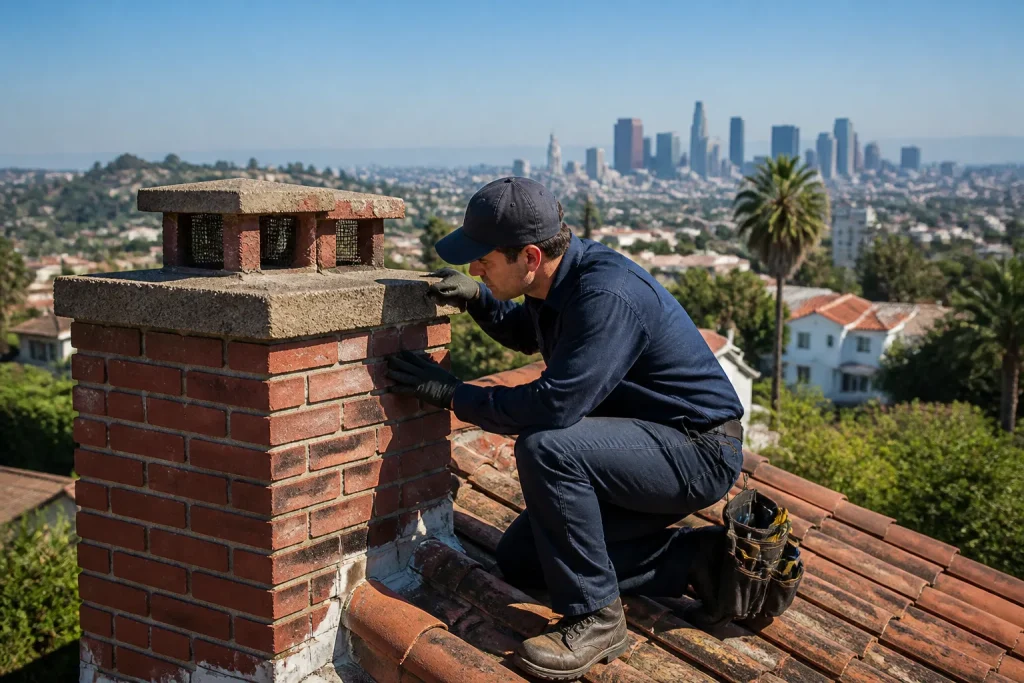
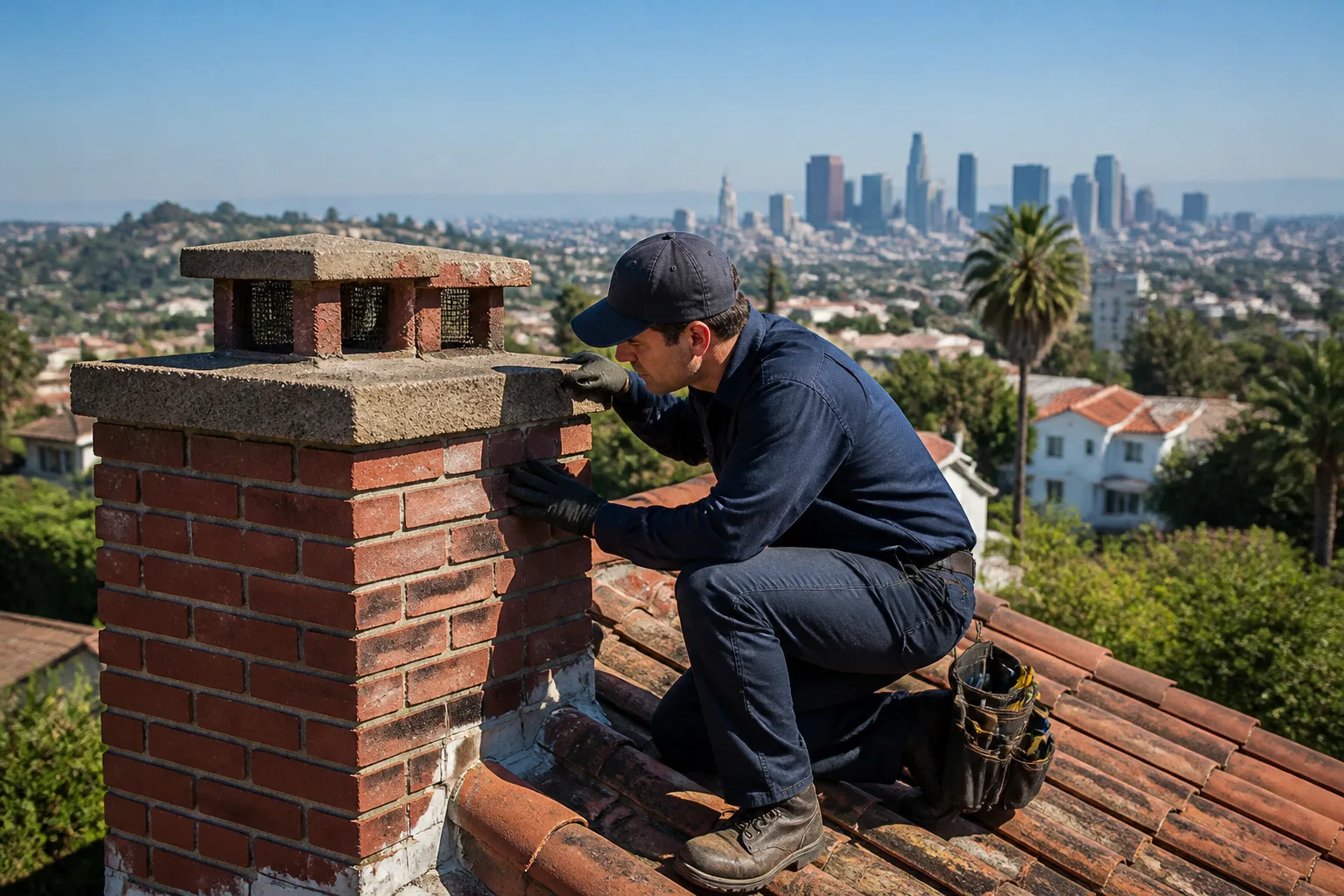
Chimney Inspection: Repair or Replace? How Los Angeles Homeowners Decide
Most Los Angeles homeowners who pay for a chimney inspection don’t actually receive the documentation NFPA 211 says they should. What they get is a verbal summary, maybe a one-page checklist, and a repair estimate that may or may not line up with what the technician actually saw. A proper inspection produces a written report with photographs, findings by component, and a specific recommendation with justification. Without that, you’re deciding between repair and replacement on someone’s word alone.
The question isn’t simply “repair or replace” – it’s “what does the data say?” And if you didn’t get data, you paid for an opinion. If you’d rather skip straight to a professional who puts everything in writing, call Flint Chimney Sweep at (830) 251-4560 for a free estimate.
What NFPA 211 Actually Requires From a Chimney Inspection
The National Fire Protection Association publishes NFPA 211, the standard for chimneys, fireplaces, vents, and solid fuel burning appliances. It defines three levels of inspection. Most Los Angeles homeowners have never seen this document, but it governs what a legitimate inspection must include.
Level I: A visual check of accessible portions of the chimney interior and exterior. No special tools, no ladder work beyond what’s safe, no disassembly. This is what you get with a routine sweep. It produces a basic written or verbal confirmation that the chimney is fundamentally sound for continued use under the same conditions.
Level II: Everything in Level I plus inspection of accessible portions of attics, crawl spaces, basements, and the chimney exterior. It may include video scanning of the interior flue. Required when you’re buying or selling a home, after a chimney fire, after an earthquake, or when you change fuel type. A Level II inspection must produce a written report with findings and photographs. Not a verbal summary. A written report.
Level III: When a Level II turns up a suspected hazard or hidden damage, Level III authorizes opening up portions of the chimney structure – removing drywall, masonry, or chimney components – to examine concealed areas. Rare in residential work, but it exists for a reason: some problems hide inside walls in Los Angeles homes, especially after seismic activity.
Here’s the part most LA homeowners miss: paying for a “full inspection” does not automatically mean you got a Level II. If nobody handed you a written document with component-by-component findings and photos, you got a Level I walkthrough with a verbal report. Those are not the same thing, and the difference matters when you’re deciding between a $400 repair and a $9,000 rebuild.
The Written Report: What You Should Walk Away With
A compliant Level II inspection report isn’t a single sheet of paper with a few checkboxes. It’s a document. After a Chimney Inspection in Los Angeles conducted properly, the report should include:
- Photographs. Interior flue images from a video scan, exterior shots of the crown, cap, flashing, and masonry. If there’s damage, the photo should show exactly where and what.
- Findings by component. Flue liner, smoke chamber, damper, firebox, crown, cap, flashing, brick or stone exterior, and the clearances around the chimney. Each gets its own line with a condition note.
- Condition ratings. Something simple: serviceable, needs monitoring, needs repair, replace now. Not vague adjectives – actual designations.
- Specific recommendations. If the report says “repair,” it should name the component, describe the problem, state what repair method is appropriate, and explain why. If it says “replace,” same thing. Justification matters.
- Documentation of the inspection level performed. If you paid for Level II, the report should say Level II.
We’ve walked into houses in Los Angeles where the homeowner had a “report” from another company consisting of a handwritten invoice that said “chimney needs work: $4,800.” No photos. No component findings. No condition rating. Just a number. That’s not an inspection. That’s a quote with a scare tactic attached.
When Flint Chimney Sweep performs an inspection, the homeowner receives a written report with photos before any repair recommendation is made. The report stands on its own. You can look at the picture and see the crack in the flue tile. The recommendation follows from the evidence, not the other way around.
Repair or Replace: How to Actually Make the Call
Once you have a real report in hand, the repair-or-replace decision gets simpler.
- Identify the failed component. A cracked flue tile is one problem. A damaged crown is another. A rusted damper is a third. Each has a different repair path and a different price.
- Check the extent. One cracked tile in the upper flue is generally repairable. Four cracked tiles with water damage throughout the flue and smoke staining in the attic is a different conversation.
- Look at age and condition of adjacent components. If the flue is shot, the crown is crumbling, and the flashing is lifting, a repair that fixes only the flue doesn’t solve the chimney. A series of substantial repairs on a 60-year-old Los Angeles chimney might mean either complete rebuild or a full reline.
- Compare the numbers honestly. If the repair is 70% of the replacement cost and the remaining components are still aging, replacement may be the better money. But if the report shows one isolated issue, repair usually wins.
In Los Angeles, seismic activity complicates the math. An earthquake can shift a chimney, crack internal flue tiles, and leave the structure looking fine from the outside. That’s why a Level II inspection with video scanning is the standard for any home sale here – and why we never tell a homeowner they need a rebuild without camera images they can see with their own eyes.
When the repair involves the flue, we specify DuraFlex or HeatShield depending on the condition of the existing liner. DuraFlex is a stainless steel relining system – a new liner inserted inside the damaged one. HeatShield is a cerfractory sealant product that repairs cracked clay tile liners from the inside using a specialized application process. The choice between them depends on the extent of the damage, the flue dimensions, and the appliance. Both are professional-grade brands you can verify independently. We don’t pick materials by margin; we pick them by job.
The Los Angeles Real Estate Context: Buyers, Sellers, and the Inspection Everyone Skips
Here’s a scenario we see constantly: a Los Angeles home goes under contract. The buyer’s inspector glances at the fireplace, notes “chimney appears functional,” and moves on. The buyer never gets a Level II. Six months later, the first real fire reveals a cracked flue. The repair was preventable at the point of sale.
Under NFPA 211, a Level II inspection is indicated any time a property changes hands. California doesn’t always mandate it, but the standard is clear about when it’s appropriate. Buyers have the right to request one and to ask for the written report. Sellers have an equally practical interest: a documented clean inspection protects them from post-sale claims that a flue problem existed before closing.
What document does each party get? The same written report. Photos, condition by component, recommendations with justification. If the seller’s “inspection” is a one-line verbal from a handyman who swept the flue, that’s not a Level II and it won’t stand up if there’s a dispute. The report is the evidence.
We pulled a video scan out of a chimney in Van Nuys last month where the flue looked passable from the fireplace opening. The camera found a four-foot section of missing mortar in the upper third. That’s the kind of thing that doesn’t show up in a walkthrough. It shows up in the photos. And it’s exactly why a written inspection with video documentation should be the floor, not the ceiling, for any Los Angeles transaction.
What Flint Chimney Sweep Puts in Writing Before Any Repair Is Recommended
This is where our process stops being about inspection generally and becomes about how we work. Flint Chimney Sweep operates under The Garrison Standard, the same code every Garrison Partners location follows. That standard means a few specific things:
- Written price before any work starts. The number you approve is the number on the invoice. Not the number plus a surprise at the door.
- Done Right Promise. Every repair carries a written guarantee, valid for one full year from the service date. If a covered repair fails in that window, we come back and make it right at no charge. No argument, no re-quote.
- Background-checked, uniformed technicians. You know who’s walking through the door before they get there.
- A live person answers the phone 24/7. No voicemail tree. No callback form. Call (830) 251-4560 and a person picks up.
We also work with Copperfield and Gelco products in addition to DuraFlex and HeatShield. Copperfield makes chimney caps, dampers, and accessory components. Gelco makes refractory products and masonry repair materials. When a repair specification calls for one of these, it’s because the job needs that product – not because it was convenient for us.
If you need a Chimney Sweep in Los Angeles before the inspection, or a Chimney Repair in Los Angeles after it, the same pricing rule applies: written quote first, every time.
The Bottom Line
The repair-or-replace decision should never be made from a verbal summary. A real inspection produces a written report with photos and component-level findings, and that report is the thing you evaluate. If you’re in Los Angeles and you’re not sure whether the inspection you paid for met the NFPA 211 standard, ask for the report. If there’s no report, there’s no data. And without data, you’re guessing.
Flint Chimney Sweep offers free estimates and writes the price down before any work begins. If you need a chimney inspection that produces documentation you can actually use, call (830) 251-4560. The report comes first. The recommendation follows. That’s The Garrison Standard.
If you’re reading this and you’re still not sure whether you need an inspection at all, start with a Flint Chimney Sweep home visit – one of our technicians can assess your setup and tell you plainly what level of inspection your situation calls for.
Frequently Asked Questions
A Level I inspection in Los Angeles typically runs $150 to $300, usually as part of a chimney sweep service call. A Level II inspection, which includes video scanning and written documentation, typically runs $250 to $500 depending on the chimney size, roof access, and whether an attic or crawl space inspection is included. Level III work is quoted separately because it involves opening up structure. Flint Chimney Sweep provides a written price before any inspection is performed. Call (830) 251-4560 for an exact quote.
If you’re buying or selling a home, changing fuel type, or you’ve had a chimney fire, earthquake, or severe weather event. If you’re using the same fireplace you’ve used for years and nothing has changed, a Level I during your regular sweep may be sufficient. But in Los Angeles, where seismic activity is a real factor, we recommend a Level II anytime a chimney hasn’t been camera-inspected in the past five years.
You can miss a cracked flue liner that’s sending heat into the walls around the chimney. You can miss water damage that’s slowly ruining the crown and masonry. You can miss a carbon monoxide risk from a partially blocked flue. Not every chimney problem announces itself. Some of them just sit there until they don’t. A documented inspection catches them before they become a fire or a four-figure emergency.
Most components can be repaired individually: a new damper, a rebuilt crown, a relined flue, flashing correction, mortar repair. Replacement is a last resort when the structure itself is compromised or multiple major components have failed at once. The right way to know is with a written report that itemizes what’s actually wrong. Don’t accept a verbal “you need a new chimney” without camera evidence and a component-by-component explanation. If the company won’t show you the photos, ask why.
Need a straight answer from a team that puts everything in writing? Call Flint Chimney Sweep at (830) 251-4560 and we’ll schedule an inspection.
Written by the team at Flint Chimney Sweep.
Need Chimney Cleaning Help?
Call Flint Chimney Sweep - licensed & insured, here with fast after-hours help in Los Angeles.
(830) 251-4560