
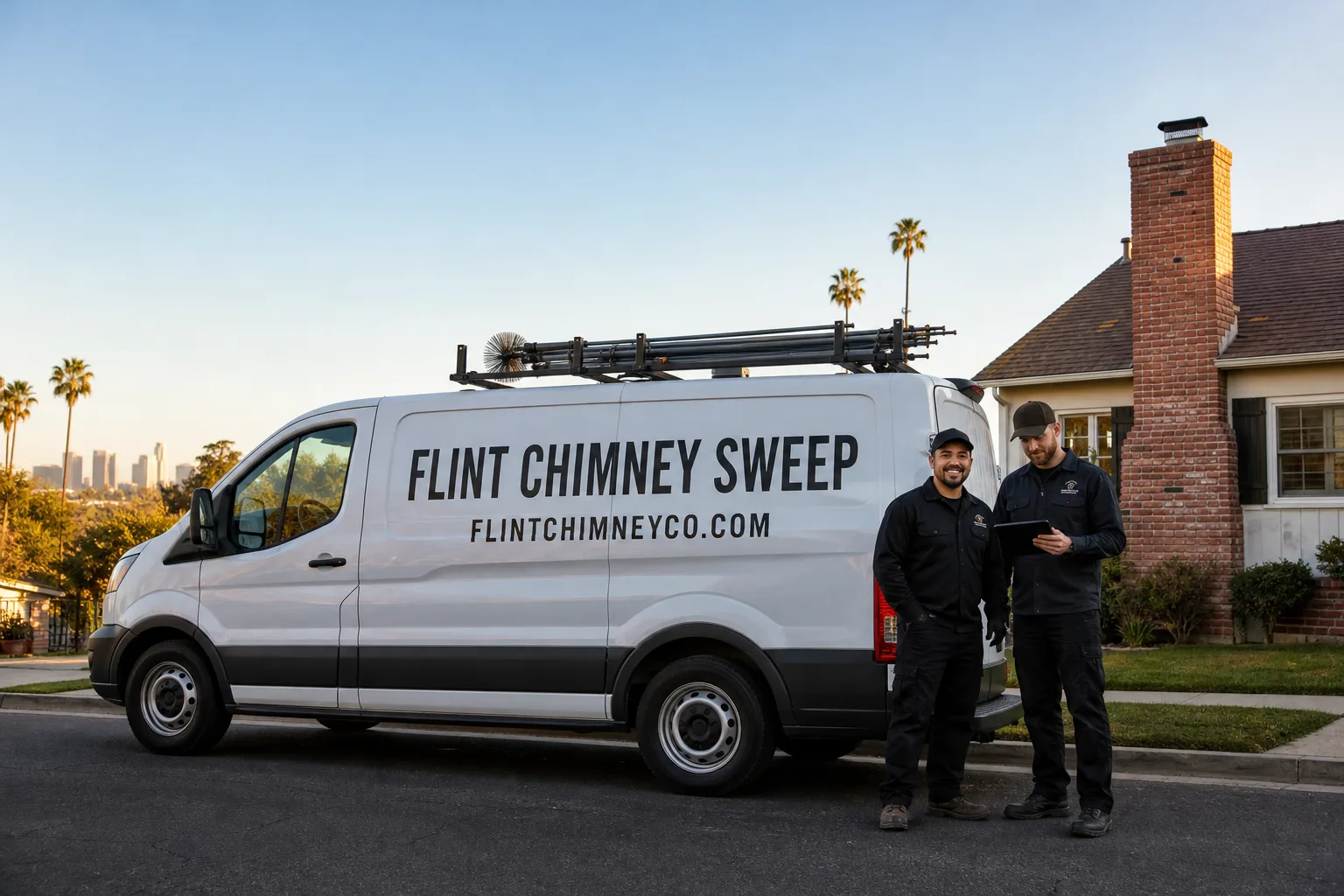
Level 1 sweep and inspection to the NFPA 211 annual standard - flue, crown, cap, and flashing checked and photographed
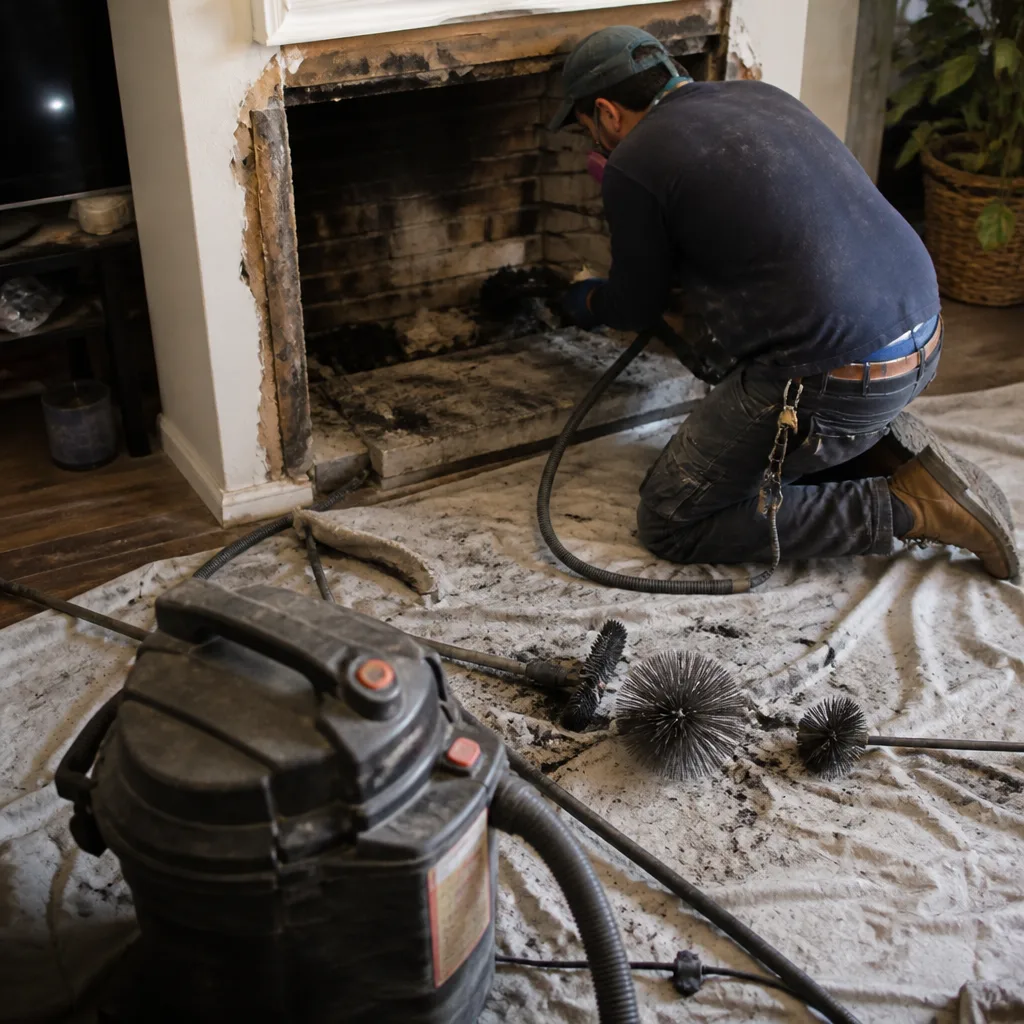
Chimney sweep logs do not sweep chimneys. They loosen some creosote - which then falls where a brush and vacuum still have to collect it.
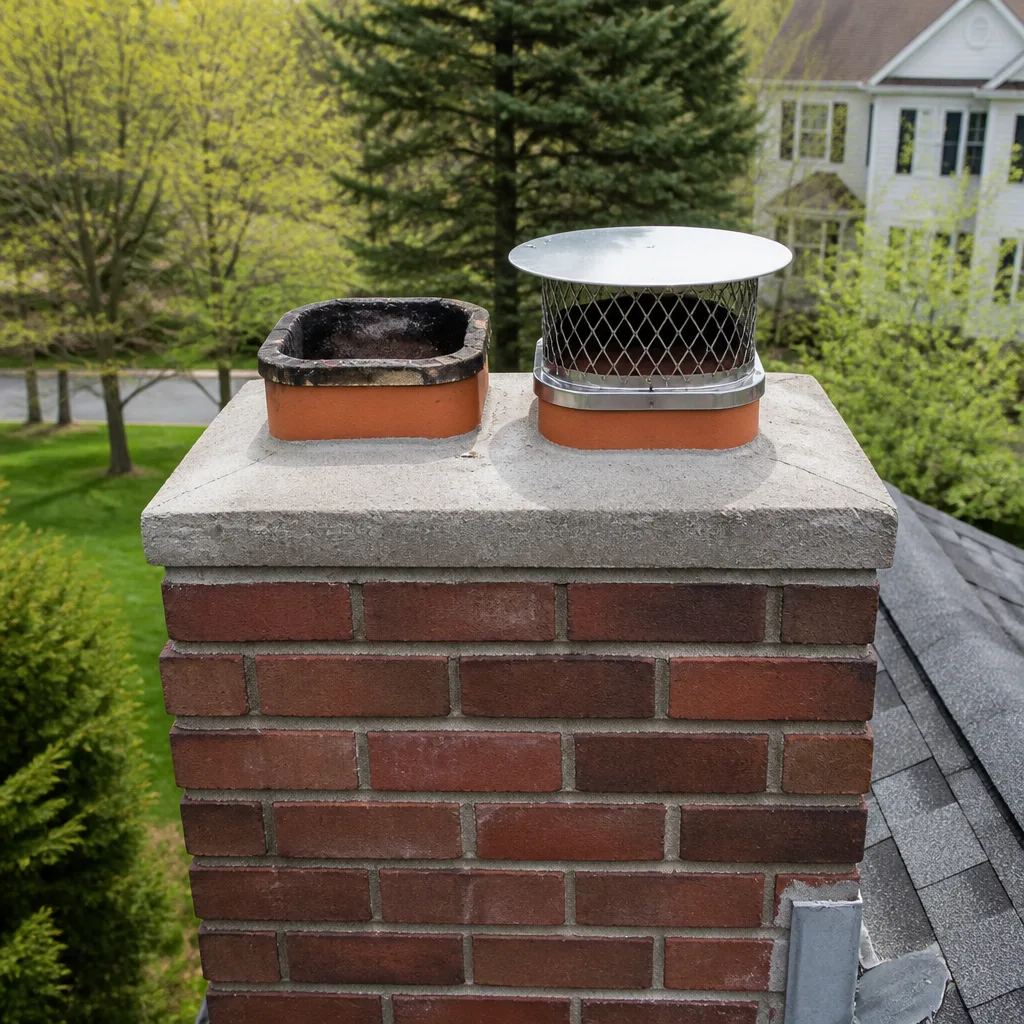
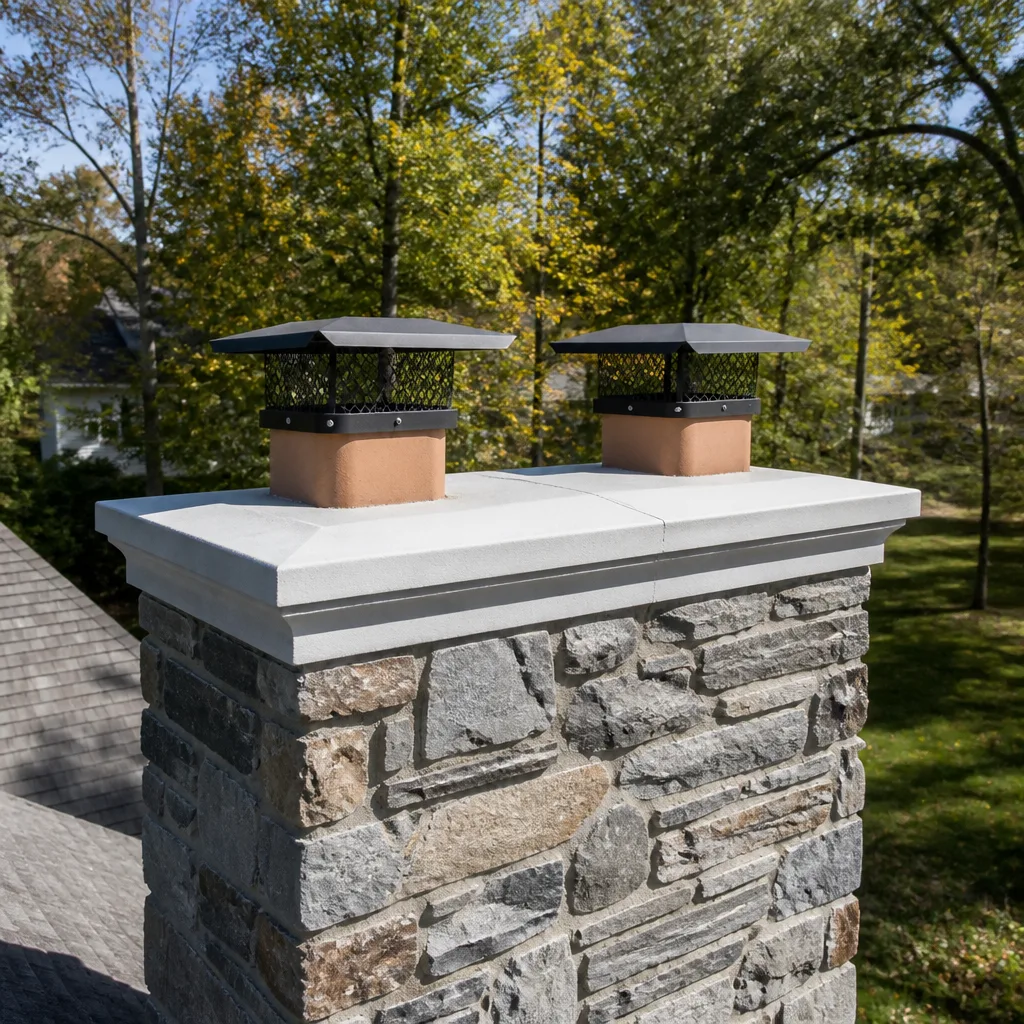
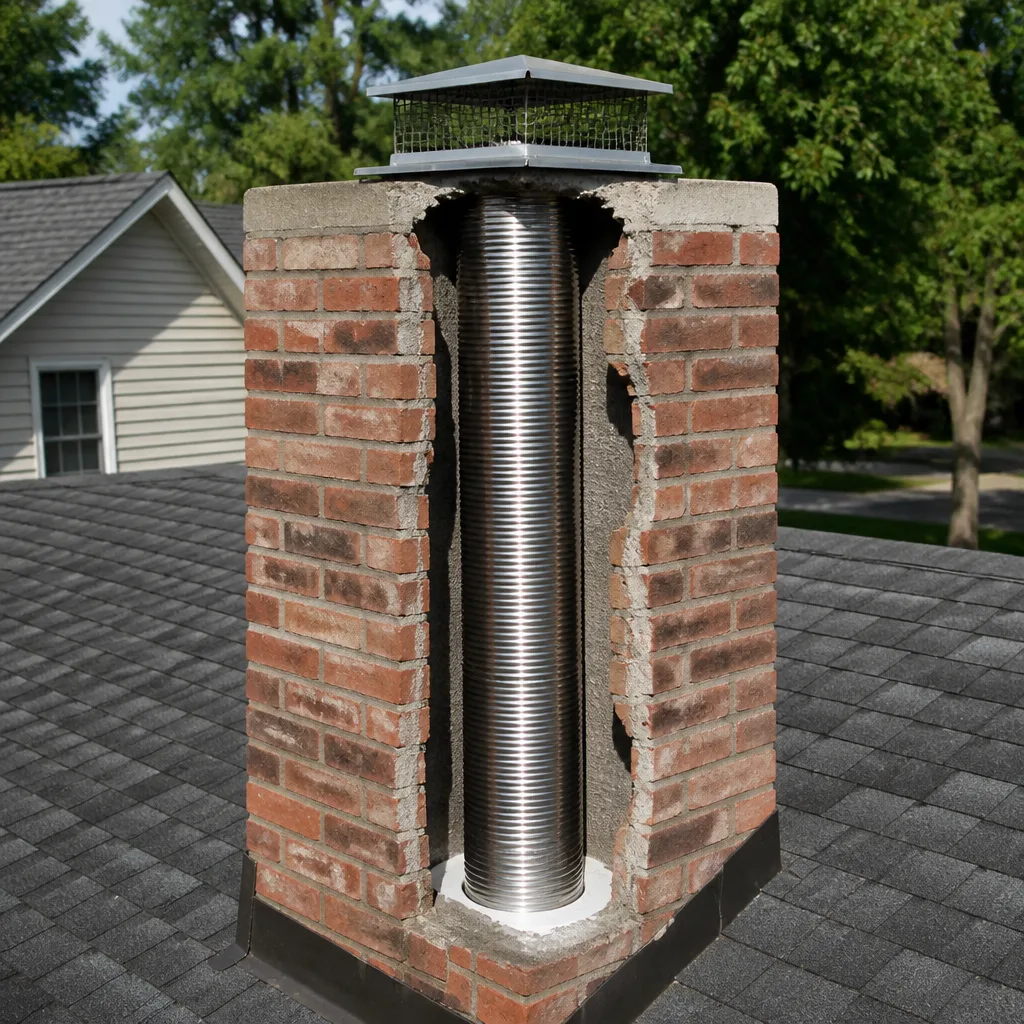
 Before
 After
After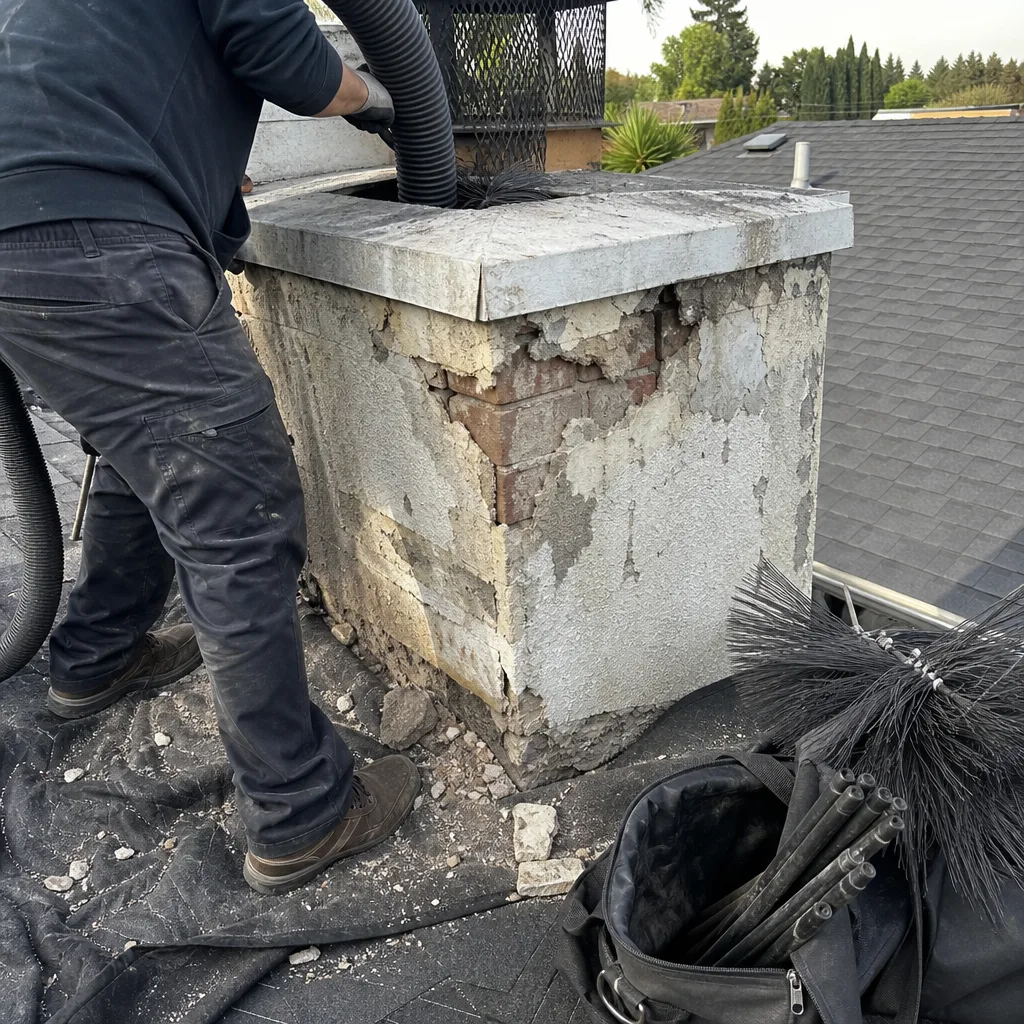 Before
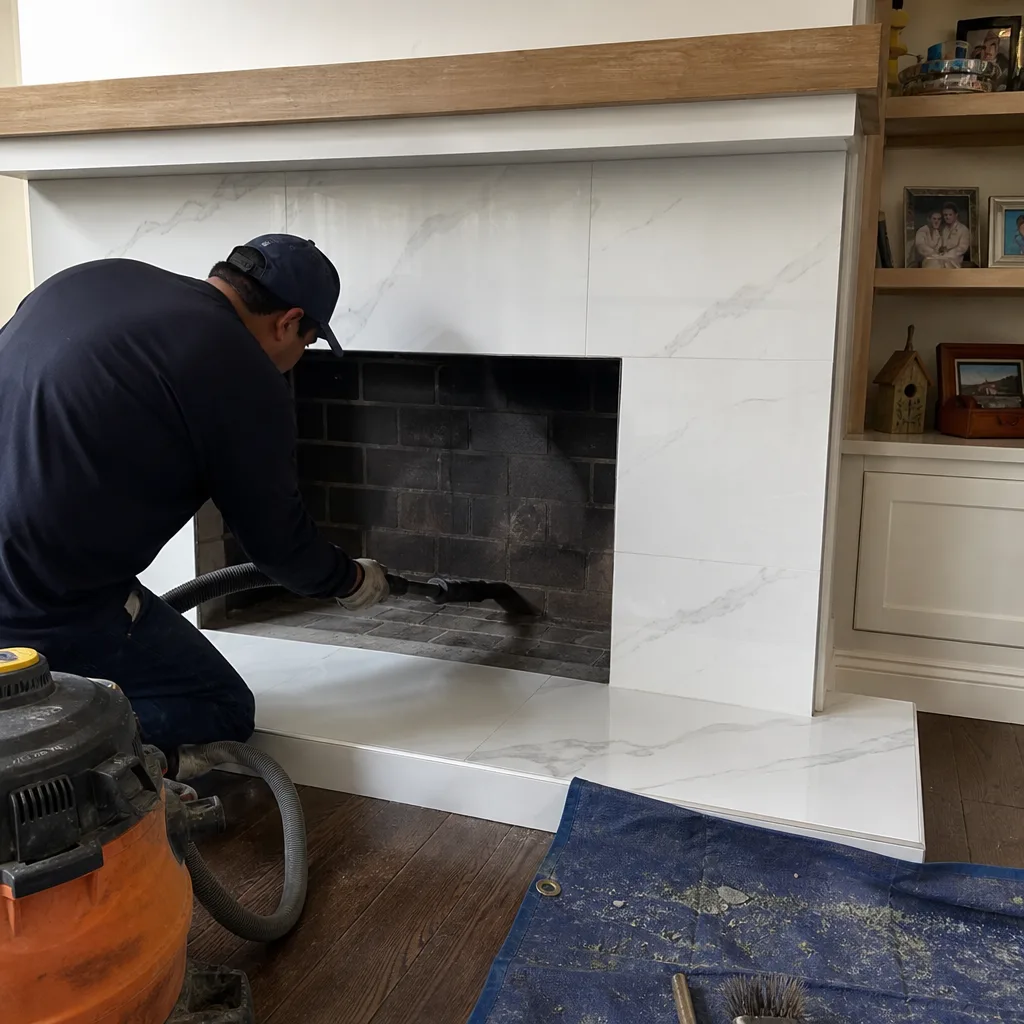 After
After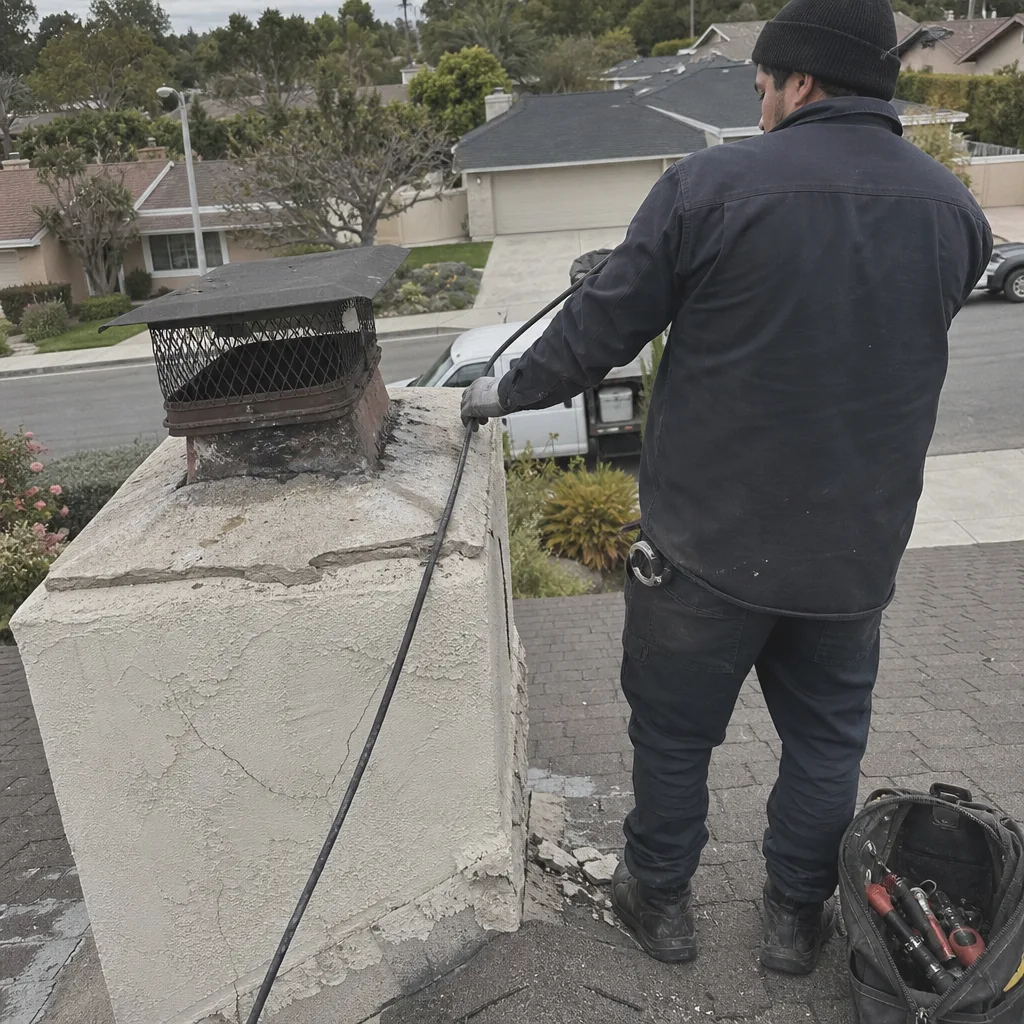 Before
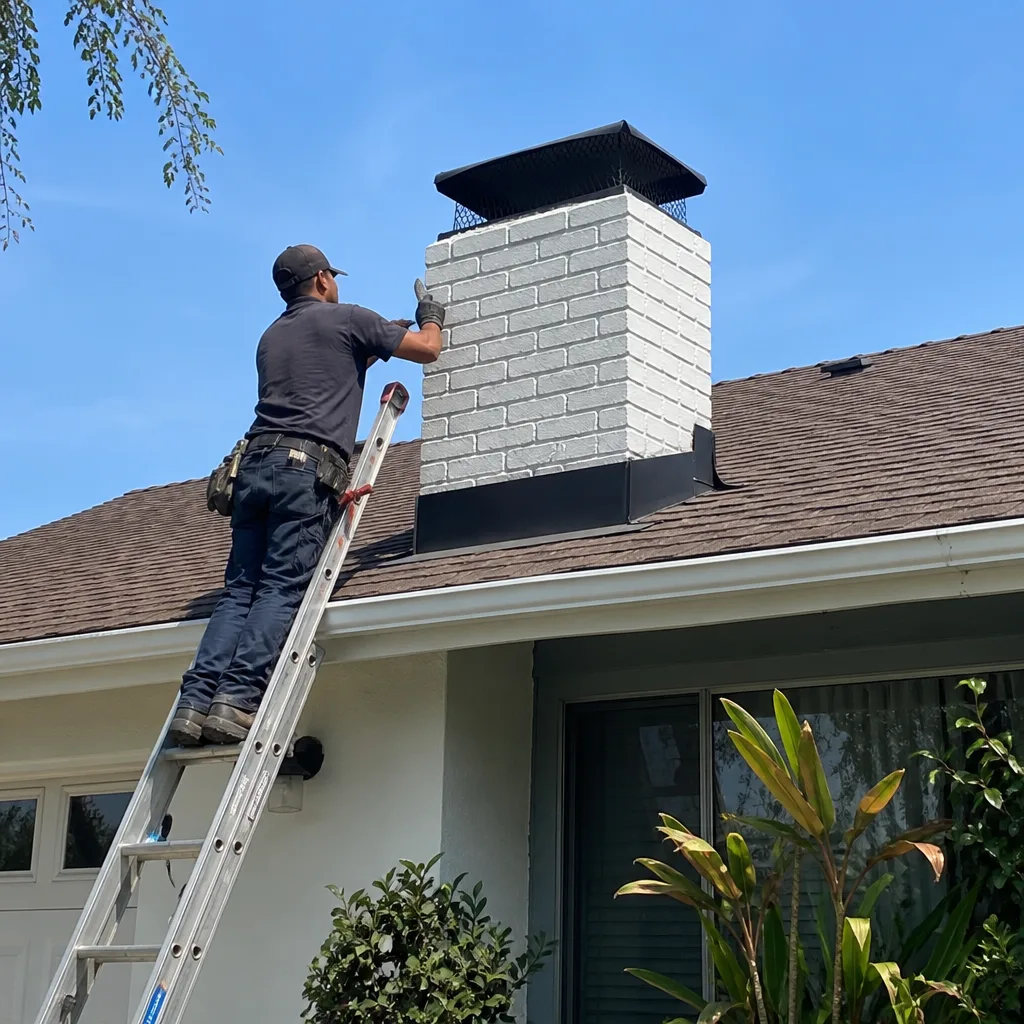 After
AfterAnimals or Birds Nesting in the Chimney
If you’re hearing scratching, rustling, chirping, or flapping sounds coming from your fireplace or chimney chase, there’s almost certainly a bird or animal that has found its way in. This happens when a chimney cap is missing, damaged, or was never installed – and once something moves in, the flue is blocked until the nest is removed and the entry point is sealed. A blocked flue is a carbon monoxide and chimney fire risk, so the fireplace needs to stay off until the situation is resolved.
The most common tenants are chimney swifts, starlings, squirrels, and raccoons. Each one creates a different kind of obstruction. Nesting material – twigs, leaves, fur, feathers, and debris – packs into the flue and reduces or eliminates the draft your fireplace needs to vent safely. Smoke backs up into the house, combustion gases have nowhere to go, and the nest itself is a ready-made fire hazard sitting inches from your firebox. It’s a situation that gets worse the longer it’s left alone.
Why It Happens
Missing or Damaged Chimney Cap
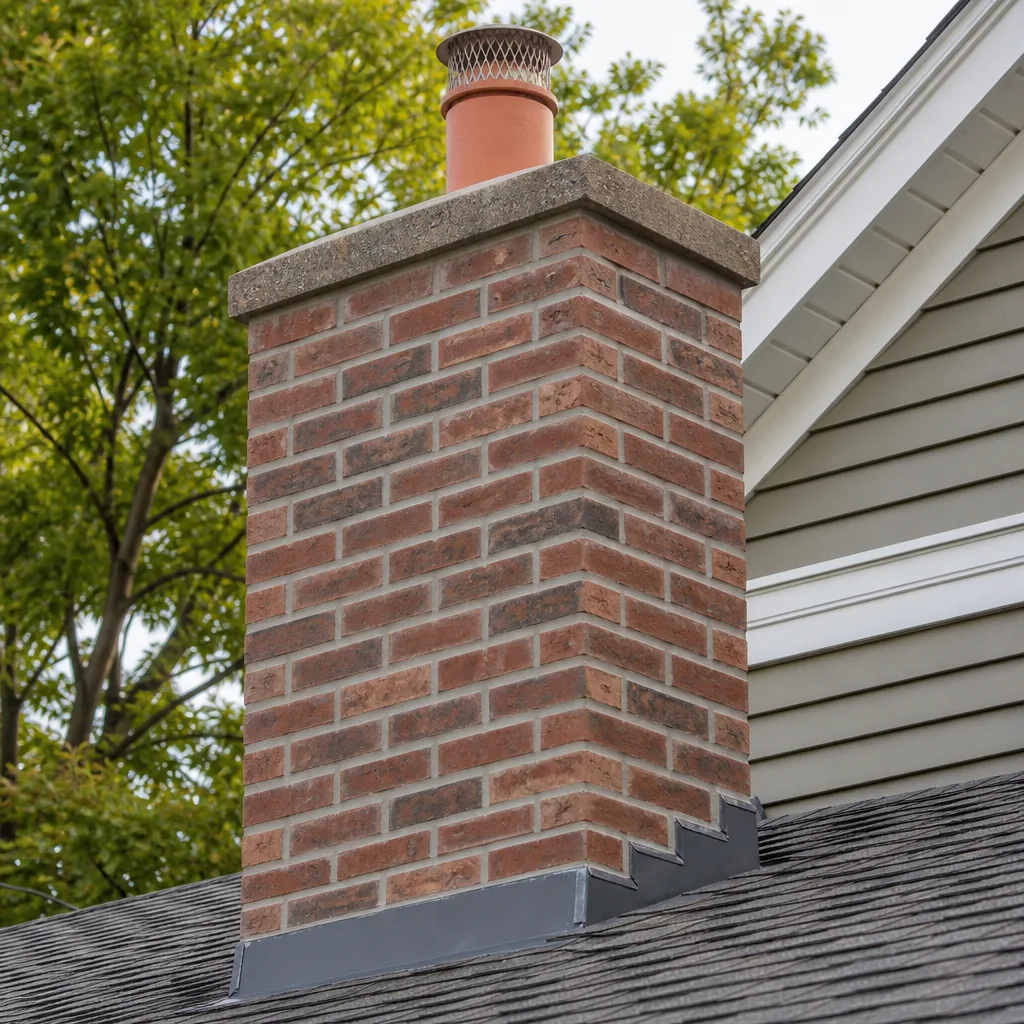
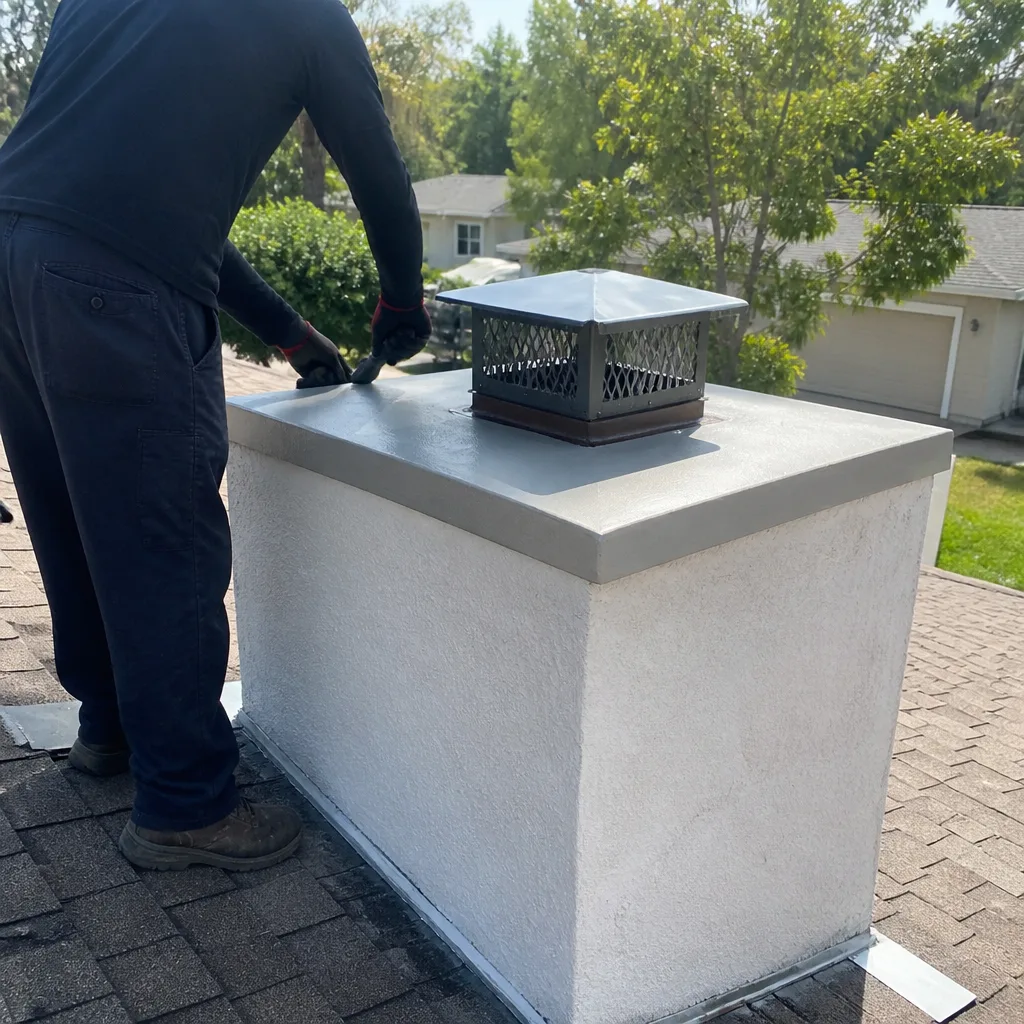
A chimney cap is the single barrier between the open sky and your flue. When a cap is missing entirely, rusted through, or knocked loose by wind or ice, the flue is an open invitation. If you can safely look up at the top of your chimney from the ground and see no cap – or see one that’s sitting crooked or has obvious gaps – that’s almost certainly how something got in. Caps fail more often than most homeowners expect, and a lot of older homes were built without one at all.
Deteriorated or Absent Damper
Your throat damper sits just above the firebox opening and is supposed to seal the flue when the fireplace isn’t in use. Dampers warp, rust, and lose their seal over years of heat cycling. A damper that no longer closes flat leaves a gap that’s more than enough for a bird or small animal to slip through and drop down into the smoke chamber. If you push the damper handle to the closed position and still hear wind noise or feel a draft, the seal is probably gone.
Chimney Swift Nesting (Protected by Federal Law)
Chimney swifts are small migratory birds that have nested in chimneys for centuries, and they are federally protected under the Migratory Bird Treaty Act. If the sounds you’re hearing are a high-pitched chattering or whirring noise – especially in late spring or summer – swifts are the likely culprit. You cannot legally remove an active swift nest until the birds have migrated. A chimney professional can confirm swifts are present, advise you on the legal timeline, and schedule the sweep and cap installation for after migration season ends.
Raccoon or Squirrel Entry Through a Deteriorated Crown
The chimney crown is the concrete or mortar cap that covers the top of the masonry chimney, surrounding the flue liner. When it cracks – which happens as mortar weathers and settles – it creates gaps wide enough for raccoons and squirrels to push through. These animals are strong enough to displace a loose cap. If you’re hearing heavier thumping sounds, not just scratching, or if you’ve found animal tracks or droppings near the fireplace, a deteriorated crown combined with a weak or missing cap is the most likely path of entry.
What to Do Right Now
- Stop using the fireplace immediately. A nest in the flue means the flue is at least partially blocked. Lighting a fire with a blocked flue can push smoke and carbon monoxide back into the living space, and nesting material can ignite.
- Close the damper if it closes. Push the damper handle to the sealed position to keep any animal from dropping further into the firebox. If it won’t seal fully, place a piece of plywood or cardboard against the firebox opening as a temporary barrier.
- Do not attempt to remove a nest or animal from the roof yourself. Ladder work on a roofline is a serious fall hazard, and a cornered animal – especially a raccoon – can be aggressive. Leave that work to a technician with the right equipment.
- Take a photo of anything visible from inside the firebox. If you can see nesting material from the firebox opening without climbing or reaching in, photograph it. That image helps the technician understand the scope before they arrive.
- Note when the sounds are loudest. Morning and dusk activity points to birds. Nighttime scratching often points to raccoons. That detail helps identify the animal and the likely entry point before the inspection begins.
How We Fix It
When your local Flint Chimney Sweep technician arrives, the first step is a full chimney inspection – usually including a camera run through the flue – to see exactly what’s in there, where it is, and how the animal got in. Nothing is assumed. The technician confirms the type and location of the obstruction before any work starts.
From there, the job almost always involves a professional chimney sweep to clear the nesting material, debris, and any buildup from the flue walls, followed by repair or installation of a correctly sized chimney cap to close the entry point. If the crown is cracked or the damper is no longer sealing, those repairs are quoted separately and clearly, in writing, before anything is touched.
Every repair is covered by the 365-Day Done Right Promise – a written guarantee valid for a full year from the service date. If a covered repair fails in that time, we come back and make it right at no charge. The written price is delivered before any work starts, without exception. Most jobs of this type are completed in a single visit.
Frequently Asked Questions
It should not wait. A nest in the flue is a real fire hazard – dry nesting material sits close to the firebox, and a single spark can ignite it. Beyond the fire risk, a blocked flue can force carbon monoxide back into the living space if the fireplace or any connected appliance is used. Keep the fireplace off until the flue is cleared and inspected, and call (830) 251-4560 to get someone out.
Your local Flint Chimney Sweep team works to schedule promptly, and the phones are answered by a live person around the clock – not a voicemail system, not a callback form. Call (830) 251-4560 and talk to someone right now about getting on the schedule. Availability varies by location and season, so the best way to find out is to call.
Some homeowner’s policies cover animal intrusion damage to the chimney structure, but the sweep itself is generally not a covered claim. The right call is to contact your insurance provider directly with specifics. Your local Flint Chimney Sweep team can provide a written scope of work and itemized pricing that you can submit to your insurer if needed.
Chimney swifts are protected under the Migratory Bird Treaty Act, and an active nest cannot be removed during the nesting season. The fireplace has to stay off for that period. Once the birds migrate in late summer or fall, the nest can be swept, the flue inspected, and a chimney cap installed to prevent a return the following year. Call (830) 251-4560 and we’ll walk you through the timeline for your situation.
Get It Fixed
A blocked flue is not something to light a fire above. Call (830) 251-4560 – a live person answers around the clock – and your local Flint Chimney Sweep team will get you scheduled, walk you through what to expect, and put the price in writing before any work starts.
Written by Hank Delano, Owner at Flint Chimney Sweep, part of the Garrison Partners family of chimney service companies serving communities across the country since 2002.
What Our Customers Say
"Very respectful, wore boot covers, laid drop cloths. Left no soot."
- Jan S."Level 2 inspection before we bought the house. Report was detailed and saved us from a bad surprise."
- Archie M."Full inspection with a camera. Found a cracked flue tile and quoted the repair clearly. Did not push."
- Lydia C.