
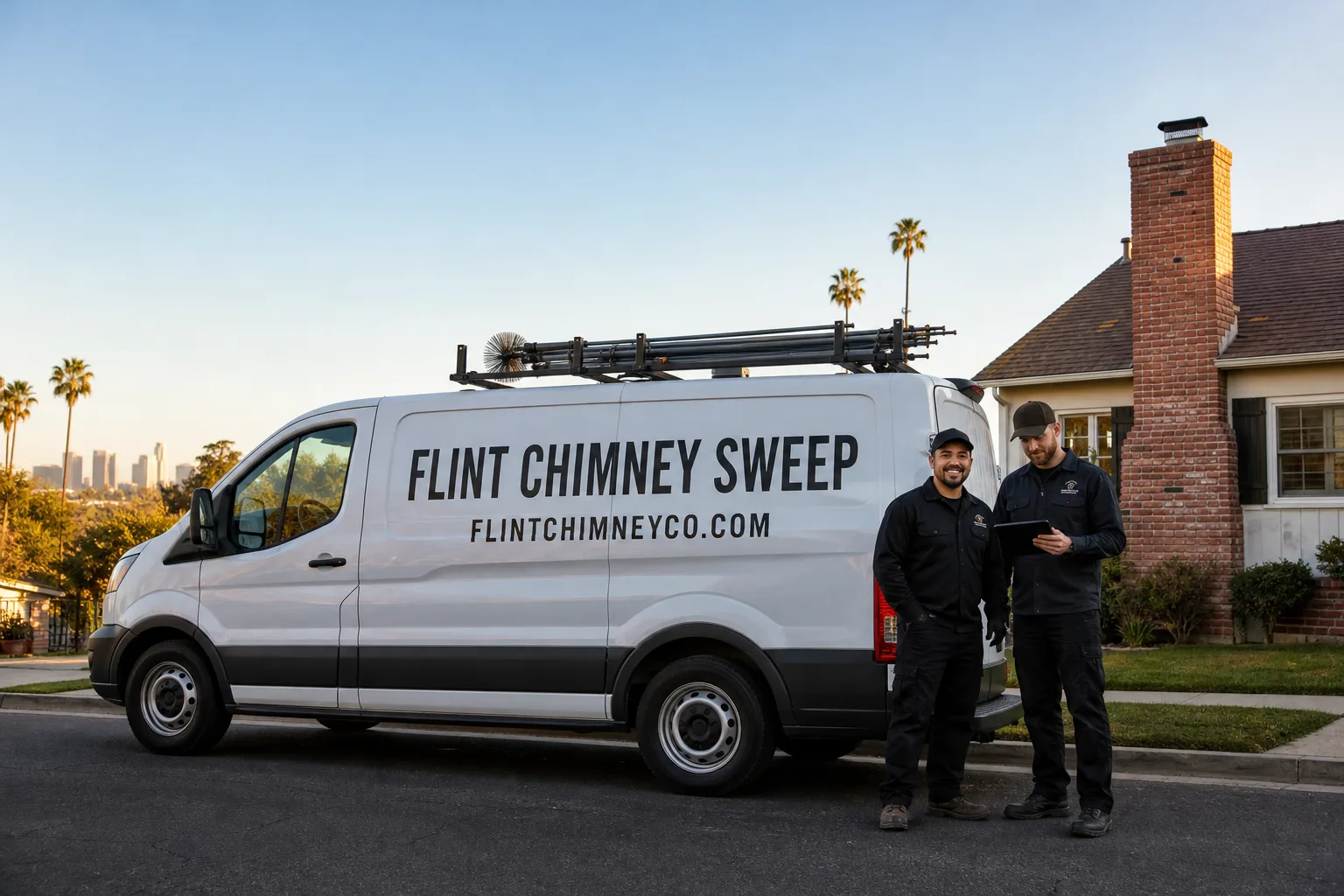
Level 1 sweep and inspection to the NFPA 211 annual standard - flue, crown, cap, and flashing checked and photographed
Chimney sweep logs do not sweep chimneys. They loosen some creosote - which then falls where a brush and vacuum still have to collect it.
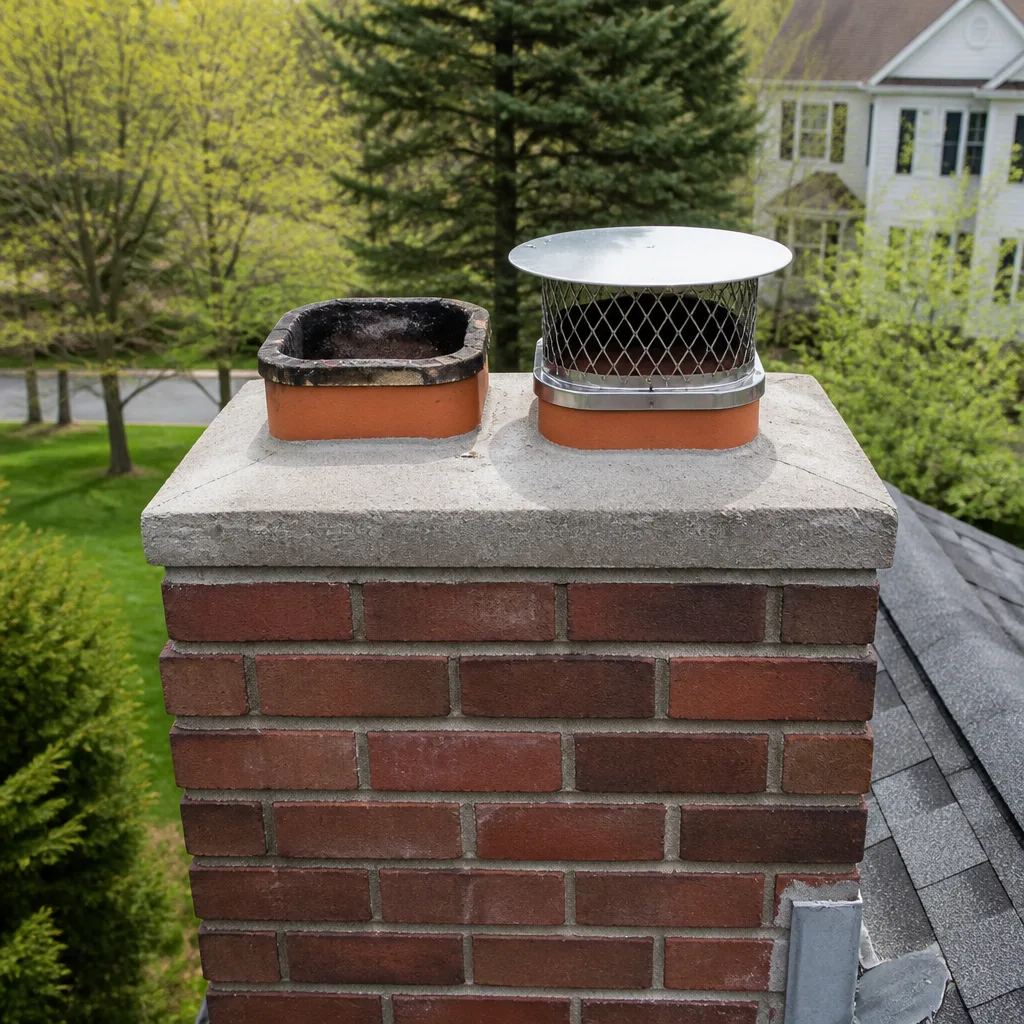
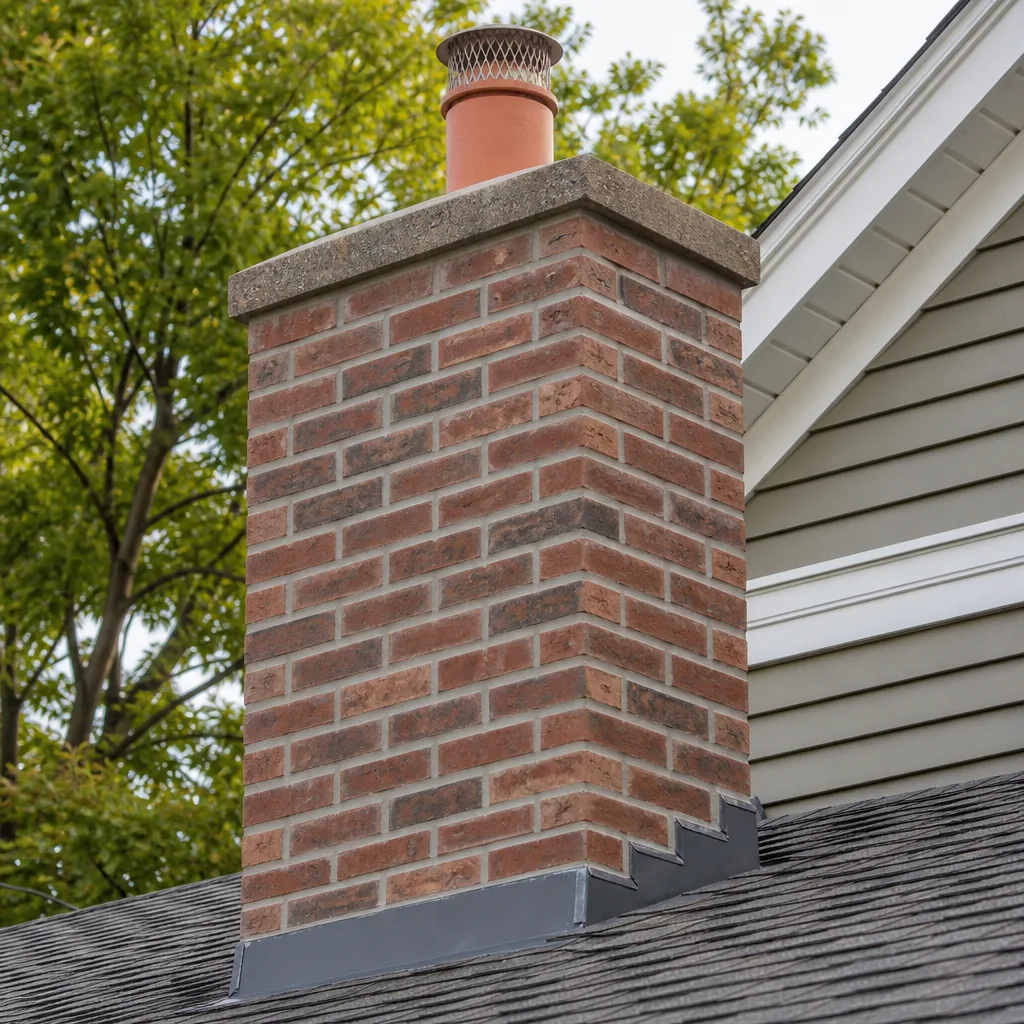
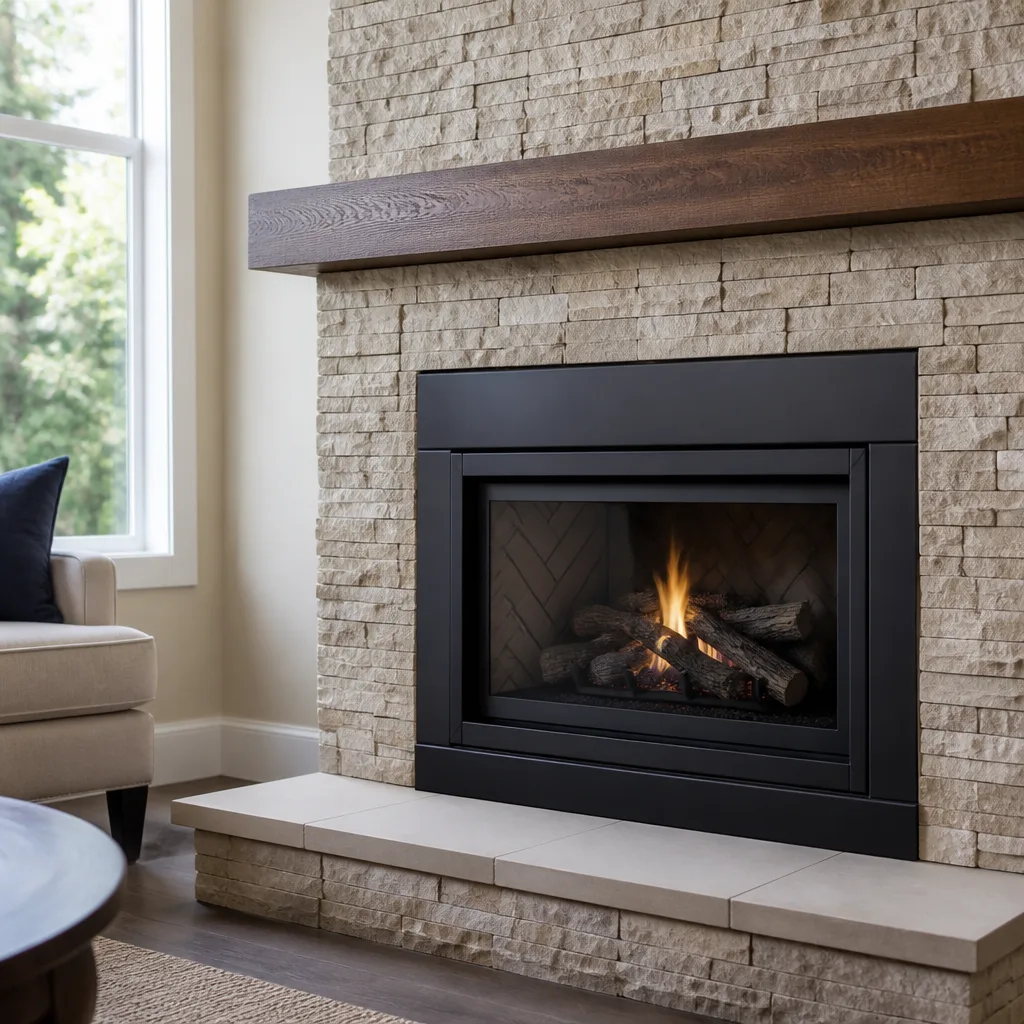
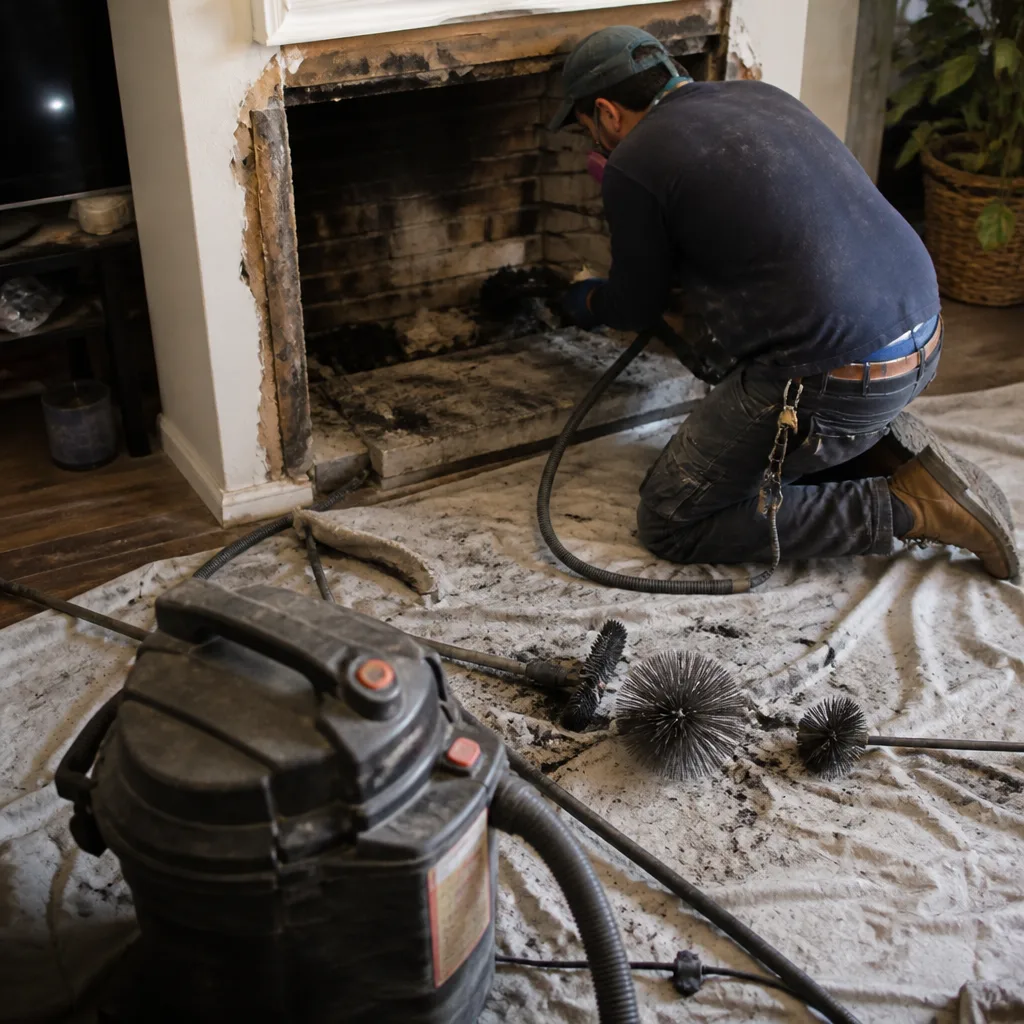 Before
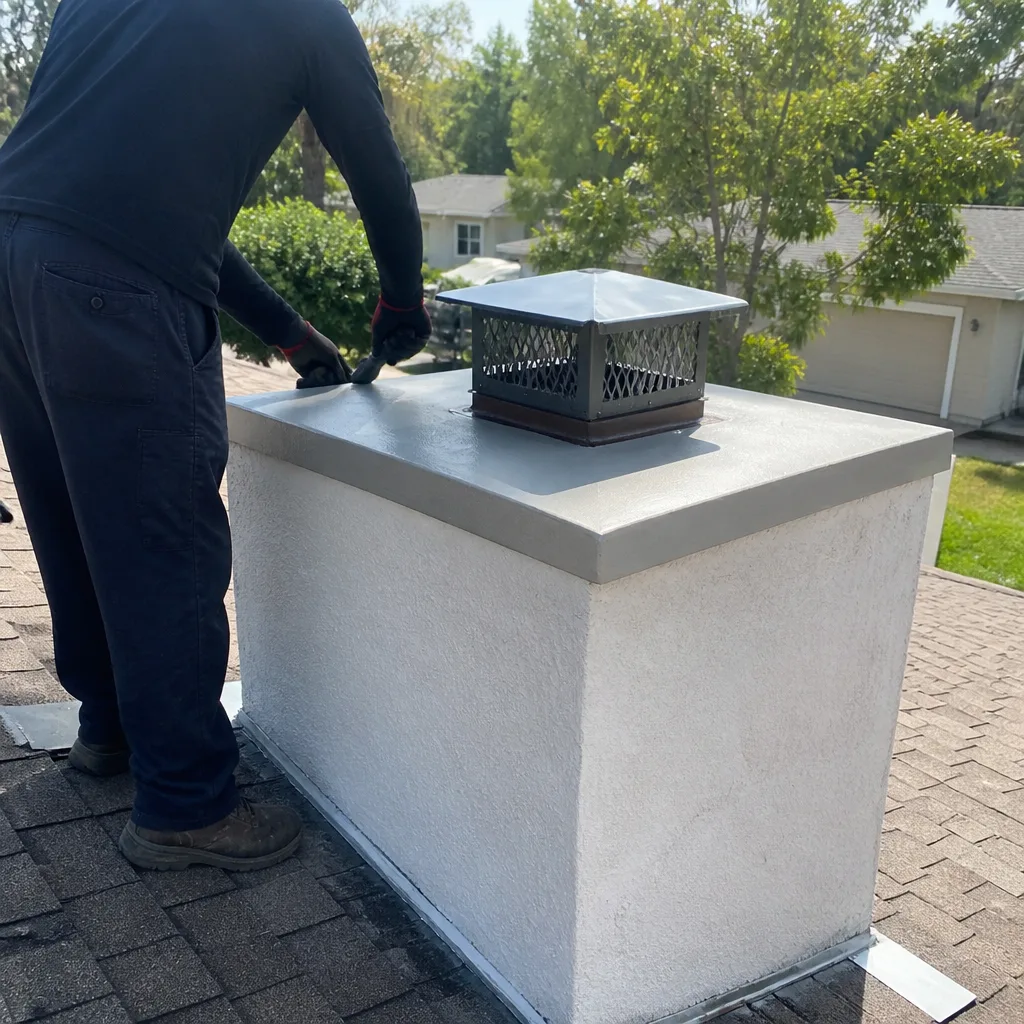 After
After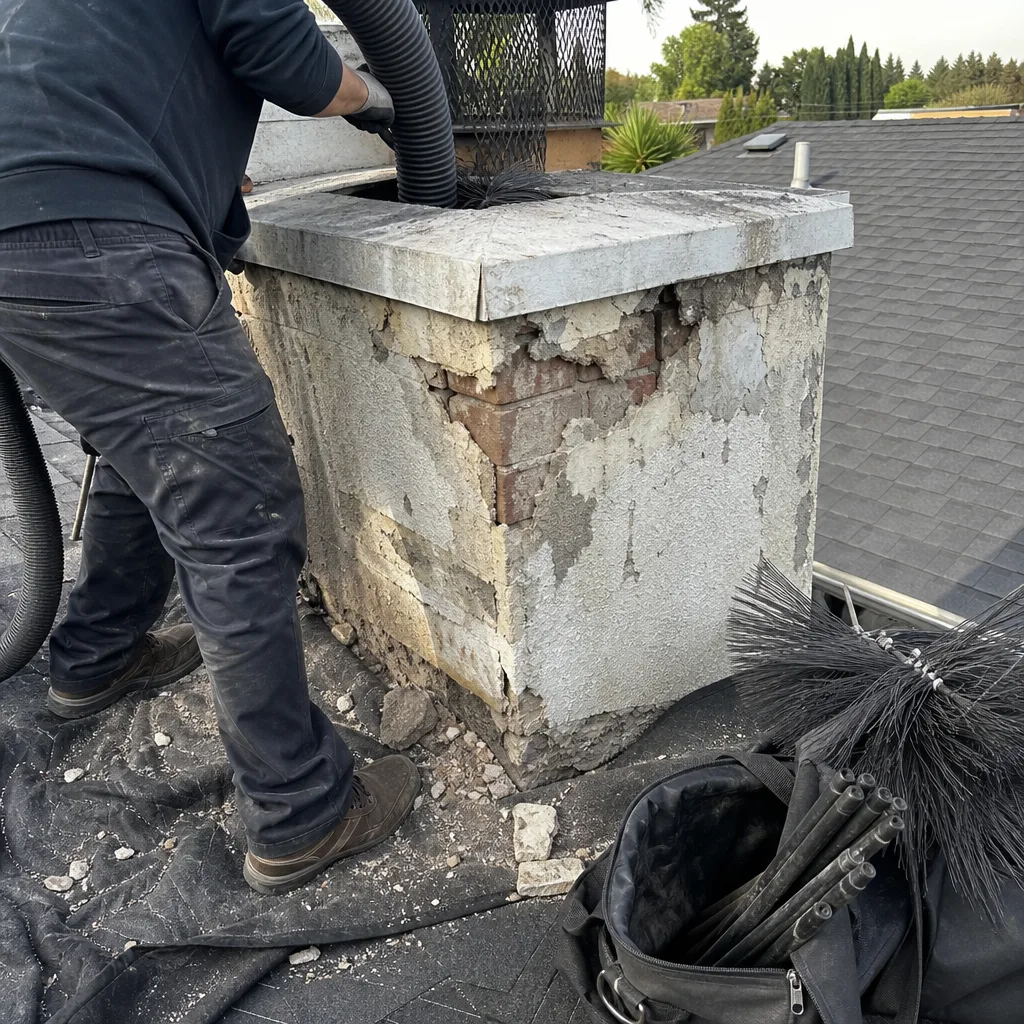 Before
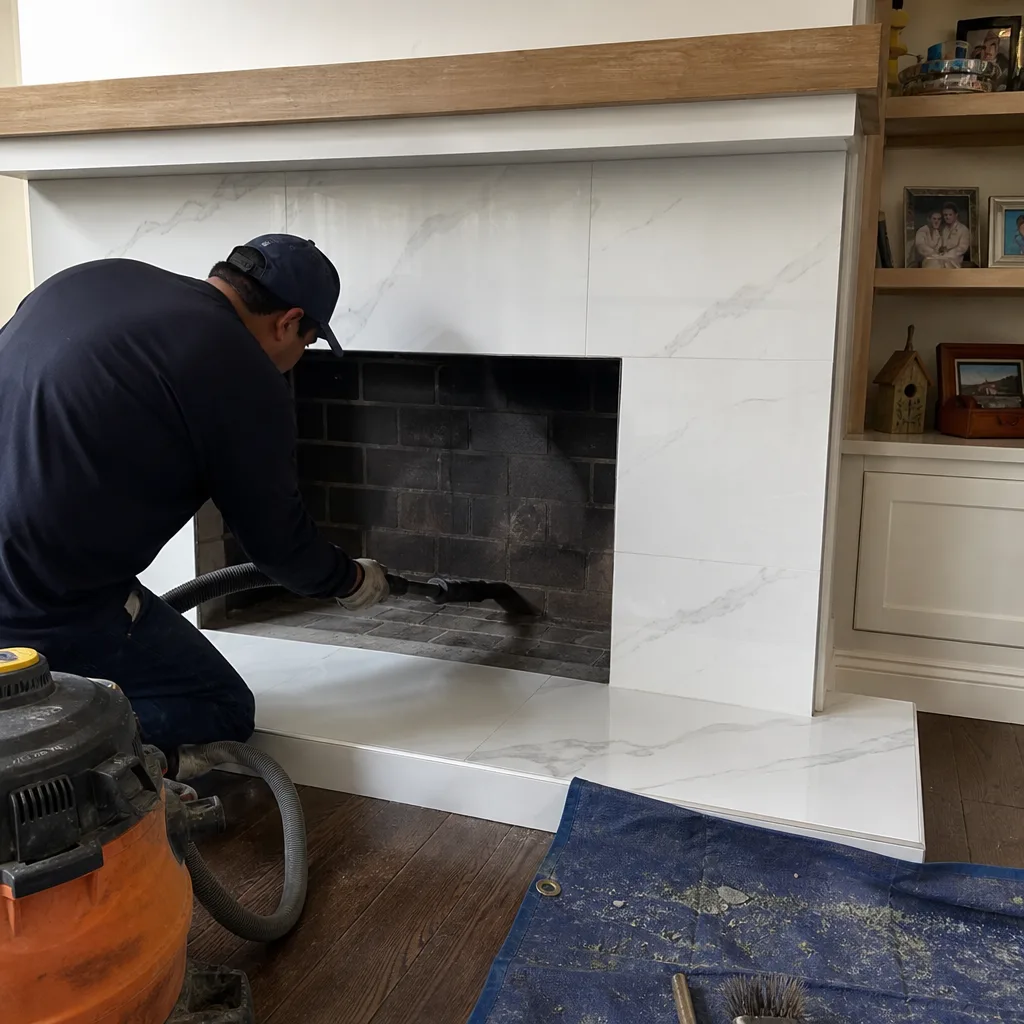 After
After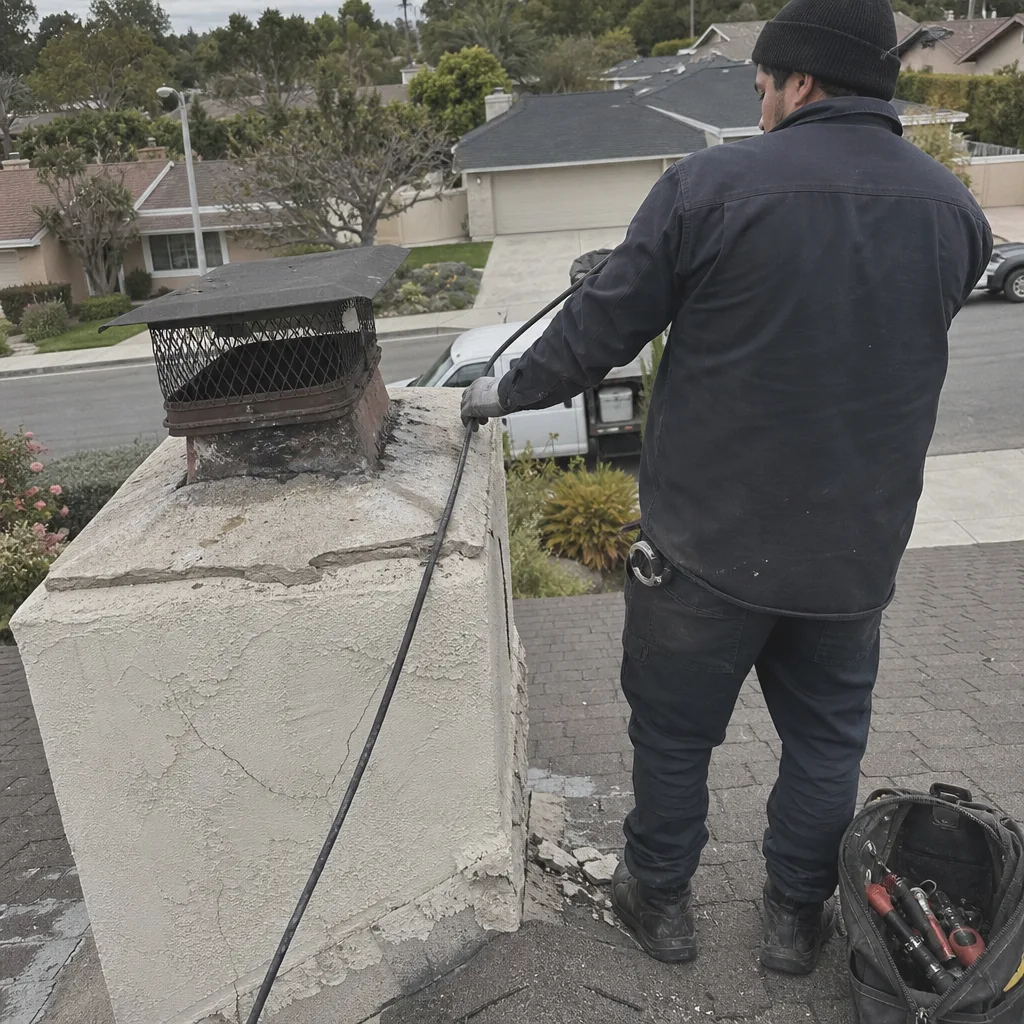 Before
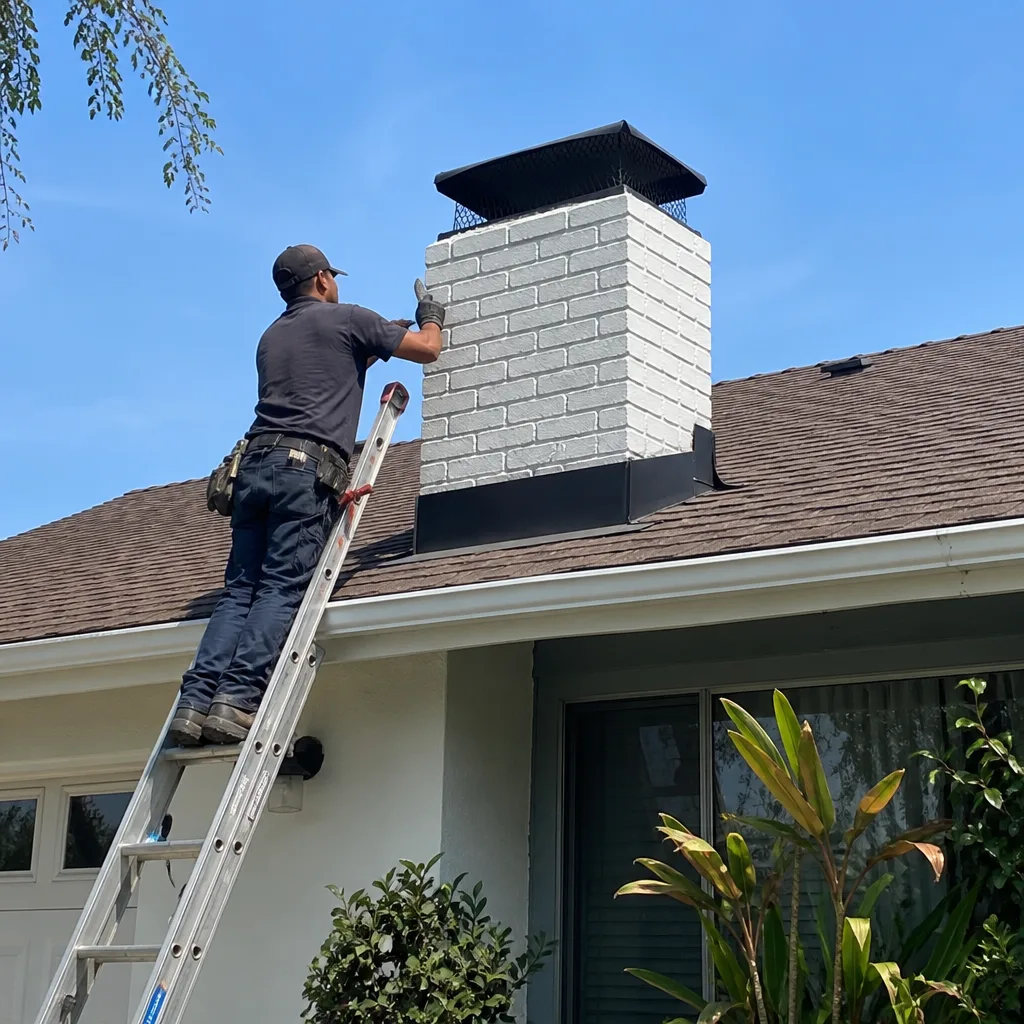 After
AfterFast, Reliable Chimney Inspection Across Coconut Creek
A standard chimney inspection in Coconut Creek runs $99 – $249 depending on the level, and a Level 2 inspection with a camera scan typically lands between $249 – $399. Most inspections take 45 – 90 minutes on site, and you’ll get a written photo report before the tech leaves your driveway. If you live anywhere in Coconut Creek, from Winston Park down to the Sawgrass corridor, we can usually get a tech to your door within a few business days. Call (830) 251-4560 and you’ll reach a live person, not a voicemail tree.
We are Chimney Inspection in Coconut Creek specialists, and we’ve worked enough homes here to know that the houses off Lyons Road and along the creek itself do not behave like the older brick chimneys down in Fort Lauderdale. Newer builds, factory-metal fireplaces, rusted liners, failed attic flashing. Different problems, different inspection approach.
Why Flint Chimney Sweep Is Coconut Creek’s Preferred Chimney Inspection Company
Flint Chimney Sweep has been inspecting and repairing chimneys since 2002 as part of the Garrison Partners family. That’s over two decades of documented work, and every repair we make carries a written guarantee valid for one full year. If a covered repair fails in that window, we return at no charge. No argument, no re-quoting, no phone tag. That guarantee is what separates us from the guy with a brush and a ladder who books a “visual check” for $79 and then emails you a one-paragraph report with no photos.
Every tech who shows up at a Coconut Creek home is background-checked and uniformed. You’ll know who is walking through the door before the door even opens, because dispatch confirms the name. Phones are answered by a live person 24 hours a day, seven days a week, including weekends and holidays. If you call at 10:30 on a Sunday night with a question about a leak, a human picks up.
Local reputation matters more than anything we could write about ourselves. Homeowners in the Township and Country Woods neighborhoods have hired us for Level 2 inspections after getting burned by crews that quoted $149 over the phone and then “discovered” $1,100 of urgent work at the door. We put the price in writing before any work starts. The number you approve is the number you pay. That’s The Garrison Code: document everything, price everything, stand behind everything.
Level 2 Chimney Inspection in Coconut Creek
A Level 2 Chimney Inspection in Coconut Creek is the right call when you’ve bought a home, changed fuels, had a chimney fire, or gone more than a year or two without a real look inside the flue. It includes everything in a Level 1: accessible portions of the firebox, damper, smoke chamber, and exterior, plus a camera scan of the full flue liner from top to bottom. We also check the attic side of the flashing and the chimney crown, because in Coconut Creek’s humidity and afternoon storm cycle, that’s where water gets in.
The camera is the part that matters most. A visual peek up the flue with a flashlight tells you almost nothing about the middle of the liner. A camera shows pitting, rust-through, separated joints, and the condition of the smoke chamber in real time. We record the whole scan and then walk you through the findings with photos pulled directly from the video. If we recommend a repair, you’ll see the exact frame that justifies it.
What you’ll see in the report
Every Level 2 inspection ends with a written report: photos, measurements of any buildup we found, notes on liner condition, and a plain-English recommendation on what needs work now and what can safely wait. No vague “concern noted” language. If the liner has 12 inches of rust pitting, the report says so and shows you the frame.
When Coconut Creek homeowners schedule one
Most of our Level 2 work in Coconut Creek comes from three situations: a real estate transaction closing within 30 days, a homeowner who just bought a place and wants a baseline before burning season, or a leak that has already stained the ceiling near the fireplace. The first two are predictable, and booking a week out is usually fine. The leak call usually comes after a heavy rain, when the ceiling paint has already bubbled.
Chimney Leak in Coconut Creek
A chimney leak in Coconut Creek is almost always traced to one of three points: the crown, the step flashing, or the liner cap. South Florida’s afternoon thunderstorms dump an inch of rain in 20 minutes, and if the flashing seal has failed where the chimney meets the roofline, water will track down the side of the chimney and into the attic before you ever see it in the living room. Our inspection starts with a camera up the inside and a physical check of the attic side of the flashing, because that’s where the roofers with a caulk gun never look.
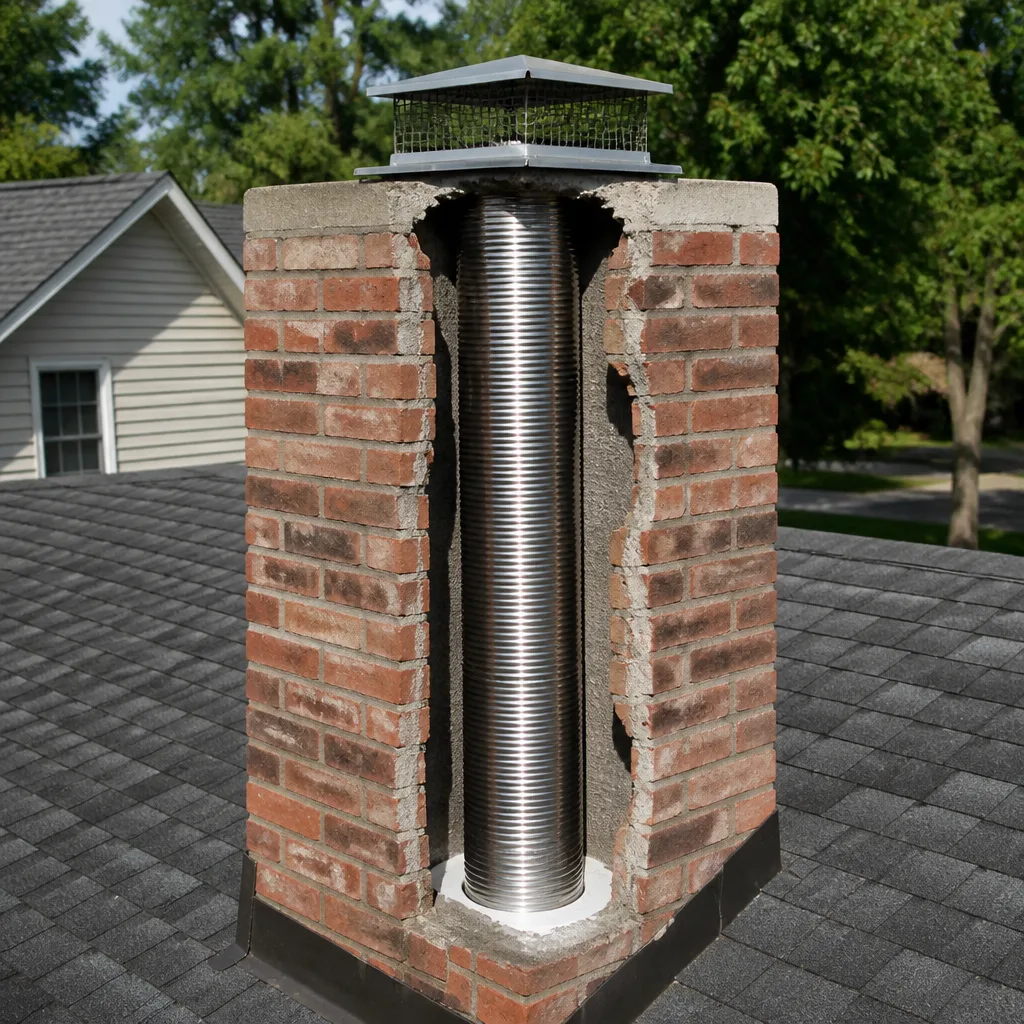
Water intrusion is the dominant failure mode in Coconut Creek housing stock. Much of the city was built from the 1980s through the 2000s with factory-metal fireplaces rather than masonry brick. Those units have thinner liners than a traditional clay tile system, and once the cap seal fails or the crown cracks, the liner begins to rust from the inside out. A rusted-through factory liner is not a cosmetic issue. It is a path for carbon monoxide to enter the living space through the chase.
Signs that point to flashing failure
Staining on the ceiling directly around the fireplace chase, peeling paint on the chimney exterior below the roofline, or a musty smell near the firebox after a rain. These point toward the flashing, not the liner. The fix is often resealing or replacing the flashing, and it can usually wait a few days if we tarp it. We’ll tell you that plainly.
Signs that point to the liner
If the camera shows rust-through or heavy pitting inside the liner, or if you smell smoke inside the house when the fire is burning, the problem is the liner itself. In Coconut Creek’s humidity, a breached metal liner can degrade quickly once it starts. A liner replacement with a DuraFlex or HeatShield system runs $2,800 – $5,400 depending on the liner length and the chase access. We’ll show you the camera footage and let you decide with your eyes, not our word.
Trusted Brands We Service in Coconut Creek
We install and service products from DuraFlex, HeatShield, Famco, and Copperfield. These are the same brands specified by the trade’s more demanding masons, and we stock common parts locally for Coconut Creek jobs: DuraFlex liner sections, HeatShield joint banding, Famco caps and dampers, Copperfield flashing. If you have an existing system from one of these manufacturers, we can inspect it and source factory components without waiting on a backorder from a distributor three states away. Parts availability is not something every neighbor advertises. For us it is just how we keep a Coconut Creek inspection and repair running on schedule.
Common Chimney Inspection Problems We See in Coconut Creek Homes
- Rusted factory-metal liners in 1980s-2000s builds. The metal liners inside builder-grade fireplaces are thin, and once the cap seal fails, South Florida humidity does the rest. We see pitting and rust-through in liners that have never once carried a heavy creosote load. That is the local signature: water damage, not fire residue.
- Failed attic-side flashing seals. Roofers and painters in Coconut Creek rarely check the chimney flashing from inside the attic. Rain drives sideways off the Atlantic, hits the flashing, and works its way into the chase. The firebox looks fine, so nobody looks up.
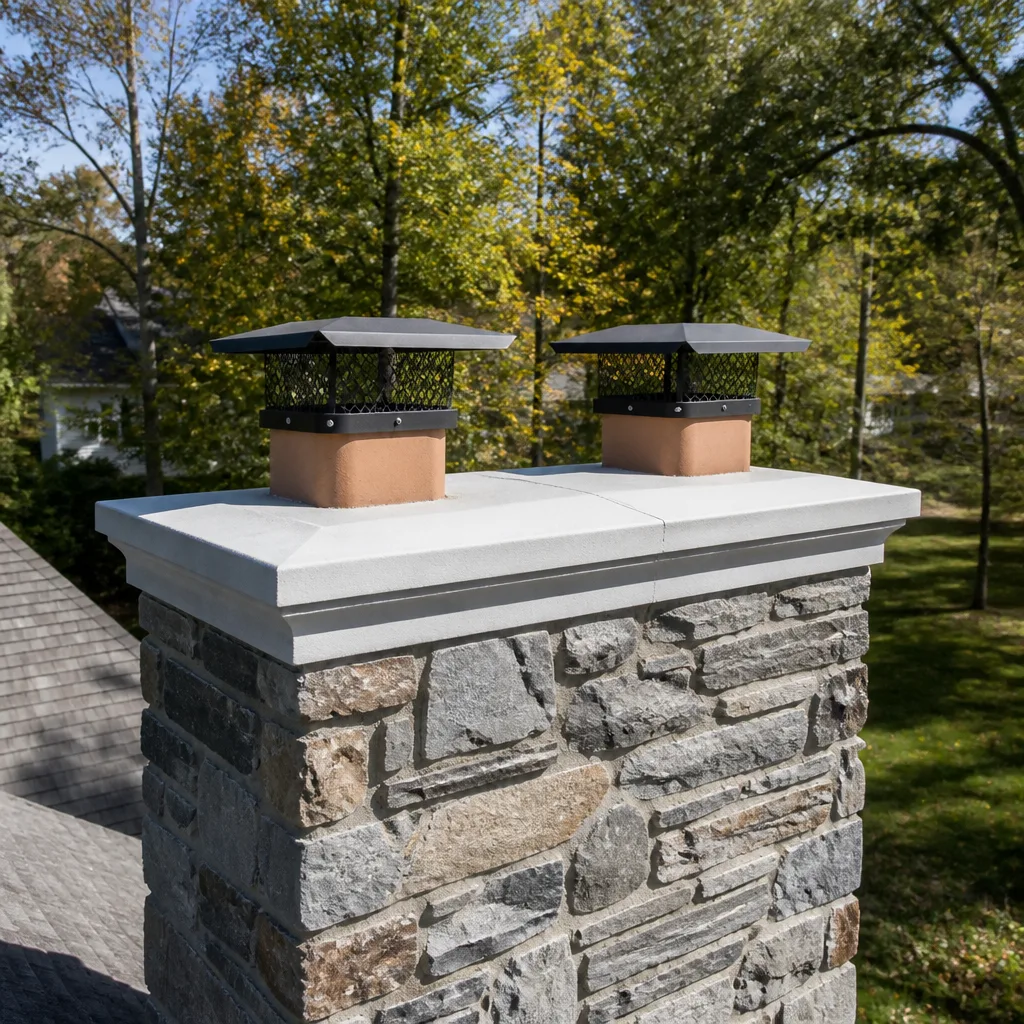
- Improperly sized caps from previous “inspections.” A handyman with a ladder and a generic cap from a big-box store will slap it on without measuring the draft. The cap rusts, the mesh clogs with palm fronds and gecko droppings, and the fireplace starts smoking into the room. We have fixed this in the Banyan Trails area more times than we can count.
- Third-degree creosote in homes that burn unseasoned wood or use the fireplace as the primary heat source in winter. It’s less common here than in the Northeast, but when a Coconut Creek homeowner burns pine from a storm-downed tree, the buildup can hit dangerous levels faster than they expect.
Pricing for Chimney Inspection in Coconut Creek, FL
We Also Serve Cities Near Coconut Creek
Flint Chimney Sweep crews cover all of Coconut Creek and the surrounding cities. If you’re in Margate, Pompano Beach, Coral Springs, or Deerfield Beach, the same Chimney Inspection team runs the same camera scan and writes the same photo report. Dispatch is coordinated from our South FL office, and we schedule by appointment across the whole corridor.
Serving Coconut Creek, FL - Our Local Coverage Area
We’re based in the Coconut Creek area and know this community well. Use the map below to see our service coverage - if you’re nearby, we can almost certainly help.
FAQs About Chimney Inspection in Coconut Creek
No. NFPA 211 requires an annual inspection, but cleaning is only required if the sweep finds measurable buildup. If you burn a handful of fires a year, you may go two or three seasons between cleanings. What the inspection does catch is water intrusion and rust, which happen whether you burn or not. And in Coconut Creek’s climate, water is the thing that ruins a chimney, not creosote. We will tell you if the fireplace can wait another year. That honesty is the whole point. Call (830) 251-4560 with questions.
A Level 2 inspection includes the firebox, damper, smoke chamber, and a full camera scan of the flue liner from top to bottom, plus the attic side of the flashing and the crown. A basic sweep is just brush work in the flue. The camera is what costs money, and it’s what shows you the condition of the liner, which is the part that can kill you if it fails. A proper Level 2 in Coconut Creek runs $249 – $399, and you leave with a photo report you can hand to a real estate agent or insurance adjuster. A sweep alone will never show a rusted liner hiding behind the smoke chamber.
If the leak shows up as a stain on the ceiling around the chimney chase or peeling paint on the exterior, it is almost certainly the flashing or the crown. If you smell smoke inside the house when burning, or the camera shows rust-through on the liner, it’s the liner. The only way to know for sure is to put a camera up the flue and physically check the attic side of the flashing. We do both on every inspection. We’ll show you the video, and then we’ll tell you which can wait. Estimates are free at (830) 251-4560.
Third-degree creosote is a hardened, tar-like glaze that forms when flue temperatures stay low and the wood burns incompletely. It is highly concentrated fuel, and it is the type of creosote most likely to sustain a chimney fire. A normal brush sweep cannot remove it, which is why dangerous buildup is sometimes missed by a low-bid crew that just runs a wire brush through and stamps the work order. We identify it on camera and use a chemical creosote treatment followed by a follow-up visit to remove it. This is more common in Coconut Creek homes where someone burned wet storm wood, not in homes that burn the fireplace twice a year for ambiance.
If the fireplace is unused and there’s no sign of water, an inspection can usually wait a few months. That’s an honest answer. What should not wait: ceiling staining near the chase, a musty smell after rain, rust flakes falling into the firebox, or smoke entering the living space when the fire burns. A rusted-through factory liner can leak carbon monoxide, which has no smell and no color. Same goes for visible cracks in the crown or missing caps. If you see any of those, call (830) 251-4560 and we’ll schedule a camera inspection without the scare tactics.
Written by Hank Delano, Owner at Flint Chimney Sweep, part of the Garrison Partners family founded in 2002.