

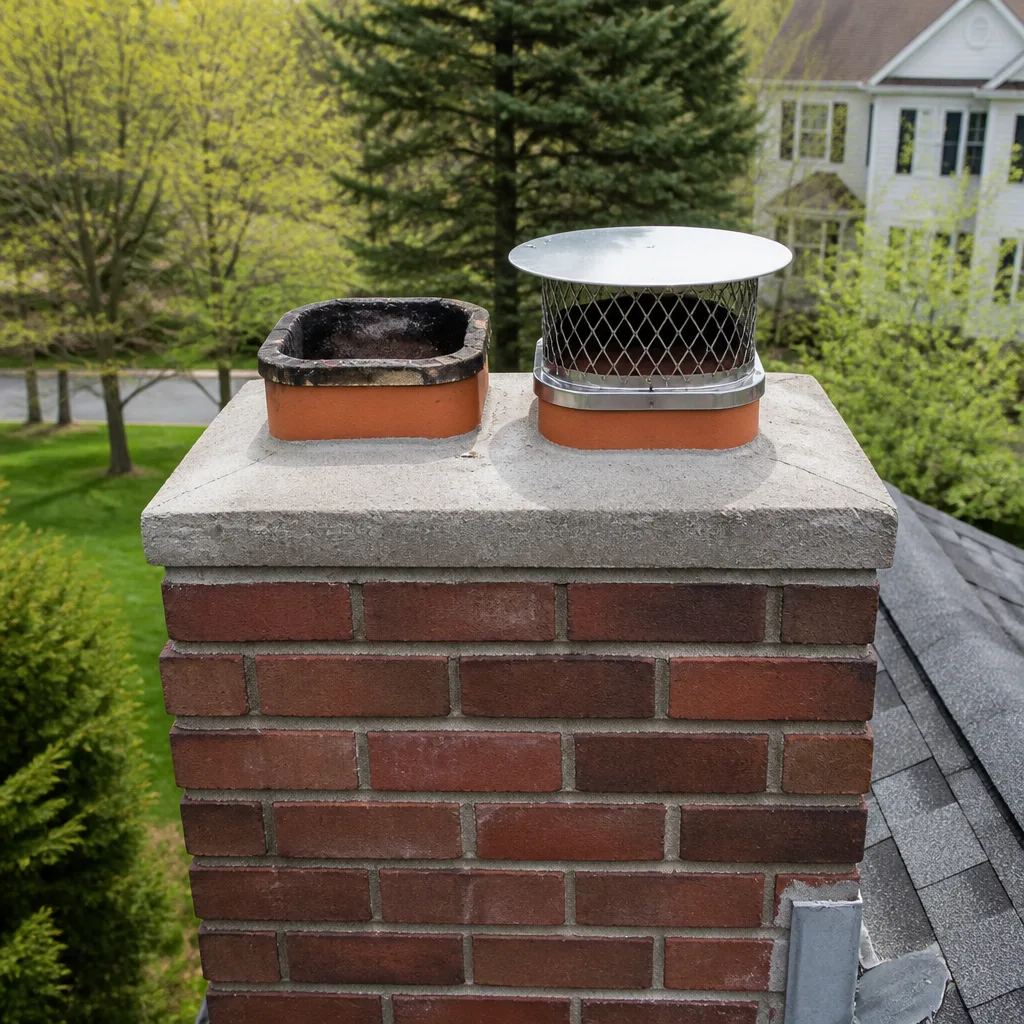
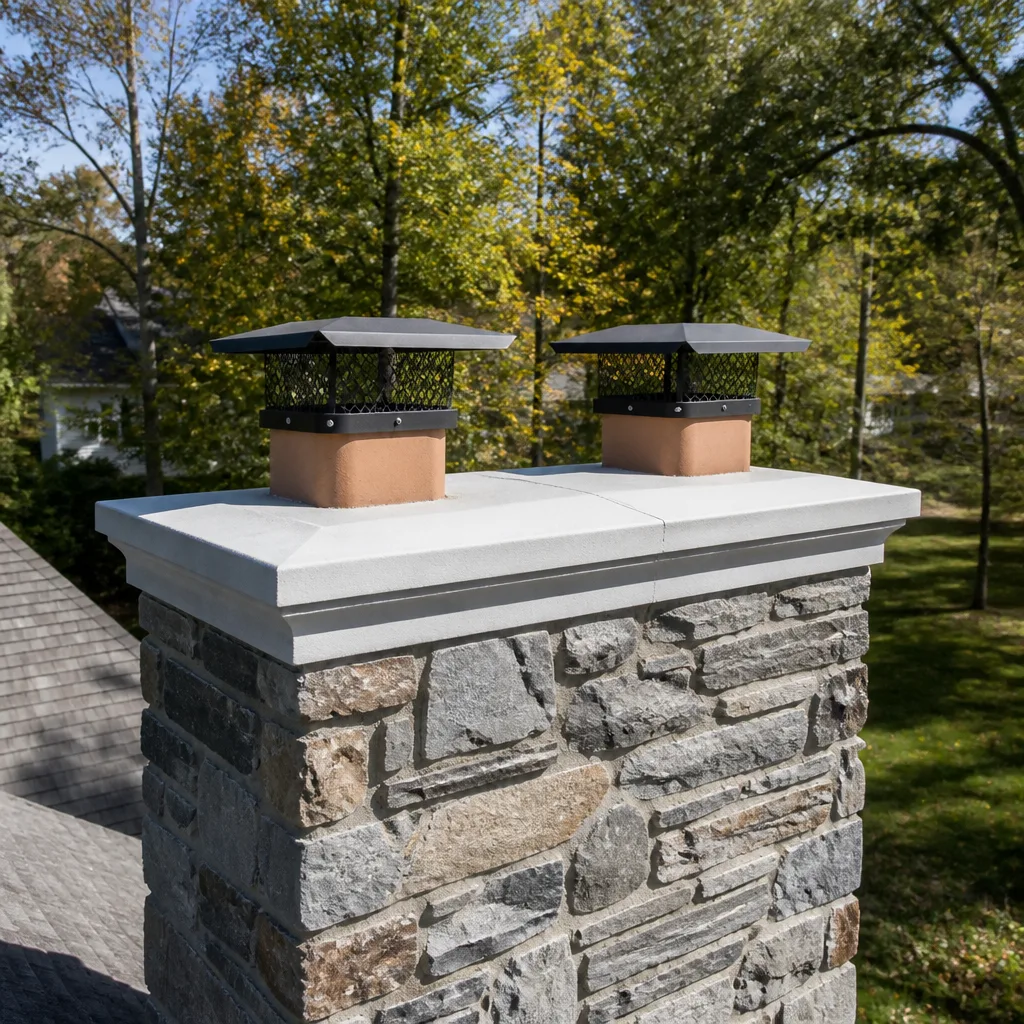
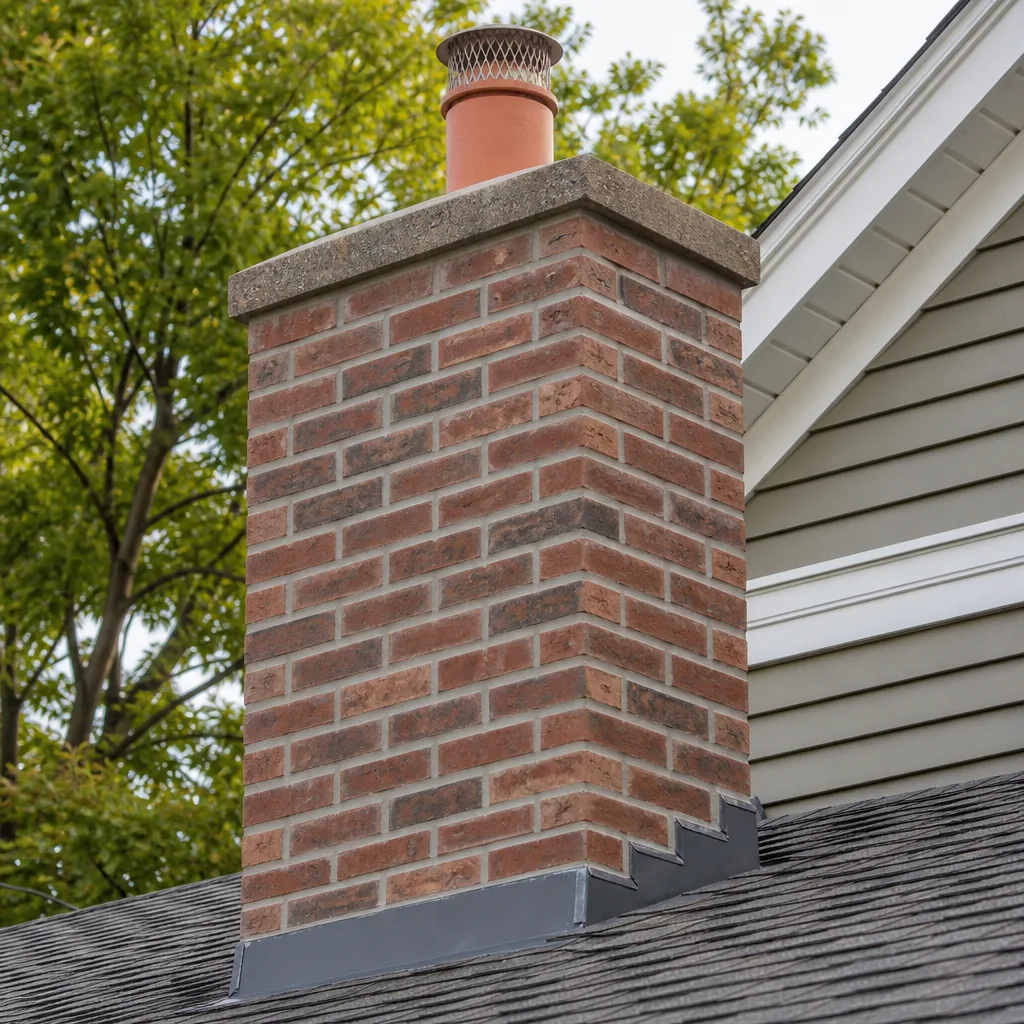
Level 1 sweep and inspection to the NFPA 211 annual standard - flue, crown, cap, and flashing checked and photographed
Chimney sweep logs do not sweep chimneys. They loosen some creosote - which then falls where a brush and vacuum still have to collect it.
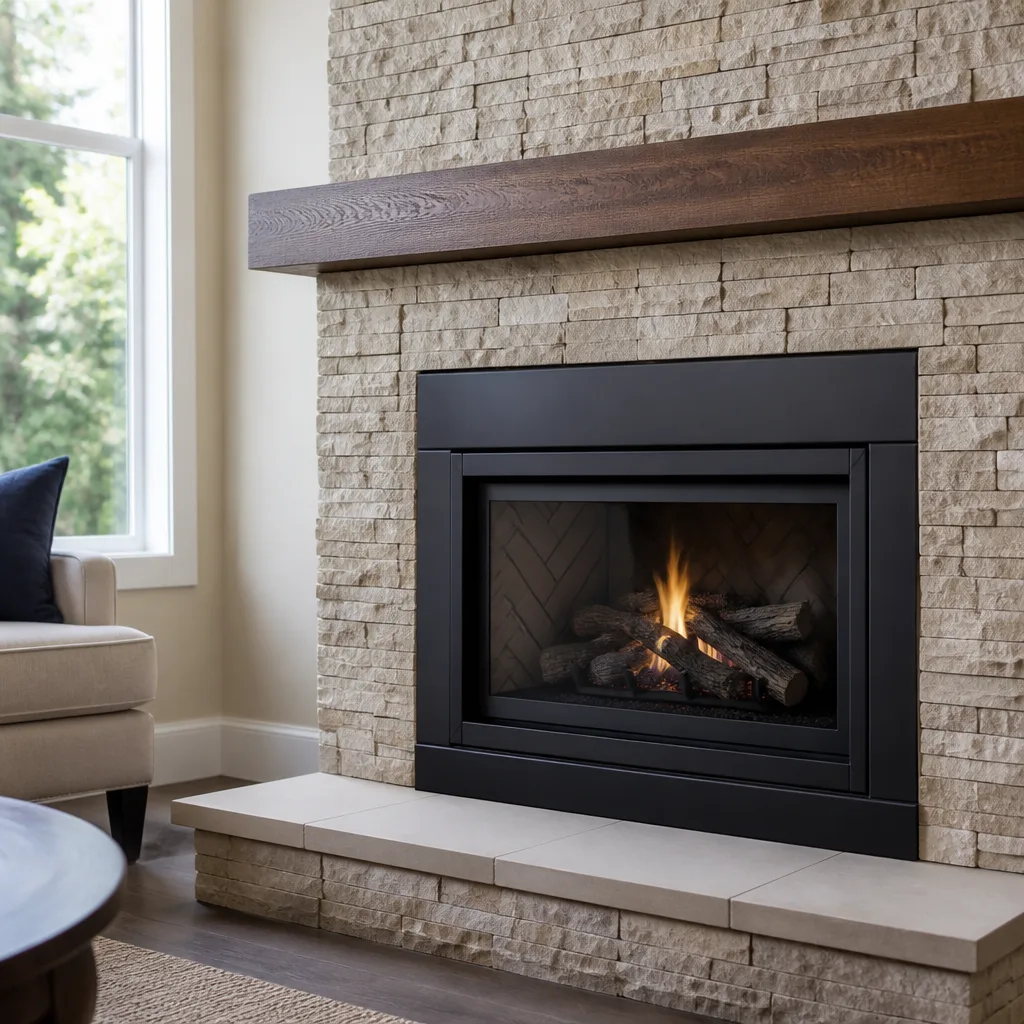
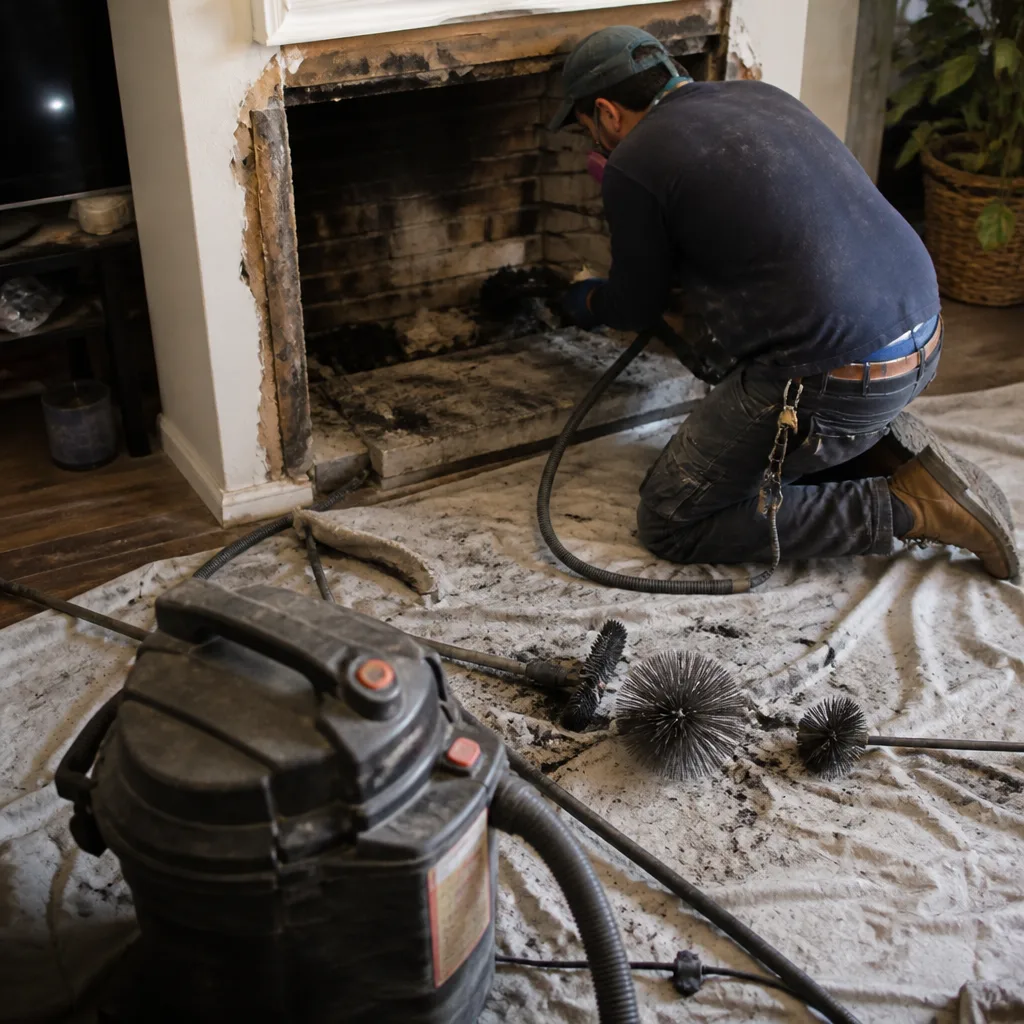 Before
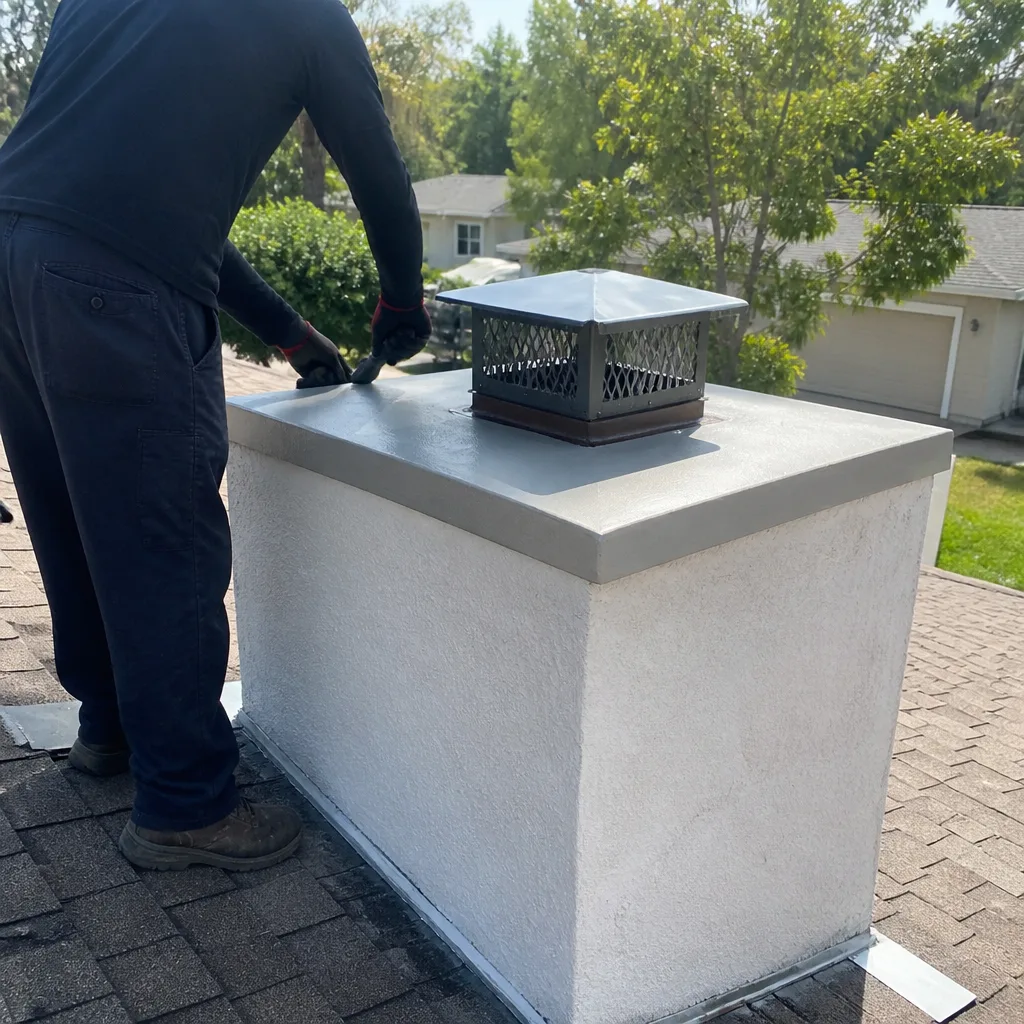 After
After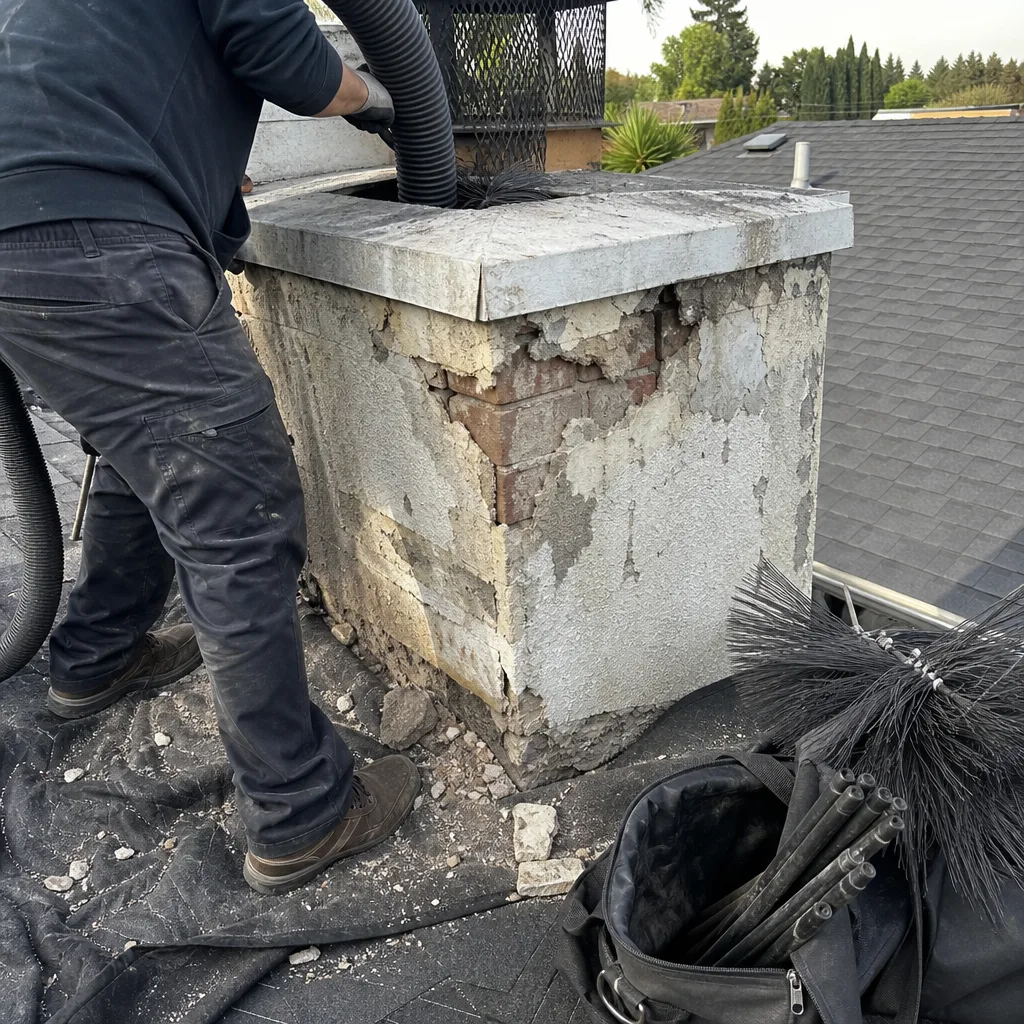 Before
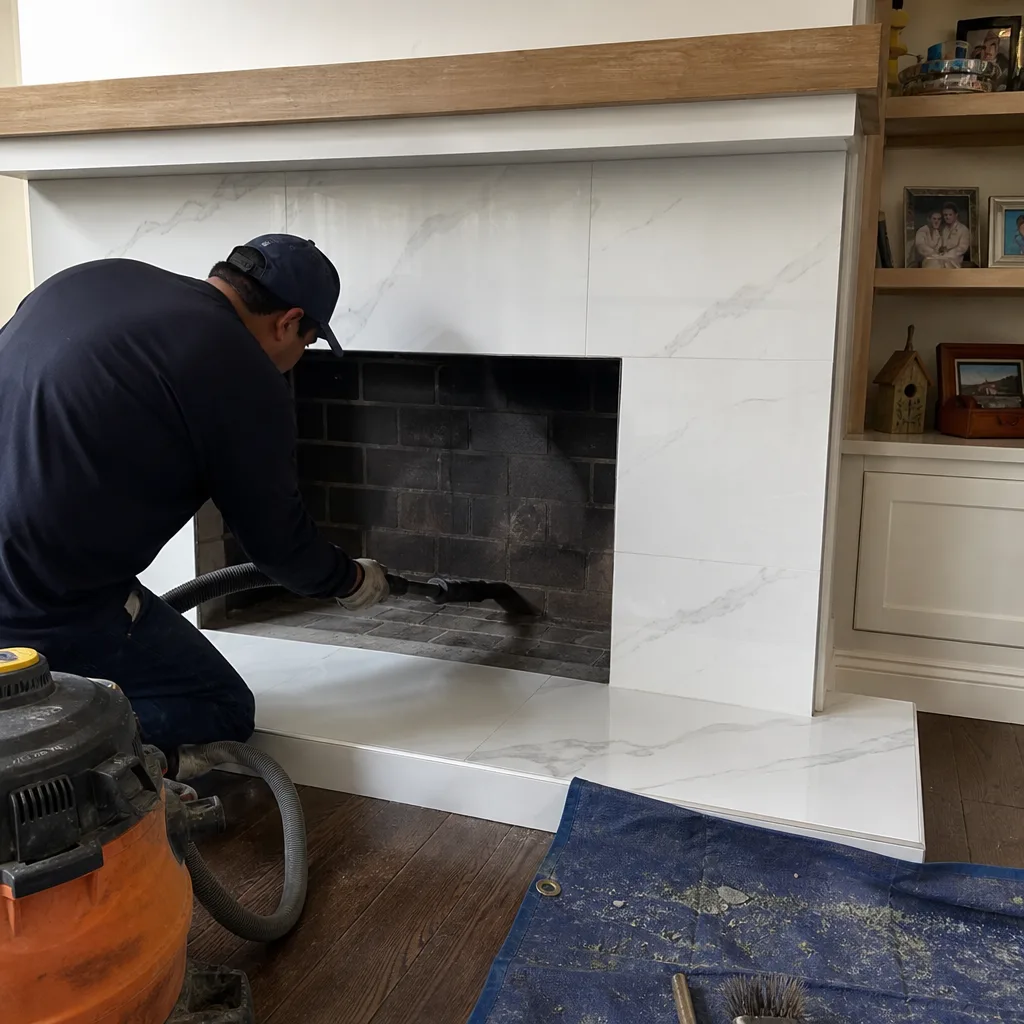 After
After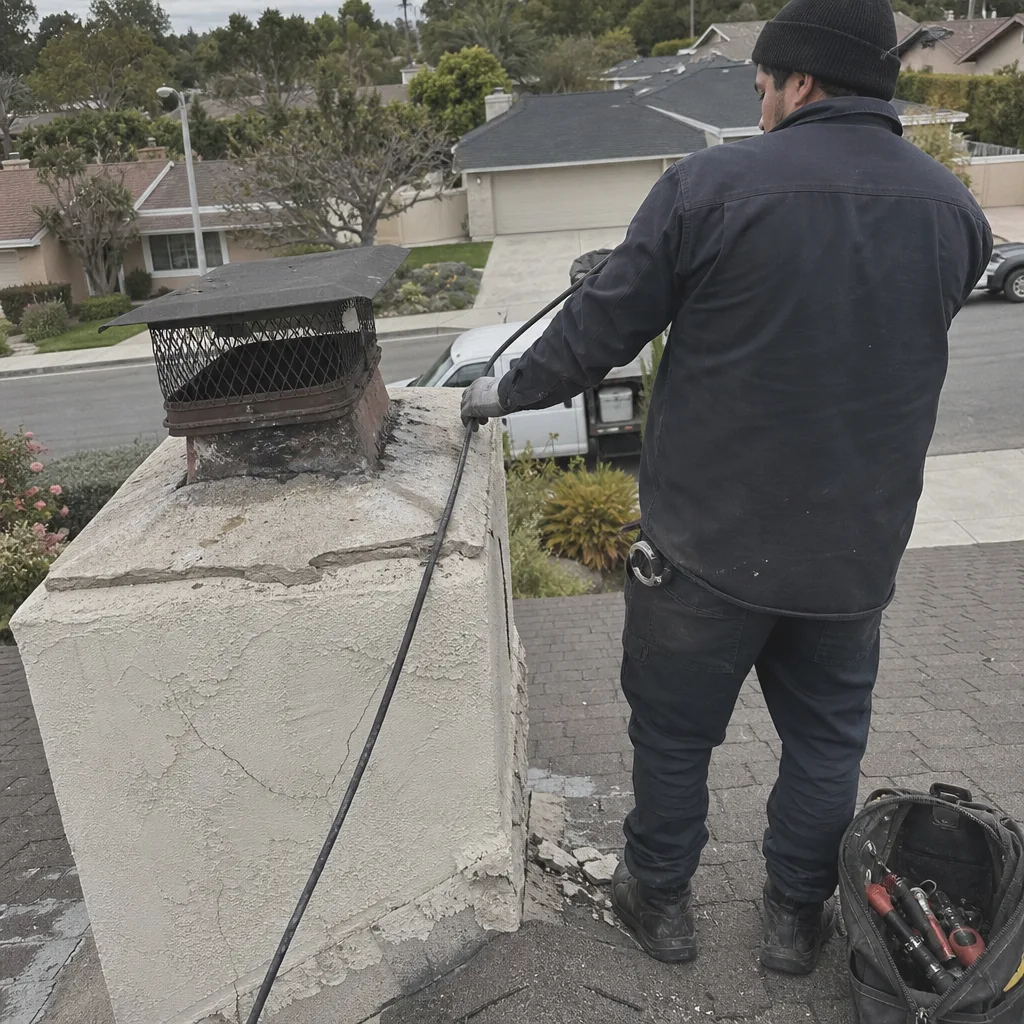 Before
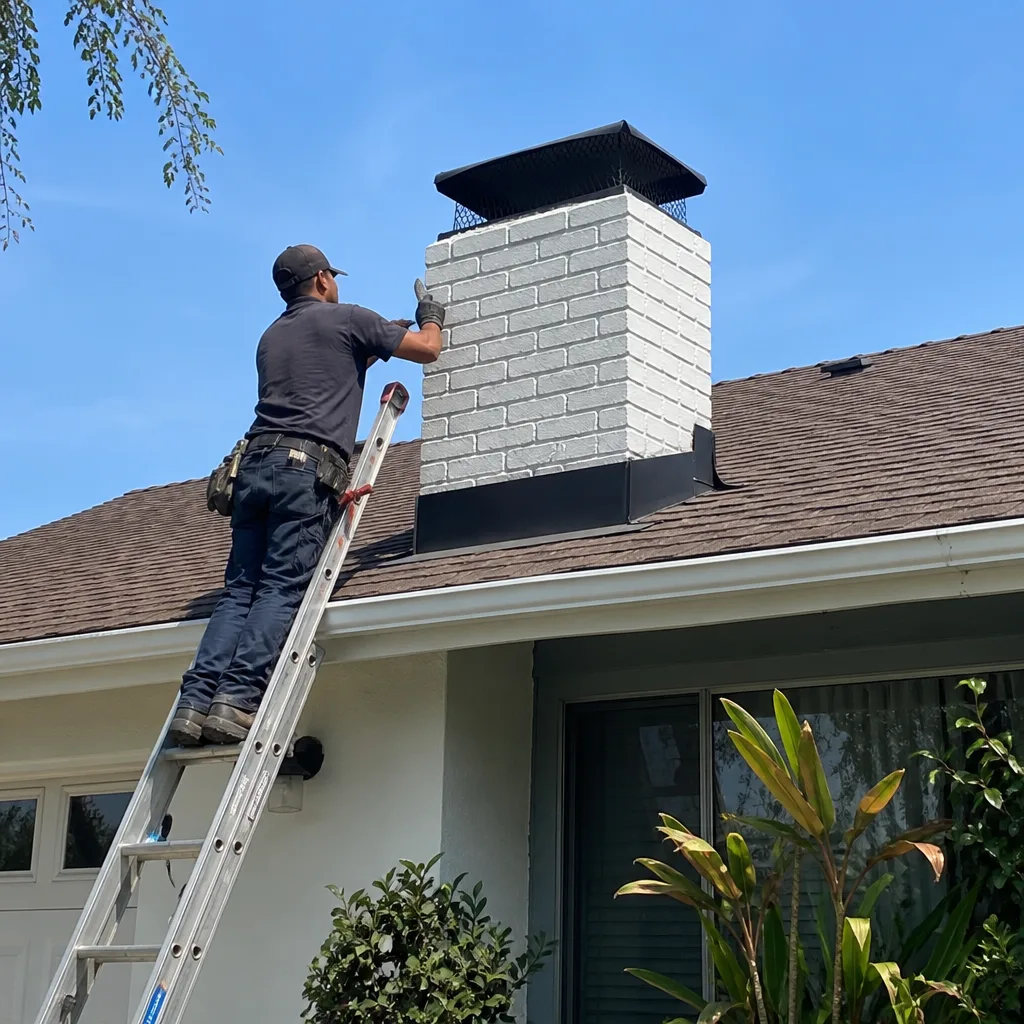 After
AfterCreosote Buildup Warning Signs
What’s Happening
If you’re seeing black, tar-like buildup inside your firebox, smelling a sharp or oily odor when the fireplace isn’t in use, or noticing reduced draw when you burn, creosote has accumulated inside your flue and needs professional attention before you light another fire. Creosote is a natural byproduct of wood combustion, and some accumulation is expected – but once it reaches a certain thickness or transitions to its harder, glazed forms, it becomes a genuine chimney fire hazard.
Creosote deposits along the flue lining and smoke chamber walls. In its early stage it looks like dark, flaky soot. Left alone, it thickens into a tar-like coating and eventually hardens into a dense, glassy layer that’s very difficult to remove and highly flammable. A chimney fire can reach temperatures well above 2,000 degrees Fahrenheit – hot enough to crack the liner, damage masonry, and in the worst cases spread to the house structure. This is not a symptom to watch for a few more seasons. It’s a reason to stop burning and call.
Why It Happens
Slow, Smoldering Fires
The single biggest driver of rapid creosote buildup is burning at too low a temperature for too long. When wood smolders rather than burns hot, smoke lingers in the flue and the unburned particles cool and condense on the liner walls before they can exit. If you tend to bank your fires low at night or burn small loads to “save wood,” you’re almost certainly accelerating creosote accumulation. You’ll know this is your situation if the deposits are heaviest near the lower portion of the flue and have a sticky, wet-tar consistency.
Unseasoned or Green Wood
Wood that hasn’t dried for at least a year holds a significant amount of moisture. Burning it produces far more smoke and far more creosote-forming vapor than properly seasoned wood. The giveaway is wood that hisses when it burns, produces very little heat relative to how much it smokes, and leaves a heavy, dark ring inside the firebox door after a single session. If you’ve recently switched wood suppliers or burned wood cut that same season, this is likely a contributing factor.
Restricted Airflow and a Partially Closed Damper
A damper that’s stuck partly closed, a flue that’s undersized for the firebox, or a chimney cap that’s become clogged with debris can all choke the draft. Poor draft means smoke moves slowly through the flue, giving creosote more time to condense and stick. You’ll feel this as smoke that pushes back into the room, a fire that’s hard to start and harder to keep going, and a noticeable reduction in draw compared to previous seasons. Don’t reach up and force a stuck damper yourself – call your local Flint Chimney Sweep team to assess it safely.
Going Too Long Between Cleanings
Creosote is cumulative. A single season of regular burning can leave enough deposit to warrant a full sweep; two or three seasons without one can push the flue into the territory where standard brush cleaning won’t cut it and chemical treatment or mechanical removal is required. If you can’t remember the last time your chimney was swept, or if a previous sweep revealed Stage 2 or Stage 3 deposits, that history matters. Heavy glazed deposits have a shiny, almost varnished appearance – you may be able to see them with a flashlight aimed up into the firebox, though a camera inspection is the only way to see the full flue.
What to Do Right Now
- Stop burning immediately. If you’re seeing warning signs – oily odor, visible tar buildup, reduced draw, or any smoke rollout into the room – don’t use the fireplace again until a professional has inspected and cleared it. A chimney fire can start without warning, and no fire is worth that risk.
- Don’t attempt to scrub or chip creosote yourself. Disturbing glazed or hardened deposits without proper ventilation, containment, and the right tools can release fine particles into the living space and, in the case of Stage 3 deposits, cause structural issues in the flue. This is a job for trained technicians with professional equipment.
- Take a flashlight to your firebox and note what you see. Look at the smoke shelf and firebox walls. Is the deposit flaky and gray-black (Stage 1), sticky and tar-like (Stage 2), or hard and shiny like a glazed coating (Stage 3)? Photograph what you see. This information helps the technician show up prepared.
- Check your damper position from below – carefully. If you can see daylight when you look up (from below the damper, while standing in the firebox opening), it’s open. If not, don’t force it. Note whether the damper moves freely or feels stuck, and let the technician handle any inspection above the smoke shelf.
- Note how the fireplace has been performing. Think back to the last several burns: Was there more smoke in the room than usual? Did fires struggle to draw? Did you notice any smell when the fireplace was cold? Specific observations like these help the technician diagnose the root cause faster.
How We Fix It
When your local Flint Chimney Sweep team arrives, the first step is a chimney inspection – camera equipment goes into the flue so both the technician and you can see exactly what’s there. No guessing, no assuming. The inspection determines what stage the creosote has reached, whether the liner is intact, and whether there’s any secondary damage from previous overheating.
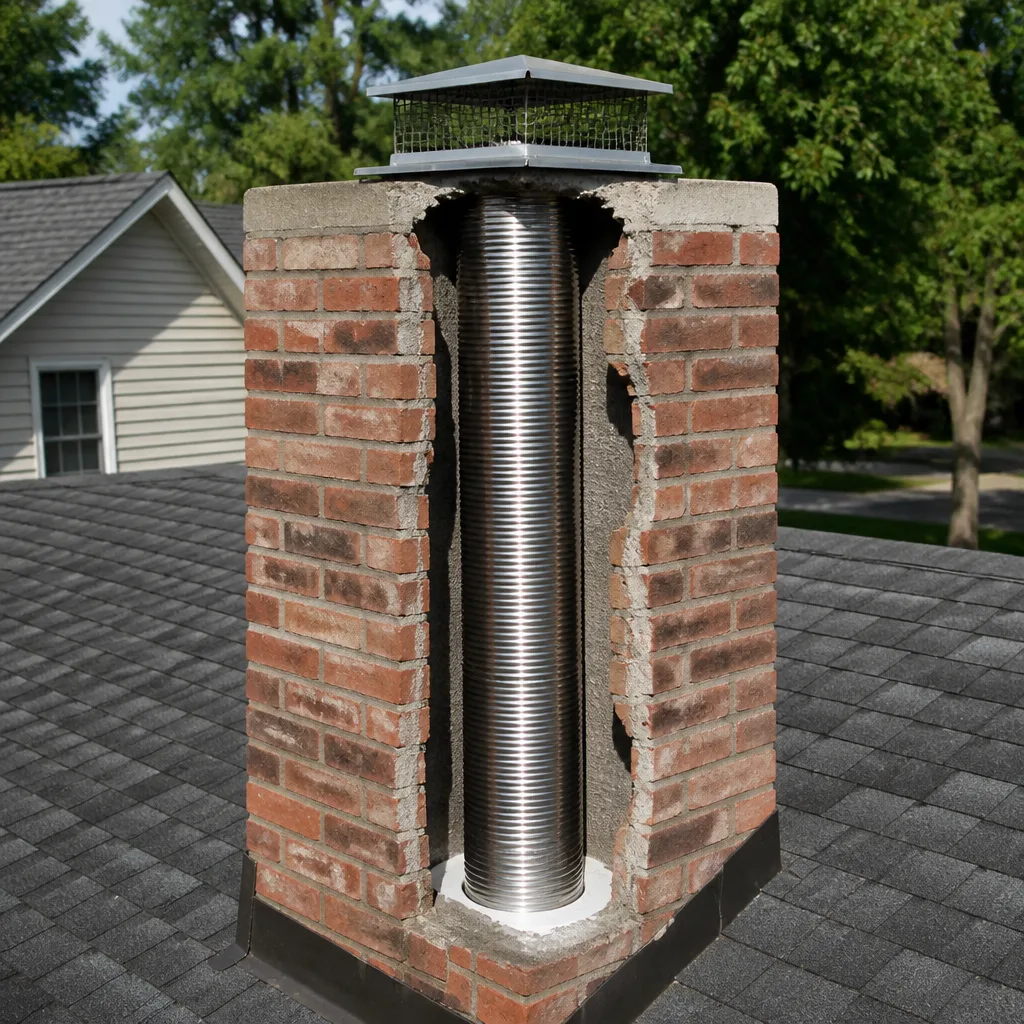
From there, the repair path depends on what the camera shows. Stage 1 and 2 deposits are typically cleared with a professional chimney sweep using rotary brushes and a high-efficiency vacuum system that keeps the mess contained. Stage 3 glazed deposits require chemical treatment – products like HeatShield applied to the flue surface to break down the hardened glaze before mechanical removal. If the liner is damaged, your technician will walk you through what’s needed and why, and you’ll have a written price in hand before any repair work begins. That’s not a formality – it’s The Garrison Standard, and it applies to every job, every time. Most sweep-and-inspect visits are completed in a single appointment. Liner repairs take longer and will be scheduled based on the scope of work.
Every repair is covered by our 365-Day Done Right Promise: written, included on every repair, valid for a full year from the service date. If a covered repair fails within that period, we come back and make it right at no charge.
Frequently Asked Questions
Creosote buildup is the leading cause of chimney fires, and no, it can’t safely wait if you’re already seeing warning signs. Stage 2 and Stage 3 deposits are actively hazardous – a single hot fire can ignite accumulated creosote and produce a chimney fire intense enough to crack the liner and threaten the structure of your home. Don’t use the fireplace again until it’s been inspected and cleared. Call (830) 251-4560 and we’ll get your local Flint Chimney Sweep team out to assess it.
Your local Flint Chimney Sweep team serves your area and stays reachable around the clock – a live person answers at (830) 251-4560 any time of day or night, seven days a week. We’ll find you the earliest available appointment and confirm it. Call us and we’ll give you a real window, not a someday-soon.
You need a liner repair or replacement only if the camera inspection shows damage – cracks, spalling, or sections that have failed. Nothing is recommended without the photographic evidence to back it up, and you’ll see that evidence yourself on the camera feed. A written price comes before any work starts, so you know exactly what’s proposed and why before you agree to anything. If the liner is sound, we’ll tell you that too.
The National Fire Protection Association recommends annual inspections for any chimney in regular use, and annual sweeping for fireplaces burned through a full heating season. If you burn frequently, use softwoods, or have had Stage 2 deposits noted in a previous inspection, sweeping before each burning season is the safer call. The cost of a sweep is a fraction of what liner repair runs – and an annual cleaning is the most straightforward way to keep creosote from reaching a dangerous stage in the first place.
Get It Fixed
Don’t use the fireplace again until it’s been cleared. Call (830) 251-4560 – a live person answers around the clock – or book online and your local Flint Chimney Sweep team will take it from there. Written price before anything starts. Work guaranteed for a full year.
Written by Hank Delano, Owner at Flint Chimney Sweep, part of the Garrison Partners family of chimney service companies serving communities across the country since 2002.
What Our Customers Say
"Smoky fireplace for years. Turned out the cap was clogged. Swapped it and the smoke is gone."
- Brandon T."Rebuilt the crown on our chimney where water had been getting in. Neat masonry and a fair price."
- Eddie J."Very respectful, wore boot covers, laid drop cloths. Left no soot."
- Jan S.