

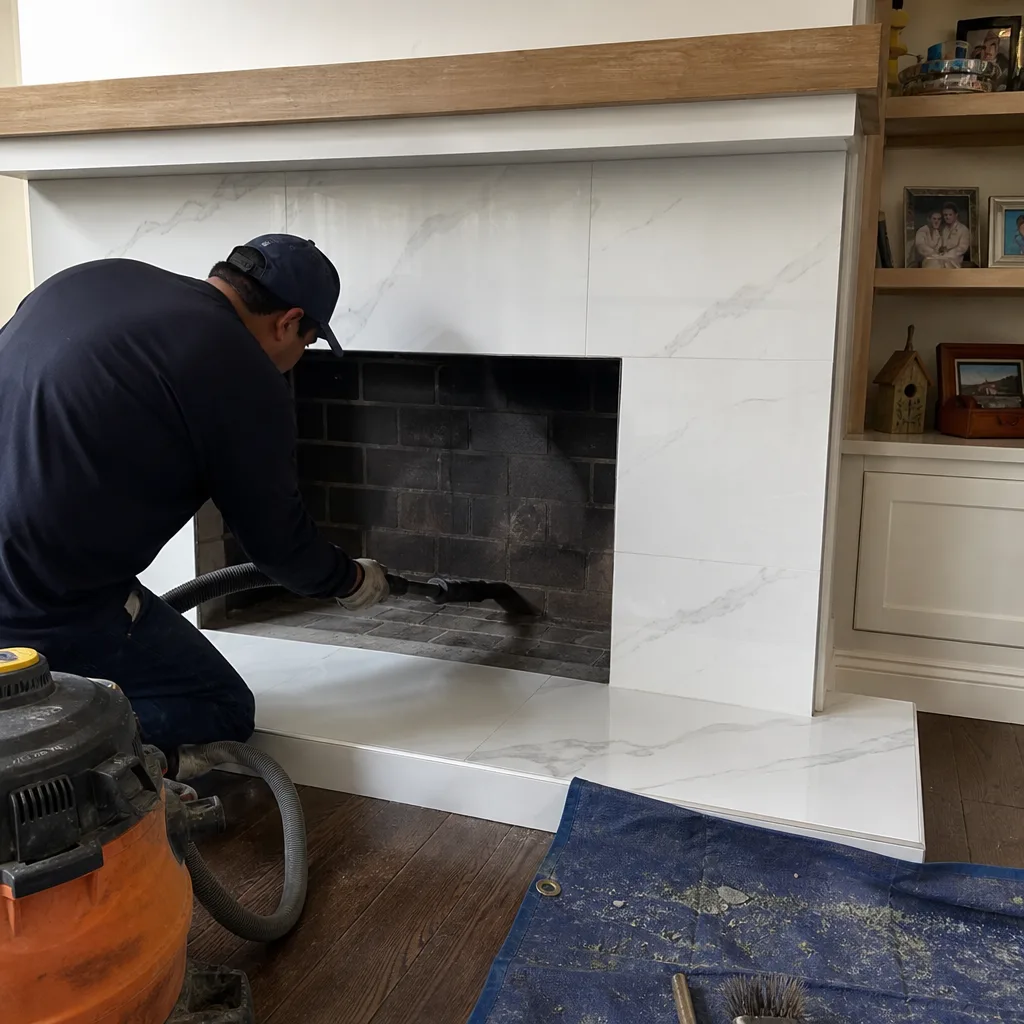
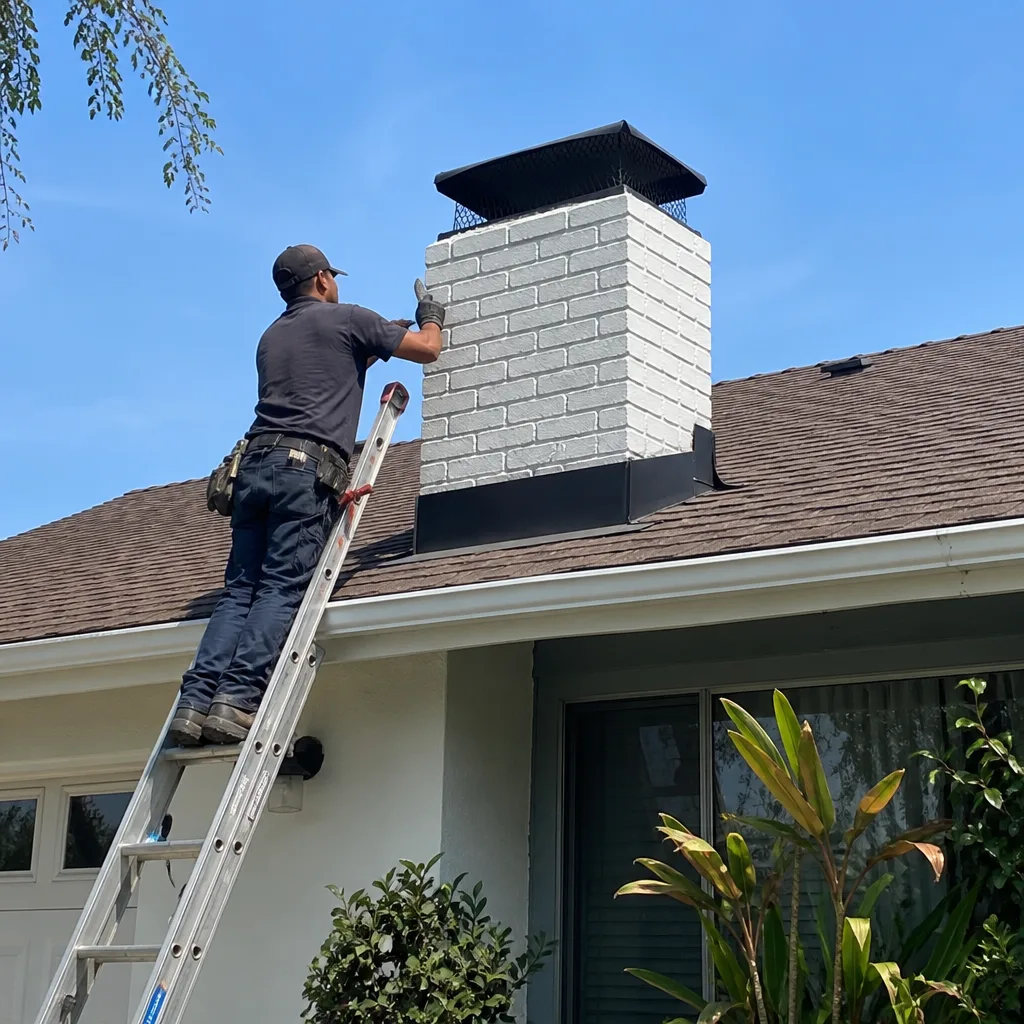
Level 1 sweep and inspection to the NFPA 211 annual standard - flue, crown, cap, and flashing checked and photographed
Chimney sweep logs do not sweep chimneys. They loosen some creosote - which then falls where a brush and vacuum still have to collect it.
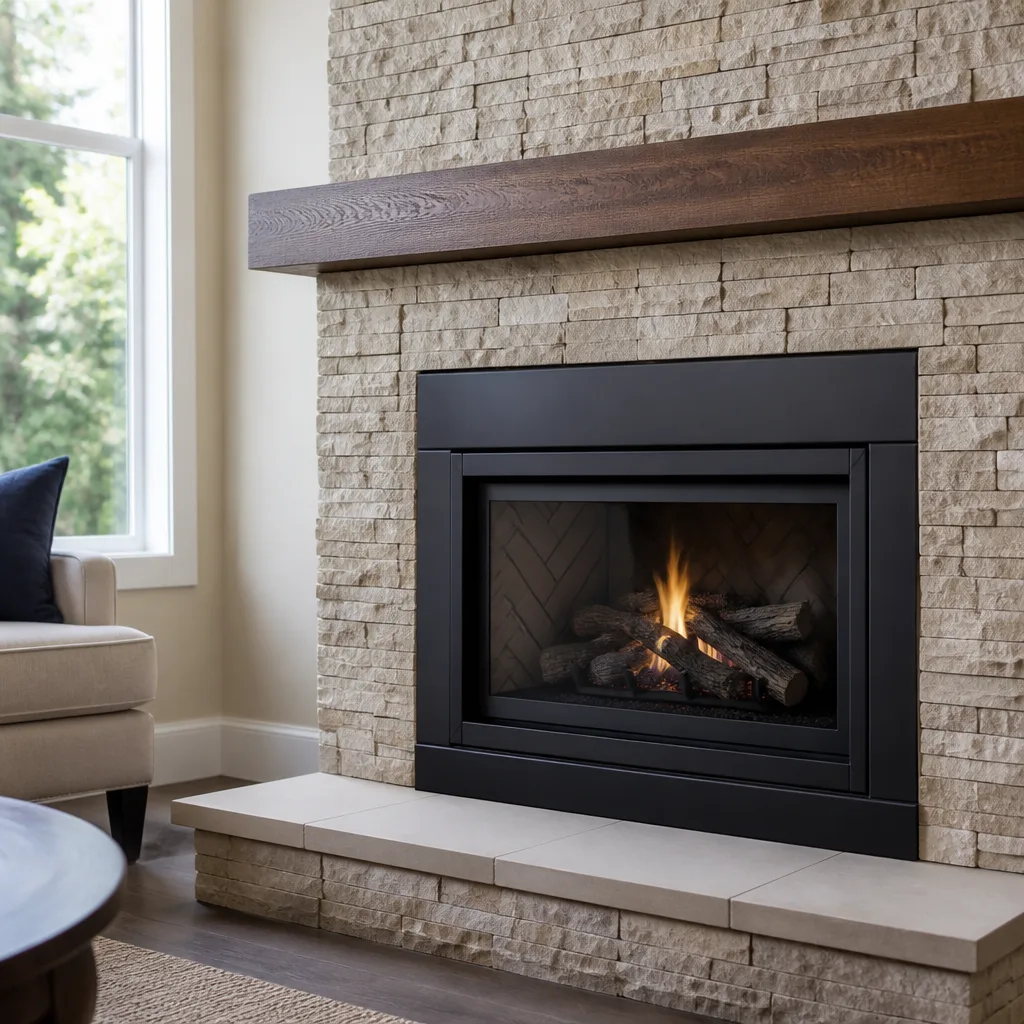
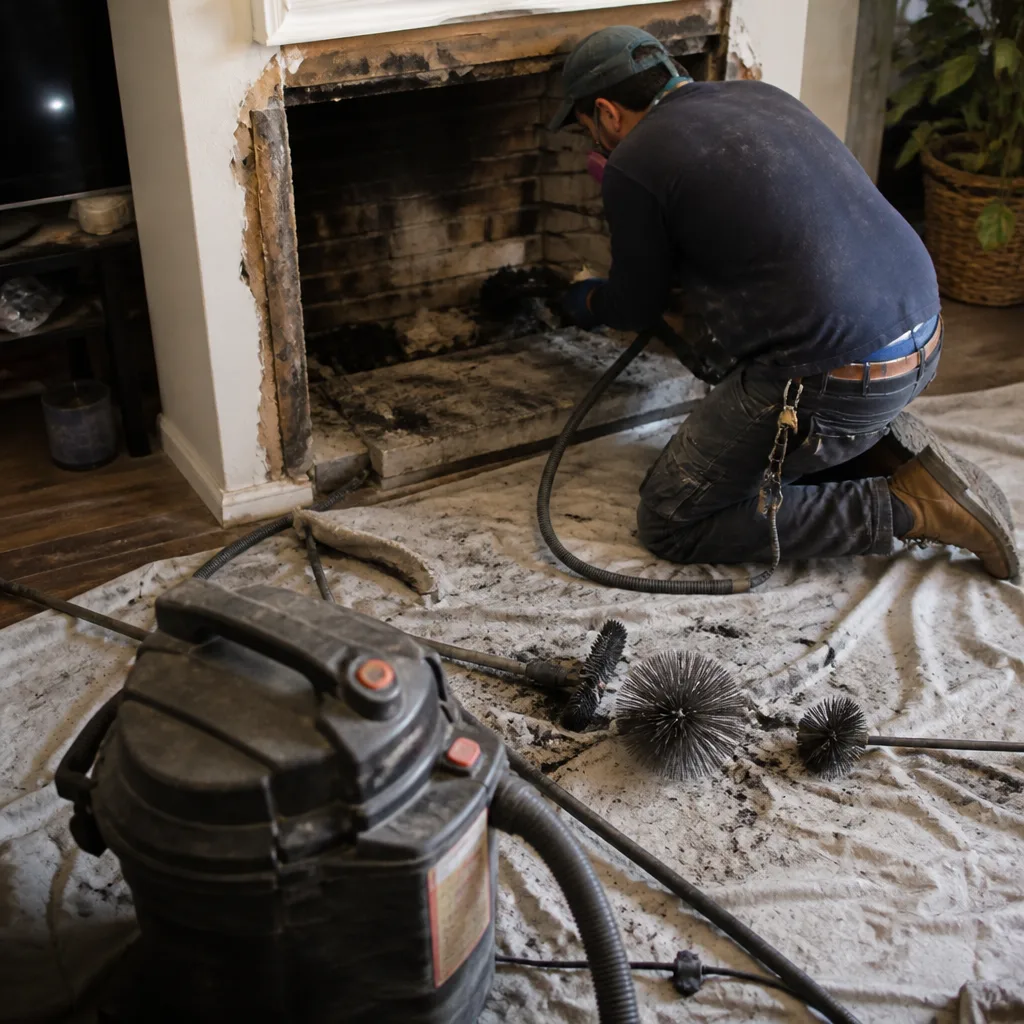 Before
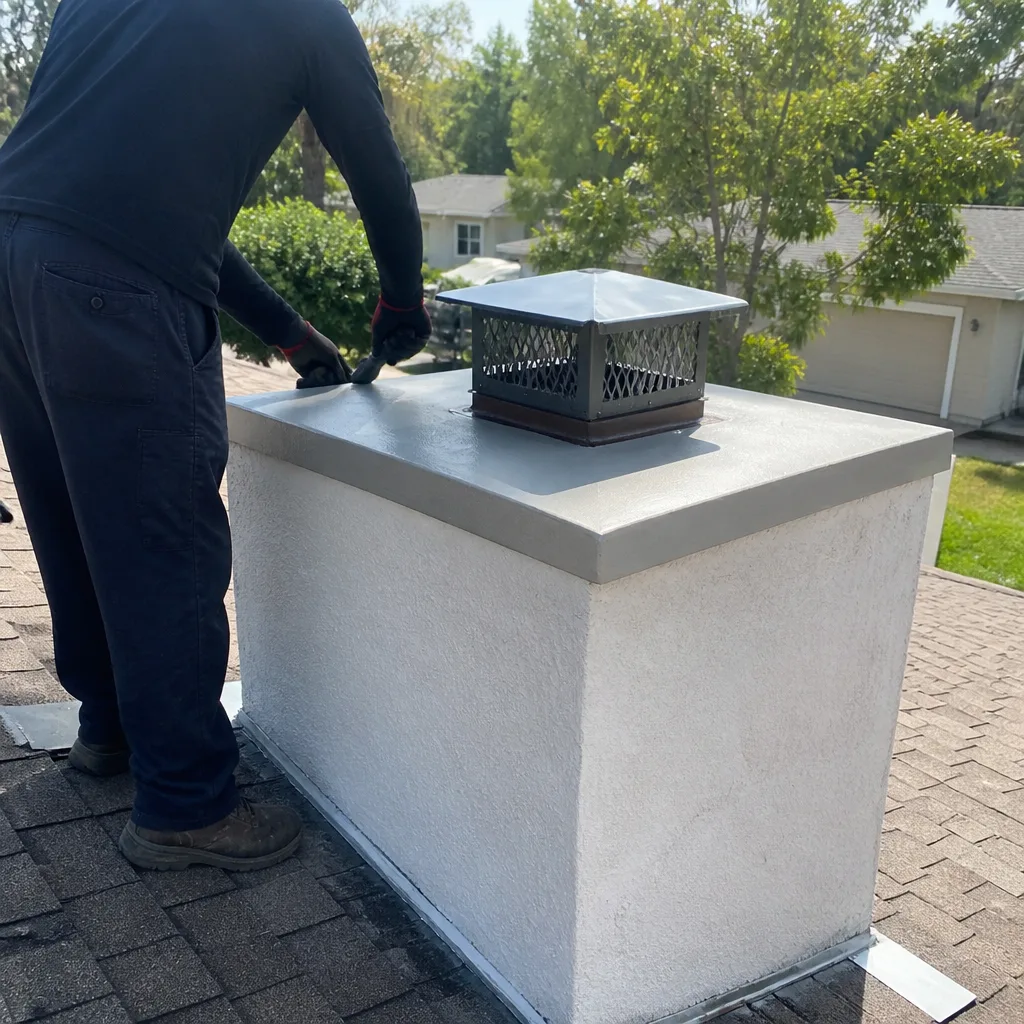 After
After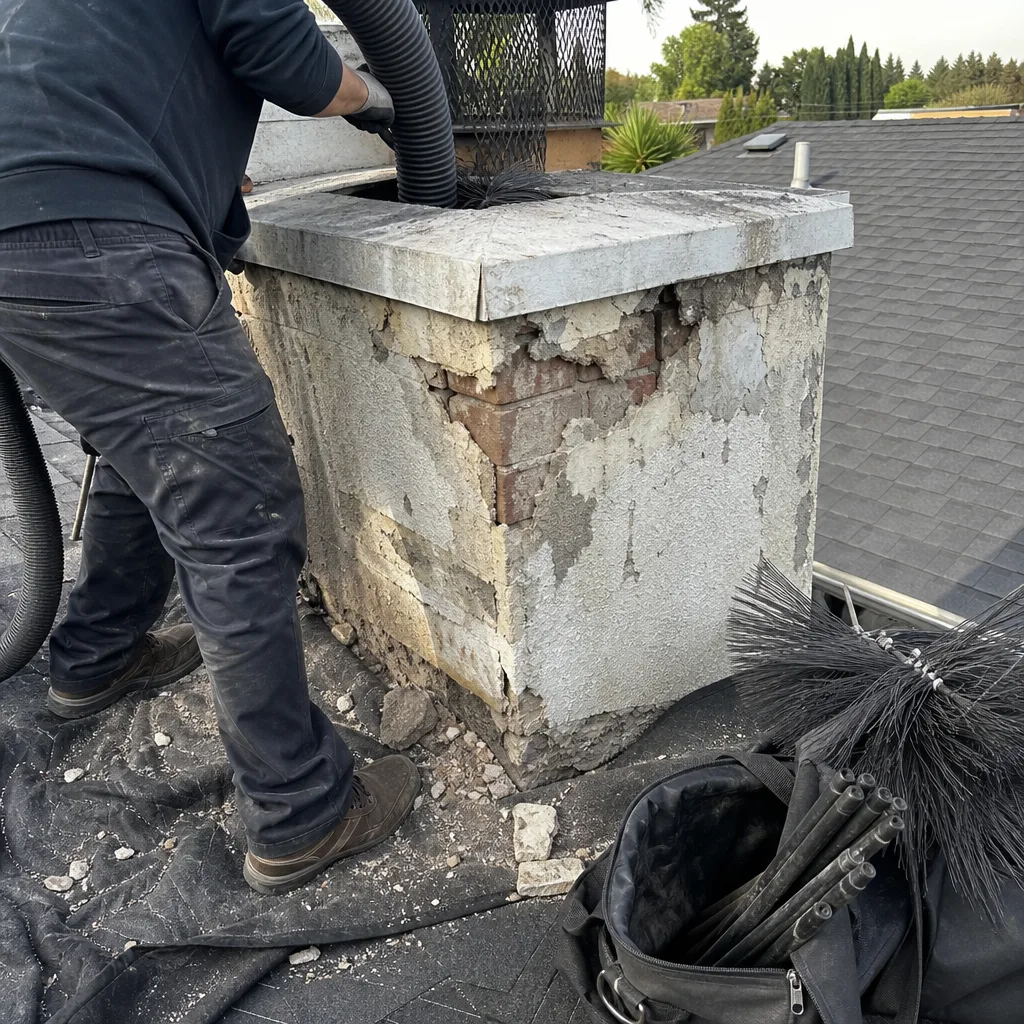 Before
 After
After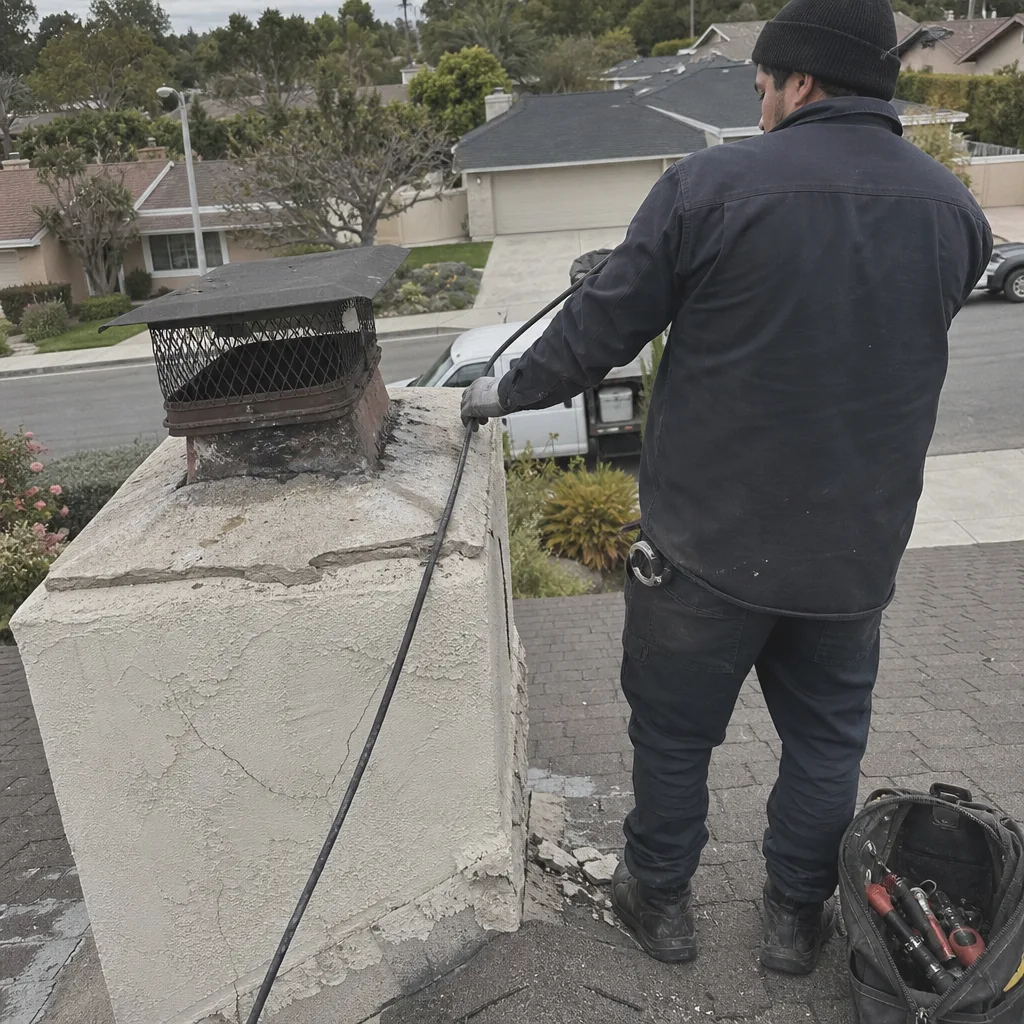 Before
 After
AfterDamper Stuck Open or Closed
What’s Happening
A damper that won’t move is almost always a mechanical failure: the pivot rod has corroded, the frame has warped from heat cycles, or years of creosote and debris have locked the plate in place. It is not a fireplace problem you can work around safely.
The damper is the metal plate that controls airflow between your firebox and the flue. When it works correctly, you open it before lighting a fire and close it when the fireplace is cold to keep conditioned air from escaping up the chimney. When it seizes, you lose that control. A damper stuck open drafts your heated or cooled air straight out of the house, and a damper stuck closed means combustion gases, including carbon monoxide, have nowhere to go when you light a fire. Neither situation is minor. Both are worth fixing before your next fire.
Why It Happens
Rust and Corrosion on the Pivot Rod
The throat damper sits a few feet above the firebox, exposed to moisture coming down from the flue and heat rising from below. That combination corrodes the steel pivot rod and the hinge points over time. When you push or pull the handle and feel nothing move – or hear a grinding scrape and then nothing – corroded hardware is the most likely cause. A flashlight aimed up through the firebox at the damper plate will sometimes show visible rust scale or a plate that’s sitting slightly crooked in its frame.
Warped or Collapsed Damper Frame
Cast-iron and sheet-metal damper frames expand and contract every time you run a fire. After enough seasons, the frame can warp just enough that the plate binds against it. You may be able to move the handle partway but feel it hit a hard stop before it’s fully open or closed. If your handle moves freely but the plate doesn’t, or if the plate moves an inch and then locks, frame distortion is a strong candidate.
Creosote or Debris Buildup Blocking the Plate
Fireplaces that go several seasons without a cleaning build up creosote, a tar-like byproduct of incomplete combustion, on every surface inside the flue, including the damper plate and its frame. A heavy enough deposit physically prevents the plate from rotating. You may also find nesting material from birds or squirrels packed into the damper opening. If you can see or smell a dark, sticky coating on the damper, or if you notice twigs and debris when you look up with a flashlight, this is likely your cause, and a chimney sweep will clear it as part of the cleaning.
Broken or Disconnected Handle Linkage
Some dampers are operated by a rotary handle on the firebox face or a long pivot rod that connects down to a pull ring or bar. If that linkage cracks, bends, or disconnects at a joint, the handle moves freely but nothing happens at the plate. This one is easy to distinguish: wiggle the handle, then shine a light at the plate. If the handle moves without resistance but the plate doesn’t budge, the connection between the two is broken somewhere along the rod.
What to Do Right Now
- Do not light a fire. If the damper is stuck closed, lighting a fire creates a carbon monoxide hazard in the room. If it’s stuck open and you’re unsure of the flue condition, lighting a fire before an inspection is not a safe call.
- Determine which position it’s stuck in. Hold a lit match or lighter just inside the firebox opening. If the flame pulls upward, some air is moving through the flue and the damper may be at least partially open. If the flame pushes back toward you, airflow is blocked.
- Use a flashlight to look at the plate. From the firebox opening, shine a light upward. Note whether the plate looks flat and horizontal (closed), angled or fully out of the way (open), and whether you can see heavy debris, a dark tar buildup, or rust scale on the frame. A quick photo will help your technician when they call.
- Try the handle once, carefully, and then stop. One firm attempt to free a stuck damper is reasonable. If it doesn’t move, stop there. Forcing the handle can snap a corroded pivot rod or collapse a warped frame further, which turns a repair into a replacement. Don’t try to reach up into the firebox to manipulate the plate by hand.
- Call your local Flint Chimney Sweep team. A technician can inspect the damper, tell you exactly what’s wrong and what it will cost, and in most cases fix it the same visit. Call (830) 251-4560 – a live person picks up, any time of day.
How We Fix It
When your local Flint Chimney Sweep technician arrives, they start with a chimney inspection – a close look at the damper plate, pivot hardware, frame, and the flue condition just above it. That inspection tells us whether you’re dealing with a repair or a full damper replacement, and we put the price in writing before any work starts. That is not optional on our end; it’s how every job at every Garrison company runs.
If the damper is salvageable, a chimney sweep clears the creosote or debris that’s binding it, and we work the hardware free if corrosion is the issue. If the frame is warped beyond repair or the pivot rod is snapped, we replace the unit with professional-grade hardware from suppliers like Olympia Chimney and Famco, specified for your firebox size, not whatever is cheapest to carry on the truck.
Most damper calls resolve in a single visit. Every repair is covered by the 365-Day Done Right Promise: if a covered repair fails within a year of the service date, we come back and make it right at no charge.
Frequently Asked Questions
A damper stuck closed is a genuine safety issue if you use the fireplace – combustion gases including carbon monoxide cannot vent properly. A damper stuck open is not immediately dangerous, but it’s costing you on heating and cooling every day and may indicate a larger problem inside the flue. Don’t use the fireplace until a technician has looked at it. If you want to stop the waiting and get an answer, call (830) 251-4560 – someone picks up right now.
You can try the handle once with firm, steady pressure, and that’s a reasonable first step. Beyond that, it’s better to stop. A corroded pivot rod can snap if you force it, and reaching into the firebox to push the plate by hand puts your arm and face close to sharp, corroded metal and heavy creosote deposits. The repair is not expensive, and a technician can usually fix it the same visit.
We don’t post a flat number here because the cost depends on whether the hardware can be freed and cleaned or needs to be replaced, and whether the flue needs sweeping at the same time. What we can tell you is this: your local Flint Chimney Sweep team puts the price in writing before any work begins – no number moves at the door. Call (830) 251-4560 and we’ll get you a written estimate after the inspection.
Yes, and it’s to your benefit. A damper that has seized or corroded is a sign that the system hasn’t been serviced recently, and the same conditions that lock a damper tend to affect the flue liner and firebox above it. An inspection takes the guesswork out of it: you’ll know exactly what’s wrong, what’s fine, and what can wait – all in writing, all before any work starts.
Get It Fixed
Call (830) 251-4560 – a live person answers around the clock, every day of the year. Your local Flint Chimney Sweep team will schedule the inspection, put the price in writing before anything starts, and have your damper working correctly again.
Written by Hank Delano, Owner at Flint Chimney Sweep, part of the Garrison Partners family of chimney service companies since 2002.
What Our Customers Say
"Sweep showed up on time, in uniform, and ran a tight job. Cleaned the flue, inspected the firebox, and gave me a short written report. Veteran-run and it shows."
- Walt R."Chimney repair on loose bricks near the top. Tuckpointed it so it matches. Looks right."
- Rosa H."Direct, no nonsense, and polite. Exactly what I wanted."
- Tina W.