

Level 1 sweep and inspection to the NFPA 211 annual standard - flue, crown, cap, and flashing checked and photographed
Chimney sweep logs do not sweep chimneys. They loosen some creosote - which then falls where a brush and vacuum still have to collect it.
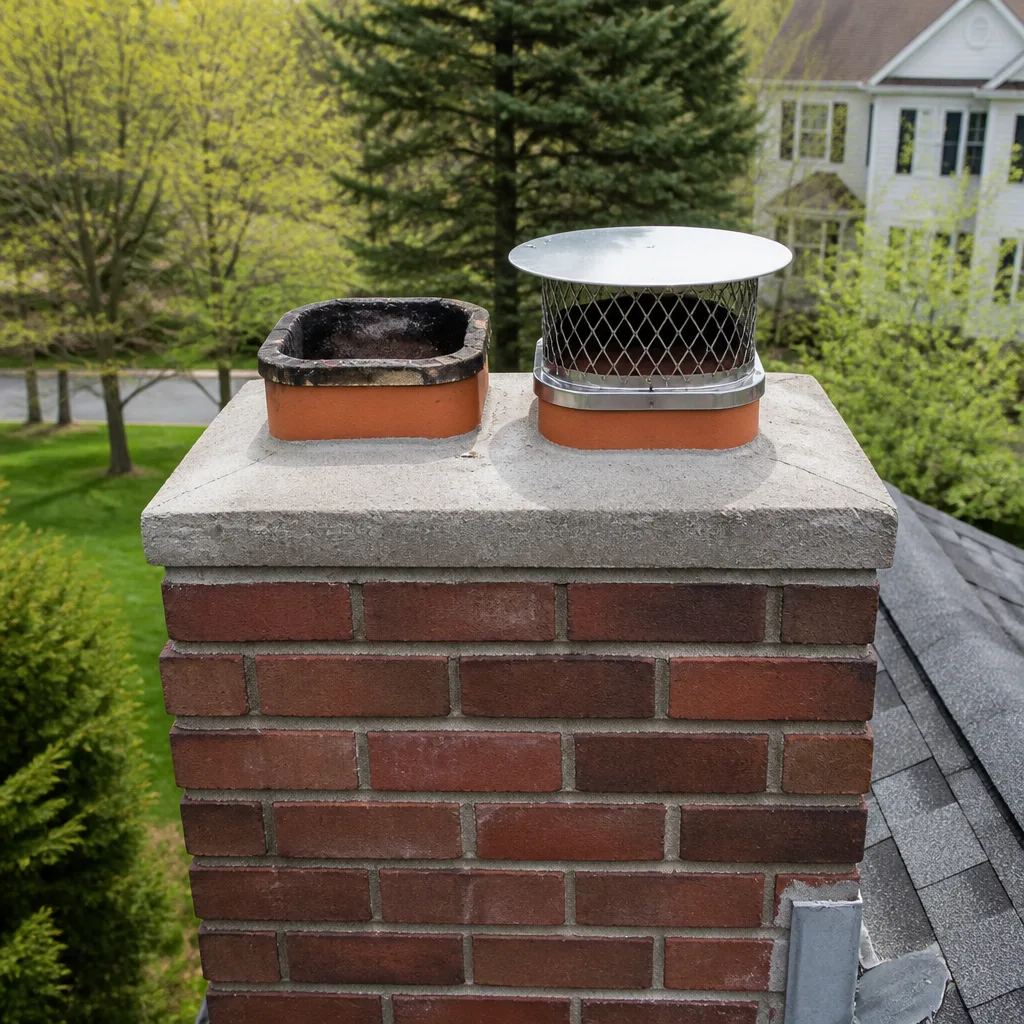
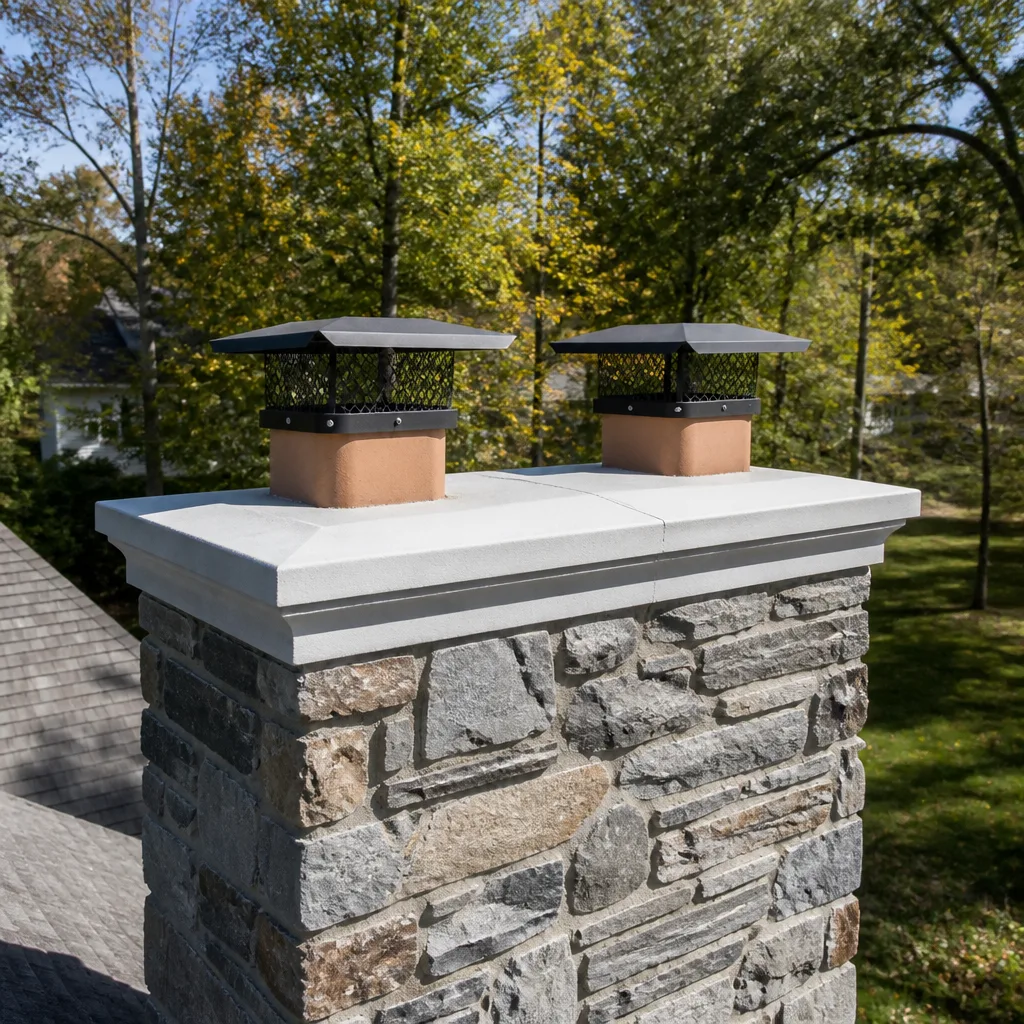
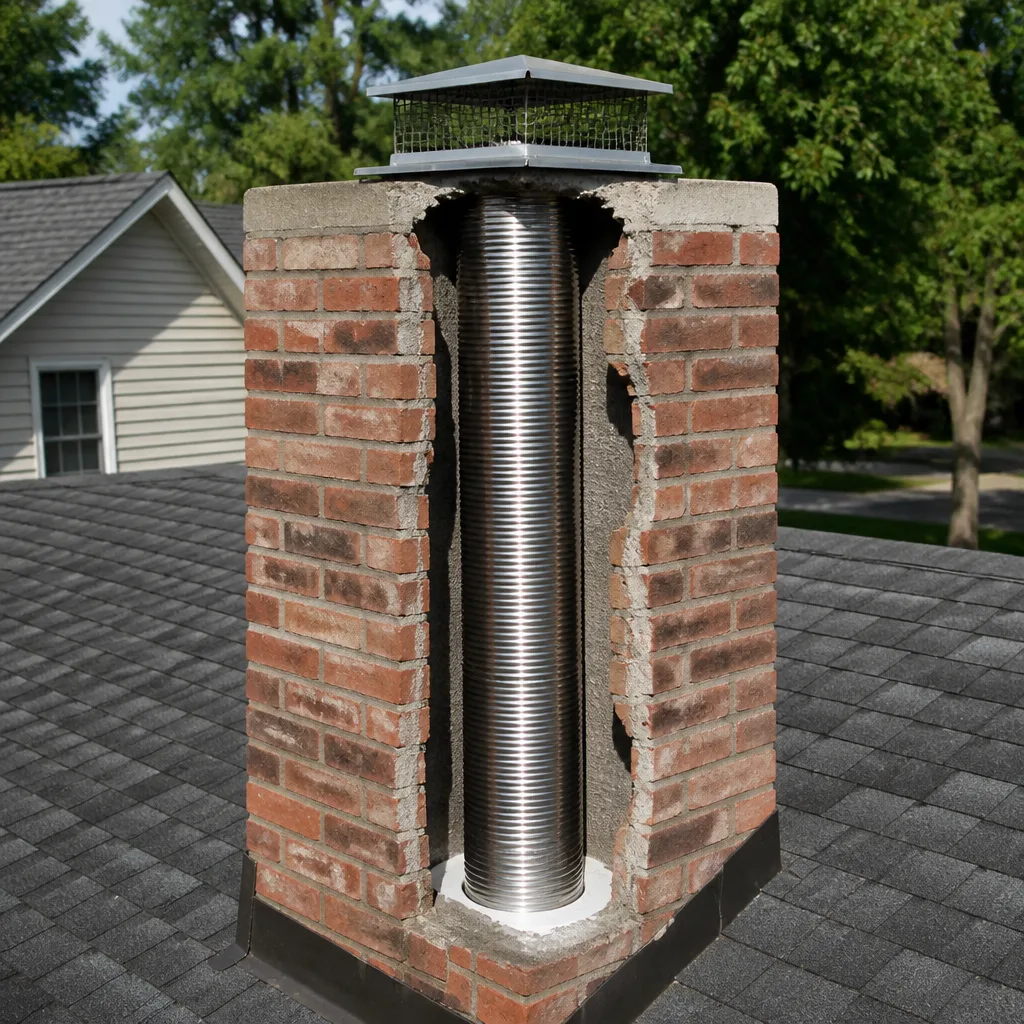
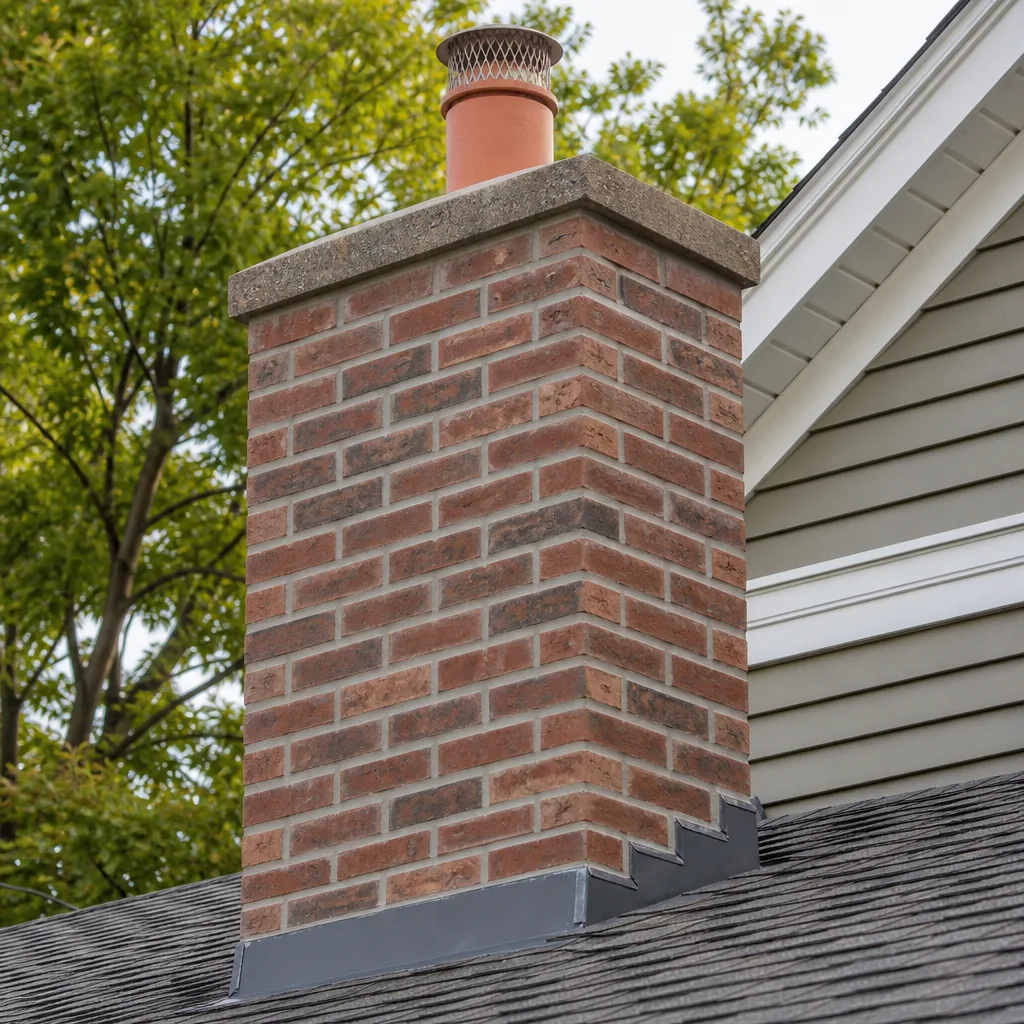
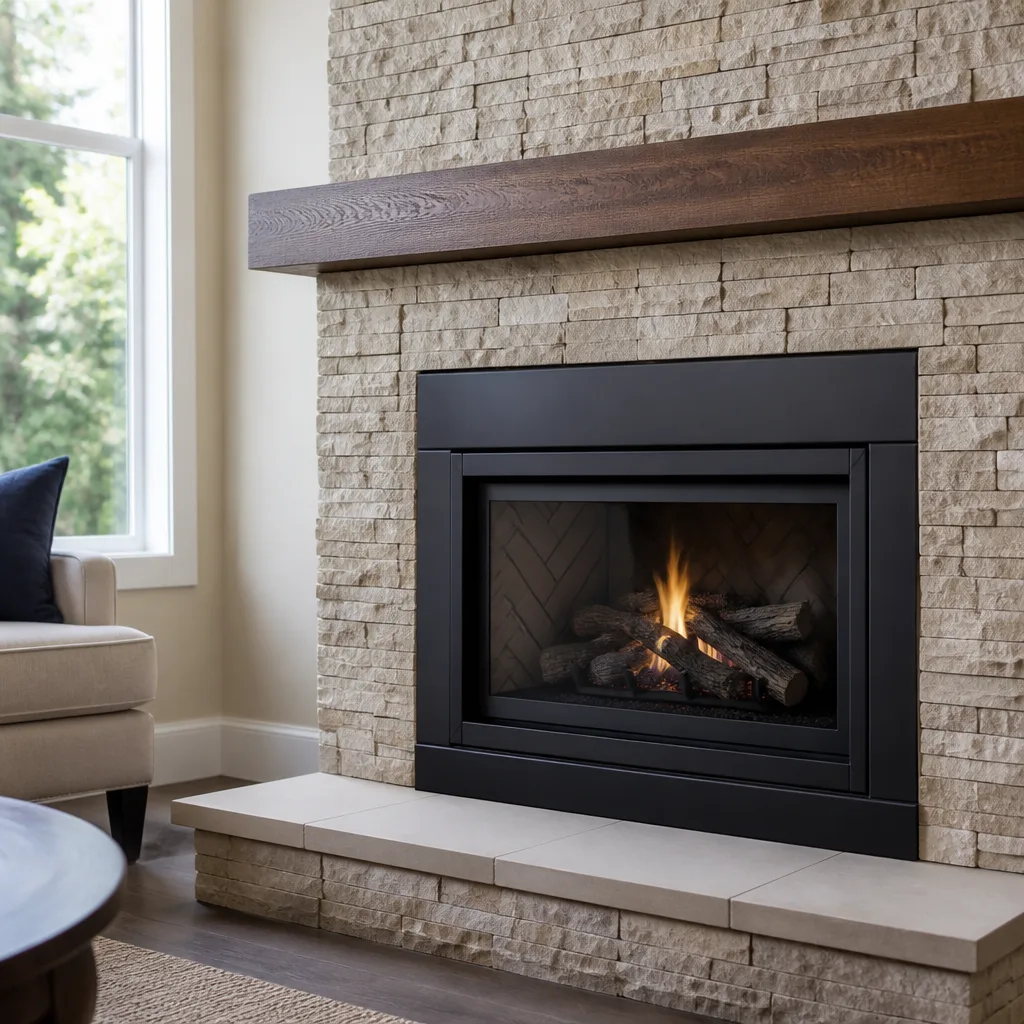
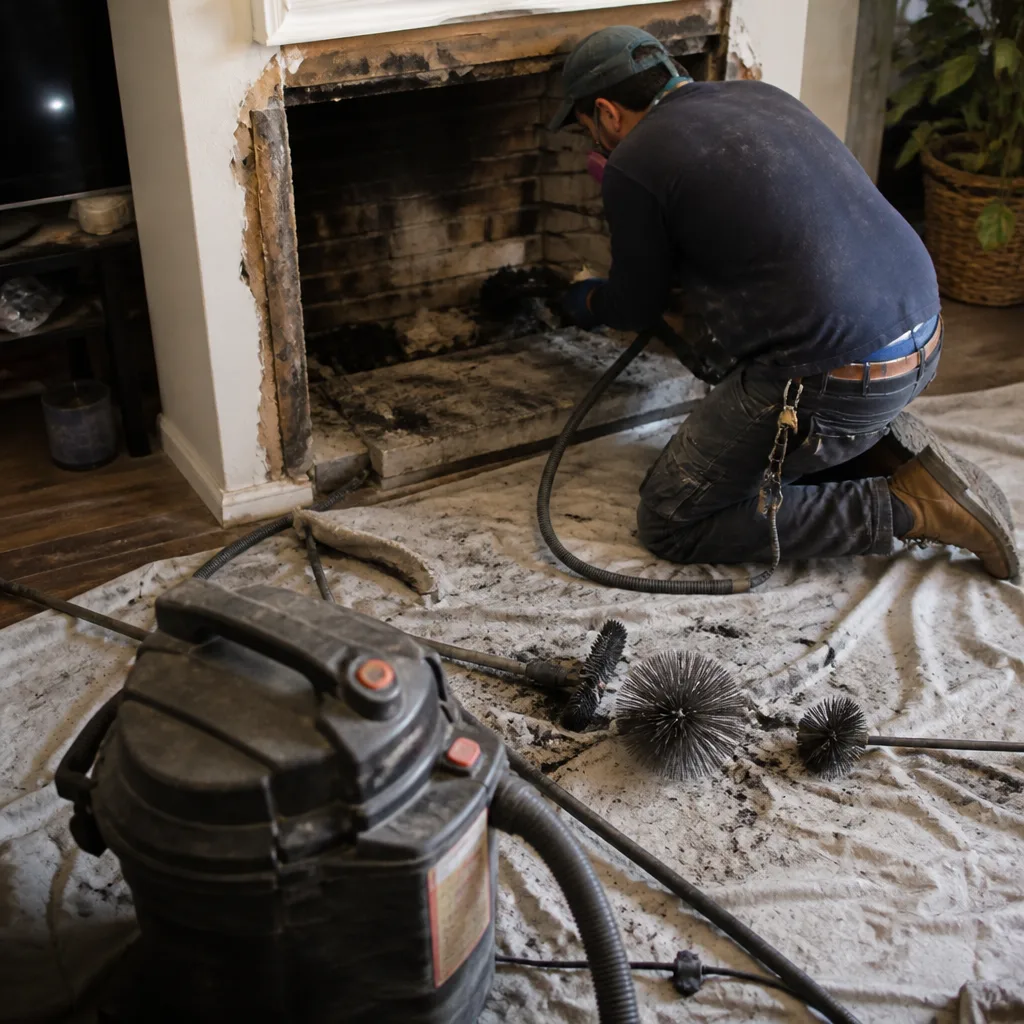 Before
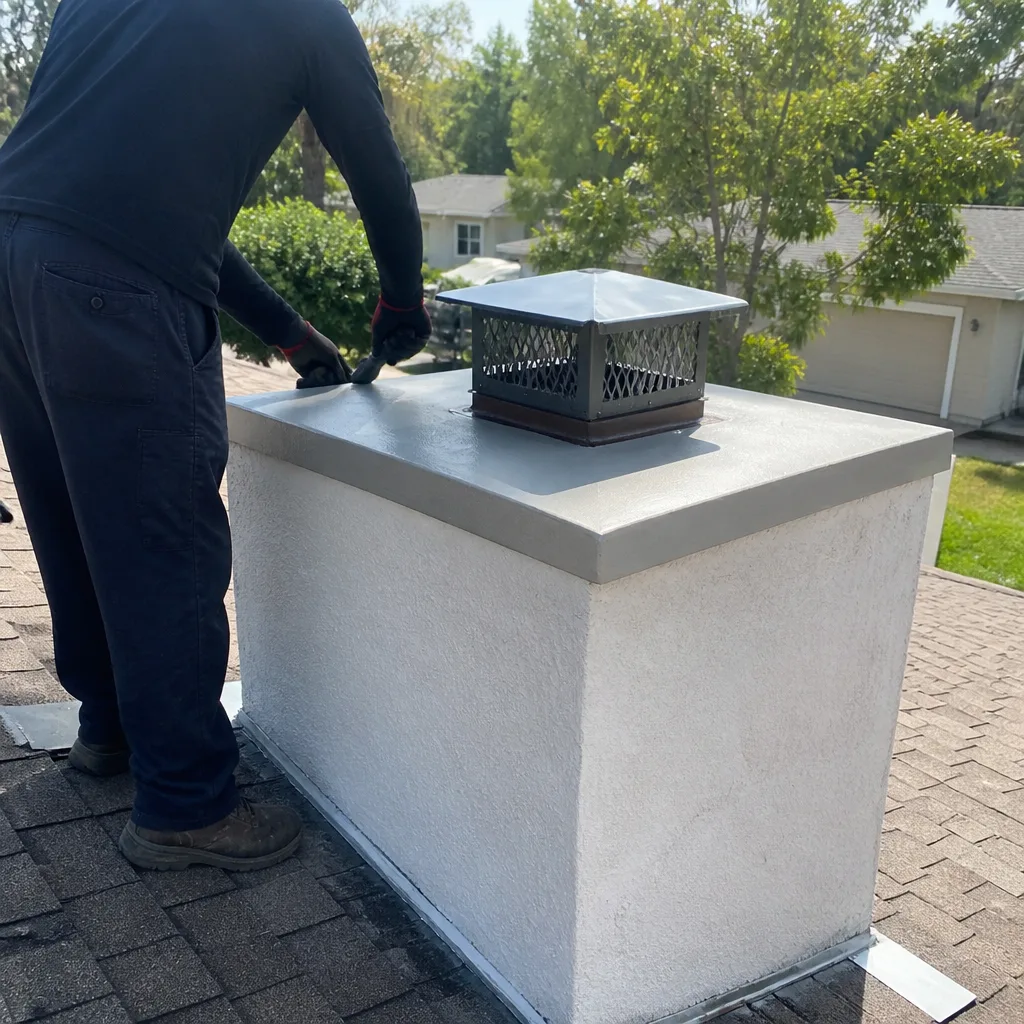 After
After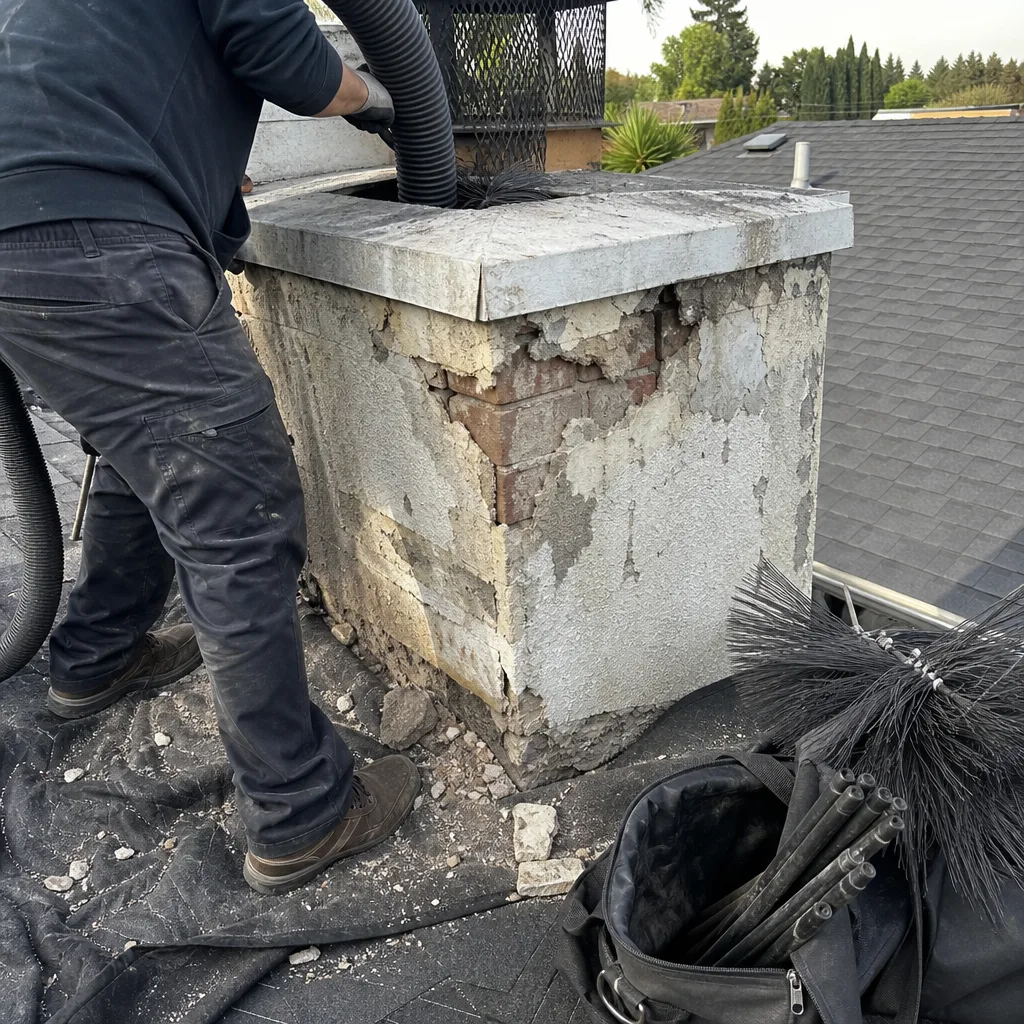 Before
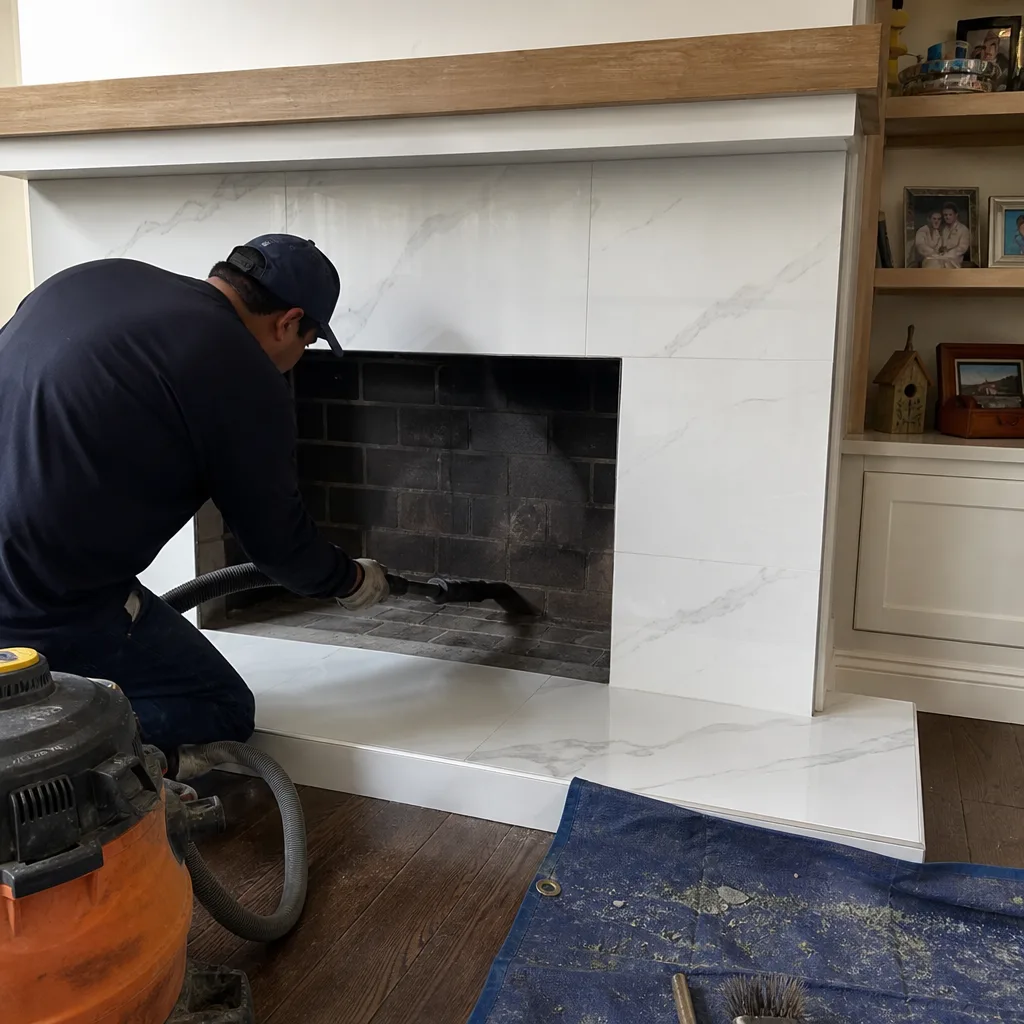 After
After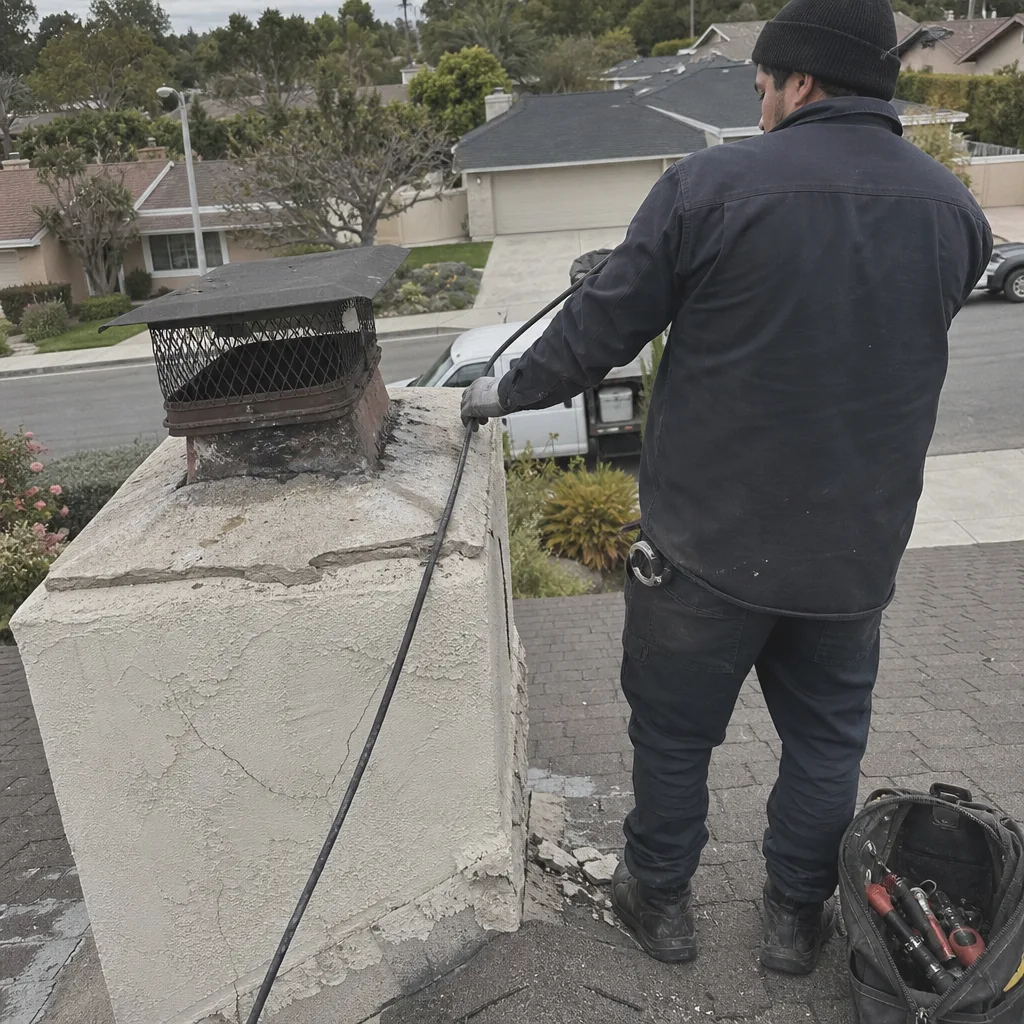 Before
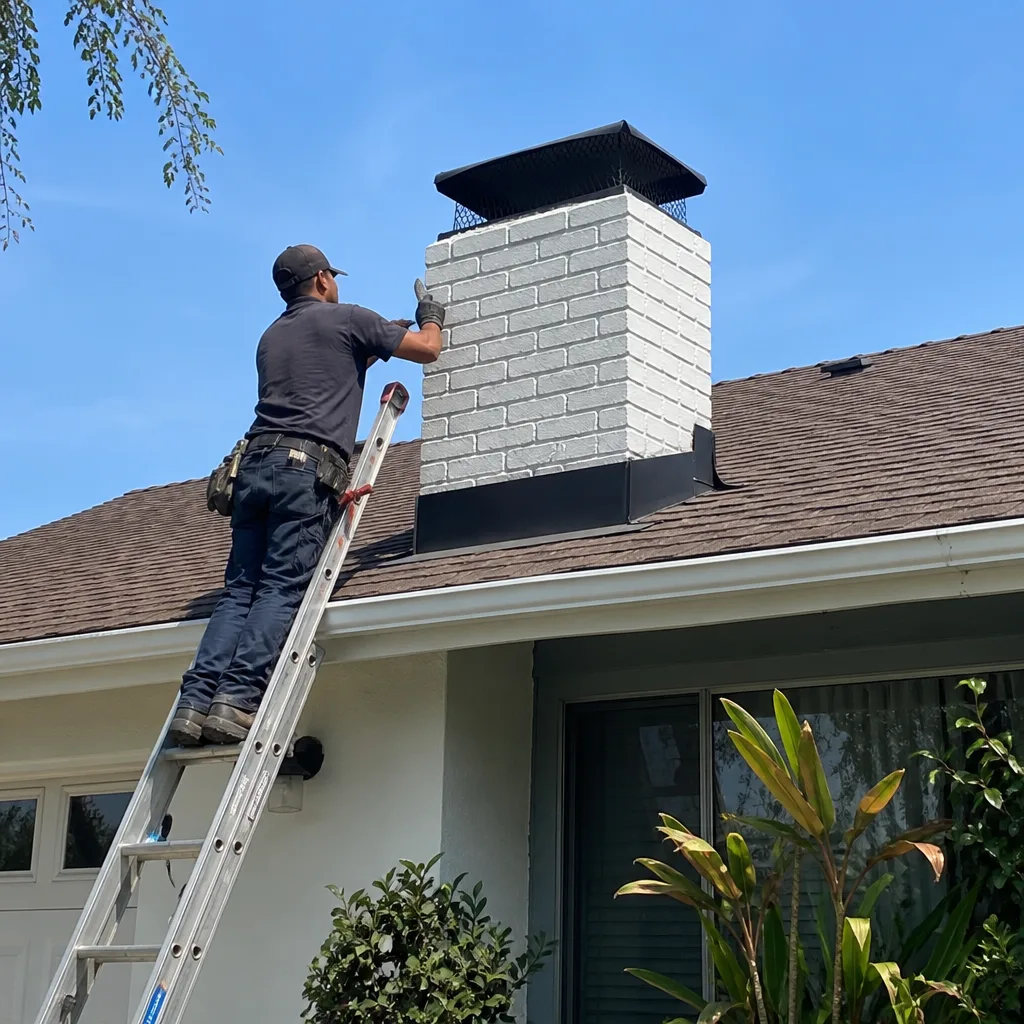 After
AfterSmoke Coming Back Into the Room
What’s Happening
Smoke backdrafting into your living space almost always means the chimney isn’t drafting properly – either it’s blocked, the flue is cold and hasn’t pressurized yet, or something has closed off the airflow the fire needs to exhaust. This is not a cosmetic issue. Carbon monoxide and combustion gases are coming back into the house with that smoke.
The chimney is supposed to work like a vertical pump. Hot gases rise, pull fresh air in through the firebox, and exhaust everything up and out. When that cycle breaks – for any reason – the smoke has nowhere to go but back into the room. The fix depends entirely on which part of the system failed, and that’s something a technician can usually identify within the first ten minutes of an inspection.
Why It Happens
1. Creosote or Debris Is Blocking the Flue
This is the most common cause we see. Creosote, a tar-like byproduct of combustion, builds up on the inside of the flue walls over years of use. Heavy enough accumulation narrows the opening the gases need to escape, and at some point the chimney simply can’t exhaust fast enough. You can sometimes tell this is the issue if the backdraft is worse than it used to be, or if you notice a sharp chemical or oily smell even when the fireplace isn’t lit. A blocked flue from a bird nest or fallen debris produces a similar result – sometimes more sudden in onset.
2. A Cold Flue Has Stalled the Draft
If your chimney runs along an exterior wall or sits on the outside of the house, the air inside the flue is cold when you first try to light a fire. Cold air is heavy and sits in the flue like a plug. The smoke from your new fire hits that cold column and rolls back into the room rather than rising through it. You’ll typically notice this happens only at startup, and the backdraft improves or stops once the fire has been burning for fifteen or twenty minutes and the flue has warmed up. If that matches what you’re seeing, this is likely the cause.
3. The Damper Is Closed, Stuck, or Corroded
The damper is a metal plate that sits just above the firebox and controls how much air moves through the flue. It has to be fully open when the fireplace is in use. If it’s closed – which happens more often than you’d expect – smoke has no exit at all. A damper that’s corroded or warped may open partially but not fully, which creates the same restricted-draft problem as a creosote blockage. Reach up carefully just above the firebox throat and feel whether the plate is open. If you can’t move it freely by hand, or if it feels stuck, that’s your problem. Do not force a corroded damper; the metal can break in a way that makes it worse to repair.
4. Negative Air Pressure Inside the House
Modern homes are built tightly. Exhaust fans, clothes dryers, and HVAC systems all pull air out of the house, and if there’s no fresh air coming in to replace it, the chimney becomes the path of least resistance for outside air to enter. When that happens, air flows down the flue instead of up, carrying smoke back into the room with it. You can test this: crack a window near the fireplace about an inch and see if the backdraft improves. If it does, the house is under negative pressure and the chimney isn’t the only part of the system that needs attention.
What to Do Right Now
- Stop using the fireplace until the cause is identified. Smoke in the room means combustion gases in the room, and that includes carbon monoxide. This is not a fire to push through and see if it clears up.
- Open a window on the same floor as the fireplace. This reduces negative pressure and slows the backdraft while you sort out the next steps. It won’t fix the underlying cause, but it helps in the short term.
- Check the damper position before anything else. Look up into the firebox – if you can see a metal plate and it appears closed, try opening it with the handle or lever in your firebox. If it moves freely and opens, good. If it won’t budge or only partially opens, stop and call – don’t force it.
- Photograph the inside of the firebox and the damper area if you can do it safely. A clear photo of what you’re seeing helps the technician prepare before arrival and can speed up the diagnosis.
- Do not attempt to access the flue, the smoke chamber, or the top of the chimney yourself. Creosote buildup is a fire hazard at certain thicknesses, and working at chimney height is genuinely dangerous. These are not DIY tasks – call your local Flint Chimney Sweep team and let a trained technician handle it.
How We Fix It
When your local Flint Chimney Sweep technician arrives, the first thing they do is a chimney inspection – looking at the firebox, damper, smoke chamber, and flue from the bottom up, and typically from the top down as well. The inspection tells us exactly what we’re dealing with before any tools come out for repair work.
If the flue is blocked by creosote or debris, a professional chimney sweep clears it. That’s the correct fix, and it usually takes two to three hours depending on buildup. If the damper is corroded or broken, that’s a chimney repair – we carry the parts to handle most standard damper replacements the same visit.
Before any work starts, you get a written price. That’s not a policy we’re flexible on – it’s part of the Garrison Standard and it applies to every job, every time. The repair is also covered by our 365-Day Done Right Promise: if the work we did fails within a year, we come back and make it right at no charge. Call (830) 251-4560 to get your local team on the schedule.
Frequently Asked Questions
It should not wait. Smoke backdrafting into the room carries carbon monoxide, which is colorless, odorless, and can reach harmful concentrations faster than most people expect. Stop using the fireplace now, ventilate the room, and get the flue inspected before the next fire. Call (830) 251-4560 and your local Flint Chimney Sweep team will get you on the schedule.
Call (830) 251-4560 and a live person answers – not a voicemail, not a callback form. Your local team will tell you exactly what availability looks like and get you into the first open slot. We staff phones around the clock for exactly this kind of situation.
Backdraft usually has a specific cause, and a sweep alone doesn’t always find it. An inspection tells us whether the problem is creosote buildup, a damaged damper, a crack in the smoke chamber, or something else entirely. We don’t guess and we don’t recommend work we haven’t confirmed is needed – the inspection drives everything, and you’ll see exactly what we found before we quote a single repair.
Every job gets a written price before any work starts – no exceptions. That’s one of the five points of the Garrison Standard and it’s non-negotiable on every call we run. The number you approve is the number on the invoice. Call (830) 251-4560 to schedule and we’ll put it in writing before the first tool comes out of the truck.
Get It Fixed
Smoke in the room means the chimney isn’t working – and that’s a safety issue, not a minor inconvenience. Call (830) 251-4560 right now and a live person will pick up. Your local Flint Chimney Sweep team will inspect, diagnose, and fix it, with a written price before anything starts and a full year of guarantee behind the work.
Written by Hank Delano, Owner at Flint Chimney Sweep, part of the Garrison Partners family serving communities across the country since 2002.
What Our Customers Say
"Sweep showed up on time, in uniform, and ran a tight job. Cleaned the flue, inspected the firebox, and gave me a short written report. Veteran-run and it shows."
- Walt R."Chimney repair on loose bricks near the top. Tuckpointed it so it matches. Looks right."
- Rosa H."Direct, no nonsense, and polite. Exactly what I wanted."
- Tina W.