

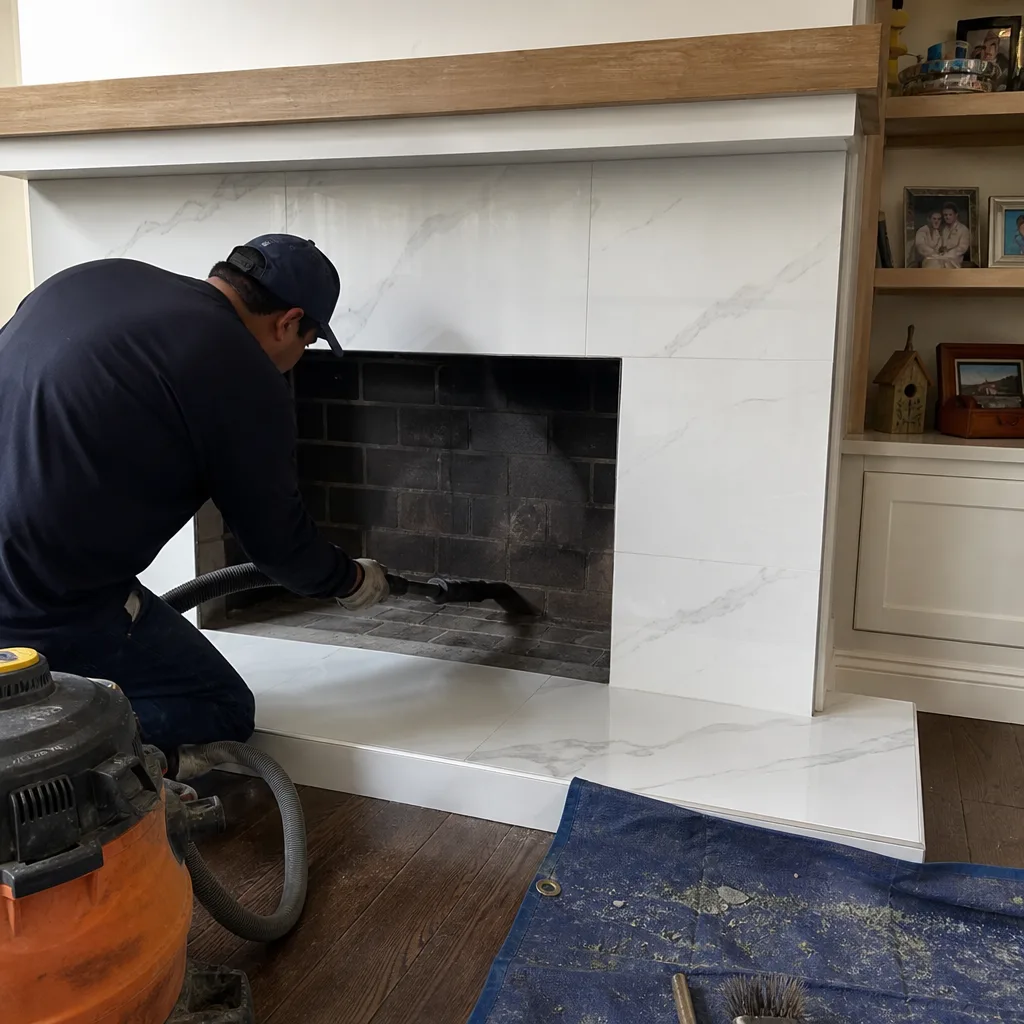
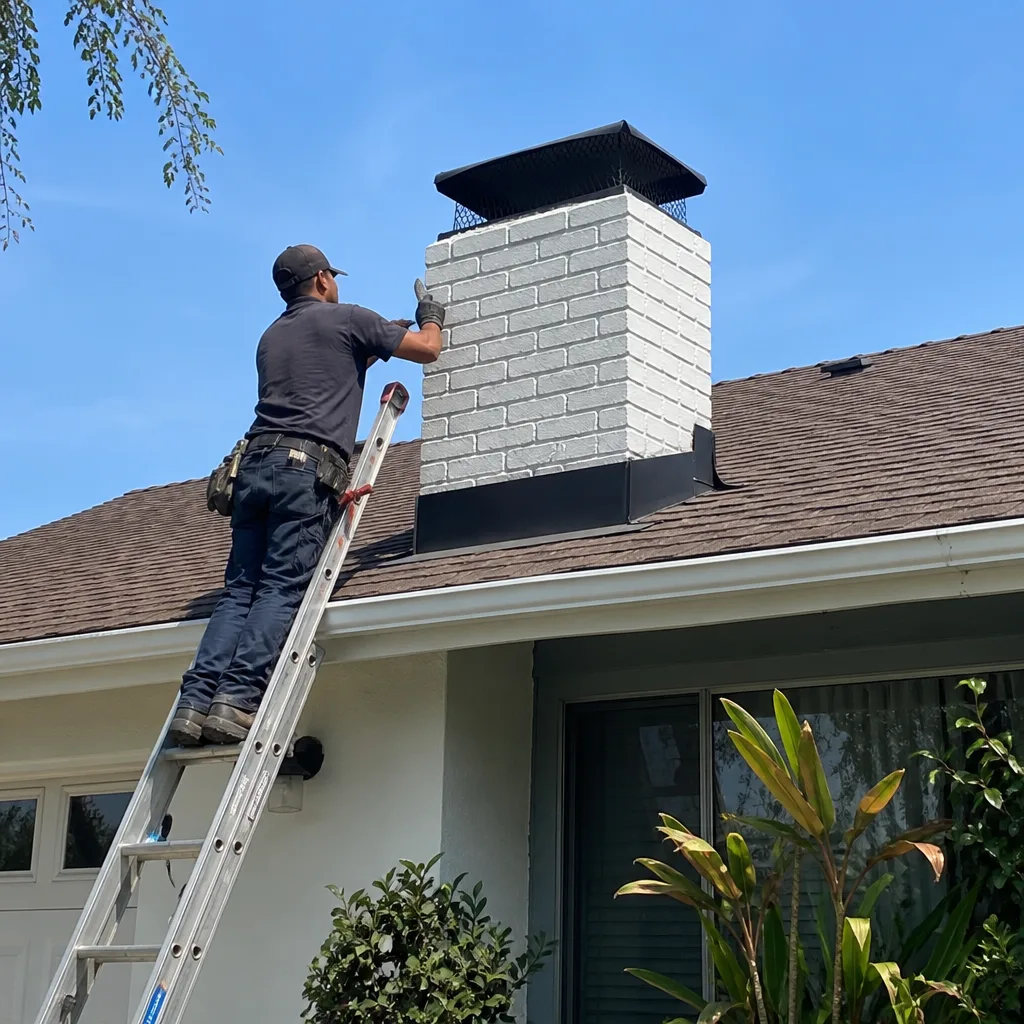
Level 1 sweep and inspection to the NFPA 211 annual standard - flue, crown, cap, and flashing checked and photographed
Chimney sweep logs do not sweep chimneys. They loosen some creosote - which then falls where a brush and vacuum still have to collect it.
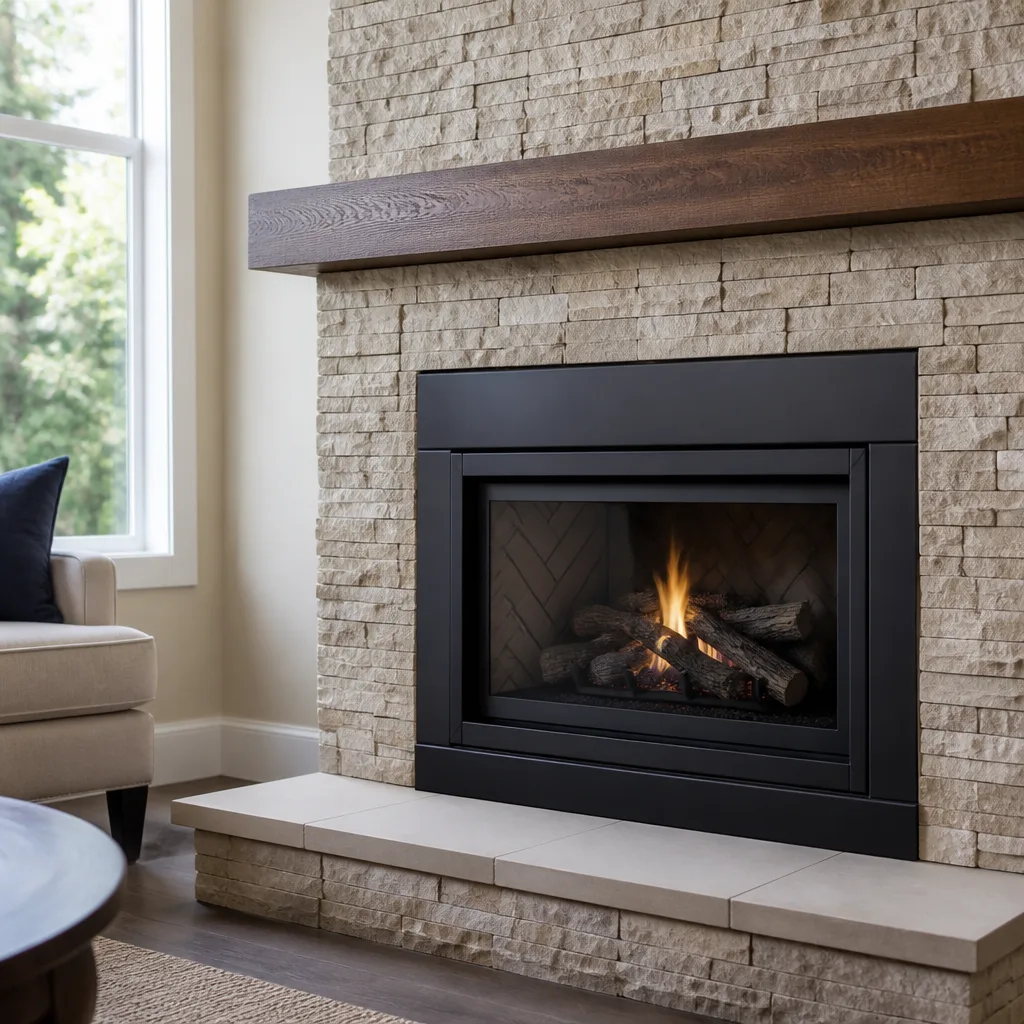
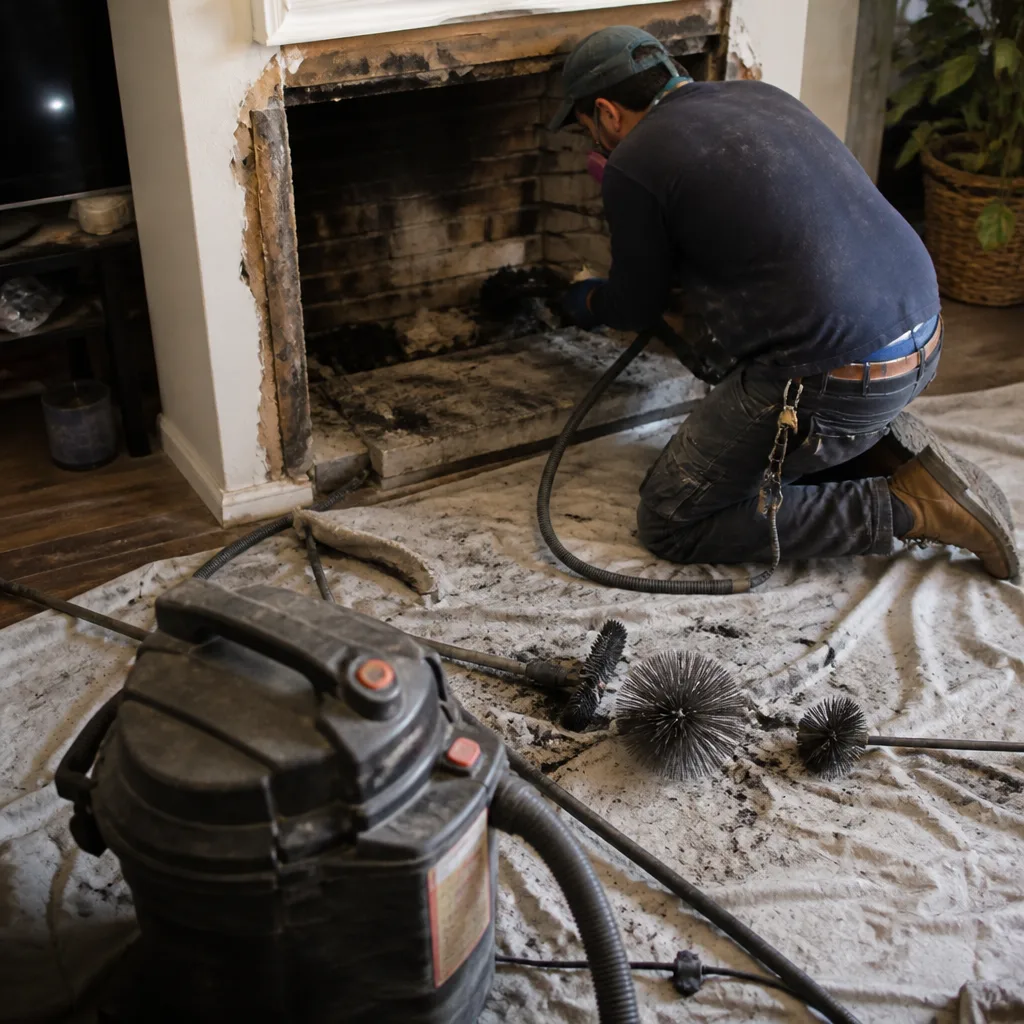 Before
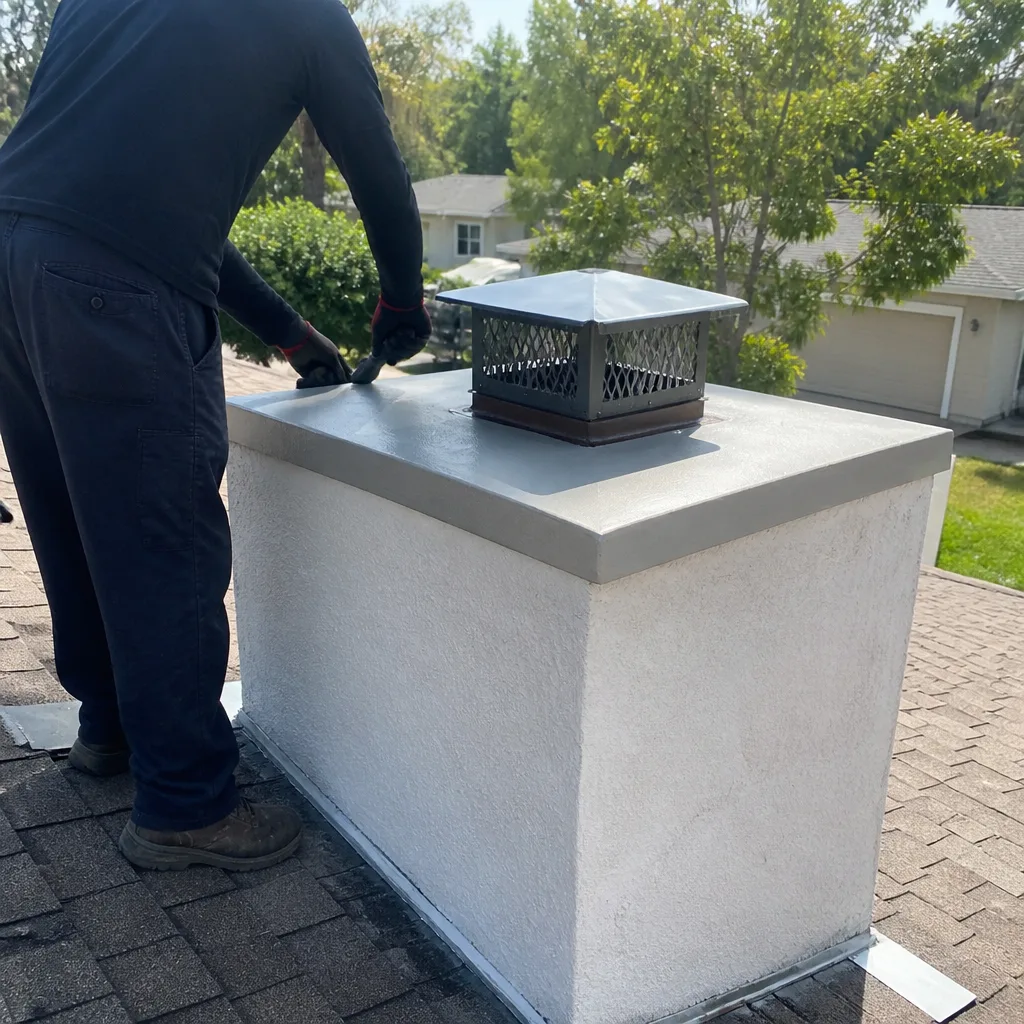 After
After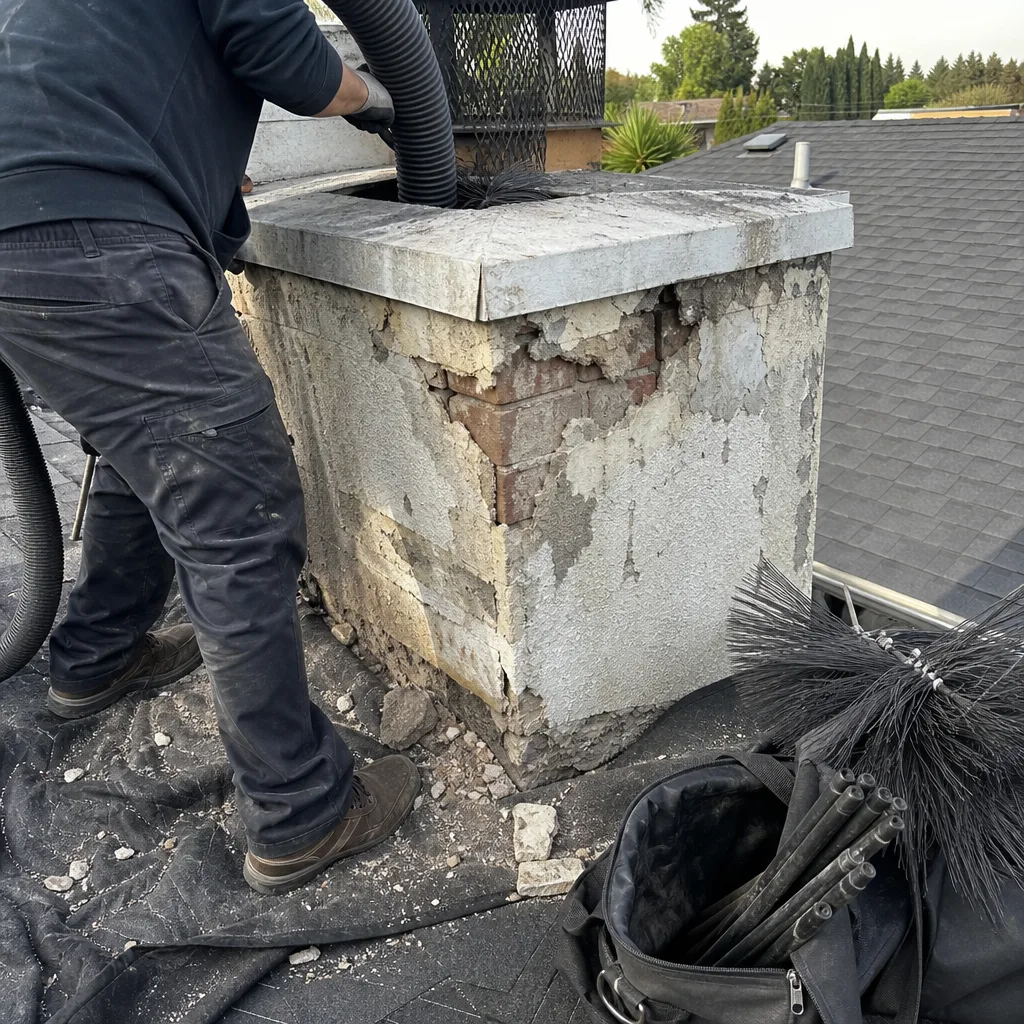 Before
 After
After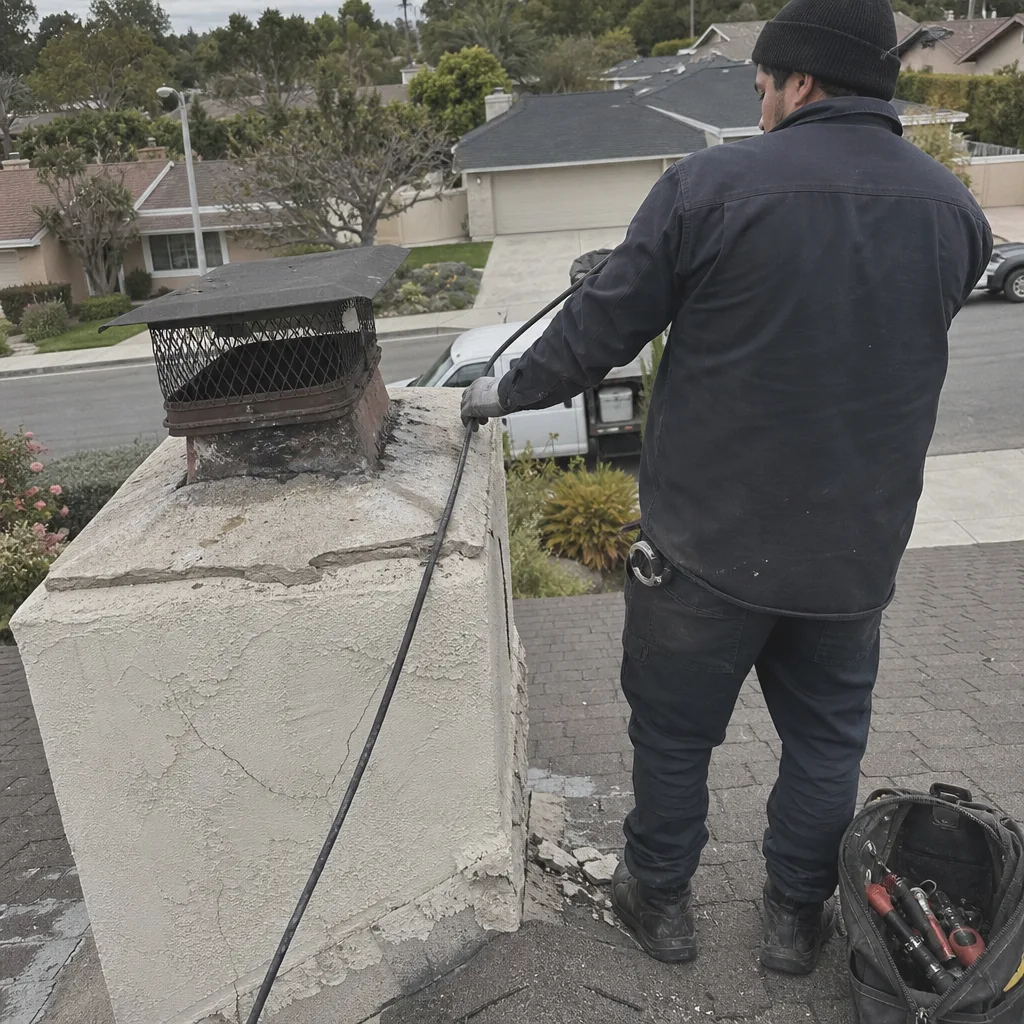 Before
 After
AfterWhite Staining on the Outside of the Chimney
What’s Happening
That white, powdery or streaky staining on your chimney’s exterior is almost always efflorescence – mineral salts being pushed out of the masonry by water moving through the brick or mortar. It’s a reliable signal that moisture is getting in somewhere it shouldn’t be, and the staining itself is the least of your worries. What matters is finding the entry point before the water does more damage.
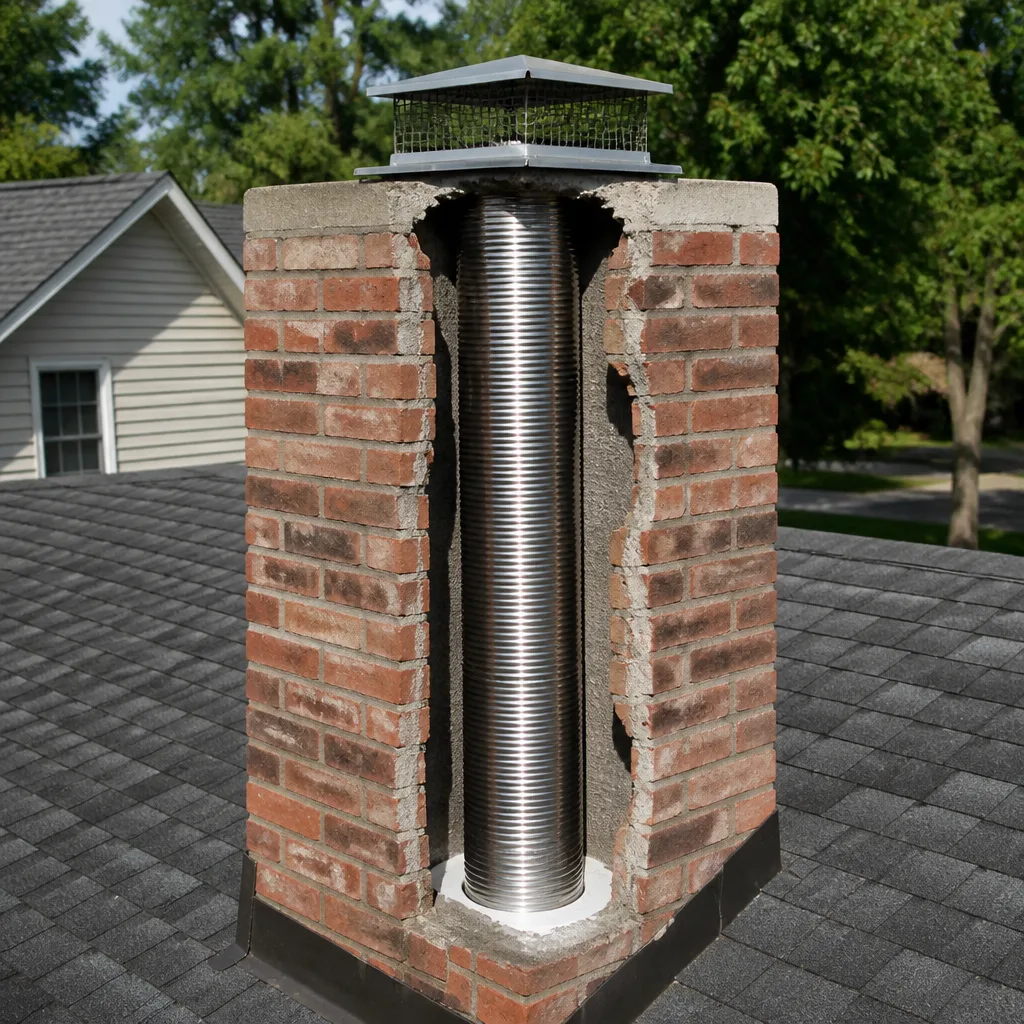
Here’s the plain explanation: brick and mortar contain water-soluble salts. When water soaks into the masonry, it dissolves those salts and carries them toward the surface. As the water evaporates, the salts are left behind as a white crust or haze. The staining will keep coming back – and getting worse – until the water source is sealed. In older chimneys especially, repeated wet-dry cycles break down mortar joints, crack the flue liner, and eventually work their way into the attic or ceiling below. The stain is your chimney telling you something specific, and it’s worth listening.
Why It Happens
Failing or Missing Crown
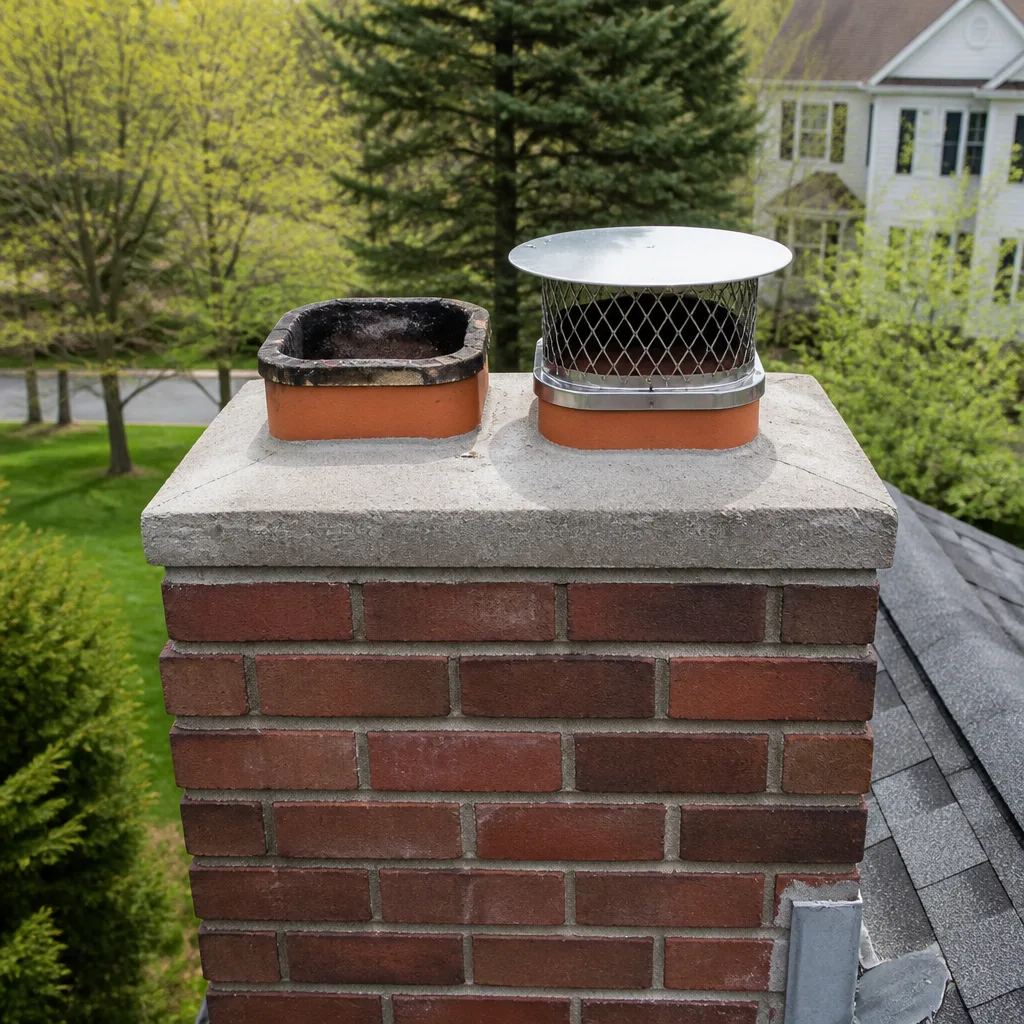
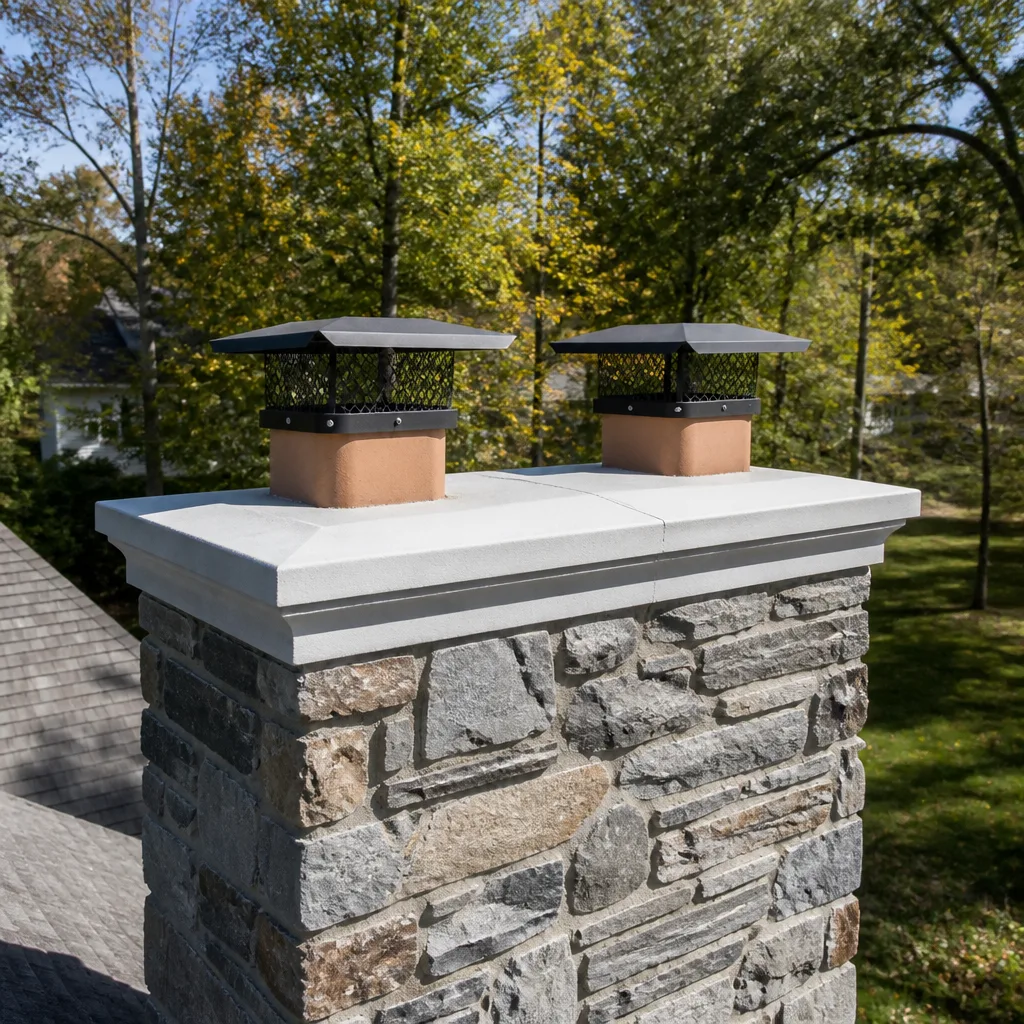
The chimney crown is the sloped concrete or mortar cap that covers the top of the chimney structure and sheds rain away from the flue opening. When it cracks or crumbles – which it does as it ages, especially through freeze-thaw cycles – water runs straight down the face of the chimney rather than off it. If the staining is concentrated near the top of the chimney or runs in distinct vertical streaks from the crown line downward, this is the most likely cause. You can often see crown cracking with binoculars from the ground without getting on the roof.
Deteriorated Mortar Joints
Mortar is softer than brick by design – it’s meant to absorb movement and be replaced periodically. When mortar joints erode, they leave small gaps that funnel water directly into the chimney’s core. If the efflorescence is spread across a wider section of the chimney face rather than running from the top, and you can see mortar that looks recessed, crumbly, or hollow between the bricks, deteriorated joints are a strong candidate. A technician can confirm with a close inspection and probe.
Flashing Failure
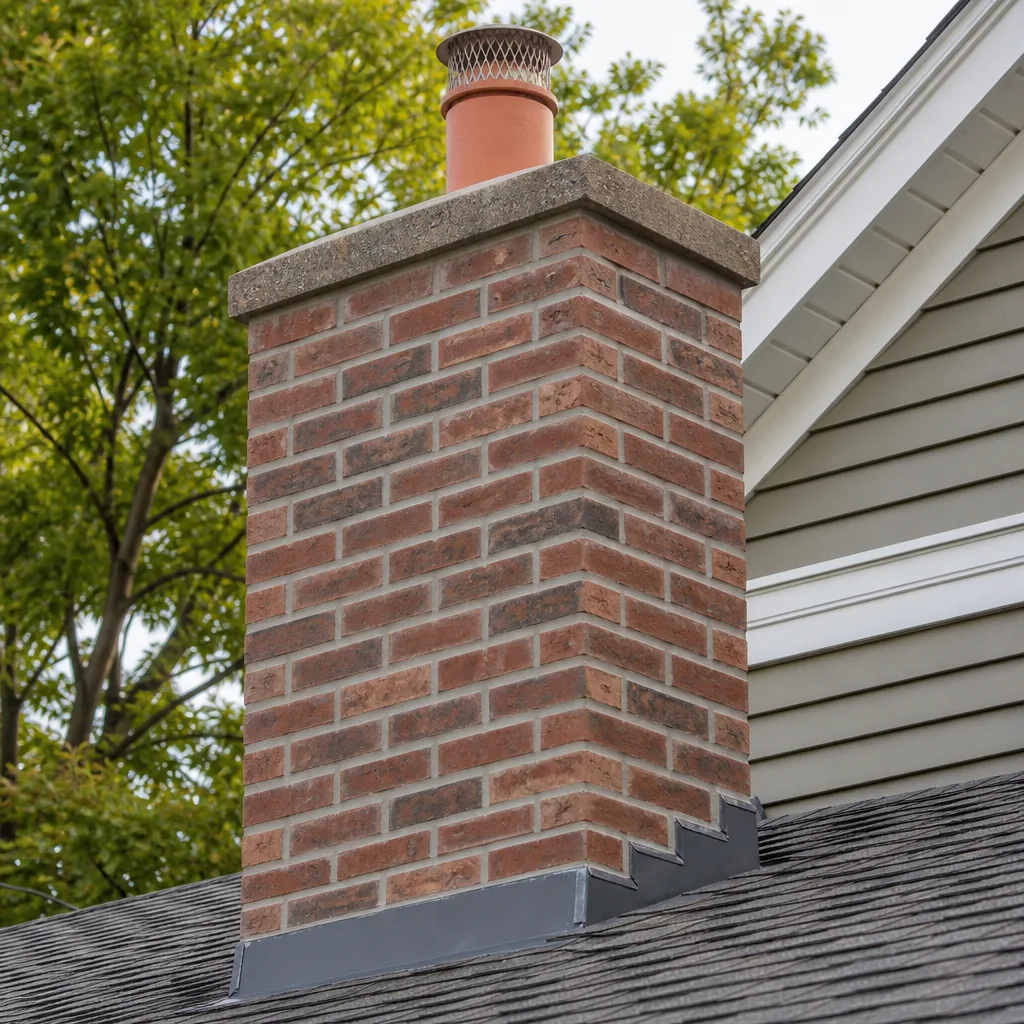
The flashing is the metal seal where the chimney meets the roof. When it corrodes, pulls away from the masonry, or was installed too shallow to begin with, water migrates behind it and travels down into the chimney structure. Flashing-related staining often shows up lower on the chimney, near the roofline, and you may also notice water stains on the ceiling or attic framing nearby. Do not get on the roof to check this yourself – let a technician assess it safely from proper access.
No Waterproofing or Sealer Degradation
Masonry is porous. Untreated brick absorbs water readily, and even treated brick eventually loses its sealer as it weathers. If your chimney has never been waterproofed – or was treated years ago and hasn’t been since – the entire exterior face becomes a slow sponge during rain. Efflorescence from this cause tends to appear more evenly distributed across the chimney face, without a concentrated streak pattern pointing to one specific entry point. It’s the most diffuse presentation of the four, and also the most preventable going forward.
What to Do Right Now
- Stop using the fireplace until the source of moisture is identified. If the flue liner is compromised – which water intrusion can cause or accelerate – burning in a damaged liner is a carbon monoxide and chimney fire risk. Don’t light another fire until a technician has confirmed the system is safe.
- Take photographs now, before anything dries. Capture the full chimney face and any concentrated staining patterns. A photo taken right after rain or dew is especially useful because it can show where water is actively wetting the surface. These images help the technician zero in faster.
- Check indoors for water stains. Look at the ceiling near the fireplace, the attic framing directly above the chimney chase, and the wall behind the firebox for any discoloration or soft spots. Document what you find – it adds context that a camera inspection alone may not catch.
- Do not attempt to clean or seal the staining yourself yet. Applying a waterproofer or masonry sealer over active efflorescence traps salts in the wall and can make the underlying problem harder to diagnose. The staining needs to be evaluated first, not painted over.
- Call your local Flint Chimney Sweep team to schedule an inspection. The white staining is a symptom – finding the water entry point is the job. A camera inspection of the flue liner and a close review of the crown, flashing, and mortar joints will tell you exactly what you’re dealing with and what, if anything, needs repair.
How We Fix It
When your local Flint Chimney Sweep technician arrives, the first step is a chimney inspection – a close review of the crown, flashing, mortar joints, and flue liner to locate every water entry point. Nothing gets skipped, because a repair that misses one source means the water finds another path.
Once the inspection is complete, you get a written price for the recommended work before anything starts. That’s not a policy we bend – it’s one of the five points in the Garrison Code, and it applies to every job without exception.
Depending on what the inspection finds, the repair path might include repointing deteriorated mortar joints, rebuilding or resurfacing a cracked crown, resealing the flashing, applying a professional-grade masonry waterproofer, or addressing liner damage using materials like HeatShield or DuraFlex where appropriate. Most single-cause repairs are completed in one visit. More involved work – a full crown rebuild or liner repair – may take a few hours. Every repair is covered by our 365-Day Done Right Promise: if covered work fails within a year of the service date, we come back and make it right at no charge.
Frequently Asked Questions
The staining itself isn’t the danger – the water causing it is. Sustained moisture intrusion can crack the flue liner, which is the barrier between combustion gases and your home’s framing. A damaged liner raises real carbon monoxide and chimney fire risk. The stain is a visible flag that something is letting water in, and that something needs to be found and sealed before the damage becomes a safety issue rather than a cosmetic one.
It can wait a few weeks if the fireplace is not in use and there’s no active water coming into the house. What it can’t do is wait a season. Water intrusion through masonry compounds with each rain and every freeze-thaw cycle – a hairline crack in the crown becomes a split, a slightly recessed mortar joint becomes a gap, a soft flashing edge pulls further away from the brick. The longer the entry point stays open, the more masonry and liner repair costs tend to climb. If you’re heading into a wet season or winter, call sooner rather than later. Reach your local Flint Chimney Sweep team at (830) 251-4560 to get an inspection scheduled.
Our phones are staffed by a live person around the clock – no voicemail, no callback form, no waiting until Monday. When you call, you talk to someone who can check availability for your local Flint Chimney Sweep team and get you on the schedule. We don’t make promises about specific arrival windows here because every market’s availability is different, but calling (830) 251-4560 is the fastest way to find out what’s open.
A liner replacement is only recommended when the inspection shows the liner is actually compromised – cracked, separated, or deteriorated to a point where it can’t safely contain combustion byproducts. We use a camera to document what’s in there, and you see the findings before any recommendation is made. Nothing is recommended without evidence you can look at yourself, and nothing gets started until you’ve approved a written price. If the liner is fine, we’ll tell you that too – and what does need attention. Call (830) 251-4560 to book the inspection and see exactly what you’re working with.
Get It Fixed
White staining means water is moving through your masonry, and water doesn’t stop on its own. Your local Flint Chimney Sweep team will inspect the chimney, identify every entry point, and give you a written price for the repair before any work begins. Call (830) 251-4560 – a live person picks up, any hour.
Written by Hank Delano, Owner at Flint Chimney Sweep, part of the Garrison Partners family of chimney service companies since 2002.
What Our Customers Say
"Sweep showed up on time, in uniform, and ran a tight job. Cleaned the flue, inspected the firebox, and gave me a short written report. Veteran-run and it shows."
- Walt R."Chimney repair on loose bricks near the top. Tuckpointed it so it matches. Looks right."
- Rosa H."Direct, no nonsense, and polite. Exactly what I wanted."
- Tina W.