
Last updated October 9, 2026
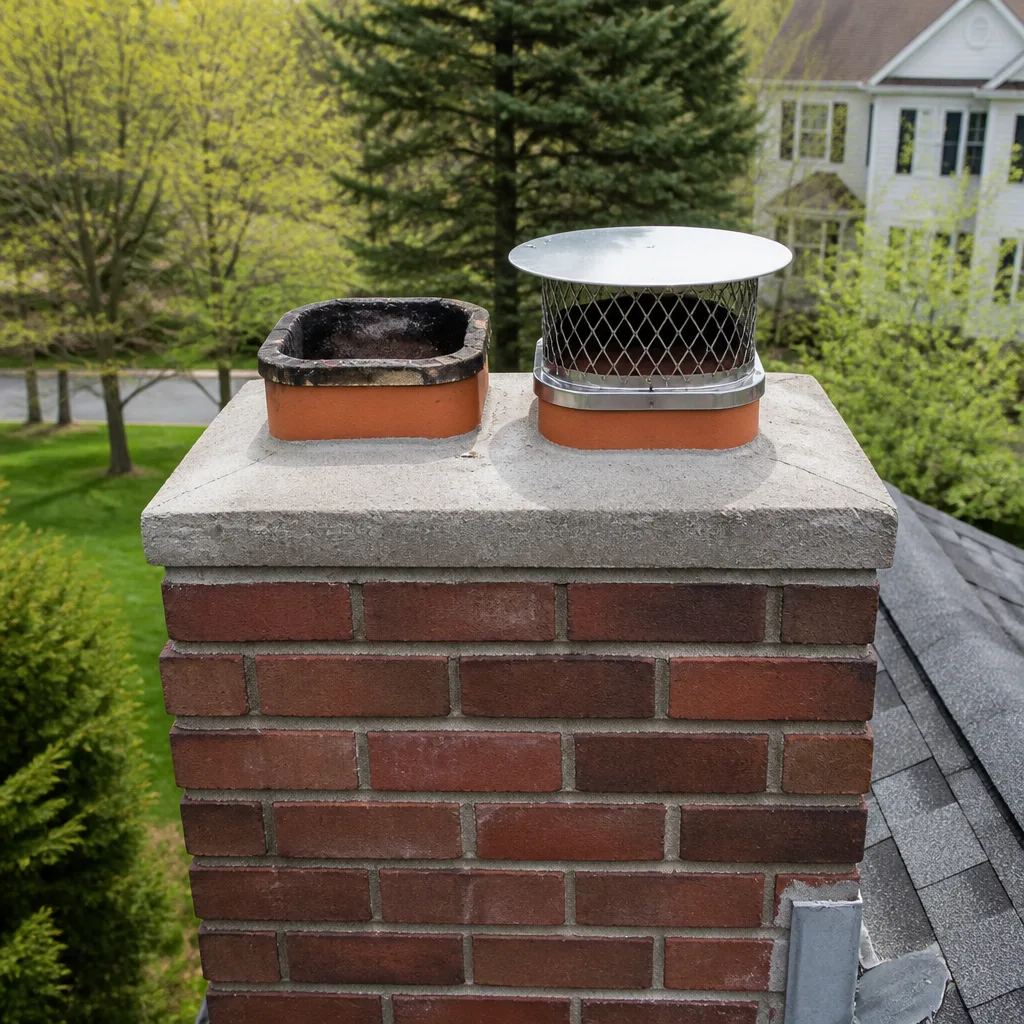
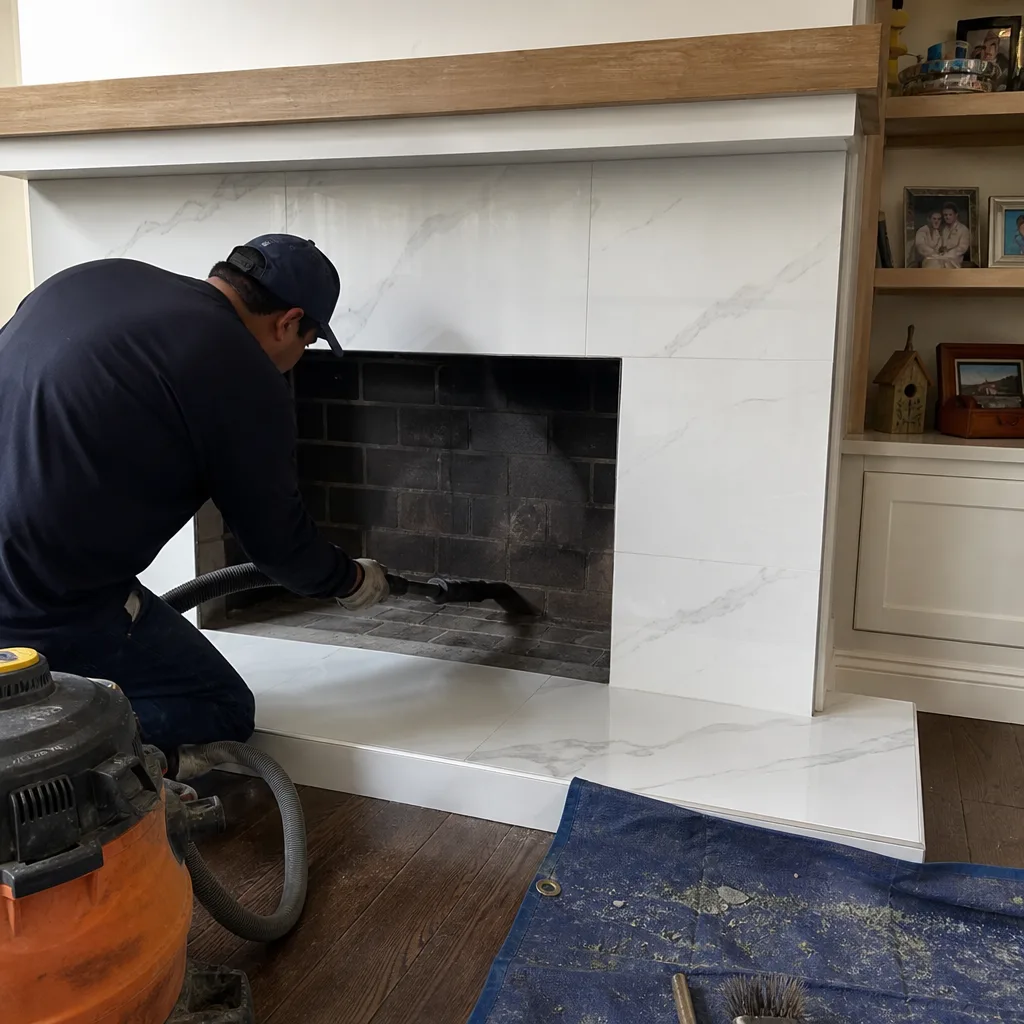
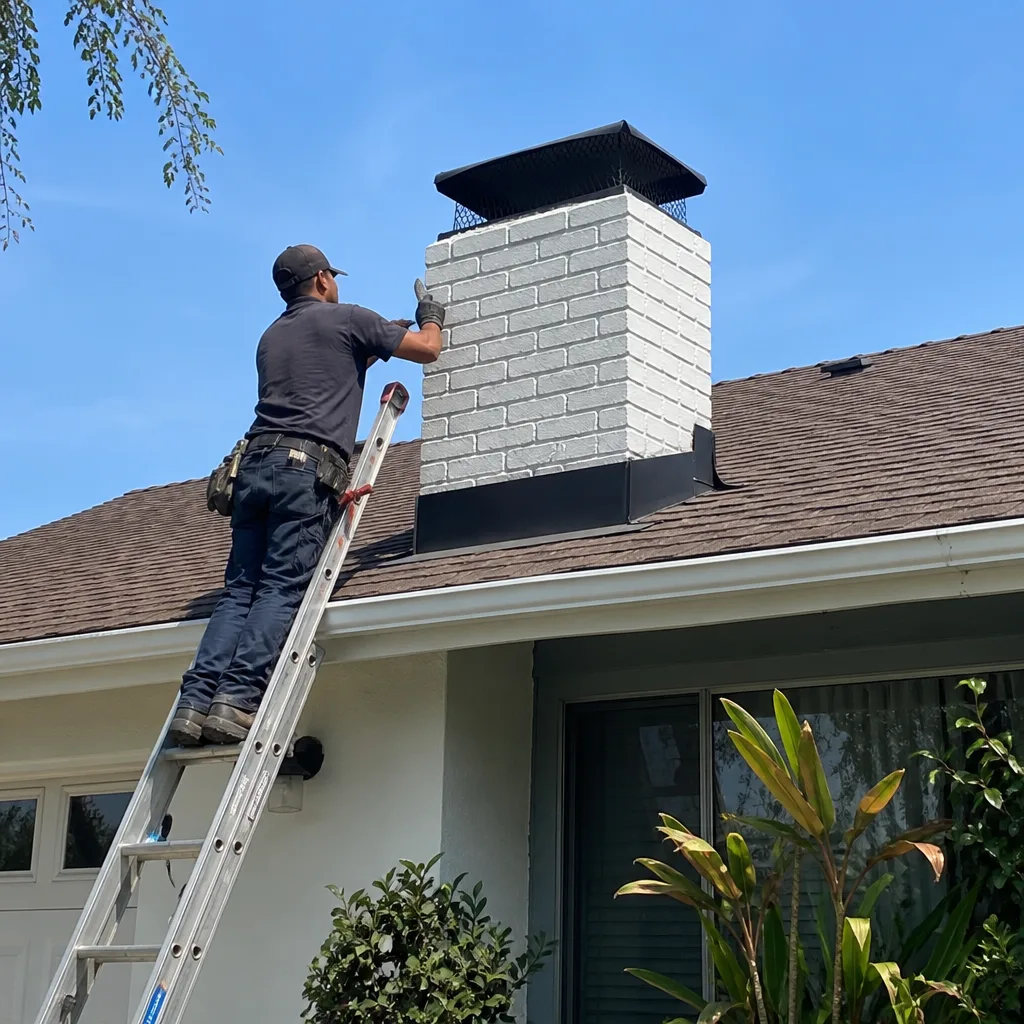
Level 1 sweep and inspection to the NFPA 211 annual standard - flue, crown, cap, and flashing checked and photographed
Chimney sweep logs do not sweep chimneys. They loosen some creosote - which then falls where a brush and vacuum still have to collect it.
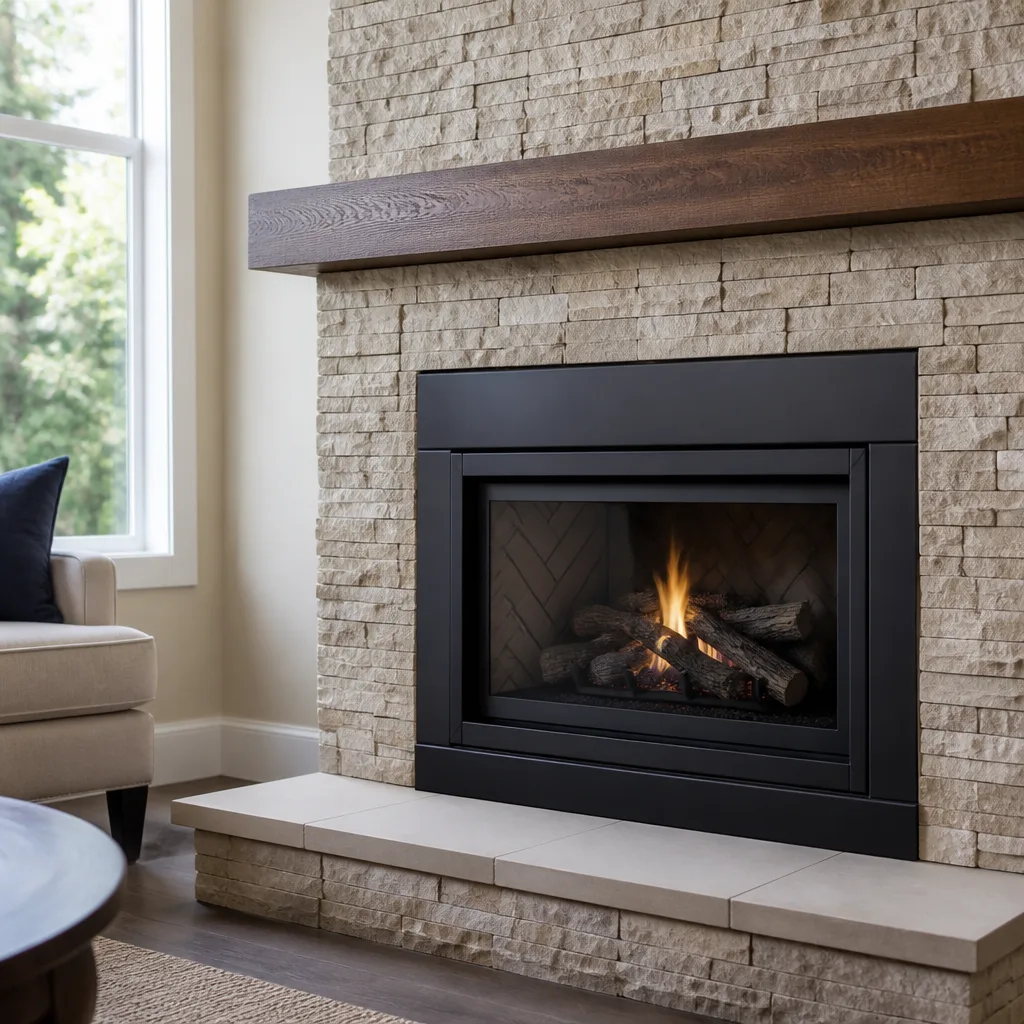
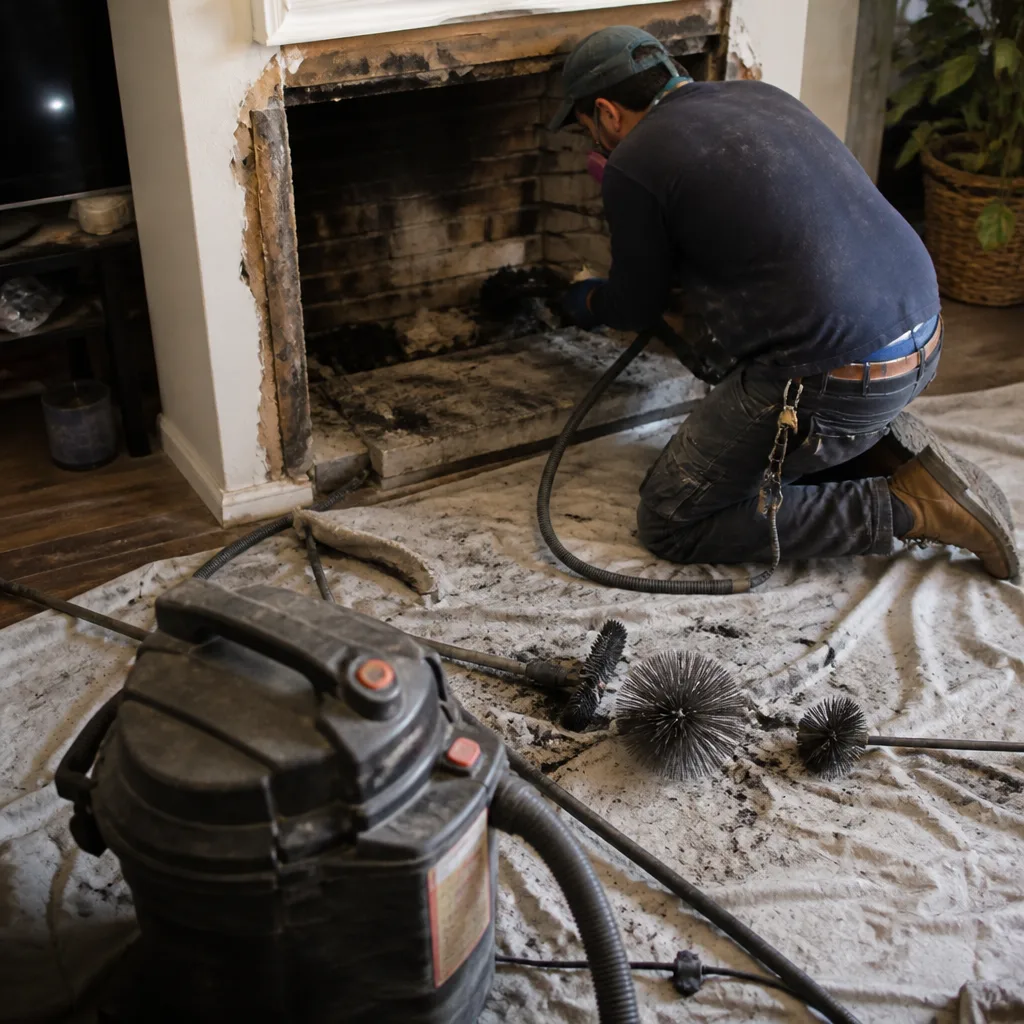 Before
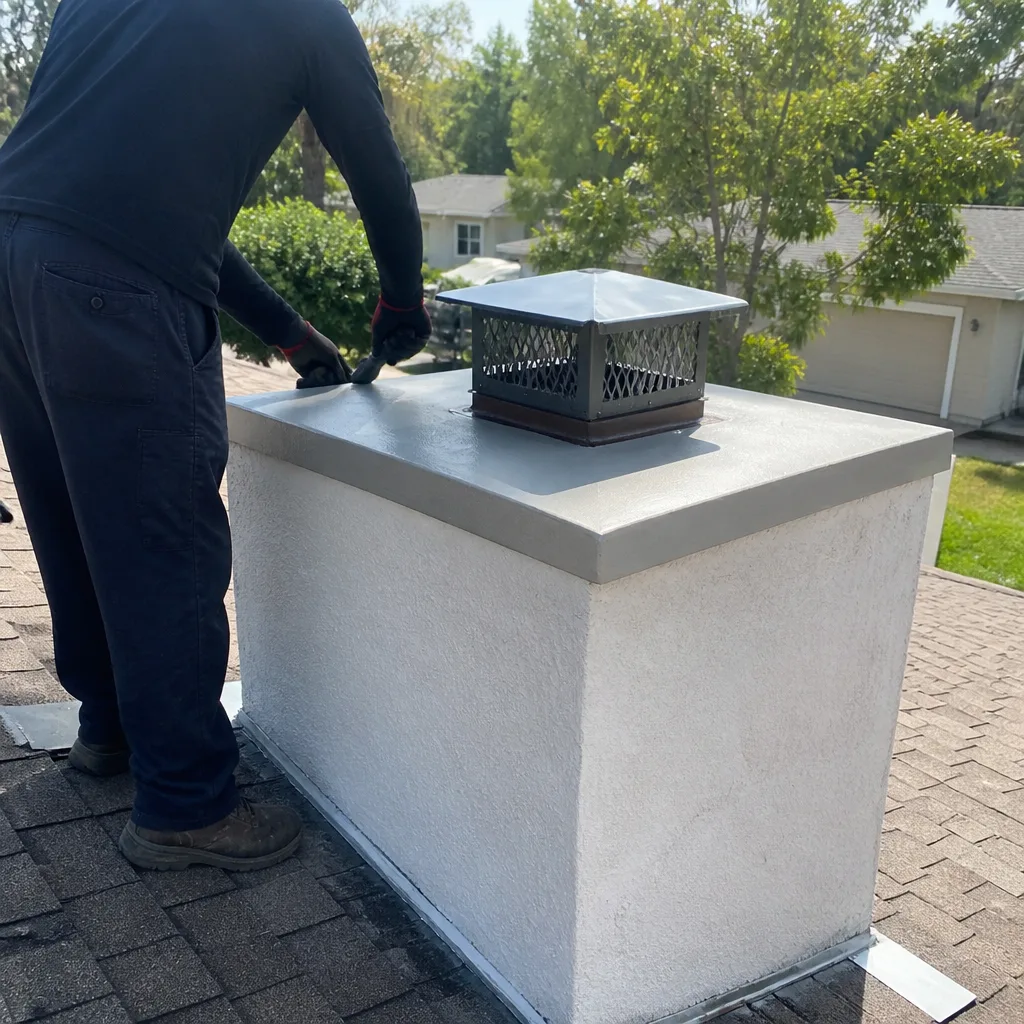 After
After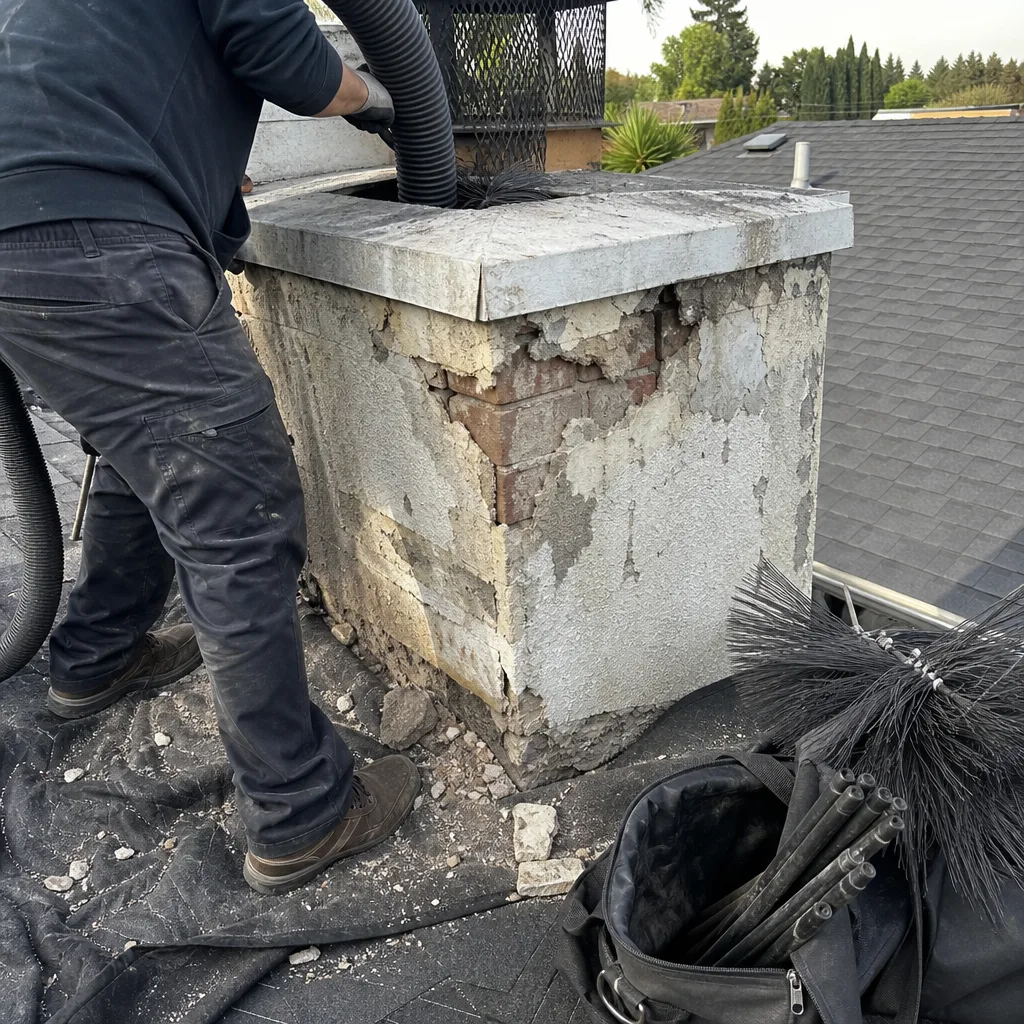 Before
 After
After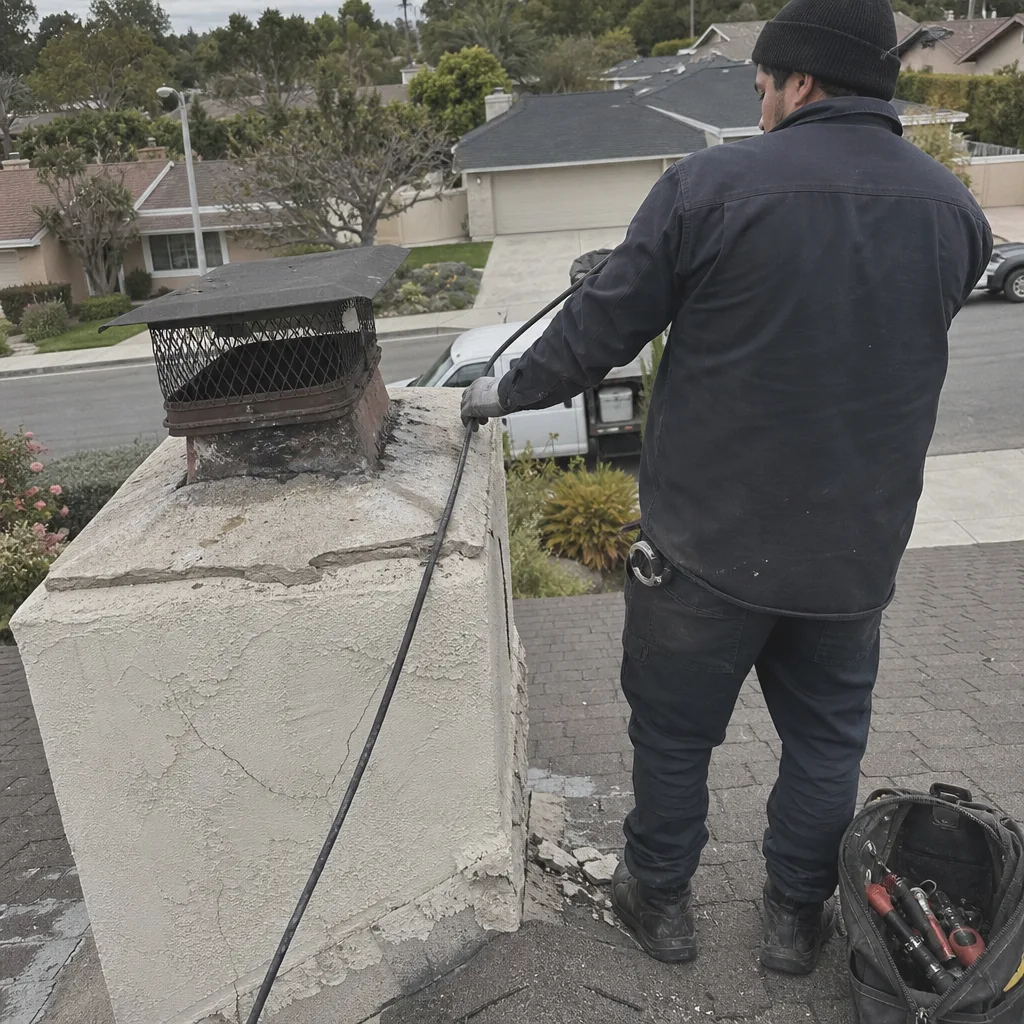 Before
 After
AfterHow Long Does Chimney Repair Take? Timelines and What to Expect
A chimney crown rebuilt on a Monday should not be fireplace-ready by Friday. Fresh mortar needs 28 days to reach full cure strength, and rushing that window is the most common reason repairs fail within a year. In Los Angeles, where mild weather makes homeowners eager to get back to the fireplace, understanding the difference between labor time and cure time is the difference between a repair that lasts one season and one that lasts twenty. This guide walks through the real timelines for every major chimney repair, the material lead times that affect scheduling, and what a trustworthy contractor should put in writing before any work begins.
Quick Answer
Most chimney repairs in Los Angeles take between 4 hours and 2 full days of on-site labor, but total project time ranges from 1 day to 4 weeks depending on mortar cure windows, material lead times, and weather delays. For a deeper look at scheduling, see our guide on How Long Does Chimney Sweep Take? Timelines and What to Expect. A simple flashing repair can be done in a single afternoon, while a crown rebuild or repointing job requires a 28-day cure period before the fireplace should be used again. Anyone quoting only labor hours is leaving out the part of the timeline that actually determines whether the repair holds.
Table of Contents
- Labor Time vs. Cure Time: The Two Timelines That Matter
- Repointing: 1-2 Days Labor, 28 Days to Full Cure
- Flue Liner Replacement: 4-8 Hours, Same-Day Completion
- Crown Rebuild: 1 Day Labor, 28-Day Cure Window
- Flashing Repair: 2-4 Hours, Single Visit
- How Los Angeles Weather Affects Chimney Repair Timelines
- Single Visit vs. Return Appointment: Why a Second Visit Is a Quality Sign
- What a Written Scope of Work Should Include
- Common Mistakes to Avoid
- When to Call a Professional
- Frequently Asked Questions
- The Bottom Line
Labor Time vs. Cure Time: The Two Timelines That Matter
Chimney repair runs on two clocks. The first is labor time: the hours a technician actually spends on your roof, in your attic, or inside the firebox. The second is cure time: the days or weeks a material takes to reach the strength it needs to do its job. Contractors who only talk about the first clock are either inexperienced or hoping you won’t ask about the second.
Mortar, which is a mixture of cement, lime, sand, and water, doesn’t dry. It cures. The chemical reaction that gives mortar its compressive strength takes days to start and weeks to finish. At 7 days, standard mortar reaches roughly 60% of its design strength. At 28 days, it reaches full strength. That’s not a preference. That’s material science, and it applies whether the job is in Los Angeles or Minneapolis.
Here’s what the split looks like in practice for the most common repairs we perform:
- Repointing (tuckpointing): 1-2 days labor, 28 days to full cure
- Flue liner replacement: 4-8 hours labor, usable within 24 hours
- Crown rebuild: 1 day labor, 28 days to full cure
- Flashing repair: 2-4 hours labor, usable immediately
- Damper repair or replacement: 1-3 hours labor, usable immediately
- Chimney cap installation: 30-60 minutes labor, usable immediately
The takeaway: if a contractor tells you a crown rebuild will be “done and ready to use” in three days, they’re either skipping the cure window or they don’t understand the materials they’re installing. Either way, the repair is set up to fail.
Repointing: 1-2 Days Labor, 28 Days to Full Cure
Repointing, also called tuckpointing, is the process of removing deteriorated mortar from the joints between bricks and replacing it with fresh mortar. In Los Angeles, where many homes built between 1920 and 1980 have traditional brick chimneys, repointing is one of the most frequently needed repairs. The mortar between bricks is sacrificial: it’s designed to wear out before the bricks do, and after 30 to 50 years in Southern California sun and marine-layer humidity, it often needs replacement.
The labor itself is methodical. A technician grinds out the old, cracked mortar to a depth of about ¾ inch, cleans the joints, and packs in new mortar in layers. On a typical single-flue chimney, this takes one full day. On a larger chimney or one with significant surface area to cover, expect two days. The technician must also protect the surrounding area, since grinding kicks up dust, and clean the work site at the end of each day.
Then comes the part nobody wants to hear: the 28-day cure window. The mortar will feel dry to the touch within 24 hours, but touching it and using it are two different things. During those four weeks, the mortar is still gaining strength. If you light a fire before the cure window closes, the thermal expansion and contraction stress the fresh joints before they can handle it. The result is hairline cracking that cuts the life of the repair to a fraction of what it should be.
What a homeowner should ask before agreeing to a repointing job: “When can I safely use my fireplace again?” A contractor who gives a written answer of 28 days from the completion date is following the material spec. A contractor who says “a few days” or “whenever you want” is guessing, and their repair will probably need repointing again inside of three years.
Flue Liner Replacement: 4-8 Hours, Same-Day Completion
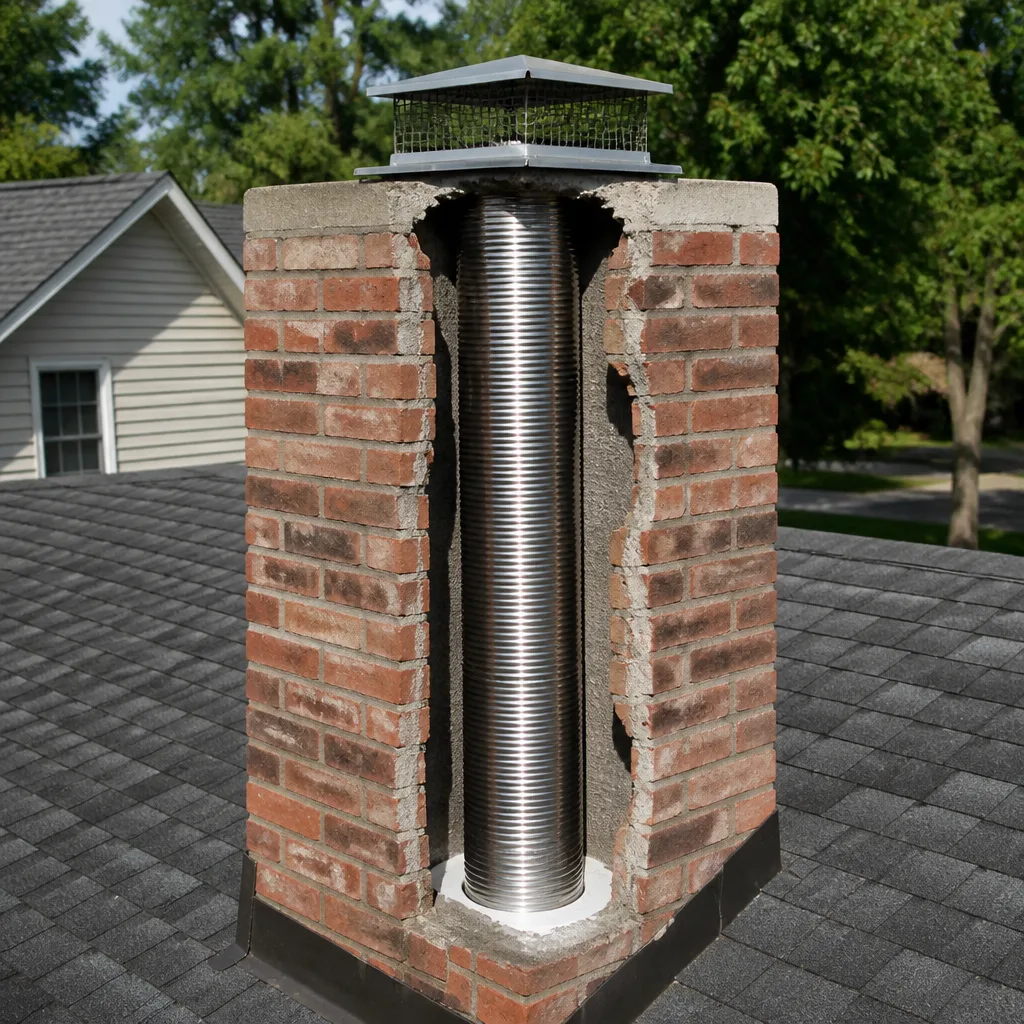
The flue liner is the inner sleeve that channels smoke and combustion gases safely from the firebox to the outside. In many older Los Angeles homes, the original liner was built from terra cotta tile. Over decades of heating and cooling cycles, those tiles crack. Cracked liners allow heat and gases to reach the surrounding masonry and, in serious cases, the wood framing of the house. That’s not a cosmetic issue. That’s a fire risk.
Replacing a liner is one of the faster major chimney repairs we do. In most cases, the old liner is either removed or prepped, and a new stainless steel liner is fitted down the flue. Systems like DuraFlex, which use a flexible corrugated stainless steel construction, are designed for this exact retrofit application. The installation process takes 4 to 8 hours depending on the height of the chimney, the condition of the existing flue, and whether any obstructions need to be cleared first.
Unlike mortar-based repairs, a stainless steel liner doesn’t require a cure window. The appliance can typically be used within 24 hours of installation, provided the connection at the appliance and the termination at the top have been properly sealed and checked. In our experience, most Los Angeles customers with a DuraFlex liner replacement are back to burning the same week, not the same month.
One thing that does add time to the project is the inspection that should precede it. Before we quote a liner replacement, we run a camera up the flue to see exactly what’s happening inside. If the liner has collapsed in sections or the flue has an offset that requires a custom fit, the job takes longer to quote and longer to complete. That inspection time is not wasted time. It’s the reason the price we give is the price the job costs, and it’s the reason Chimney Inspection in Los Angeles is a required step before any major repair.
Crown Rebuild: 1 Day Labor, 28-Day Cure Window
The chimney crown is the concrete or mortar surface at the very top of your chimney that sheds water away from the flue and the masonry below. It’s the single most important water-management component on the entire chimney, and in Los Angeles it takes a beating. The combination of intense UV exposure, occasional heavy rain, and the marine layer air that rolls through the west side and the South Bay makes crowns crack. When a crown cracks, water gets into the chimney chase and starts doing damage a homeowner can’t see.
A crown rebuild means knocking out the old crown, building a form, and pouring a new crown with a proper slope, a drip edge, and an expansion gap around the flue tile. The labor is typically one full day. Two technicians, one mixing and one placing, can complete a standard residential crown before sundown.
The cure window is where the timeline stretches. Concrete and mortar crowns need 28 days to reach full compressive strength, and during that window the crown should not be exposed to the thermal cycling that comes from an active fire. Los Angeles weather helps a bit here: with daytime temperatures in the 60s to 80s most of the year, the cure happens steadily. But “steady” still means four weeks. A crown rebuilt in January should be ready for use by late February. A crown rebuilt in June should be ready by July.
We also recommend a crown sealant applied after the cure window closes. Products like Gelco crown sealant add a waterproof membrane on top of the new crown, which buys additional years before the next rebuild. The sealant itself has a drying window of 24 to 48 hours, so plan for a short return visit if the sealant wasn’t applied on the same day as the build.
Flashing Repair: 2-4 Hours, Single Visit
Flashing is the metal barrier at the point where the chimney meets the roof. Its job is to keep water out of the gap. When it fails, the leak is often mistaken for a roof problem, because water shows up on the ceiling near the chimney chase. In Los Angeles, where many roofs are flat or low-slope with built-up roofing material, flashing repair is one of the most common chimney calls we field.
Repairing flashing is a 2 to 4 hour job in most cases. The process involves removing the old flashing material, inspecting the masonry beneath, installing new step flashing and counter-flashing, and sealing the seams. Famco and Copperfield both make flashing components that are rated for the coastal and semi-arid conditions we see across Los Angeles County. The materials are relatively inexpensive; the labor is the cost, because working at the roof line requires ladder work and careful sealant application.
There’s no cure window for flashing. The repair is usable the moment the sealant sets, which typically takes a few hours. That makes flashing one of the few chimney repairs that can be fully completed in a single visit with no return appointment. If we’re already on site for a Chimney Sweep in Los Angeles, we can often address flashing in the same day.
The caveat: flashing repair only works if the masonry around it is sound. If the bricks beneath the flashing are spalling or the mortar joints are crumbling, new flashing won’t stop the leak. In that case, the flashing job becomes part of a bigger masonry repair, and the 28-day cure window enters the picture.
How Los Angeles Weather Affects Chimney Repair Timelines
Los Angeles has some of the most consistent masonry weather in the country, and that’s a genuine advantage when scheduling chimney repairs. But it’s not a free pass. Three specific weather factors affect timelines here.
First, rain. Mortar, crown material, and sealant cannot be applied in standing water or during active rainfall. Los Angeles gets most of its rain between November and March, and those winter rains are exactly when many homeowners discover they need chimney work. A crew might need to reschedule a masonry repair if a storm is passing through. The delay is typically one to three days, not weeks, but it’s real.
Second, temperature. Masonry materials have a minimum application temperature, usually around 40°F and rising. In Los Angeles, that floor is rarely an issue except on winter mornings in the foothill communities like La Cañada or Tujunga, where temperatures can dip below 40 before sunrise. A good contractor watches the overnight forecast and starts masonry work after temperatures have climbed safely above the minimum.
Third, humidity and marine layer. The morning overcast that rolls in from the coast, especially in areas like Santa Monica, Playa del Rey, and San Pedro, can extend sealant drying times by a few hours. It doesn’t stop work, but it does mean a crown sealant applied at 9 a.m. in Redondo Beach might need until the next morning to fully set, while the same sealant applied in Burbank dries by late afternoon.
The practical takeaway: in Los Angeles, weather delays are measured in days, not months. But they exist, and a contractor who doesn’t mention them is not being straight about the schedule.
Single Visit vs. Return Appointment: Why a Second Visit Is a Quality Sign
Some chimney repairs are finished in one visit. Flashing repair, cap installation, damper replacement, and stainless steel liner installation fall into that category. The technician arrives, does the work, cleans up, and you’re done. No second appointment needed.
Other repairs require a return visit, and that’s not a sign the contractor is disorganized. It’s a sign the contractor is following the material science. Here’s why a second visit exists for masonry work:
- Sealant application. Crown sealant and water repellents often need a fully cured substrate to bond properly. If the crown was poured today, the sealant goes on in 28 days.
- Cure verification. A proper company sends someone back to check that the new mortar or crown has cured without cracking or shrinking. That check takes 20 minutes and catches problems early, while the fix is still covered.
- Final waterproofing. On a repointing job that included a water repellent treatment, the repellent goes on after the cure window, not before.
- Inspection of the finished work. After the materials have settled, a camera inspection confirms the flue is clear and the work is holding.
Flint Chimney Sweep includes the return visit in the written price. You don’t pay extra for it, and you don’t get to decide to skip it. The written scope of work we provide before any job begins includes the projected timeline for both the initial labor and the follow-up. That document is yours to hold us to, and it operates under The Garrison Standard: the price on the page is the price you pay, and the work we commit to is the work we do.
What a Written Scope of Work Should Include
Every chimney repair we perform starts with a document. Not a verbal estimate. Not a handshake. A written scope of work that spells out what’s being done, what materials are being used, what it costs, and how long it’s going to take. If your contractor can’t produce this document before starting, find a different contractor. For help vetting professionals, read How to Hire a Chimney Cleaning Contractor in Los Angeles: A Step-by-Step Guide.
A proper written scope includes these items:
- Specific repair description: “Repoint exterior brick joints on north and east elevations from roofline to crown” is a scope. “Fix chimney” is not.
- Materials specified by brand or type: When the job calls for a stainless liner, we specify systems like DuraFlex. When we’re sealing a crown, we name the sealant. You should be able to look up the material and verify it’s a real, professional-grade product.
- Labor estimate in hours or days: Including the expected number of visits.
- Cure window stated in writing: “Fireplace may be returned to service 28 days after completion of masonry work” is a sentence that should appear on your document.
- Total price, flat: The number on the estimate is the number on the invoice, regardless of whether the job takes longer than expected.
- Guarantee terms: Flint Chimney Sweep includes a 365-Day Done Right Promise on every repair. If a covered repair fails within one year, we return and fix it at no charge. That’s written, not implied.
The Garrison Code is the operating rule here: every job gets a written price before any work begins. No exceptions. In Los Angeles, where the chimney trades have more than their share of contractors who won’t put things on paper, a written scope is the single best way to protect your money.
Common Mistakes to Avoid
- Hiring on price alone. A $400 flashing repair that leaks again in six months costs more than the $700 one done correctly the first time. The second repair always costs more because it includes the damage from the first failure.
- Accepting a verbal quote. In Los Angeles, verbal estimates are how jobs go from $800 to $2,400 after the work starts. If it’s not written, it didn’t happen.
- Ignoring the cure window. Lighting a fire two weeks after a crown rebuild because “it looks dry” is the number one cause of early crown failure we see. The crown is not dry. It is curing.
- Skipping the pre-repair inspection. You cannot properly quote a liner replacement without seeing the inside of the flue. Guessing leads to change orders, which leads to a bill that looks nothing like the estimate.
- Delaying flashing repair because it’s “small.” Flashing leaks are quiet. By the time water shows up on your ceiling, the framing around the chimney has been rotting for months. An 8-hour delay during the rainy season can turn a $600 flashing job into a $2,400 structural repair.
- Choosing the wrong materials for a coastal climate. Some parts of Los Angeles – Mar Vista, Culver City, Long Beach – get enough salt air and marine moisture that standard galvanized flashing corrodes in a few years. A contractor who uses materials like Olympia Chimney’s stainless components or Copperfield flashing are specifying for the environment, not for the cheapest quote.
- Not asking what happens if the repair fails. A written guarantee with a free return visit is not a luxury. It’s the minimum standard for any contractor who stands behind their work. If the answer is “call us and we’ll see,” walk away.
When to Call a Professional
Any repair that involves the structural integrity of the chimney, the function of the flue, or the waterproofing of the crown should be handled by a trained technician. That includes repointing, crown rebuilds, liner replacement, flashing repair, and any work that requires access to the roofline. If you see crumbling mortar, rust staining on the firebox, water in the firebox after rain, or smoke backing into the room, those are signals that a component has failed, not that it’s about to fail. Delaying turns a contained repair into an open-ended one. Flint Chimney Sweep offers free estimates in Los Angeles – call (830) 251-4560 and we’ll come out, inspect the chimney, and put a written quote in your hand. No work starts until you’ve approved the number.
Frequently Asked Questions
Most chimney repairs take 4 hours to 2 days of on-site labor, but the full timeline from first visit to fireplace use runs 1 to 4 weeks when mortar or crown cure windows are involved. Repointing and crown rebuilds need a 28-day cure, while liner replacement and flashing repair are typically fire-ready within 24 hours. We put the full timeline in writing before any work starts so you know exactly what to expect. For a free estimate in Los Angeles, call (830) 251-4560.
Mortar and concrete don’t dry; they cure through a chemical reaction that takes 28 days to reach full compressive strength. Using the fireplace during those four weeks exposes uncured material to thermal expansion, which causes micro-cracking and significantly shortens the life of the repair. The 28-day wait is not a preference; it’s the material specification, and any contractor who says otherwise is not following it.
Yes, several chimney repairs are completed same-day, including flashing repair, damper replacement, chimney cap installation, and most flue liner replacements. Masonry work like repointing and crown rebuilds requires one day of labor plus a 28-day cure period before use, which is why those projects involve a follow-up visit. Los Angeles homeowners considering a one-day repair should ask whether the one-day timeline includes the full cure. Eager to get your chimney safe again? Call (830) 251-4560 for a free quote.
Rain can delay the start of masonry work by one to three days, but it doesn’t stop a project that has already cured past its critical first 24 hours. Los Angeles gets most of its rain between November and March, and a contractor should proactively reschedule rather than attempt to place mortar or sealant on wet surfaces. A one-or-two-day weather delay is normal and worth it; rushed work in wet conditions fails early.
No. A return visit is required for any repair involving mortar or crown work because the sealant and water repellent go on only after the 28-day cure finishes. A contractor who schedules a return visit is following the manufacturer’s instructions, not padding the bill. The key is whether the return visit is included in the original price and written into the scope of work, which it always is with Flint Chimney Sweep’s 365-Day Done Right Promise.
Repair pricing in Los Angeles varies by scope: flashing repair typically runs $400 to $800, repointing $1,500 to $3,500 depending on the size of the chimney, crown rebuilds $800 to $2,200, and liner replacement $2,000 to $5,000. These are honest ranges, not quotes, and the only way to get an accurate number is a camera inspection and a written scope of work. Call (830) 251-4560 for a free estimate – the price we quote is the price you pay, guaranteed.
The Bottom Line
Chimney repair timelines in Los Angeles are driven by two clocks: the labor clock and the cure clock. Labor is measured in hours and days. Cure is measured in weeks, and no amount of skill or ambition can shorten it without compromising the repair. Whether you need a Chimney Repair in Los Angeles, a liner replacement using systems like DuraFlex, or a flashing fix, the contractor you hire should tell you both numbers before you sign anything. At Flint Chimney Sweep, the timeline goes in writing. The price goes in writing. The guarantee goes in writing. And if the repair fails inside a year, we come back. No charge, no argument. That’s The Garrison Standard, and it applies on every job we do.
Written by Hank Delano, Owner at Flint Chimney Sweep, serving Los Angeles since 2002. Explore our more guides & resources for chimney care.