
Last updated October 9, 2026
Level 1 sweep and inspection to the NFPA 211 annual standard - flue, crown, cap, and flashing checked and photographed
Chimney sweep logs do not sweep chimneys. They loosen some creosote - which then falls where a brush and vacuum still have to collect it.
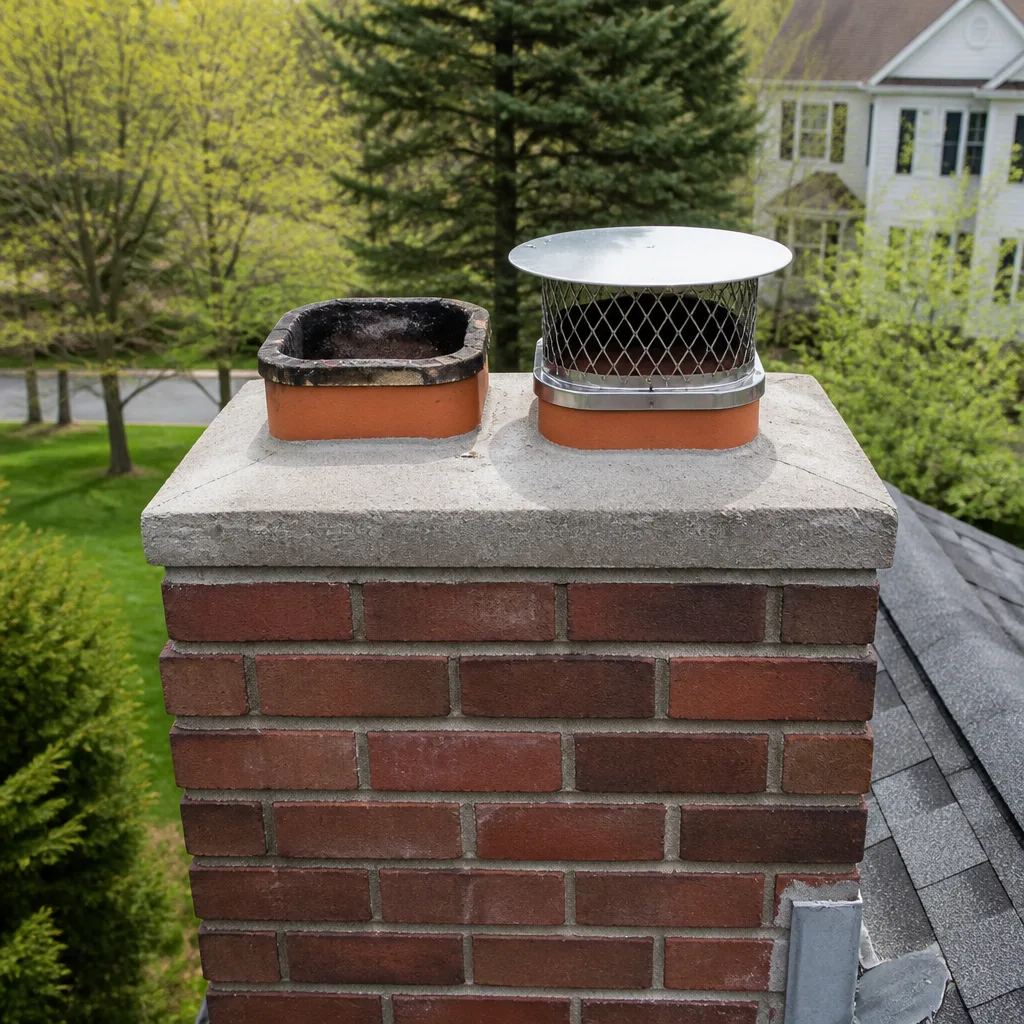
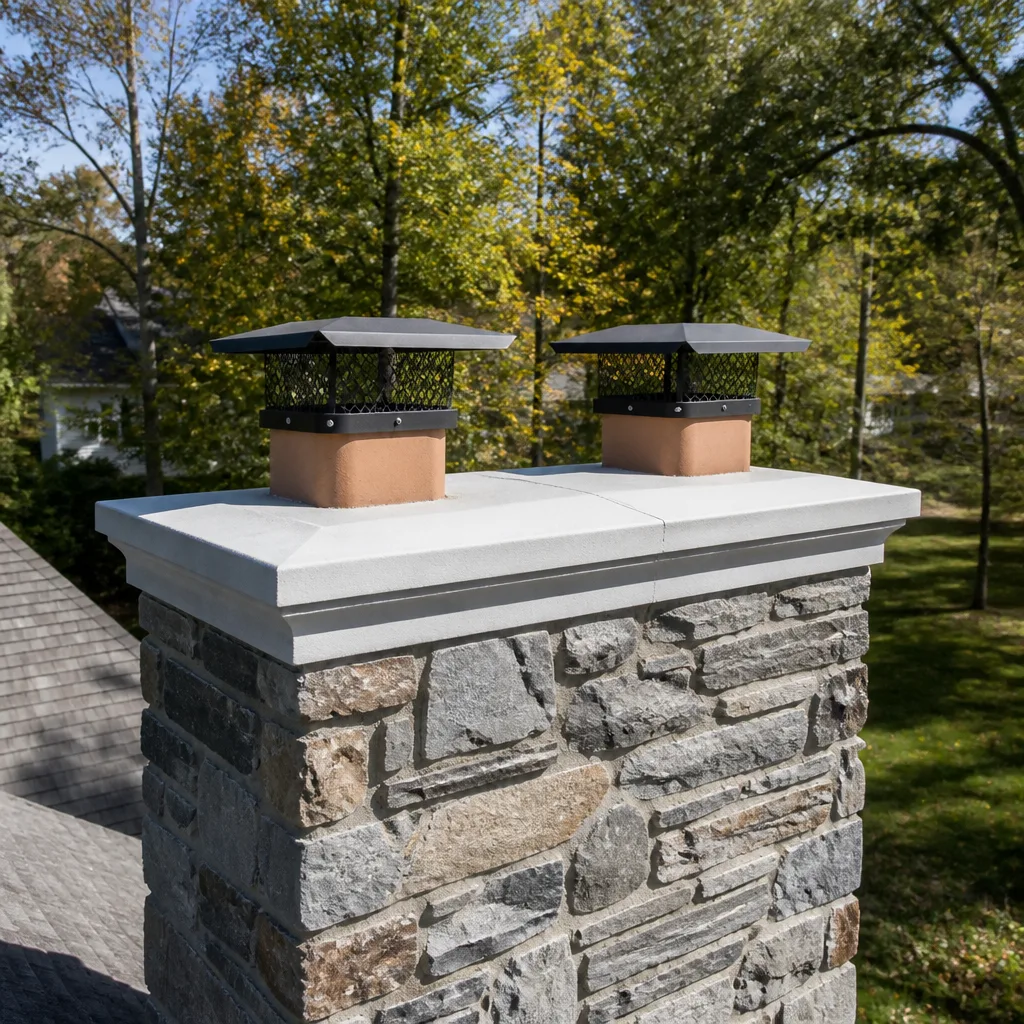
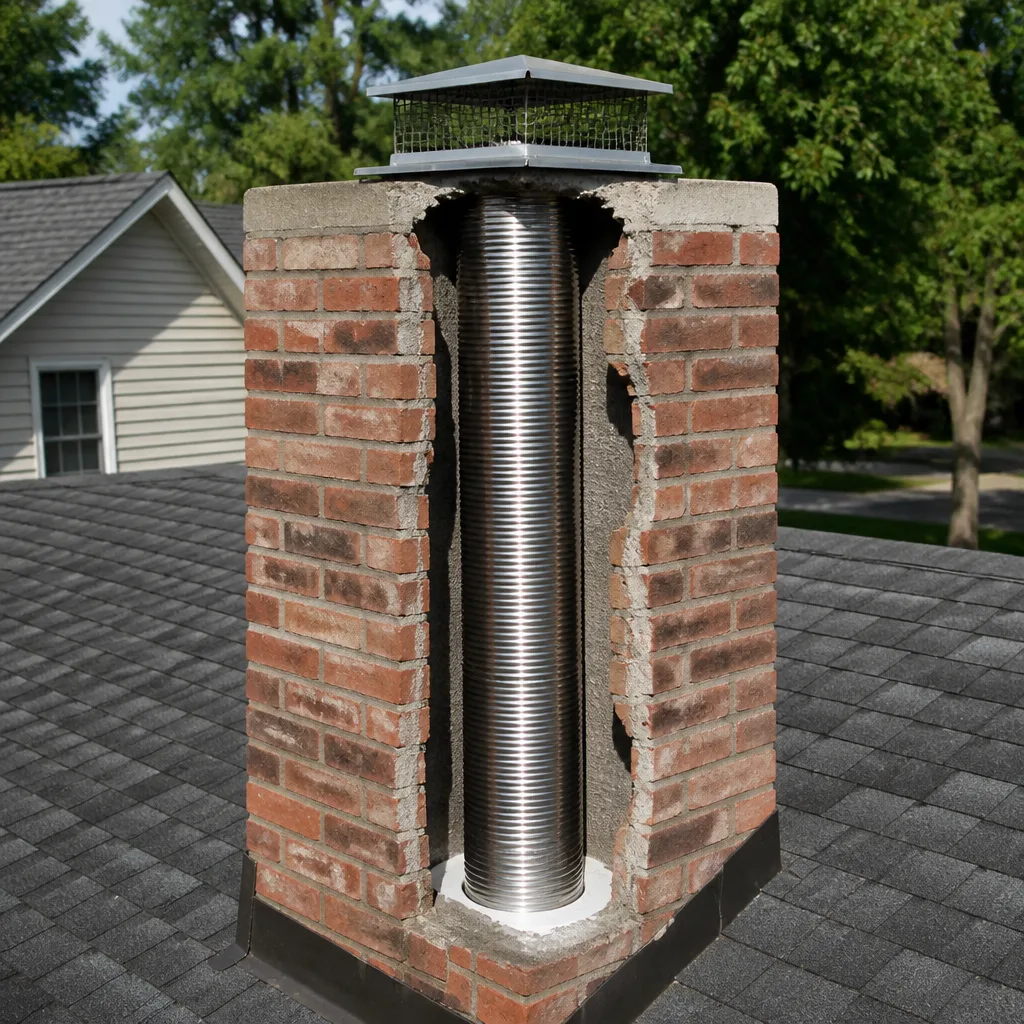
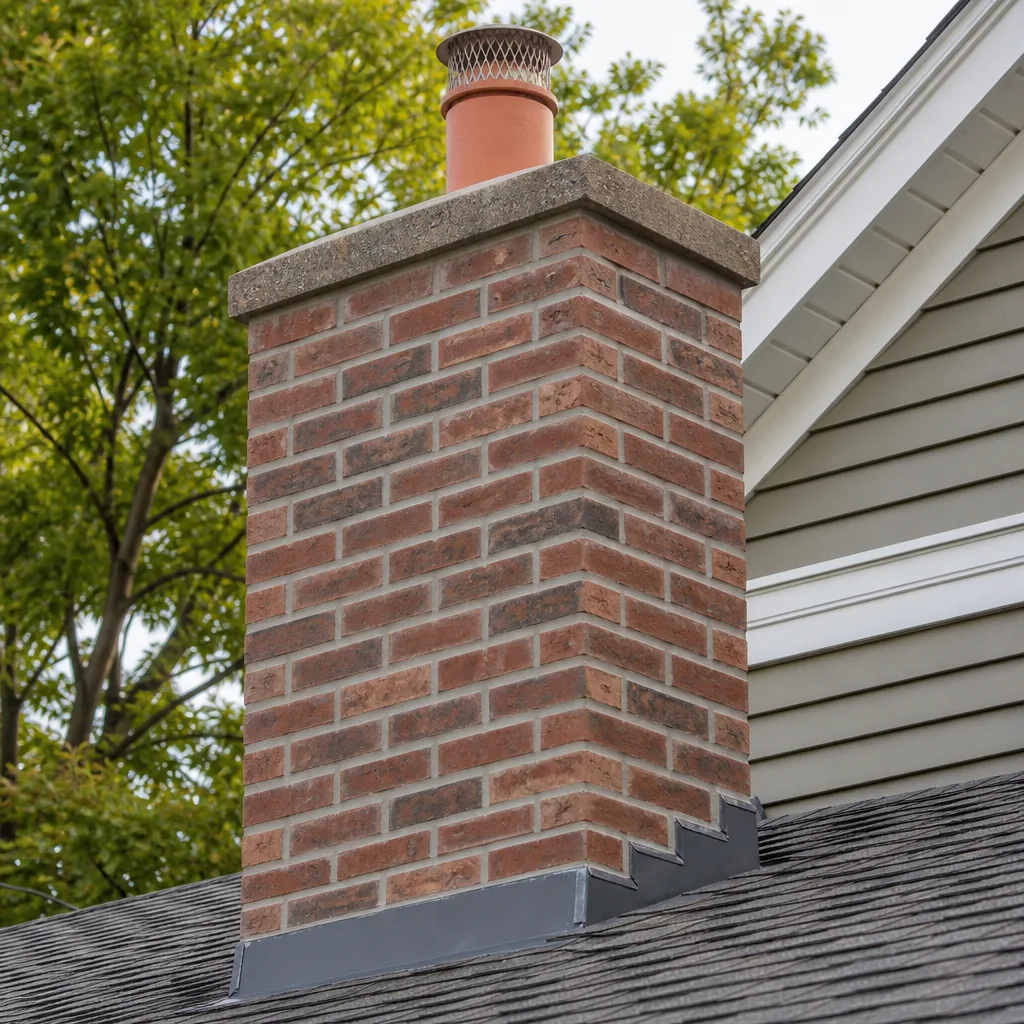
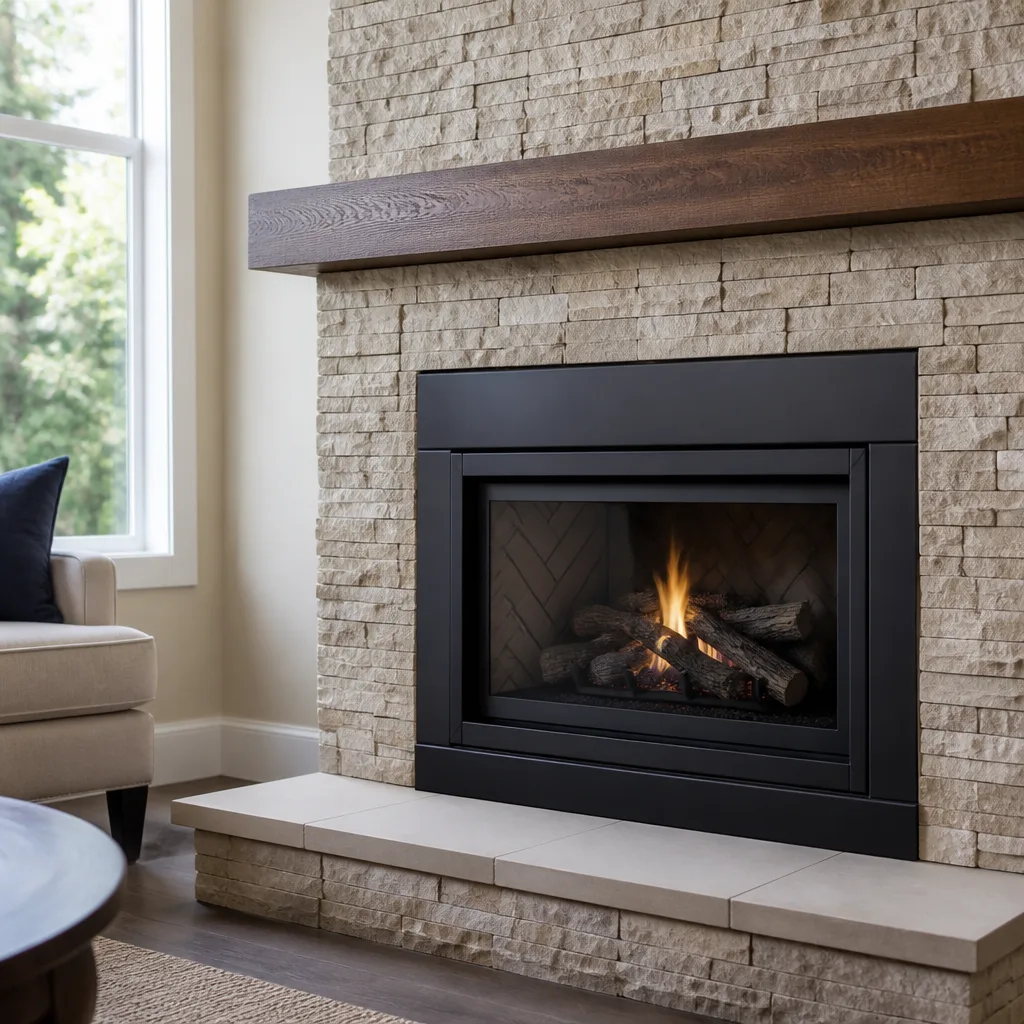
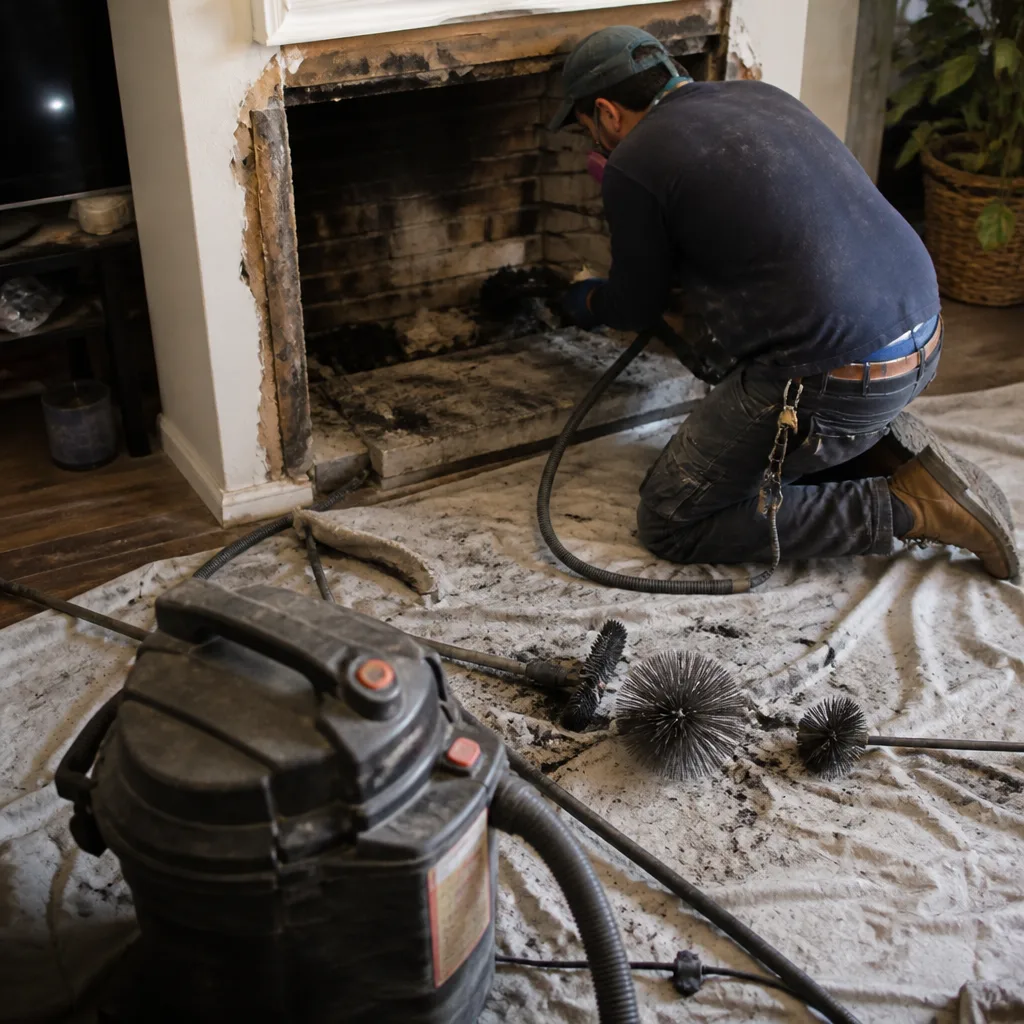 Before
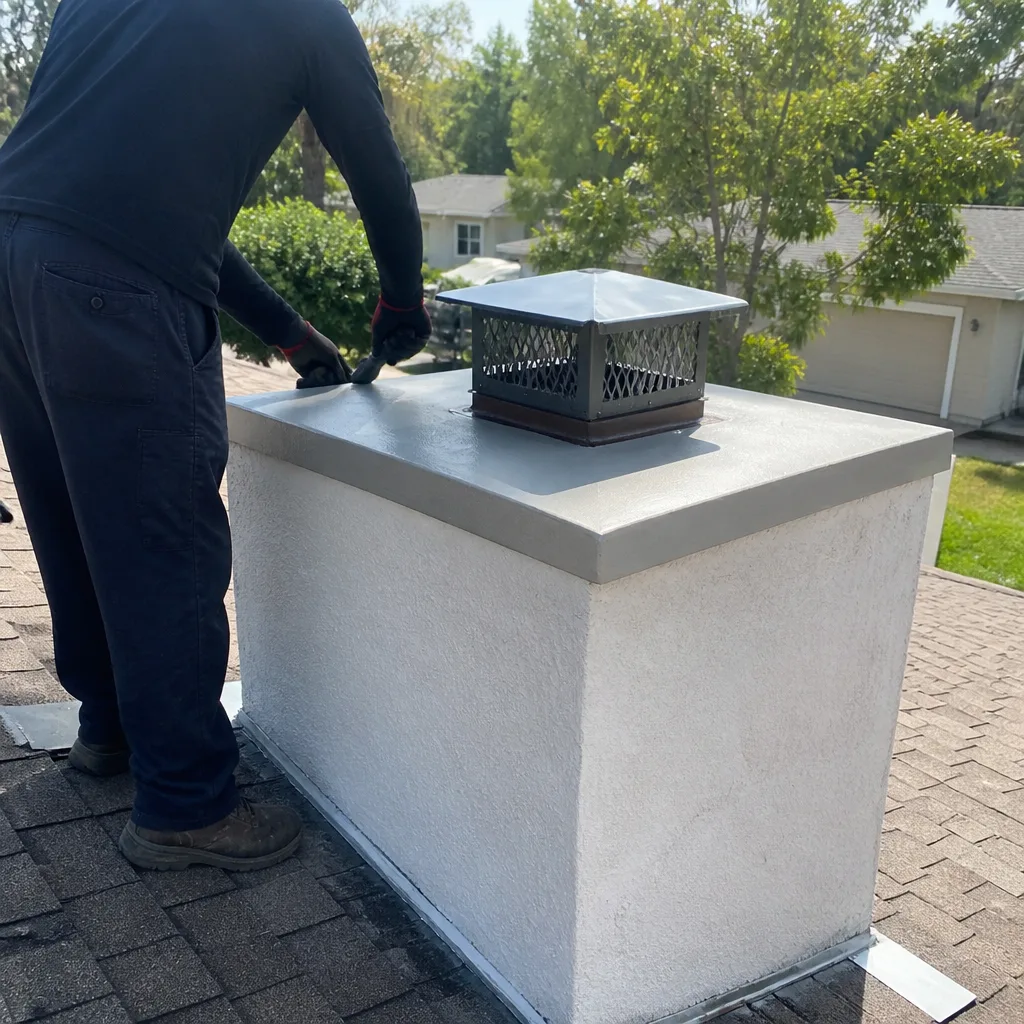 After
After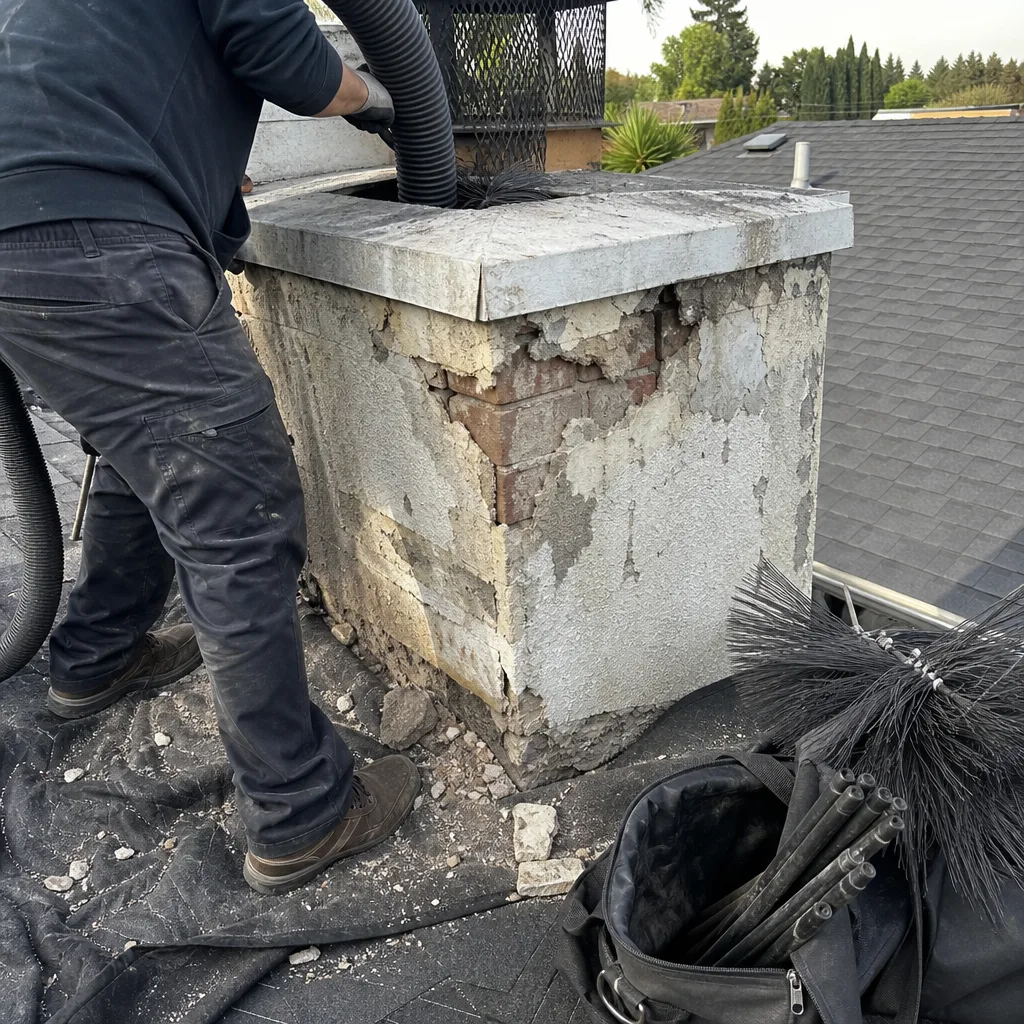 Before
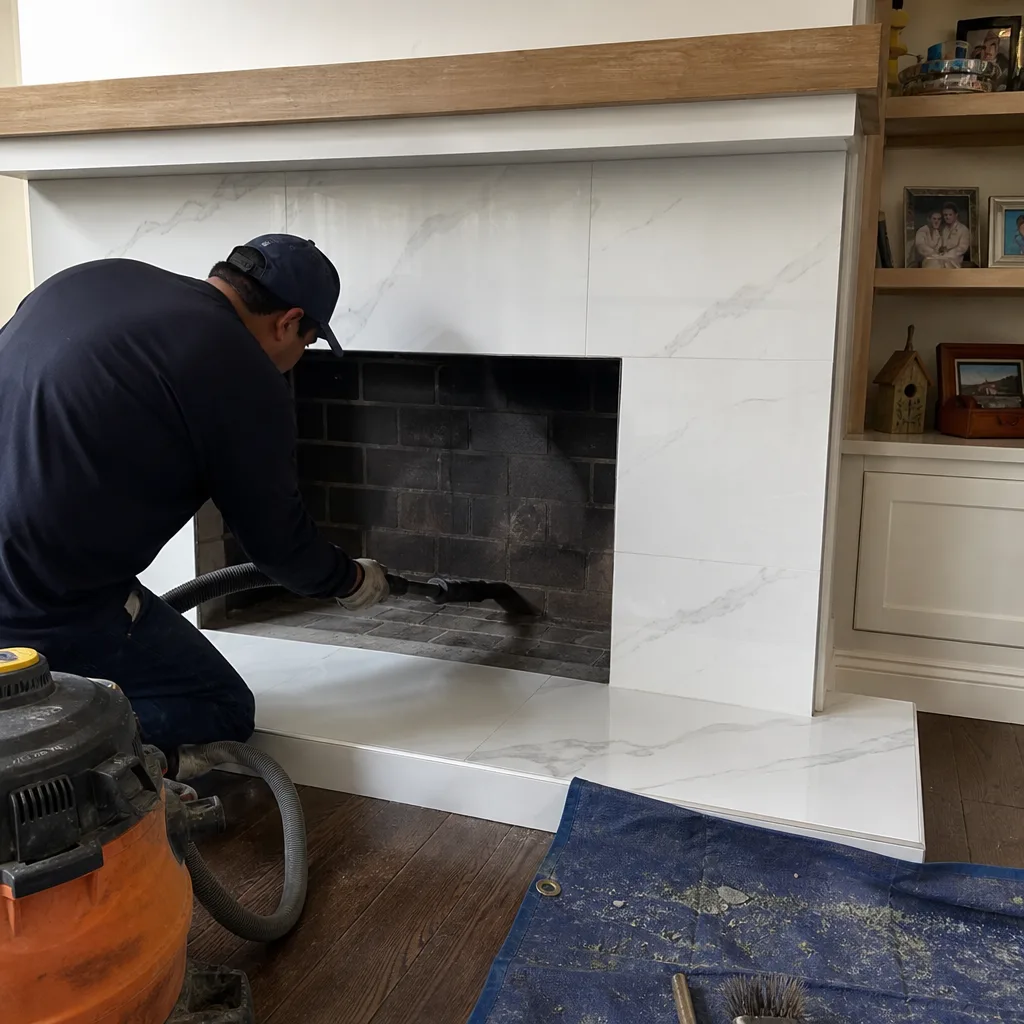 After
After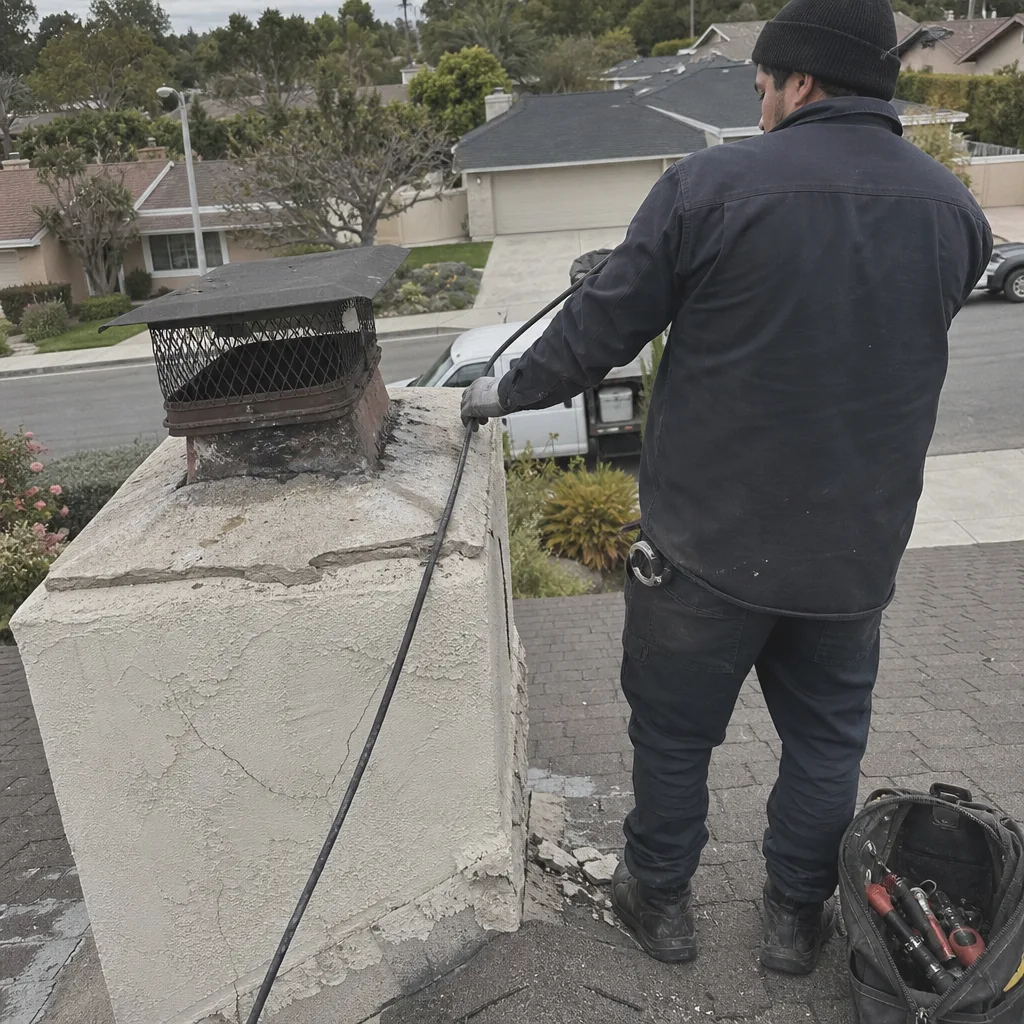 Before
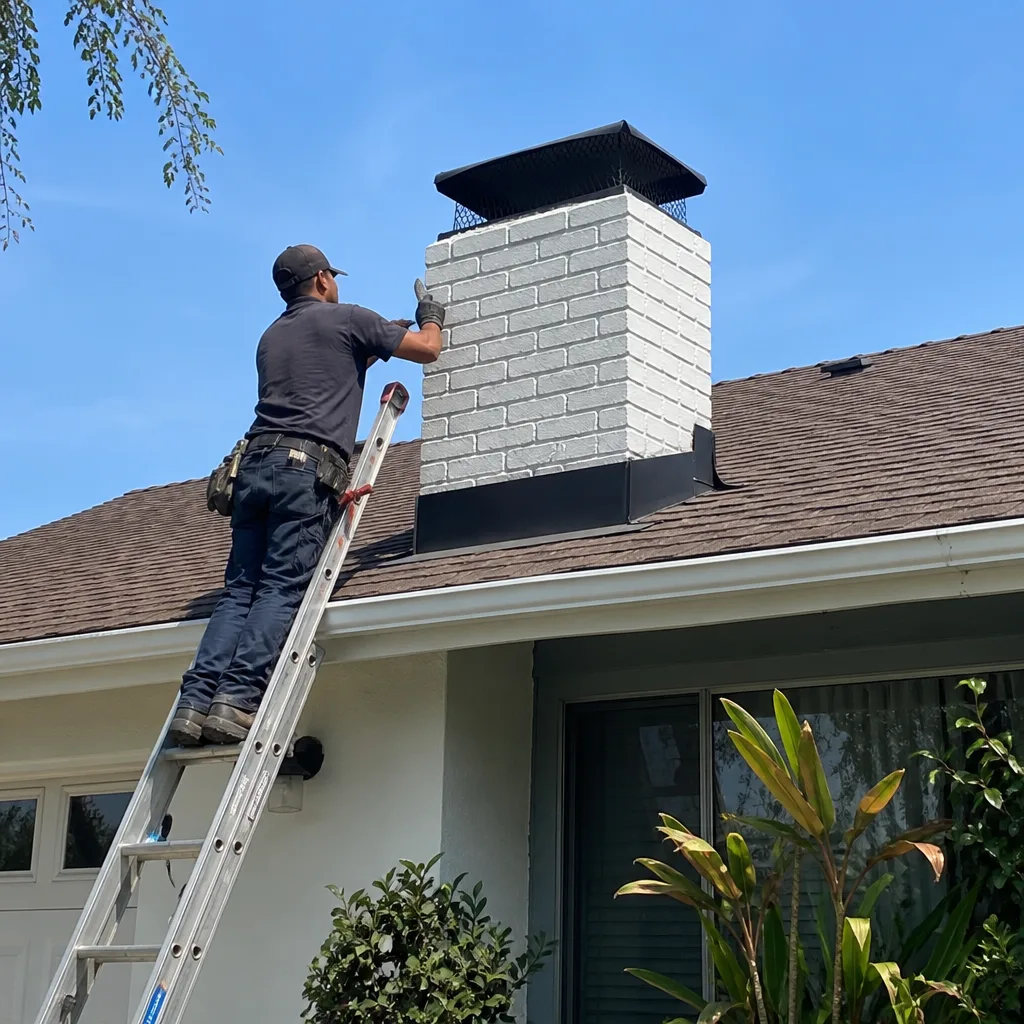 After
AfterChimney Cleaning Warning Signs: A Los Angeles Homeowner’s Reference Guide
A musty, wet-cardboard smell drifting from a fireplace that hasn’t been lit in months is not normal aging. It is a specific indicator of moisture intrusion and organic debris accumulation inside the flue, and left alone, it will accelerate liner deterioration faster than any amount of regular burning would. Most Los Angeles chimney warning sign guides focus on dramatic red flags: visible flames in the smoke chamber, smoke pouring into the living room, a chimney fire in progress. But in our experience, the signs that actually precede those events in Los Angeles homes are quieter. They are odor-based, intermittent, and easy to rationalize away because the fireplace sits unused for eight or ten months of the year. This guide will teach you how to read those early indicators, what they mean in plain terms, and when a professional inspection becomes necessary.
Quick Answer
The most common early warning signs of a chimney problem in Los Angeles are a persistent damp or musty odor from the firebox, a sulfur-and-tar smell after burning, visible white staining or rust on the exterior chimney, and smoke that enters the room on first seasonal use. Any one of these warrants a written-scope chimney inspection within days, not months. The cost of an inspection is minor compared to what a damaged flue liner or a chimney fire will cost you.
Table of Contents
- Smell-Based Diagnostics: What Your Nose Is Telling You
- Exterior Warning Signs Los Angeles Homeowners Routinely Ignore
- Why First-Use Smoke Is a Structural Airflow Problem, Not a Damper Issue
- Carbon Monoxide Indicators in Los Angeles Homes with Gas Log Inserts
- Creosote Stages and What They Mean for Your Flue
- The 24-Hour Response: What to Do After You Notice a Warning Sign
- How Los Angeles Climate Patterns Create Specific Chimney Risks
- Common Mistakes to Avoid
- When to Call a Professional
- Frequently Asked Questions
- The Bottom Line
Smell-Based Diagnostics: What Your Nose Is Telling You
A chimney speaks through smell long before it speaks through smoke or flame. Los Angeles homeowners in neighborhoods from Sherman Oaks to Mount Washington call us about odors they cannot quite place, and in most cases, the smell itself identifies the problem with surprising precision. Learning to distinguish three specific odor profiles will tell you whether you are dealing with a routine cleaning issue, a nesting animal, or a failing liner.
The damp-organic smell, often described as wet cardboard, decaying leaves, or a musty basement, points to moisture intrusion combined with organic debris. In Los Angeles, this typically means one of two things: rainwater bypassing a damaged or missing chimney cap and saturating accumulated leaves, or nesting material from birds, squirrels, or raccoons that has absorbed moisture over the wet season. The smell intensifies on humid days and after rain. What matters here is not the smell itself but what it represents: trapped moisture against a clay tile or steel liner will, over repeated wet-dry cycles, cause spalling, cracking, and accelerated rust. A chimney that smells like a damp cellar in August has a structural problem in progress, not a housekeeping problem.
The sulfur-and-tar odor is different. It appears only after burning and smells like a mix of asphalt, burnt matches, and old campfire tar. This is Stage 2 creosote, a hardened, tar-like glaze that forms when smoke cools too quickly inside the flue and condenses against the walls. Stage 2 creosote is highly combustible and does not brush away with a standard sweep; it requires chemical treatment or mechanical removal. If your fireplace produces this smell after a fire, you are burning either unseasoned wood, artificial logs, or running fires too cool and too slow. Either way, the flue now carries a fuel load that increases chimney fire risk.
The metallic odor, sharp and slightly acrid, similar to hot metal or a penny held in a closed fist, is the most serious of the three. It often accompanies visible rust flakes falling into the firebox or a fine reddish dust on the hearth. A metallic smell means the liner or damper assembly is corroding, and hot combustion gases are contacting metal that should not be reaching those temperatures. This is a structural warning, not a cleaning issue. When a liner rusts through, the chimney vents combustion gases into wall cavities and living spaces rather than out the top, and no amount of sweeping will fix it. You need an inspection with a camera scope, and in most cases, a liner repair or replacement.
Here is the diagnostic summary in list form:
- Damp, wet-cardboard, or musty smell (no recent fire): moisture intrusion, organic debris, or nesting material. Inspect the cap and crown.
- Sulfur, asphalt, or tar smell (after burning): Stage 2 glazed creosote accumulation. Schedule a sweep with creosote treatment.
- Metallic, acrid, or hot-penny smell: liner or damper corrosion. Stop using the fireplace immediately and schedule a camera inspection.
- Rotting animal smell (persistent, worsening over days): an animal has died in the flue or smoke chamber. Requires removal and a full sweep.
In our experience across Los Angeles, the damp-organic smell is the one most often ignored, because homeowners assume an unused fireplace just smells old. That assumption is expensive. The moisture that creates that smell is the same moisture silently degrading whatever liner sits inside the flue.
Exterior Warning Signs Los Angeles Homeowners Routinely Ignore
Walk outside and look up at your chimney. Not casually, but deliberately, the way you would inspect a roof before buying a house. Most Los Angeles homeowners glance at their chimney maybe twice a year, and because chimneys are viewed from ground level at awkward angles, significant damage passes unnoticed for years. The exterior of the chimney is a diagnostic surface, and three specific signals appear there long before trouble moves indoors.
White efflorescence streaks are the first and most common. These look like chalky white or gray vertical stains running down the brick or stucco face of the chimney, often concentrated near the top third. Efflorescence is a mineral deposit left behind when water migrates through masonry and evaporates. It tells you water is entering the chimney structure, dissolving minerals from the mortar and brick, and carrying them to the surface. One faint streak after a rainy season is worth noting. Streaks that reappear every winter and grow longer each year are a chronic water intrusion problem. In Los Angeles, where winter rains alternate with long dry stretches, efflorescence is a reliable indicator that the chimney crown or mortar joints have failed enough to let water penetrate, and the longer that water cycles through the masonry, the more spalling and cracking it causes.
Mortar joint gaps at the roofline are the second signal. Look specifically at the horizontal and vertical joints where the chimney rises through the roof flashing. Gaps wider than a pencil lead, crumbling mortar, or joints that have receded so the brick edges cast shadows mean the mortar has lost its structural integrity. This is called open jointing, and it does two things at once: it lets water into the chimney chase, and it weakens the entire upper chimney assembly against seismic movement. Los Angeles building codes are strict about chimney reinforcement, partly because of earthquake risk. A chimney with open joints at the roofline is more vulnerable to partial collapse in a moderate quake, and it is certainly letting water in. Repointing, the process of removing deteriorated mortar and tucking fresh mortar into the joints, is a standard repair, but it needs to happen before the brick itself starts shifting.
Rust staining below the cap is the third and most overlooked signal. Most homeowners assume the chimney cap is decorative, but a proper cap is a functional rain and animal barrier. When the cap begins to rust, dark orange-brown streaks run down from beneath it, especially visible after rain. Rust below the cap means the cap has lost its protective coating and is actively corroding, and it also signals that whatever fasteners or mesh hold the cap in place are weakening. In a Los Angeles context, this is also a wind issue. Santa Ana winds can strip a weakened cap off the chimney entirely, leaving the flue open to rain, debris, and nesting animals. A rusted cap should be replaced proactively, and when we do it, we specify a stainless steel or copper cap from manufacturers like Copperfield or Gelco, selected for the specific flue dimensions and exposure rather than whatever is on the truck.
Why First-Use Smoke Is a Structural Airflow Problem, Not a Damper Issue
The first cool evening in November, the first fire of the season, and within ten minutes, smoke is curling into the living room instead of rising up the flue. The instinct is to check the damper. Most of the time, the damper is open, and the smoke is still coming in. In our experience, this scenario is one of the most misdiagnosed problems in Los Angeles fireplaces.
Here is the direct answer: first-use smoke that persists despite an open damper is almost always an airflow or draft issue caused by one of three structural conditions, not a damper malfunction. The three causes, in order of frequency, are accumulated creosote and debris restricting the flue passage, cold air trapped in the flue creating a reverse draft, or a flue that is undersized or improperly lined for the firebox dimensions.
Accumulated creosote and debris is the simplest to explain. Even if the fireplace was swept last season, summer months leave the flue exposed to whatever falls, nests, or blows inside. A flue passage that was clear in March may be partially blocked by a bird nest, wind-deposited leaves, or accumulated soot by November. The smoke backs up because there is literally less room for it to move. This is a cleaning issue, resolved with a sweep. But the key point is that no damper adjustment will fix a blocked flue.
Cold air trapped in the flue is more common in Los Angeles than most homeowners expect. On the first cold night after months of warm weather, the air inside the chimney is colder and denser than the air in the room. Cold air sinks. When you light a fire, the warm smoke rises a few feet, hits the column of cold air, and stalls. The room fills with smoke even though the chimney is perfectly clean and the damper is fully open. The fix is priming the flue: holding a lit rolled newspaper up into the damper opening for thirty to sixty seconds before lighting the main fire, so the flue warms and the air begins moving upward. This is a technique we teach homeowners on every first-season visit. If priming the flue does not solve the problem, move to the third cause.
An undersized or improperly lined flue is the structural culprit. Los Angeles has an enormous stock of houses built in the 1940s through the 1970s, and many of those fireplaces were constructed with flue dimensions that do not match the firebox opening under modern conditions. A flue that is too small creates insufficient draft, and the smoke spills into the room at the throat. A flue that is too large cools the smoke too quickly, reducing draft and accelerating creosote formation. Both conditions are corrected with a properly sized liner, and in Los Angeles, the standard is a stainless steel liner from manufacturers like DuraFlex or HeatShield, installed to match the opening dimensions. This is not a damper repair. It is a flue correction, and it resolves the first-use smoke permanently rather than treating the symptom.
Carbon Monoxide Indicators in Los Angeles Homes with Gas Log Inserts
If your Los Angeles home uses a gas log insert rather than a wood-burning fireplace, the warning signs change. Gas produces no creosote and no visible soot under normal operation, which means the fireplace runs clean when it runs correctly, and when it does not, the indicators are flame color, pilot light behavior, and soot accumulation on the glass panel. Every one of these is a potential carbon monoxide warning, and they deserve attention even though the fireplace looks like it is working.
Yellow flame color is the primary indicator. A healthy gas fireplace burns with a tight, blue flame with a lighter blue core. When the flame tips shift to yellow or orange, the fuel is not combusting completely, which produces carbon monoxide as a byproduct. The cause is usually insufficient combustion air, a dirty burner, or improper gas pressure. No gas fireplace should operate with consistently yellow flames. If you see this, shut the unit off and have it checked.
Pilot light inconsistency, meaning a pilot that flickers, lifts off the thermocouple, or goes out repeatedly, suggests a ventilation or gas supply problem rather than a simple draft. The pilot light on a gas insert lives in a sealed or semi-sealed combustion chamber that depends on a functioning vent. When the vent is partially obstructed, by debris, a failed liner section, or improper venting installation, the pilot starves for oxygen and behaves erratically. Do not keep relighting a pilot that repeatedly fails. The appliance is telling you something about the venting, and the venting is exactly where carbon monoxide leaks originate.
Soot accumulation on the glass panel is the third indicator. A properly burning gas log produces no soot, which means any black film on the inside of the glass is combustion byproduct that should not be there. Soot on the glass usually appears alongside yellow flames and points to the same root causes. But it also has a specific meaning for vented gas logs: the soot is being deposited because the flue is not carrying combustion gases away efficiently, and those gases are lingering in the combustion chamber where they can be drawn into the living space.
One carbon monoxide detector is not sufficient in a home with a gas fireplace. Install one on each floor and in the hallway outside the room where the fireplace operates. If the detector activates and you cannot identify another source, stop using the gas fireplace, open windows, and call a professional who can scope the venting. This is not a cleaning recommendation. It is a safety protocol.
Creosote Stages and What They Mean for Your Flue
Creosote is the single word every chimney service uses and almost no homeowner fully understands. It is a byproduct of wood combustion that condenses on flue walls as smoke cools, accumulating in layers. The amount and type of creosote in your flue determines both the fire risk and the cleaning method required, and understanding the three stages will help you make sense of any chimney inspection report.
Stage 1 creosote is a fine, dusty, flaky soot that brushes off easily with a standard sweep. It forms during hot, efficient fires and in flues that draft well. A fireplace used occasionally during Los Angeles winters will typically produce Stage 1 creosote if the owner burns seasoned hardwood and maintains a hot fire. A standard chimney sweep removes Stage 1 creosote completely.
Stage 2 creosote is the transition point. It appears as crunchy, shiny black flakes, like burnt sugar or dried tar, and it clings to the flue surface. This forms when smoke cools to the condensation point inside the flue, which happens during slower fires, burning unseasoned wood, or running the fireplace with the damper partially closed. Stage 2 creosote does not brush off with a standard sweep. It requires mechanical removal with rotary tools or chemical treatment, and it represents a measurable fire hazard. In Los Angeles, we see Stage 2 creosote most often in fireplaces used only a handful of times per year, because those fires tend to be short, cool, and followed by immediate shutdown.
Stage 3 creosote is the most dangerous. It is a hard, glossy, tar-like glaze that coats the flue interior like black enamel, and it burns at a high temperature once ignited. Stage 3 creosote cannot be removed with standard brushes and often requires multiple treatments or specialized rotary chain equipment. A flue with Stage 3 creosote is one hot fire away from a chimney fire. When we find Stage 3 during an inspection, we document it with camera footage and provide a written scope before any removal work begins.
The reason this matters for Los Angeles homeowners specifically: a fireplace used ten times per year, which describes many Los Angeles homes, does not automatically stay clean because it is used less. Low use with slow, cool fires can accumulate Stage 2 creosote faster than a heavily used fireplace burning hot hardwood every night in a cold climate. Infrequent use is not a protective factor. It is its own risk profile, and it is why we recommend an annual Chimney Inspection in Los Angeles even for fireplaces that are rarely lit.
The 24-Hour Response: What to Do After You Notice a Warning Sign
You have noticed a warning sign: a smell, a stain, a smoke issue, a flame color change. What you do in the next 24 hours determines whether this becomes a routine maintenance issue or an expensive structural repair. Here is the exact sequence in order.
Step 1: Stop using the fireplace. This applies to every warning sign in this guide. No exceptions. If there is a fire burning, let it burn out naturally. Do not attempt to extinguish a fire with water, as thermal shock can crack firebrick and flue tiles. Once out, close the damper but do not use the fireplace again until it has been inspected.
Step 2: Document what you observed. Write down the date, a description of the smell or visual signal, when it appeared, and whether it was present before or after burning. Take photographs of any exterior staining, rust, or mortar gaps. If there is smoke damage or soot inside the house, photograph that too. This documentation serves two purposes: it helps the technician diagnose faster, and it creates a record if an insurance claim becomes necessary.
Step 3: Check the obvious safety angles. Verify that carbon monoxide detectors are functioning and correctly placed. Confirm whether the damper opens and closes fully if it is safe to check. Do not attempt to inspect the flue interior yourself. Do not run water down the chimney. Do not sweep it with improvised tools from a hardware store.
Step 4: Call for an inspection with a written scope. Not a quote over the phone. Not a technician who shows up and tells you what you need after looking at it. A documented, line-item, written scope delivered before any work begins. In Los Angeles, Flint Chimney Sweep provides exactly this: a written price, a written scope of work, and a full-year guarantee on any repair we perform. The phone number is (830) 251-4560, and a live person answers it.
Step 5: Ask for camera evidence. Any legitimate chimney inspection for liner damage or flue blockage involves a camera scope. The technician should be able to show you images or video of the flue interior, and explain what the images show in plain language. If someone recommends a major repair without camera evidence, ask why. You have a right to see the problem before paying to fix it.
How Los Angeles Climate Patterns Create Specific Chimney Risks
Los Angeles does not have a chimney season in the way that Minneapolis or Boston does. The fireplaces in Los Angeles homes sit idle through long stretches, get used briefly during winter, and then sit idle again. That usage pattern, combined with the local climate, creates a distinctive set of risks that generic chimney guides do not address.
The wet-dry cycle is the most significant Los Angeles factor. Winter rains saturate masonry, and then months of dry, sometimes hot weather evaporate that moisture rapidly. Each cycle stresses mortar joints and brick surfaces through expansion and contraction. Over years, this produces exactly the efflorescence streaks and mortar joint gaps described earlier, and it is the reason Los Angeles chimneys often show significant masonry deterioration even on homes that are otherwise well maintained.
The animal intrusion window is wider in Los Angeles than in colder climates. The same mild weather that makes fireplace use optional also makes chimneys attractive to raccoons, squirrels, and birds for most of the year. We have removed active bird nests from Los Angeles chimneys in December, a month when chimneys in colder regions are either in use or sealed by snow. A chimney cap with spark arrestor mesh is the only reliable prevention, and it needs to be sized and installed correctly.
The Santa Ana wind factor is unique. When dry, high-pressure air pushes down through the mountain passes, it creates gusty conditions that test every loose component on a roof. Weak chimney caps, loose flashing, and cracked crowns are all vulnerable. We routinely see chimneys in the San Fernando Valley and canyon-adjacent neighborhoods that lost caps or sustained flashing damage during Santa Ana events. An exterior inspection after a high-wind period is prudent, especially if you live in Altadena, Pasadena, Sierra Madre, or any hillside community exposed to the wind corridors.
Low-use fireplace patterns also mean that Los Angeles homeowners are often less familiar with their chimneys than homeowners in cold climates. A functional issue that would be caught within weeks in a cold state can persist for years in Los Angeles simply because the fireplace is not used enough for anyone to notice. This is not a reason to skip maintenance. It is the reason annual inspection matters more, not less.
Common Mistakes to Avoid
- Assuming an unused fireplace stays clean. An idle flue accumulates debris, nests, and moisture. Infrequent use does not keep a chimney safe; it changes the risk profile and often makes problems harder to detect.
- Checking the damper when the problem is the flue. First-use smoke with an open damper is an airflow or blockage issue. Adjusting or replacing the damper will not fix a restricted flue passage or an undersized liner.
- Ignoring exterior staining because the fireplace still “works fine.” Efflorescence and rust below the cap indicate water intrusion and cap corrosion. Neither goes away on its own, and both worsen with every Los Angeles rain season.
- Scrubbing yellow gas flames off the glass and continuing to use the fireplace. Yellow flame and soot on the glass mean incomplete combustion and possible carbon monoxide production. Cleaning the glass does not fix the combustion problem.
- Waiting until the next winter to address a summertime smell. A damp or musty smell in July is moisture and organic material deteriorating the liner right now. By November, the damage is worse, and the repair is more expensive.
- Accepting a repair recommendation without camera evidence. If a technician says you need a new liner or extensive masonry work, ask to see the camera images. Legitimate findings are documentable, and a Chimney Repair in Los Angeles should always begin with visual proof.
- Burning anything other than seasoned firewood or proper gas fuel sources. Construction scraps, treated lumber, wrapping paper, or cardboard burn at unpredictable temperatures and produce excessive creosote and dangerous fumes. The fireplace is not a trash incinerator.
When to Call a Professional
Call a professional when any smell, stain, or smoke issue persists after your own basic checks. Specifically: when you detect a metallic or sulfur odor, when first-use smoke continues after priming the flue, when exterior staining has been visible for more than one season, when your gas fireplace shows yellow flames or recurrent pilot failure, or when any detector has activated in proximity to fireplace use. These are not cleaning issues that resolve themselves. They are structural and combustion issues that require a camera inspection and a written scope. Flint Chimney Sweep offers free estimates in Los Angeles, and every quote is delivered in writing before any work begins. Call (830) 251-4560 and a live person will answer.
Our Flint Chimney Sweep home page has the full breakdown of our Chimney Sweep in Los Angeles services if you want to understand our process before calling.
Frequently Asked Questions
How much does a chimney sweep cost in Los Angeles?
A standard chimney sweep in Los Angeles typically runs $189 to $350 depending on the flue size, accessibility, and the amount of creosote present. If the flue has Stage 2 or Stage 3 creosote, the price rises because the removal is more involved. At Flint Chimney Sweep, we provide a written price before any work starts, so the number you approve is the number you pay. Call (830) 251-4560 for an exact quote based on your fireplace and flue.
How often should a chimney be swept in Los Angeles?
The National Fire Protection Association recommends an annual inspection, with sweeping scheduled based on what the inspection finds. For a Los Angeles fireplace used ten to twenty times per year, an annual inspection plus a sweep every one to three years is typical. Fireplaces used heavily every winter or burning unseasoned wood may need sweeping every year. The inspection is the non-negotiable part, because it catches liner, cap, and masonry issues that a sweep alone will not address.
Why does my fireplace smell bad when it hasn’t been used in months?
A persistent musty or wet-cardboard smell from an unused fireplace means moisture and organic material are trapped in the flue. This is usually caused by a damaged or missing cap letting in rain, nesting debris, or a cracked crown allowing water into the masonry. The smell itself is not dangerous, but the moisture behind it is actively deteriorating the liner and mortar. Schedule a camera inspection to find the entry point.
Is a little smoke on first use normal?
Brief smoke on the first fire of the season can happen when cold air sits in the flue and creates a reverse draft. Prime the flue by holding a lit rolled newspaper in the damper opening for 30 to 60 seconds before lighting the fire. If the smoke continues after priming and with the damper fully open, the problem is structural: a restricted flue passage, accumulated debris, or an improperly sized liner. That requires inspection, not more fire-starting attempts.
Do gas fireplaces need chimney cleaning?
Gas fireplaces do not produce creosote, but their venting systems still need inspection. The flue or direct vent can be blocked by debris, the liner can corrode, and the burner and combustion chamber can accumulate soot when combustion is incomplete. A gas fireplace showing yellow flames, an inconsistent pilot, or soot on the glass should be inspected promptly. These are carbon monoxide risk indicators.
What actually happens if I skip chimney maintenance in Los Angeles?
If nothing is wrong with the chimney, skipping maintenance costs you nothing in the short term. The risk is that problems develop silently: water intrusion deteriorates the liner, creosote accumulates to combustible levels, animals nest in the flue, and by the time you notice, the repair is a liner replacement or major masonry repointing rather than a basic sweep. A written-scope inspection costs far less than the repairs it prevents.
The Bottom Line
Los Angeles chimneys fail quietly. The warning signs that matter most are subtle: a damp smell in summer, a sulfur odor after burning, white streaks on the brick, rust beneath the cap, smoke that will not rise on the first fire of November. None of these resolve themselves, and each one becomes more expensive the longer it waits. Document what you observe, stop using the fireplace, and get a camera inspection with a written scope. The cheapest chimney repair is the one you catch early. The most expensive is the one you rationalize away for three seasons.
Written by Hank Delano, Owner at Flint Chimney Sweep, serving Los Angeles since 2002.