
Last updated October 9, 2026
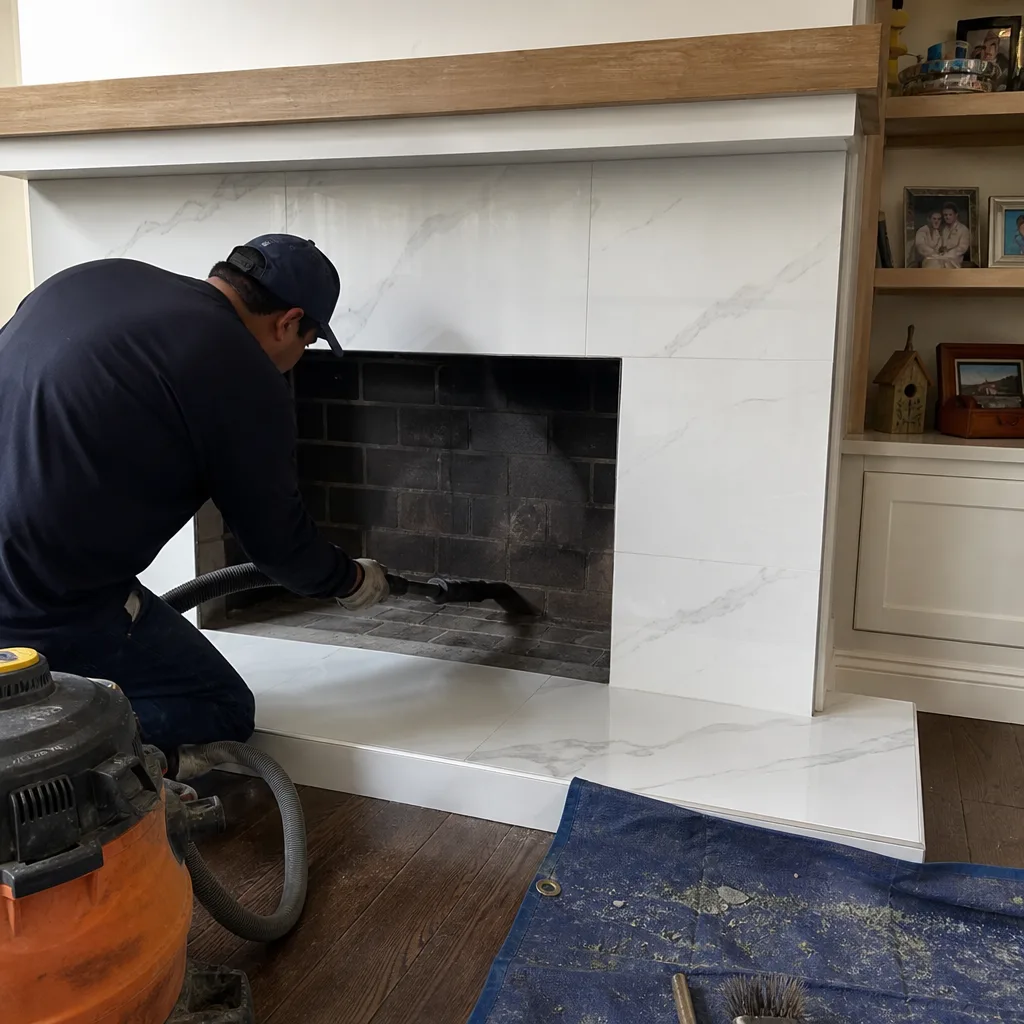
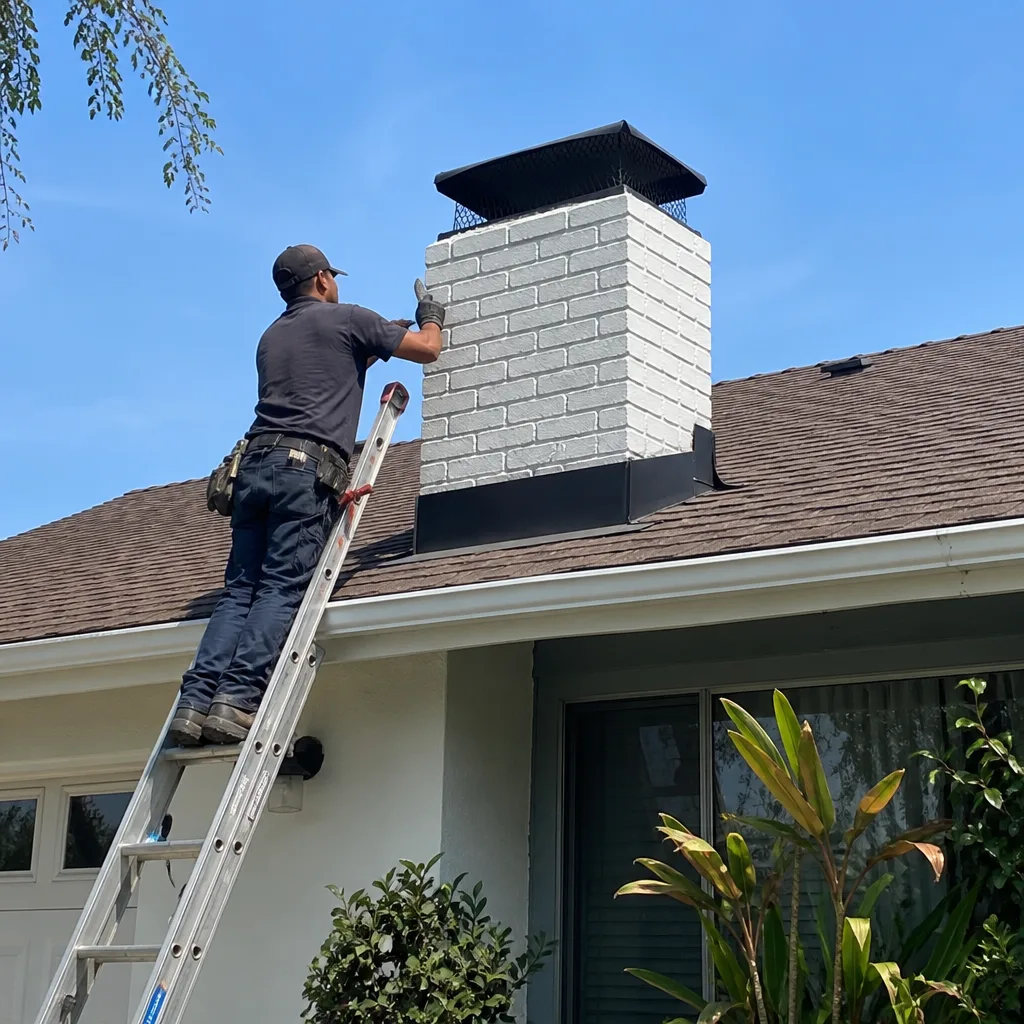
Level 1 sweep and inspection to the NFPA 211 annual standard - flue, crown, cap, and flashing checked and photographed
Chimney sweep logs do not sweep chimneys. They loosen some creosote - which then falls where a brush and vacuum still have to collect it.
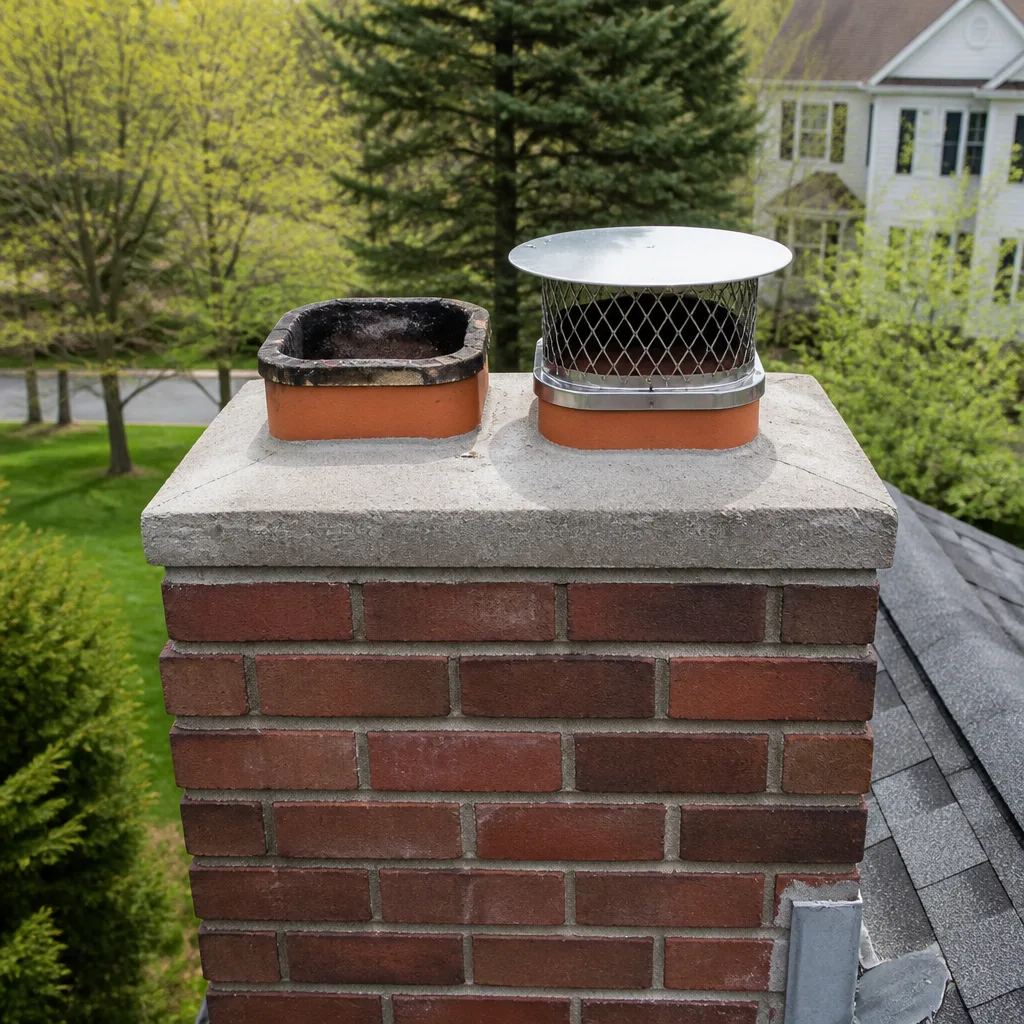
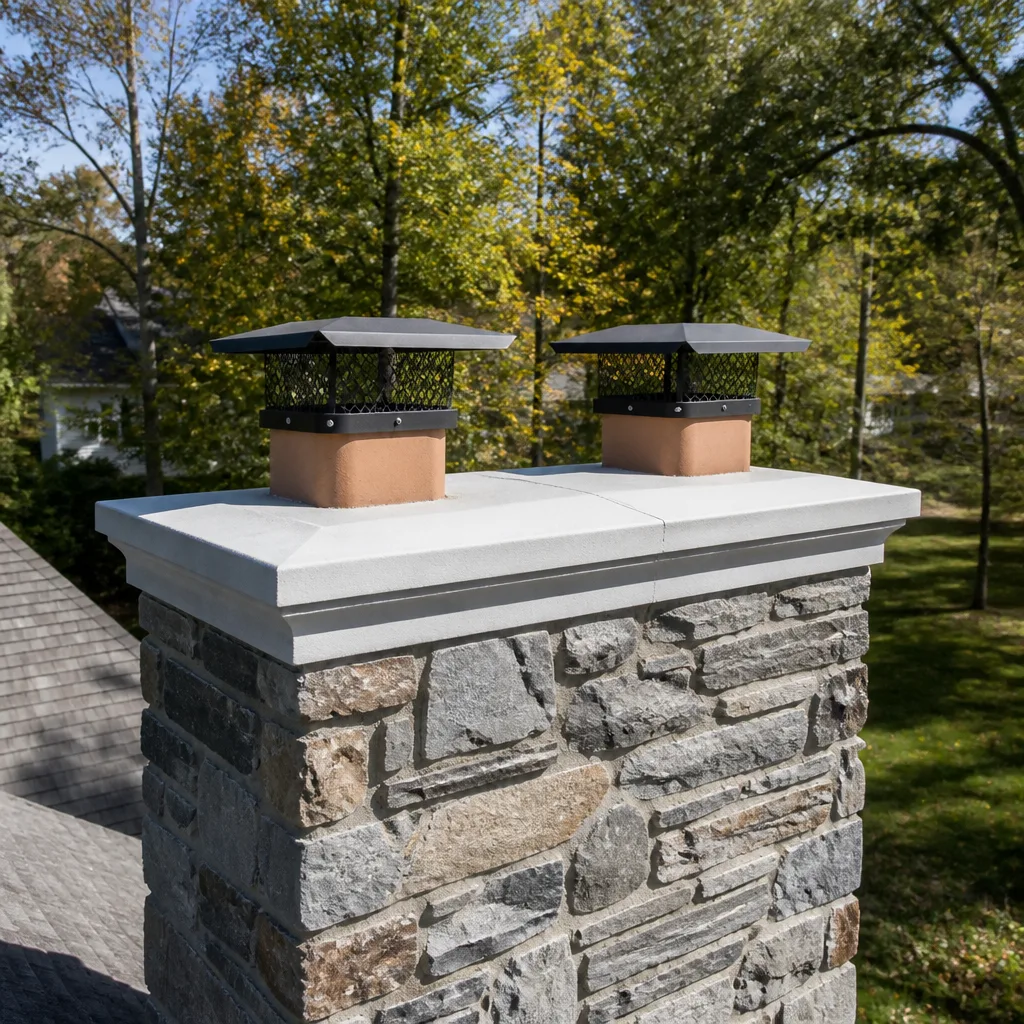
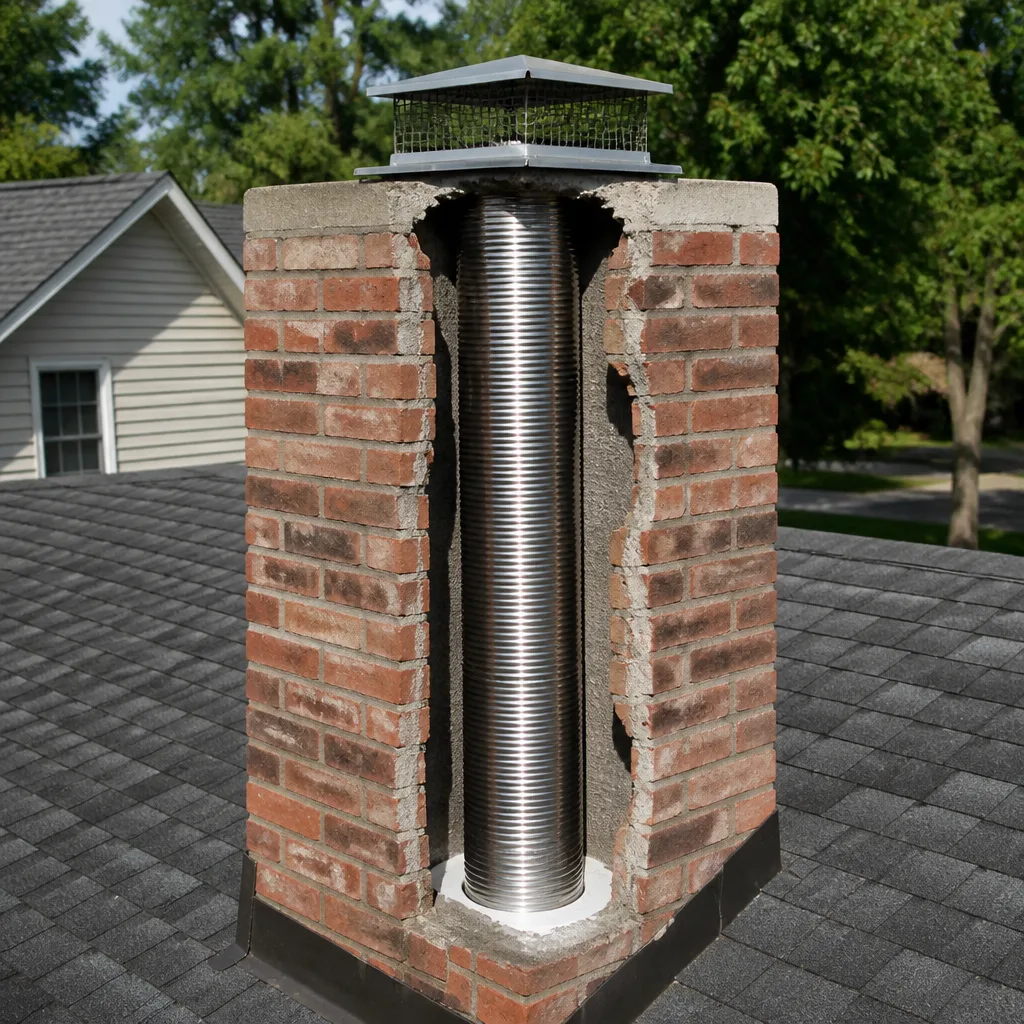
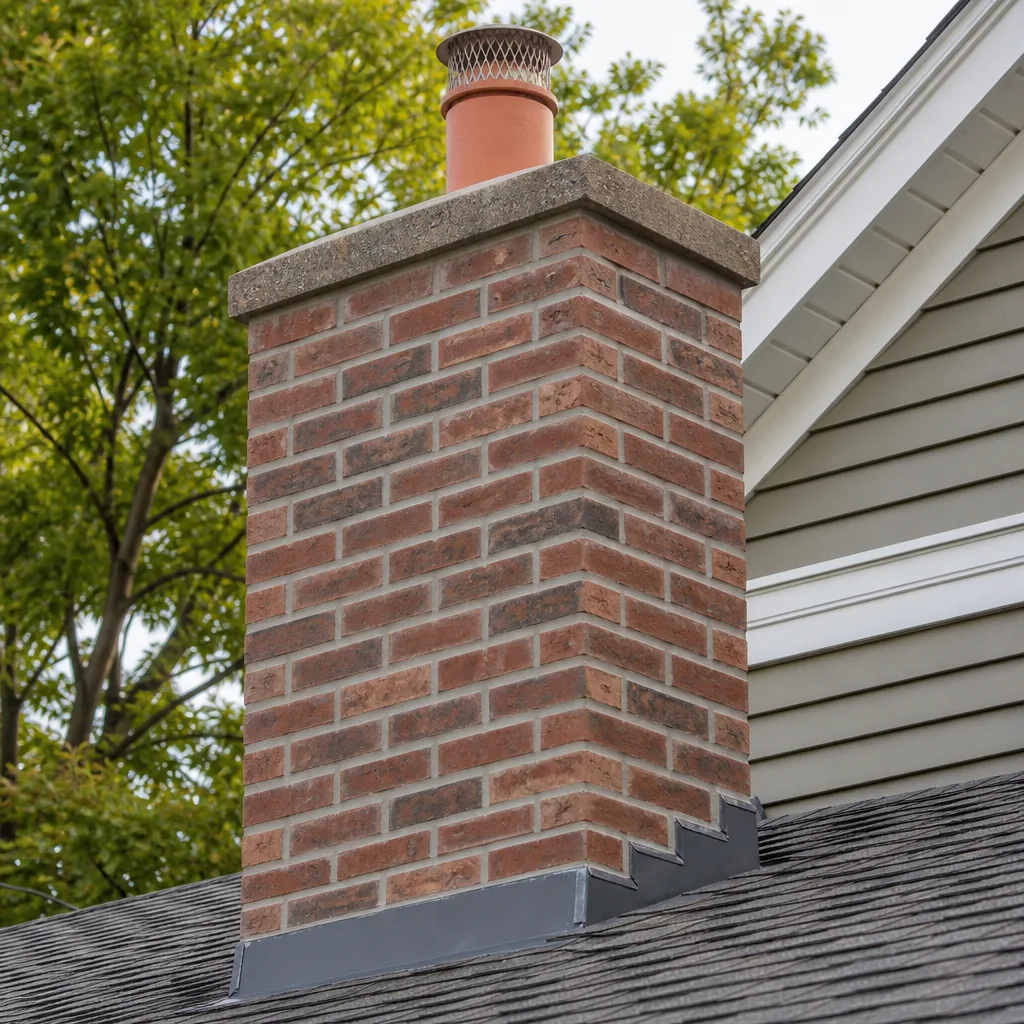
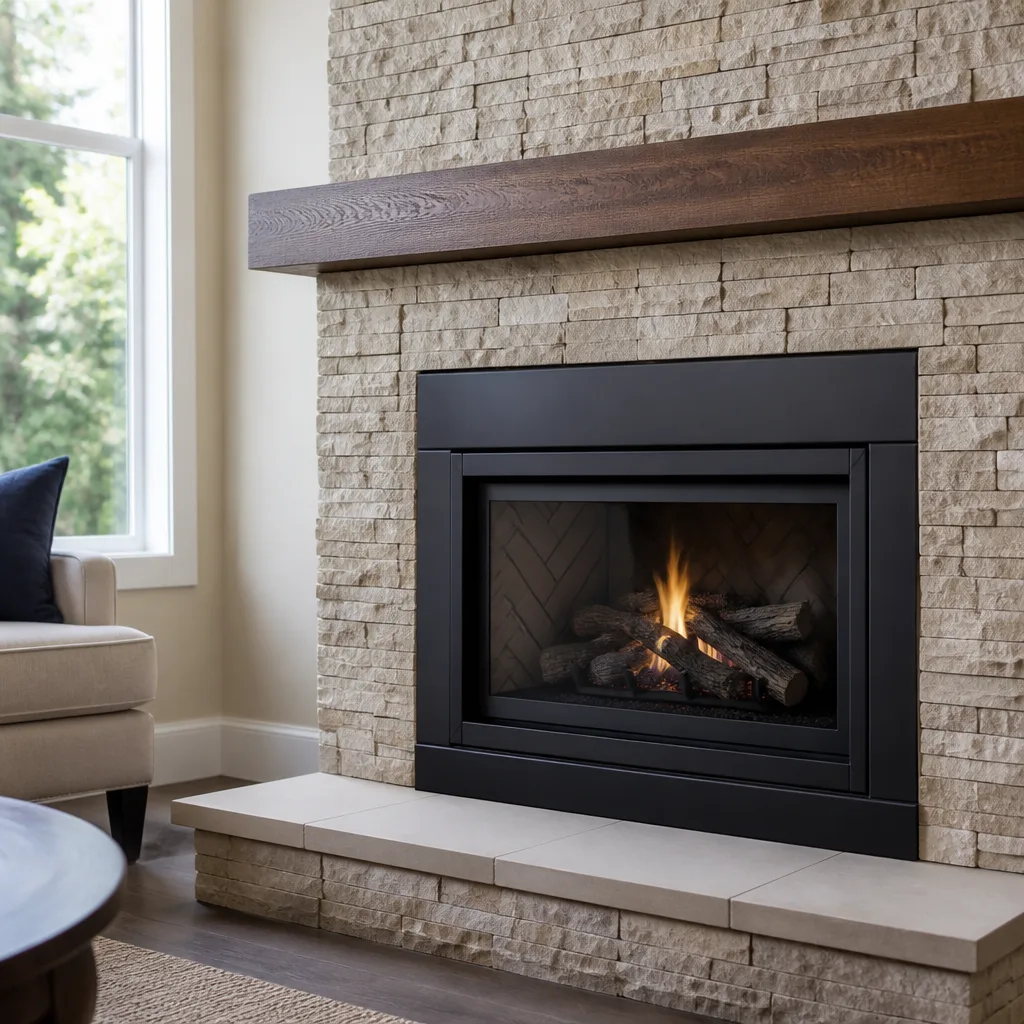
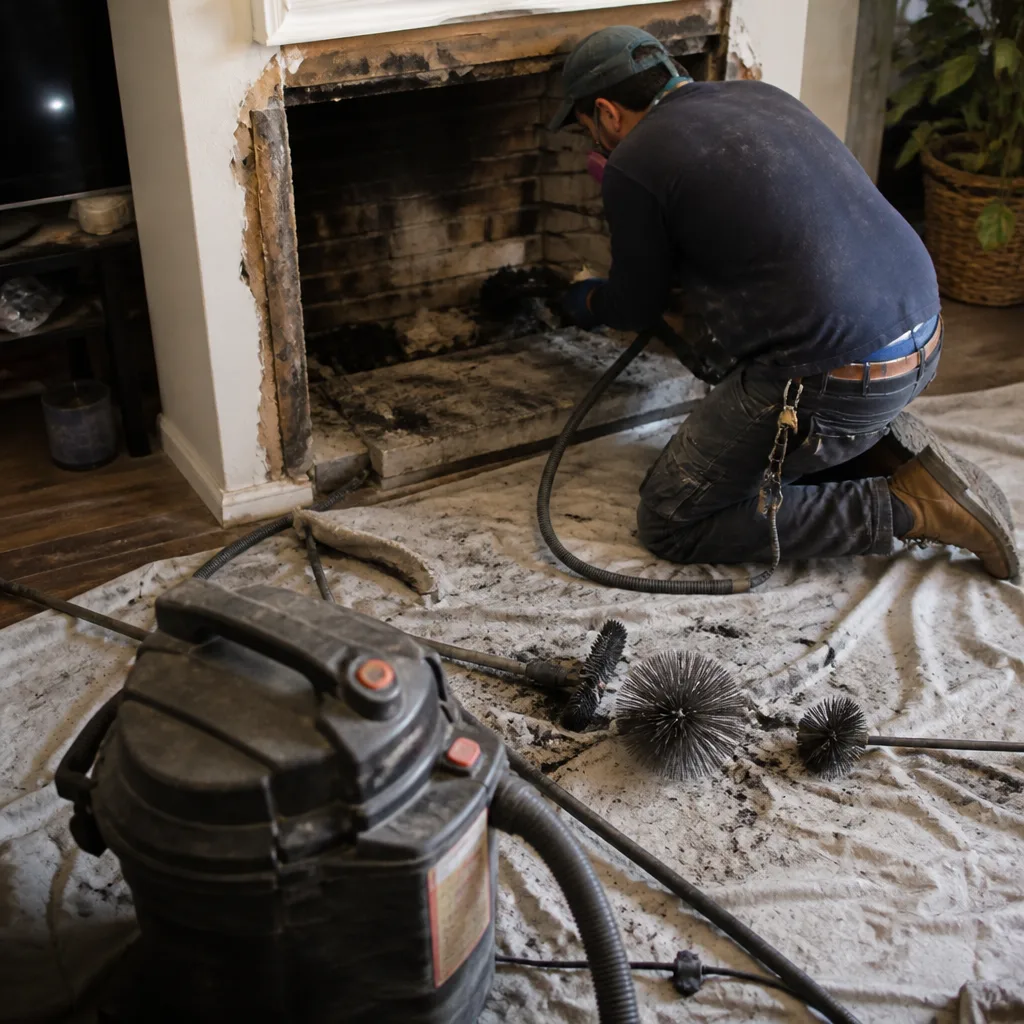 Before
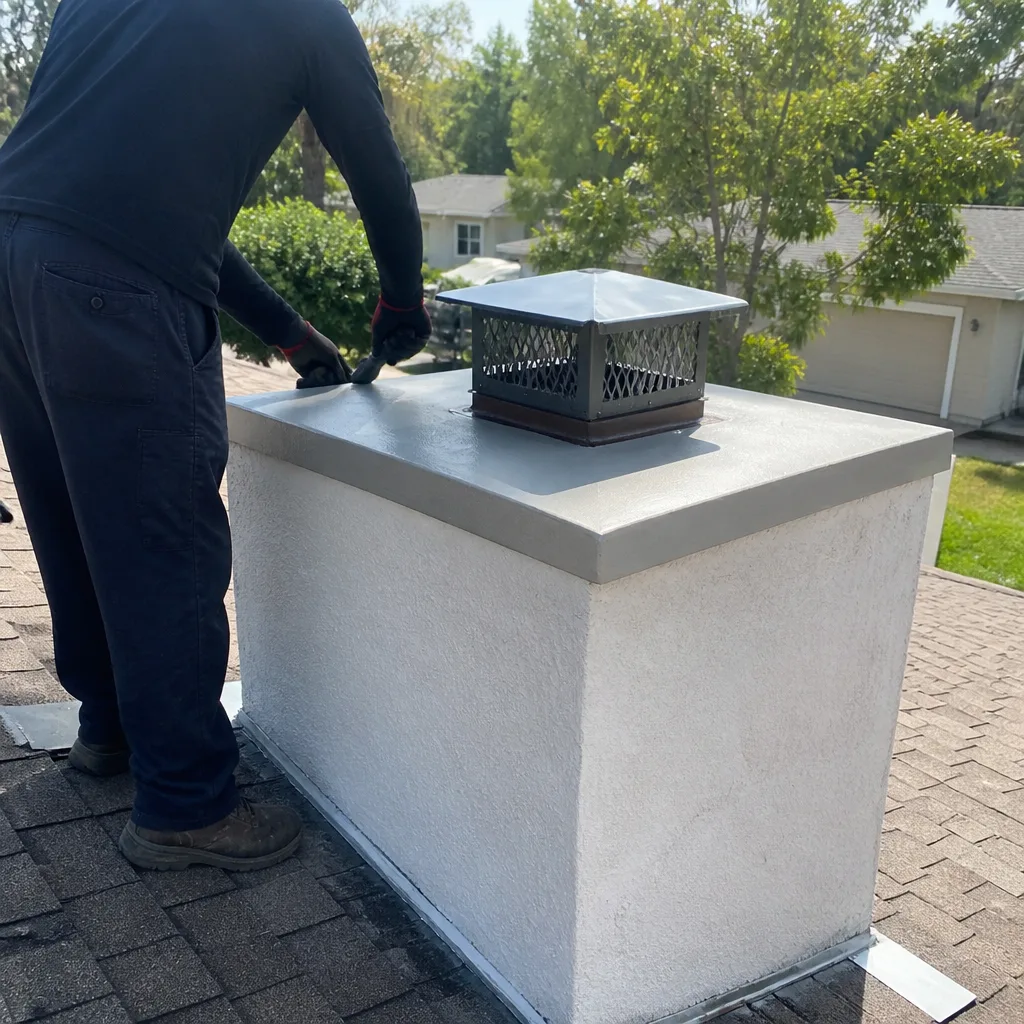 After
After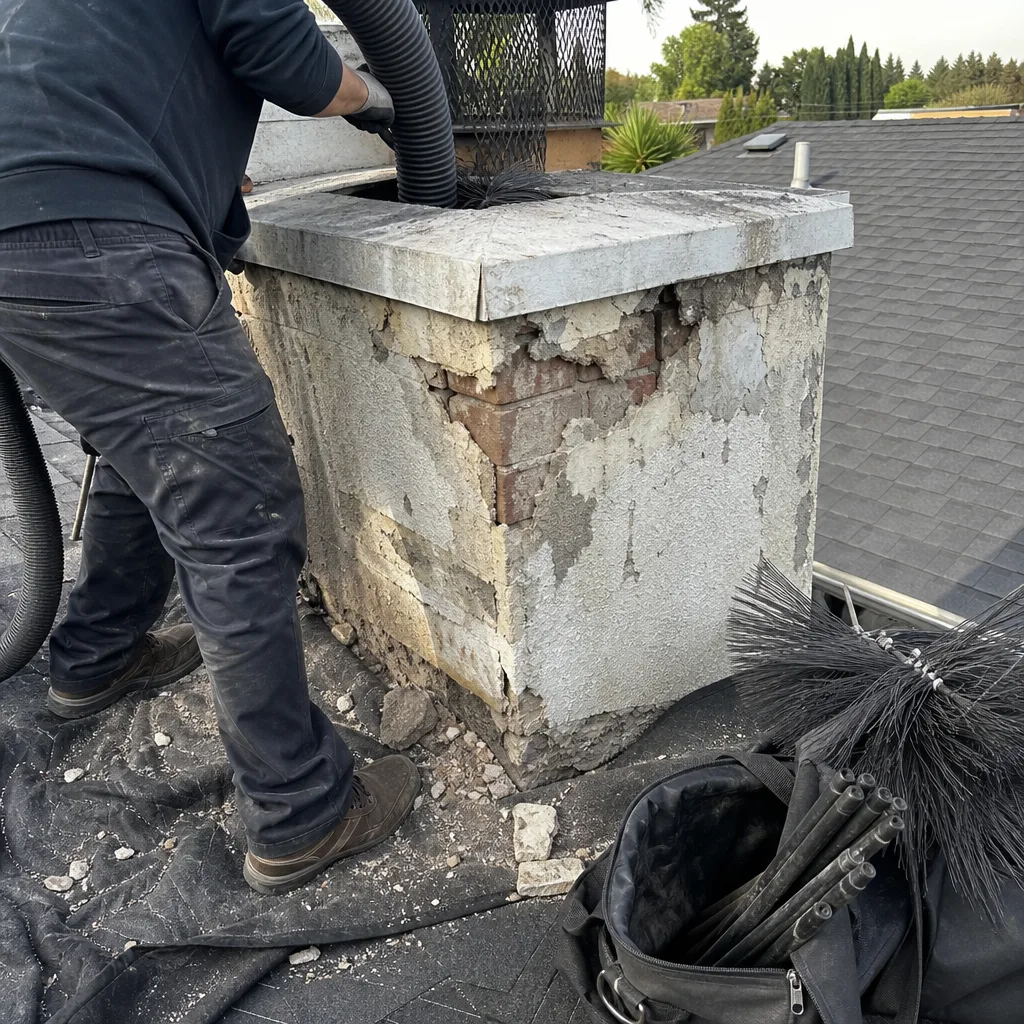 Before
 After
After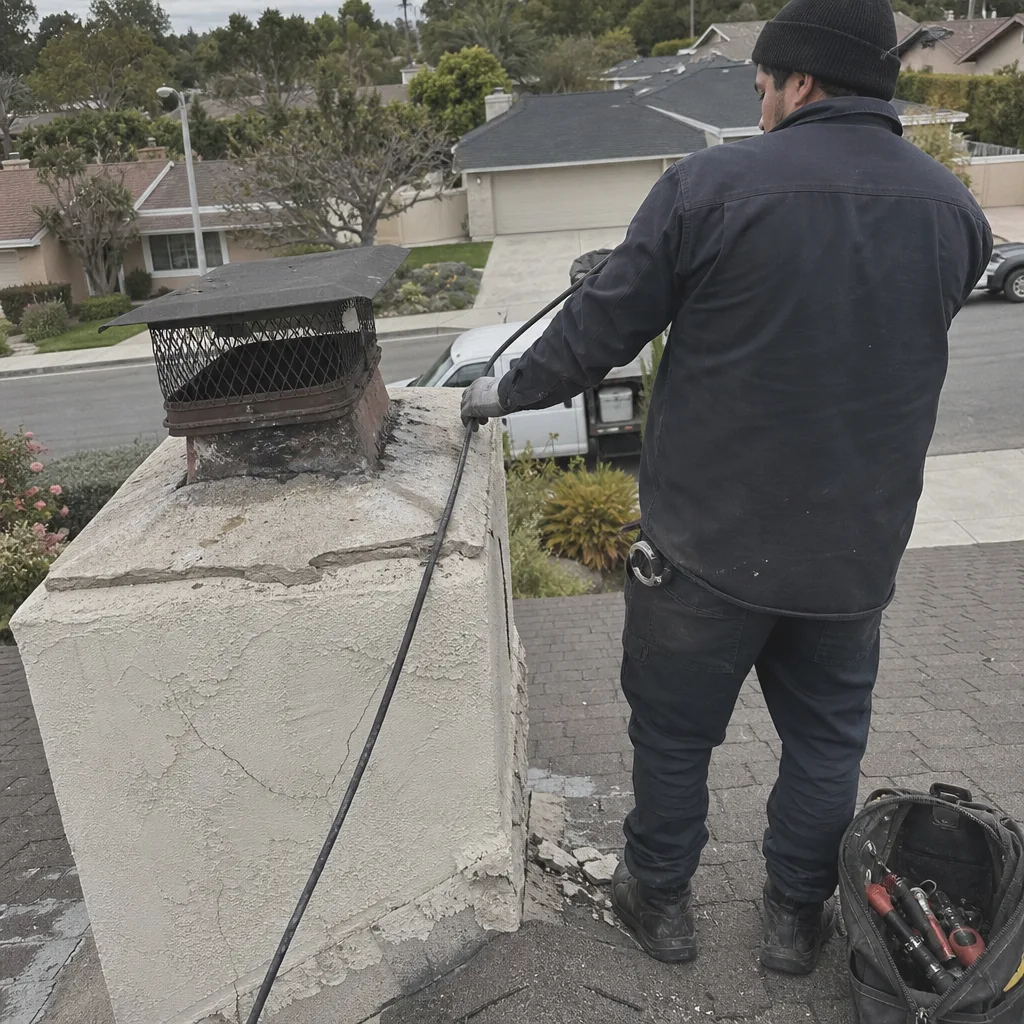 Before
 After
AfterChimney Inspection Warning Signs Every Homeowner Should Know
A white mineral stain on your firebox wall isn’t cosmetic. It’s called efflorescence, and it means water is moving through your masonry right now, dissolving salts and depositing them on the surface every time the moisture evaporates. In Los Angeles, where we get exactly enough rain to do damage but not enough to make homeowners think about their chimneys, this is the warning sign we see ignored longest. This guide will teach you to read your own fireplace before you call anyone, so you know whether you’re looking at a $200 sweep or a $4,000 repair.
Quick Answer
The most common chimney inspection warning signs are white staining on interior brick (efflorescence), flaking or crumbling brick faces (spalling), a damper that won’t fully open or close, smoke smell in a room with no active fire, and hairline cracks across the exterior crown. In Los Angeles specifically, hairline crown cracks and offset flue tiles are earthquake damage signals that need evaluation within 60 days, not normal wear. Any of these signs means a Level 2 inspection is warranted before the next fire is lit.
Table of Contents
- Warning Signs on the Firebox Walls: What Efflorescence and Spalling Tell You
- Damper Warning Signs: The Most Overlooked Part of the Chimney
- Why a Smoke Smell with No Fire Is a Structural Warning
- Crown Cracks and Flashing Failure: What to Look for from the Ground
- The Los Angeles Sign Set: Earthquake Damage vs. Normal Wear
- Schedule Within 60 Days vs. Don’t Light a Fire: The Triage List
- What a Chimney Inspection Actually Covers: Levels 1, 2, and 3
Warning Signs on the Firebox Walls: What Efflorescence and Spalling Tell You
Efflorescence is the trade term for those chalky white or grayish deposits that bloom on the inside of your firebox. The word comes from the French effleurir, “to flower out,” and that’s exactly what it does: mineral salts inside the brick are carried to the surface by water, and when that water evaporates, the salt crystallizes into a powdery crust. The stain itself is harmless to touch. What it signals is not. Water is entering your masonry somewhere above or behind that spot, and it has been doing so long enough to saturate the brick and move minerals through it. In our experience across Los Angeles neighborhoods from Sherman Oaks to Pasadena, efflorescence on a firebox wall is the single most common sign that a chimney crown or flashing has already failed.
Spalling is the next stage of the same problem, and it’s uglier. Spalling means the brick face itself is flaking, crumbling, or falling off in chunks. It happens when water trapped inside the brick expands and contracts with temperature swings, and over enough freeze-thaw cycles, the outer layer of the brick literally pops off. Los Angeles doesn’t get the hard freezes that spall bricks in the Northeast, but we do get the wet-dry cycles of coastal fog, morning dew, and winter rain, and that’s enough to do the job over a decade. If you see brick faces on the interior firebox that look like they’re shedding, or a pile of sandy grit accumulating at the base of the fireplace, that’s spalling. The masonry is actively losing structural material. A Chimney Inspection in Los Angeles will identify the water entry point, because spalling never stops at the cosmetic layer: eventually it eats into the mortar joints and the structural core of the chimney.
How to check your firebox walls
- Use a flashlight, not just the room light. Angle the beam across the brick surface. Efflorescence that’s invisible in flat light shows up clearly as a whitish haze under a raking light.
- Run your hand lightly over the bricks. Flaking brick faces, gritty residue, or powdery white dust on your fingers are all evidence of water-driven deterioration.
- Look at the back wall of the firebox, behind the grate. This is where water that penetrates the crown tends to enter, so it’s the first place efflorescence appears in most LA homes.
- Check for rust stains along mortar joints. Rust-colored streaks mean the reinforcing steel inside the masonry is corroding, which swells the steel and cracks the brick from the inside out.
Damper Warning Signs: The Most Overlooked Part of the Chimney
The damper is the metal plate inside the throat of the chimney, just above the firebox, that opens to let smoke out and closes to keep outside air from pouring into the house when the fireplace isn’t in use. Homeowners almost never inspect the damper, which is unfortunate, because it’s the one moving part of the chimney you can actually see and test from inside the house without any equipment. A damper that’s warped, rusted through, or jammed in one position is a warning sign in its own right, and it commonly appears alongside other problems.
A damper that won’t fully close means your house is losing heated or cooled air up the chimney every day of the year that you’re not burning a fire. In Los Angeles, where summer air conditioning is a bigger cost than winter heating in most homes, a stuck-open damper can add a noticeable amount to your electric bill between June and October. A damper that won’t fully open is more dangerous: it means the flue passage is partly blocked, and smoke and combustion gases aren’t leaving the house the way they should. In some cases, a jammed damper is the first sign that the chimney has shifted, which in Los Angeles often traces back to earthquake movements that slightly realigned the masonry enough to bind the damper frame.
What to look for
- Open the damper and close it again. Is the movement smooth? Does it seal fully? A damper that catches, sticks, or leaves a visible gap when closed needs attention.
- Look up at the underside of the damper plate with a flashlight. Rust through the metal is a sign of long-term water entry from above, often the same crown or flashing failure that causes efflorescence in the firebox.
- Listen on a windy day. If you hear a whistling or moaning noise coming from the chimney, the damper is likely not sealing, and wind is moving through the flue.
- If the damper handle is broken off or disconnected from the plate, the damper’s position is unknown. Treat it as closed and do not light a fire until a professional verifies it’s open.
Why a Smoke Smell with No Fire Is a Structural Warning
Smell is not a reliable fire-safety detector, but it is one of the most useful diagnostic signals a homeowner has. If you smell smoke in a room with no active fire, in a house where the fireplace has been cold for days or weeks, that odor is not a nuisance. It’s a pressure differential telling you that air inside the chimney is moving into the house instead of out of it. Under normal conditions, a chimney draws air upward. When it doesn’t, the house is drawing air backward through the chimney, and whatever is inside the flue is coming with it.
The smell is usually most noticeable on humid days, on days with an atmospheric inversion, or when bathroom exhaust fans and kitchen range hoods create negative pressure inside the house. What you’re smelling is creosote, the tar-like residue condensed on the flue walls from past fires. The smell means the flue is not venting correctly, even when cold. The causes range from an improperly sized flue to a disconnected liner, to a chimney that’s simply too short to overcome the negative pressure of the house. In Los Angeles, we also see smoke smell complaints tied to whole-house fans and powerful kitchen ventilation in newer construction, where the house is sealed tightly and the chimney is expected to compete with mechanical exhaust. The fix starts with a professional inspection. A Chimney Sweep in Los Angeles can remove the creosote deposits that carry the odor, but sweeping alone won’t fix the venting failure. That requires identifying why air is moving the wrong direction.
Treat persistent smoke smell, especially when it appears in rooms with no fireplace, as a Chimney Repair Maintenance Schedule: What to Do and When issue. It may be a minor venting correction. It may be a cracked flue liner. Either way, it’s not a smell you should live with, and it’s not one that will fix itself.
Crown Cracks and Flashing Failure: What to Look for from the Ground
The crown is the concrete cap that sits on top of the chimney, and it is the single most important line of defense against water entry. When a crown is doing its job, rainwater and sprinkler spray sheet off the top of the chimney and onto the roof. When it fails, water soaks directly into the masonry below it. Crown failure is the leading cause of efflorescence, spalling, and flue tile damage in the chimneys we inspect across Los Angeles. The climate plays a direct role here: LA’s dry summers bake the concrete, and the winter rains soak it, and over years of that cycle, hairline cracks form and slowly widen.
Flashing is the metal strip that seals the joint where the chimney meets the roof. Like the crown, its entire job is to keep water out of the structure, and like the crown, it fails quietly. Flashing failure shows up as water stains on the ceiling or walls near the fireplace, as dampness in the attic around the chimney chase, or as rust visible on the flashing metal itself from the roof or from an upstairs window.
Ground-level checks you can do without a ladder
- Stand across the street and look at the chimney with binoculars, if you have them. Hairline cracks in the crown may not be visible from the ground, but a crown that’s spalling, crumbling, or missing pieces often is.
- Look for rust streaks running down the side of the chimney from the flashing area. That rust is a signal that the flashing has been leaking long enough to corrode the metal.
- Look for dark stains or moss growth on one side of the chimney exterior. Both mean that side of the chimney is staying wet longer than it should.
- Inside the house, check the ceiling around the fireplace for water stains, peeling paint, or a faint ring mark. Water entering at the roofline often travels down and shows up there first.
If you’re seeing any of these signs, the fix may be a crown recoat with a professional-grade material like Gelco sealant, or it may require a new flashing detail where the roof and chimney meet-see our Chimney Repair Troubleshooting: Common Problems and How to Fix Them for details. What it will not be is cheap if ignored. Crown replacement is a known quantity; structural rebuild of a waterlogged chimney is not.
The Los Angeles Sign Set: Earthquake Damage vs. Normal Wear
Los Angeles homeowners face a set of chimney warning signs that most national guides don’t even mention, because most national guides are written for climates and geological zones where the ground doesn’t move. Here, it does. Seismic activity is a primary driver of chimney damage in Southern California, and the signs of earthquake strain are distinct from the signs of ordinary aging. Learning to tell the difference is the single most locally useful skill a Los Angeles homeowner can have.
The two earthquake signatures we look for are hairline cracks in the crown and offset flue tiles. A crown crack from freeze-thaw cycling tends to be wide, jagged, and accompanied by crumbling edges. An earthquake crown crack is often a clean, straight hairline that runs across the crown surface in a single line, as though someone scored it with a utility knife. It forms when the chimney shaft torques slightly under lateral ground movement, and the rigid concrete cap can’t flex enough to follow. Offset flue tiles are more serious: the clay liner sections inside the chimney shift out of alignment with each other, so the smoke path is no longer a smooth continuous channel. Offsets can be seen during a Level 2 inspection with a camera, but they often announce themselves first through cracking in the exterior brickwork running in a stair-step pattern up the side of the chimney.
Any hairline crack in the crown in Los Angeles should be treated as a possible earthquake indicator until proven otherwise, especially if it appeared suddenly, or if it appeared after a quake that rattled your neighborhood. A Chimney Inspection in Los Angeles can determine whether the crack is cosmetic or structural. What you should not do is assume it’s normal wear. In this city, that assumption is wrong more often than it’s right.
Schedule Within 60 Days vs. Don’t Light a Fire: The Triage List
Not every chimney warning sign is an emergency, and not every emergency looks like one. The distinction that matters is whether the sign affects water intrusion (which gets worse slowly) or carbon monoxide and fire risk (which gets worse unpredictably). Here’s the triage.
Schedule an inspection within 60 days
- Efflorescence on firebox walls: water is moving through the masonry. It won’t get better on its own, but it doesn’t make the chimney immediately unsafe to use.
- Minor crown hairline cracks: unless they appeared suddenly after an earthquake, small cracks can wait a few weeks for a professional sealant application with Gelco or similar crown-coat product.
- Rust on the damper or visible surface rust on flashing: water entry is confirmed, but structural failure is not imminent in most cases.
- Smoke smell with no fire: schedule it. It’s a venting problem, but if you’re not burning fires, the immediate risk is low.
- Mild spalling on exterior brick faces: one or two flaked brick faces is a warning, not a failure.
Do not light a fire until this is fixed
- Offset flue tiles confirmed by inspection: exhaust and sparks can escape through the misaligned joints into the space between the flue and the masonry.
- Heavy spalling on the firebox interior: the firebox is losing its structural lining. Heat can reach the framing behind it.
- Damper jammed closed or missing entirely: if you can’t verify the damper is open, combustion gases have no guaranteed exit path.
- Any visible crack in the firebox floor or back wall wide enough to insert a dime: that’s a structural crack, not surface wear.
- Smoke alarm activation during fireplace use: treat it as a confirmed venting failure until proven otherwise.
What a Chimney Inspection Actually Covers: Levels 1, 2, and 3
Chimney inspections are not all the same animal, and knowing the difference before you call will save you from paying for less than you need, or being quoted for more than you do. For more guides & resources, visit our blog. The industry standard from the National Fire Protection Association defines three levels, and they exist for specific reasons.
Level 1 is a visual inspection of the readily accessible parts of the chimney: the firebox, damper, and the exterior from the ground. It’s appropriate when the chimney has been in regular use and nothing about the system has changed. A standard chimney sweep typically includes a Level 1 inspection as part of the service. In Los Angeles, a sweep and Level 1 inspection together typically runs $180-$300 depending on the condition of the flue and the size of the chimney.
Level 2 adds a camera scan of the flue interior and a closer examination of the crown, flashing, and roof penetration. You need a Level 2 after an earthquake, after a chimney fire, before a property sale, or when any warning sign from this guide is present. The camera reveals what visual inspection cannot: cracked flue tiles, hidden disconnections in the liner, or debris blockages deep inside the flue. In Los Angeles, earthquake activity makes Level 2 inspections much more common than in most other parts of the country, and for good reason. The cost typically runs $300-$600.
Level 3 is invasive and rarely needed unless a Level 2 has already found a serious problem that requires opening up the masonry to see the full extent of the damage. It involves removing parts of the chimney structure. A Level 3 is not something any reputable company will recommend lightly.
Among the repairs we specify most often for chimneys that have failed inspection: HeatShield resurfacing for damaged flue walls, which restores the smooth interior surface without a full tear-out, and DuraFlex liners for full flue relining when the clay tiles are beyond saving. These are material choices made by what the chimney actually needs, not by what the job is easiest to sell. Any of the warning signs in this guide are a reason for a Level 2 inspection. None of them are a reason to panic. All of them are a reason to stop guessing.
Common Mistakes to Avoid
- Assuming the chimney is fine because you never use it. Water damage doesn’t care how many fires you’ve lit. An unused chimney still leaks, and the damage compounds every winter it’s ignored. In Los Angeles, this is the most common mistake we see in older homes.
- Painting over efflorescence. The stain comes back, because the water hasn’t stopped. You’ve added a cosmetic layer over a structural problem, and the paint can trap moisture inside the brick, accelerating spalling.
- Treating smoke smell as a housekeeping issue. It’s a venting failure. Odor-absorbing products and extra cleaning won’t change the air movement inside the flue.
- Skipping the Level 2 after an earthquake. In Los Angeles, any significant seismic event is a reason to have the flue liner camera-scanned. The damage is often invisible from the ground.
- Confusing a chimney sweep with a chimney inspection. A sweep cleans the creosote out. An inspection evaluates the condition of the structure. They’re done together, but they are not the same service, and one does not replace the other.
- Waiting until the fall to address a problem found in the spring. Masonry and liner problems worsen with every rain and every temperature cycle. A crown crack found in April is cheaper to fix in April than it is in November.
When to Call a Professional
Call a professional when you find any of the signs in this guide: efflorescence, spalling, a stuck damper, smoke smell with no fire, crown cracks, or flashing rust. The reason to call promptly is that every one of these problems gets more expensive the longer it goes unaddressed. A crown sealant application with Gelco is a few hundred dollars. A full masonry rebuild is a five-figure job. The difference between the two is almost always a matter of when the problem was caught, not whether it existed. Flint Chimney Sweep offers free estimates in Los Angeles, and every job gets a written price before any work starts. Call (830) 251-4560 to schedule a Level 2 inspection, or a sweep and inspection together.
Frequently Asked Questions
The most common warning sign is efflorescence, the white mineral staining on firebox walls that indicates water is moving through the masonry. It’s found in a majority of the inspections we perform in Los Angeles that turn up a problem, and it almost always traces back to crown or flashing failure.
A Level 1 inspection, typically bundled with a chimney sweep, runs $180-$300 in the Los Angeles market. A Level 2 inspection with camera scan runs $300-$600. A Level 3 inspection, which is invasive and rarely needed, is priced by the scope of the demolition and rebuild required. Call (830) 251-4560 for an exact quote, estimates are free.
The National Fire Protection Association recommends a Level 1 inspection annually for chimneys in regular use, and a Level 2 inspection anytime the system changes, the property changes hands, or an event like an earthquake or chimney fire has occurred. In Los Angeles, a Level 2 after any significant seismic event is prudent.
You can screen for warning signs from inside the house: check the firebox walls, the damper, and the ceiling around the fireplace. What you cannot do without professional equipment is inspect the flue interior, which is where the most dangerous damage hides. A camera scan of the flue requires a trained technician and equipment designed for the job.
At Flint Chimney Sweep home, every sweep includes a Level 1 inspection. If the sweep reveals warning signs that require closer examination, we’ll recommend a Level 2 inspection and tell you exactly what we saw and why the next step matters.
Weathering cracks tend to be wider, more jagged, and accompanied by crumbling edges or spalling concrete. Earthquake cracks are often clean, straight hairlines that appear suddenly, sometimes accompanied by stair-step cracking in the brickwork below. In Los Angeles, any new hairline crack in the crown should be treated as a possible earthquake indicator until a professional inspection says otherwise.
The Bottom Line
Your chimney communicates with you through visible, readable signs. Efflorescence tells you water is inside the masonry. Spalling tells you the brick is losing structural material. A stuck damper tells you the one moving part isn’t moving. A smoke smell with no fire tells you the air is flowing the wrong direction. A hairline crown crack in Los Angeles tells you the ground may have had something to say. Learning to read these signs puts you ahead of the most expensive curve in home maintenance: the one where small problems become structural failures during the years nobody was looking. Watch for them, act within 60 days where water is the issue, and don’t light a fire when the flue path is in doubt.
Written by Hank Delano, Owner at Flint Chimney Sweep, serving Los Angeles since 2002.