
Last updated October 9, 2026
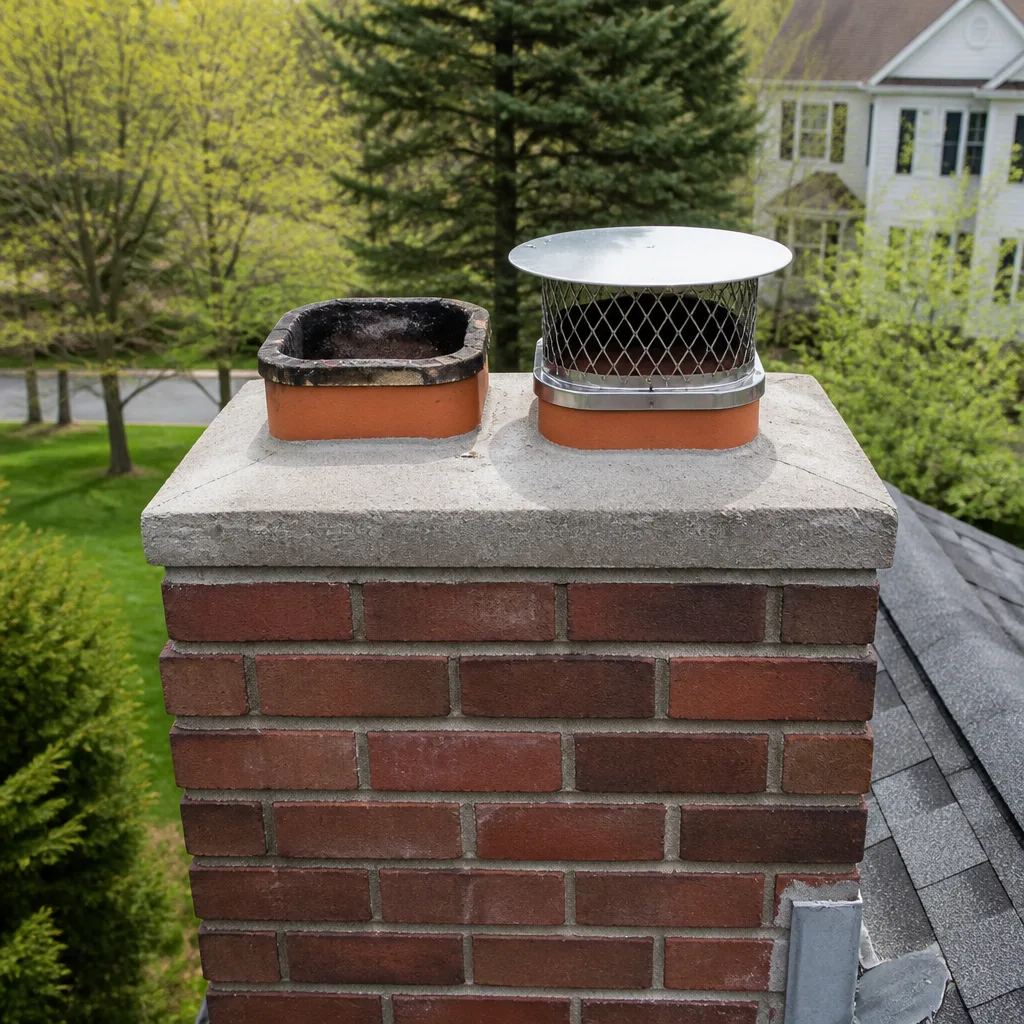
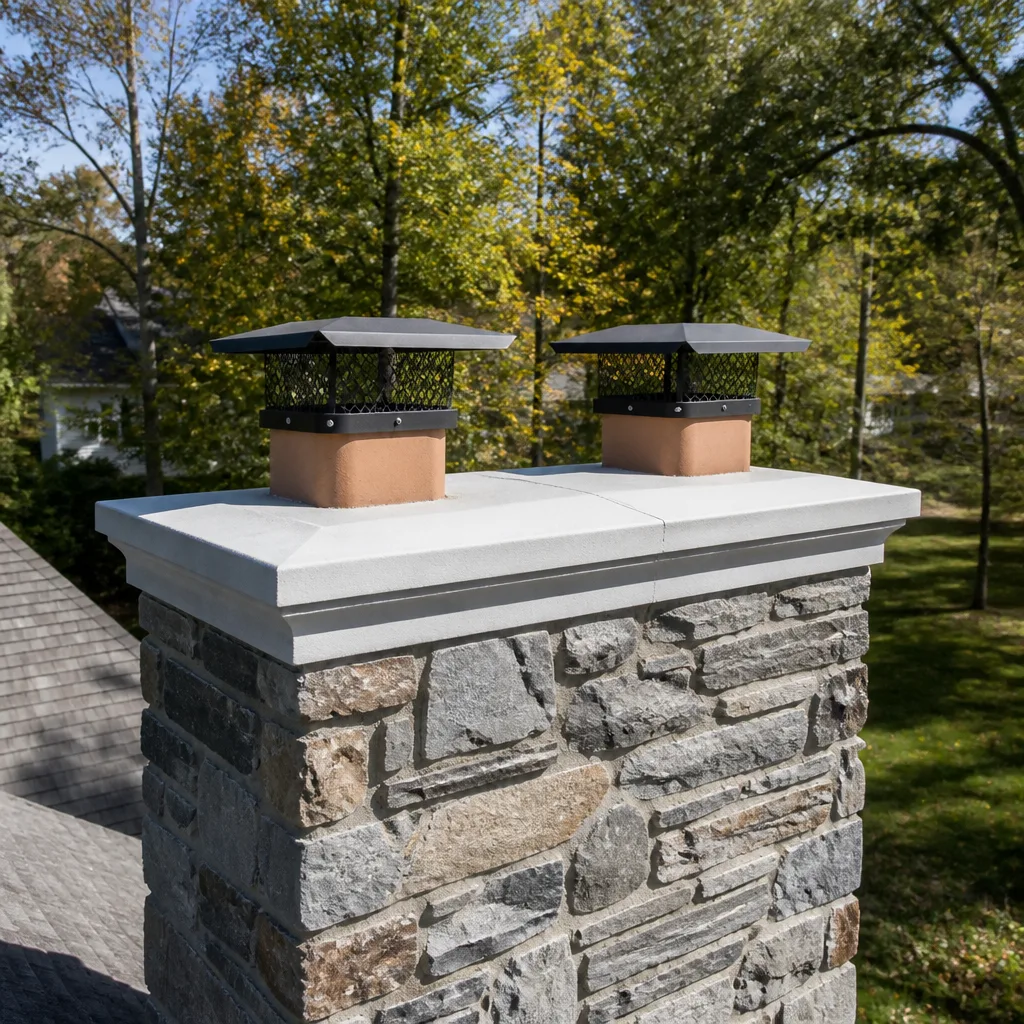
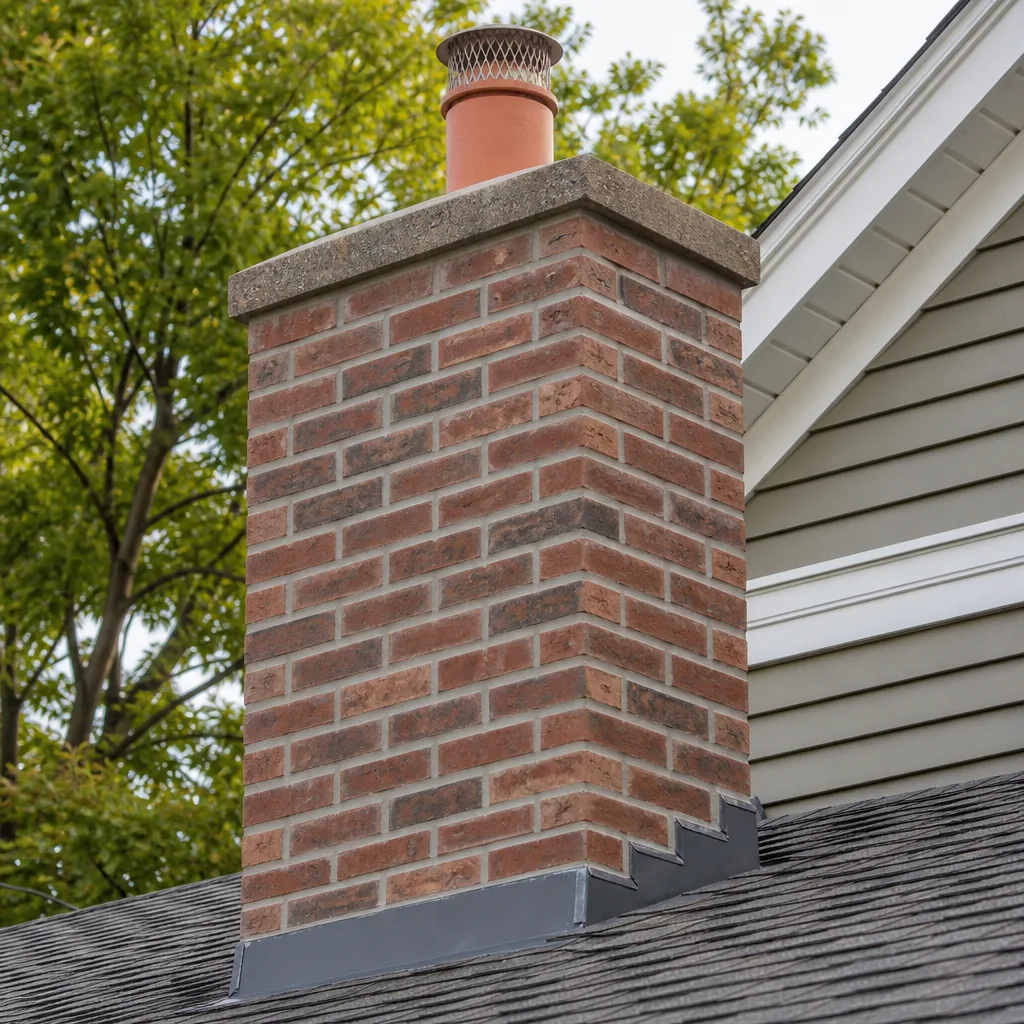
Level 1 sweep and inspection to the NFPA 211 annual standard - flue, crown, cap, and flashing checked and photographed
Chimney sweep logs do not sweep chimneys. They loosen some creosote - which then falls where a brush and vacuum still have to collect it.
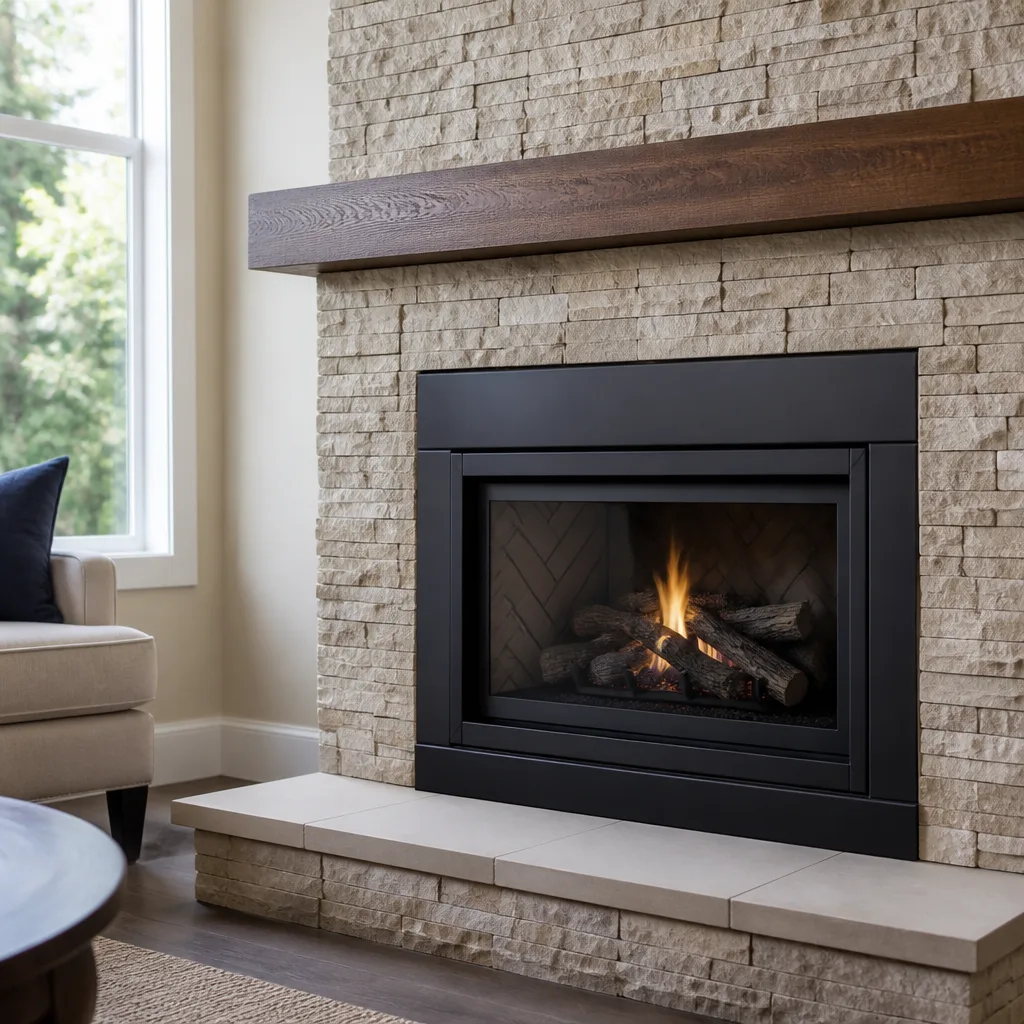
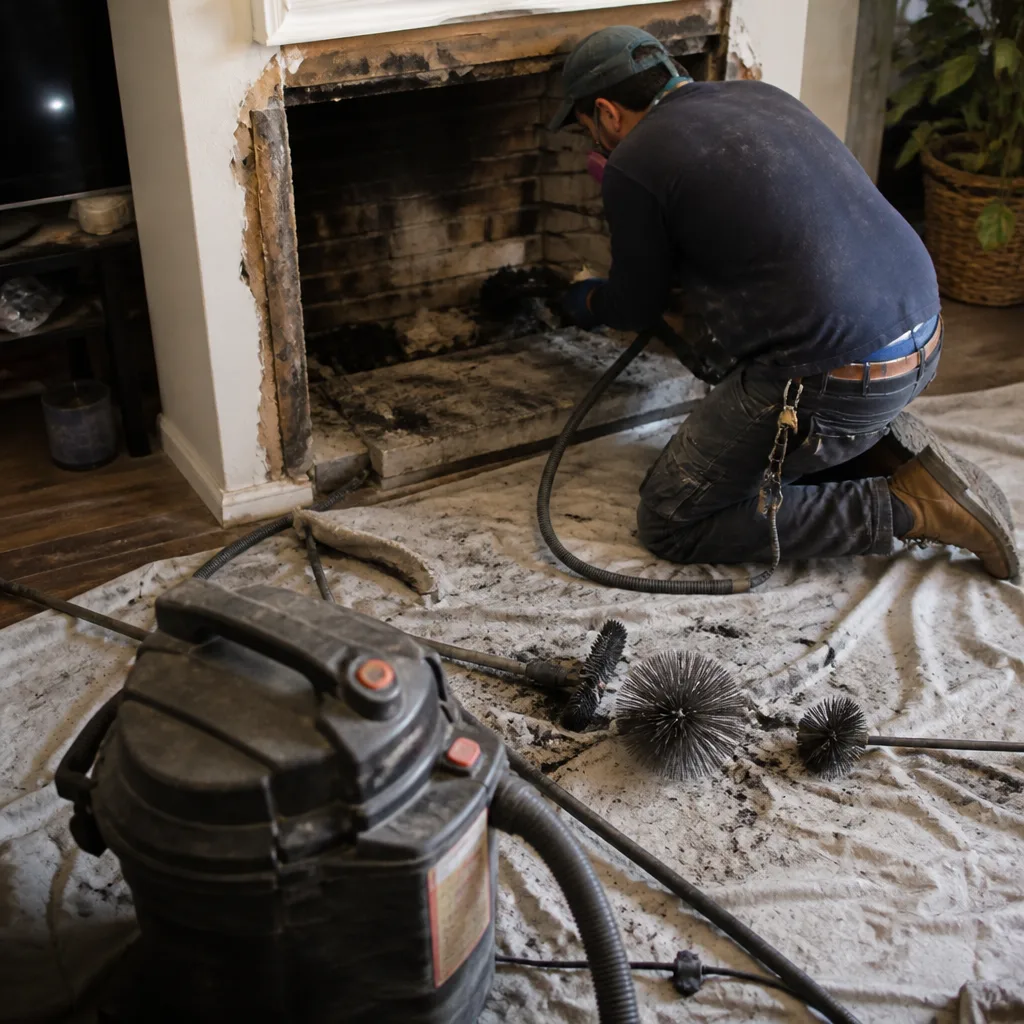 Before
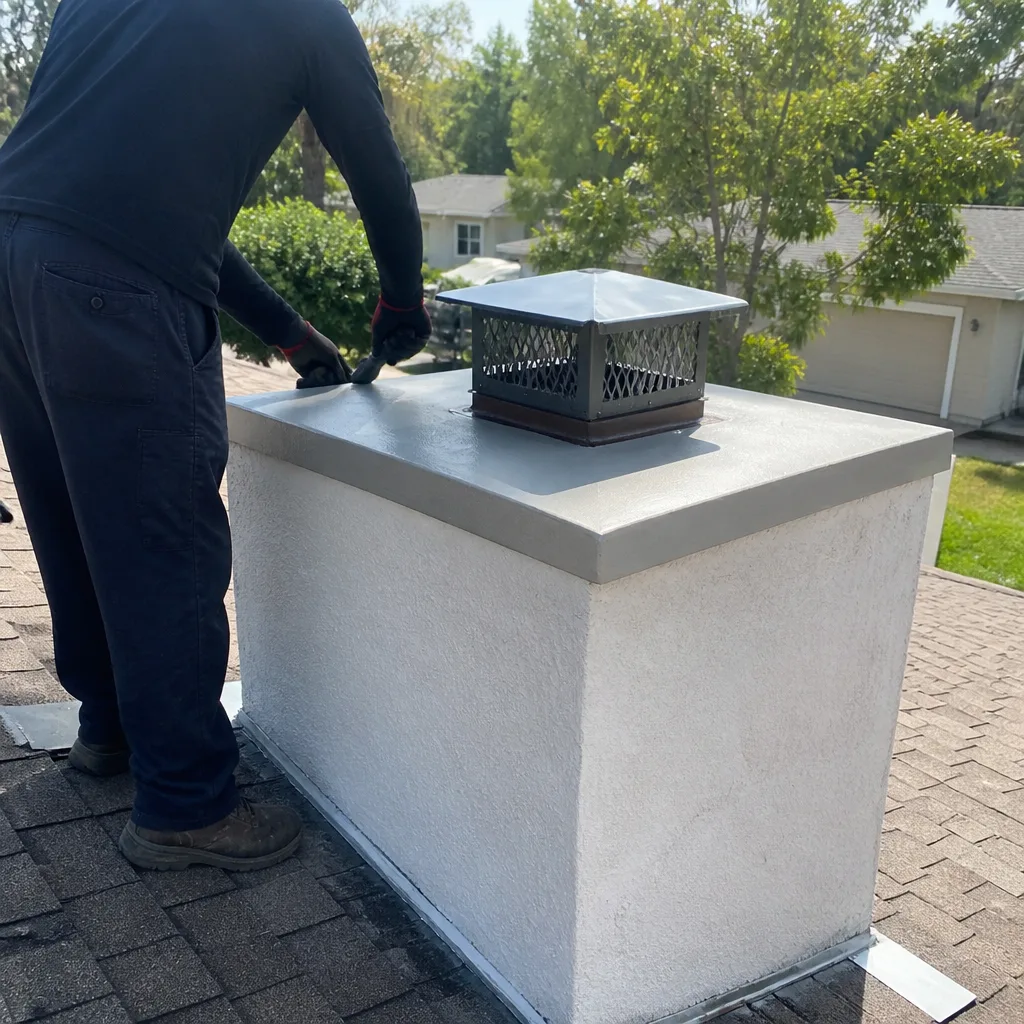 After
After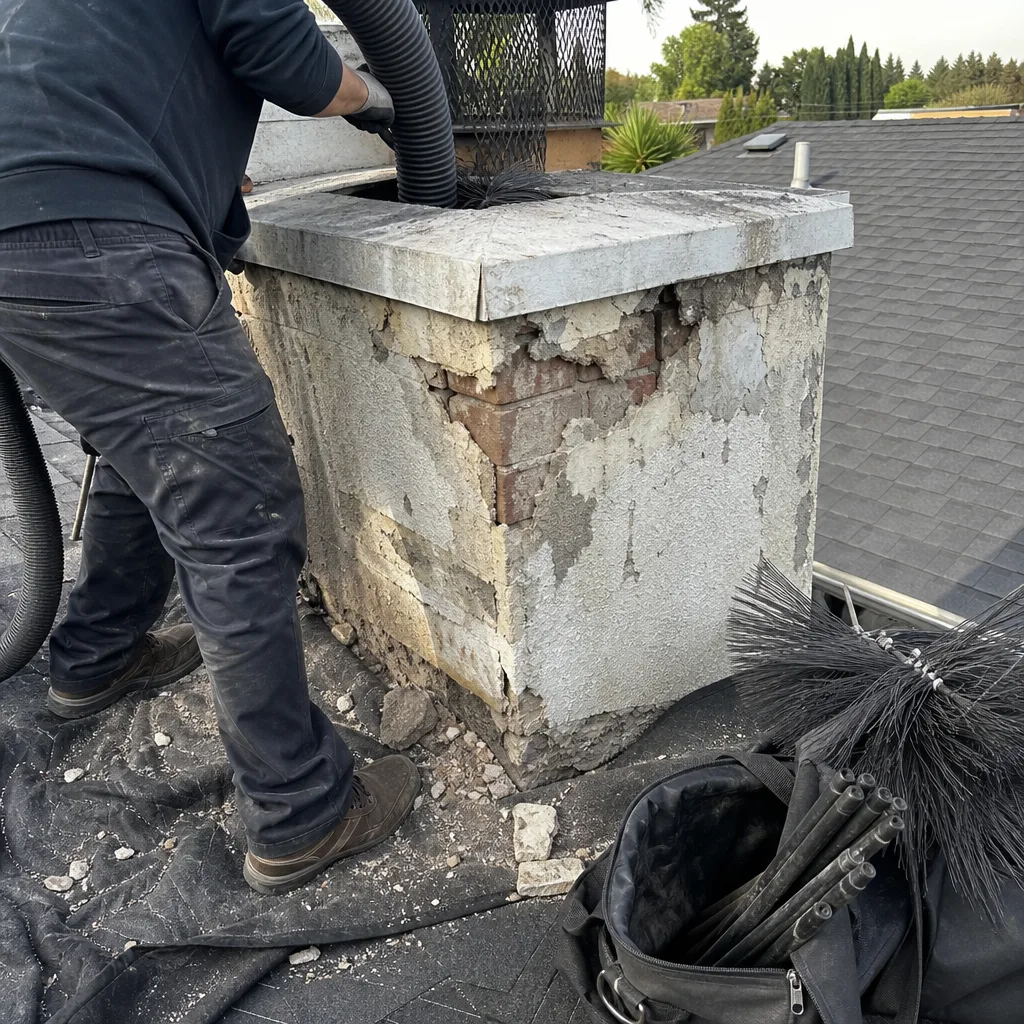 Before
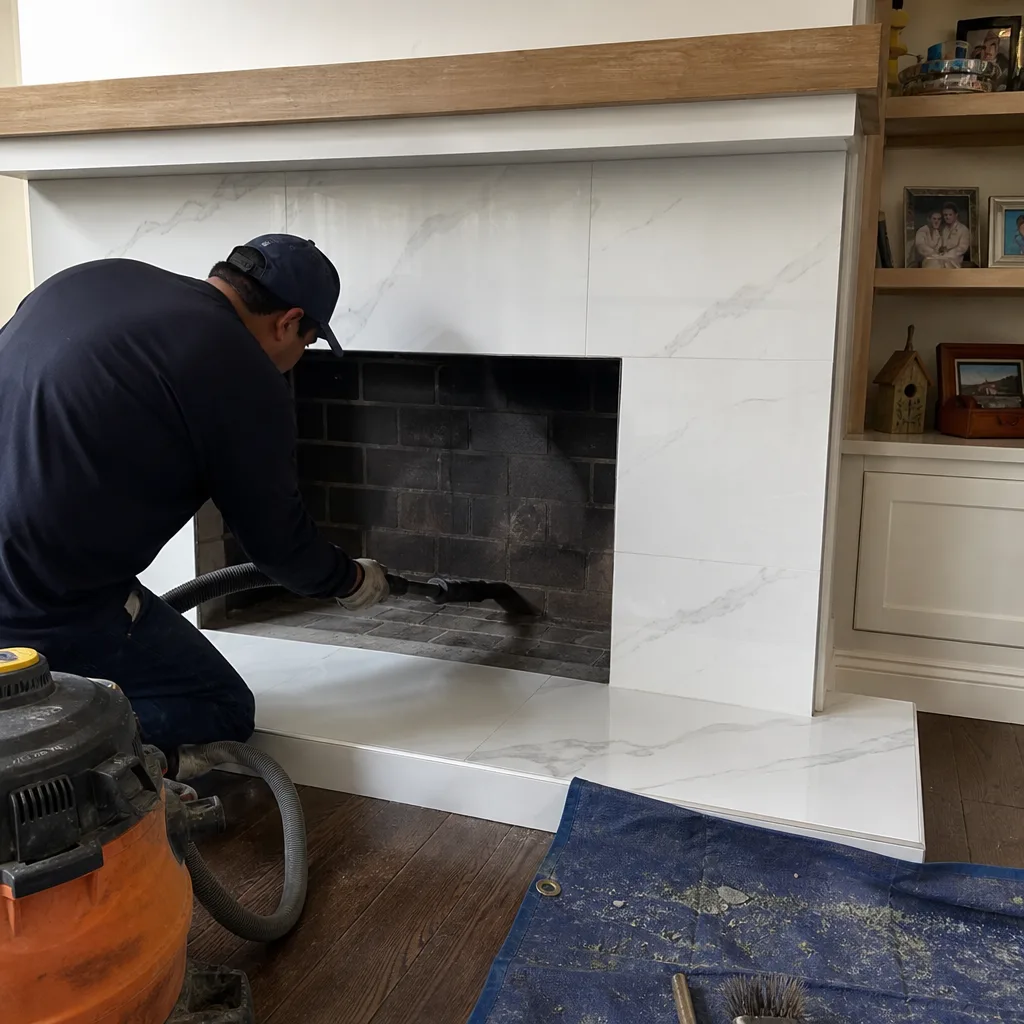 After
After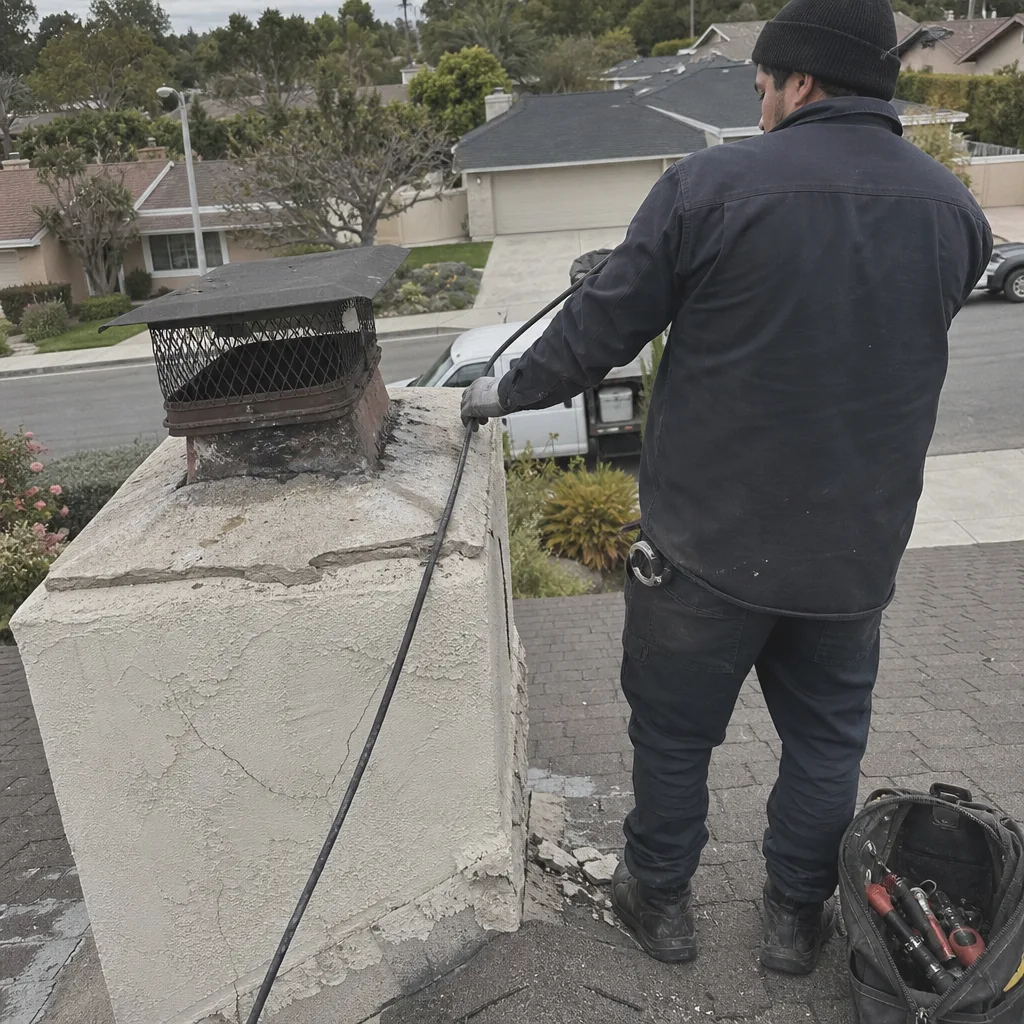 Before
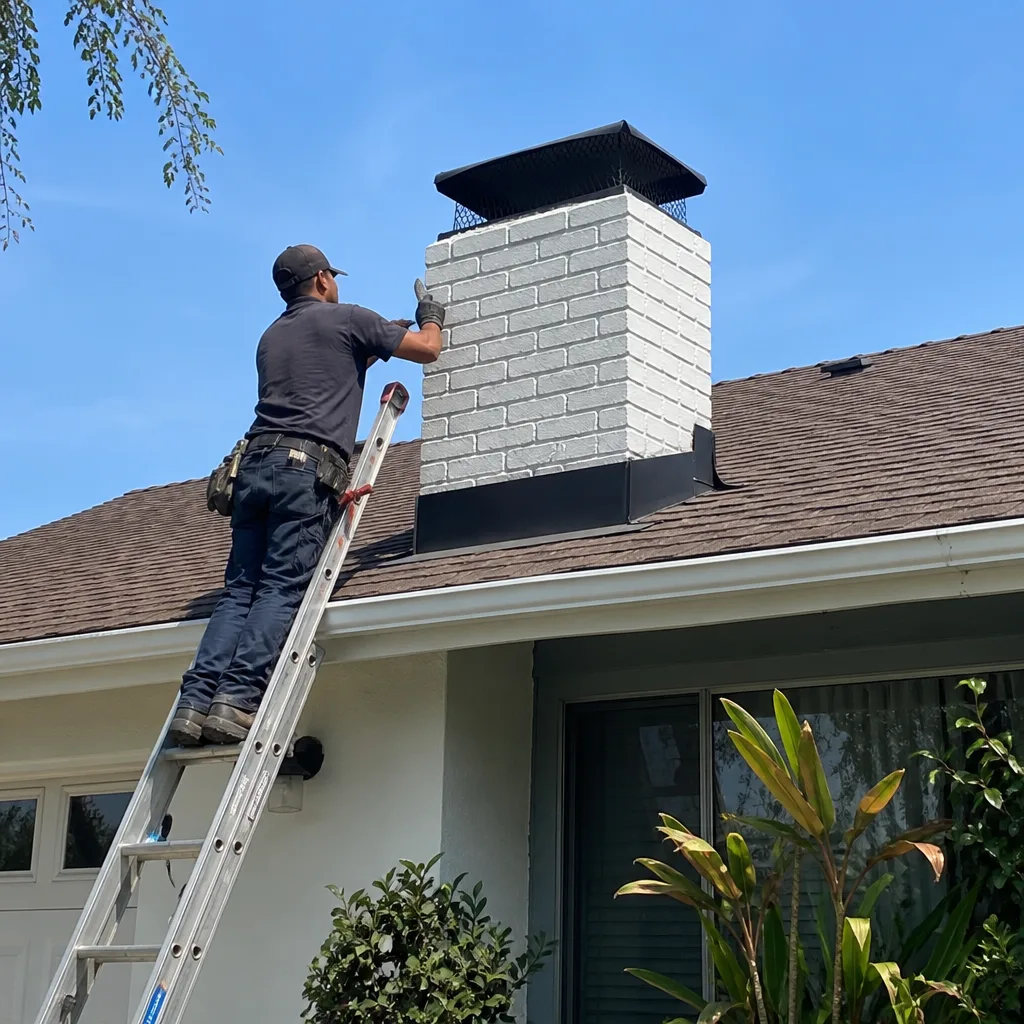 After
AfterChimney Repair Maintenance Schedule: What to Do and When
The National Fire Protection Association says inspect annually, but that’s a floor, not a complete maintenance plan or a substitute for our Chimney Repair services. An inspection tells you what’s wrong right now. It says nothing about the five other tasks that prevent the repairs an inspection alone can’t catch. This guide lays out a real schedule: what to do after every 50 fires, what to do every year, what to do every three years, and what to do every five to ten. In Los Angeles, where most homes burn 20 to 30 fires a season rather than 100 plus, the timeline shifts, and knowing that difference is what keeps a $200 issue from becoming a $4,000 rebuild. Here’s the full calendar, with cost ranges for every task, so you can plan instead of being surprised.
Quick Answer
A chimney maintenance schedule breaks down into four intervals: after every 50 fires you need a sweep; every year you need an inspection, a cap check, and a damper test; every three years you need a moisture and masonry survey; and every five to ten years you need flue relining or crown repair depending on what the camera shows. In Los Angeles, a standard sweep runs $189 to $340, an inspection runs $129 to $250, and flue relining starts around $2,800 and goes up from there based on liner length and material. The key is documenting every service in writing, because a paper trail is what makes an insurance claim hold up if a chimney fire ever happens.
Table of Contents
- After Every 50 Fires: The Sweep Interval
- Every Year: Inspection, Cap Check, Damper Test
- Every Three Years: Moisture and Masonry Survey
- Every Five to Ten Years: Relining and Crown Work
- What You Can Do Yourself vs. What Needs a Technician
- How Los Angeles Weather and Usage Change the Timeline
- What Your Insurance Company Expects You to Keep
- What Each Scheduled Service Should Cost
- Common Mistakes to Avoid
- When to Call a Professional
- Frequently Asked Questions
- The Bottom Line
After Every 50 Fires: The Sweep Interval
Creosote builds up in proportion to how much wood you burn, not how many months pass. The standard sweep interval in colder parts of the country is every cord of wood burned, which translates to roughly 50 to 60 fires. In Los Angeles, where a fire is a three-log evening affair rather than an all-day burn, 50 fires might take you two full winters to accumulate. That doesn’t mean you skip the sweep. It means you track fires instead of assuming the calendar tells you when.
A standard chimney sweep in Los Angeles typically runs $189 to $340, depending on roof access, flue height, and whether the chimney has been swept in the past two years. The sweep itself removes creosote, the acidic, flammable residue that condenses on flue walls. Stage-one creosote is dusty and brushes off. Stage-three creosote is a hard, shiny glaze that requires chemical treatment and rotary tools. The difference between stage one and stage three is exactly how often you sweep, and in a Mediterranean climate like LA’s, the dry-season burns produce a hotter fire that can bake creosote into that harder stage faster than you’d think. A homeowner in Sherman Oaks who burns 25 fires a season can build a glaze in the same time a homeowner in Minneapolis takes five seasons to build it, because the LA fire burns hotter and the chimney cools faster between burns, creating more condensation cycles.
Here’s the simple rule: keep a small log next to the wood rack. Mark a tally every time you light a fire. At 50, call for a sweep. Don’t wait for the smoke to tell you. By the time smoke backs into the room, the restriction is significant, and you’ve already shortened the life of the flue liner.
Every Year: Inspection, Cap Check, Damper Test
The annual inspection is non-negotiable, even in Los Angeles where chimneys go months without use. The NFPA 211 standard says inspect annually, and this is the one part of the schedule where the calendar overrides the fire count. California’s wildfire season means embers and ash can enter flues through damaged caps, and the winter rains expose weak mortar quickly. An inspection that costs $129 to $250 is a lot cheaper than discovering a cracked flue tile in January when you finally light the first fire of the season.
A legitimate annual inspection in Los Angeles covers three things, and you should be able to see all three on the written report:
- Camera scan of the flue interior – this is the only way to see cracks, gaps, or creosote buildup behind the damper. A visual inspection from the top or bottom misses what’s in the middle.
- Cap and spark arrestor check – caps keep out rain, animals, and embers. A missing or damaged cap in LA means rain gets in and stains the chase, birds nest in the flue, and embers have an open exit during fire season.
- Damper operation test – the damper is the cast-iron or steel door that closes the flue when the fireplace is cold. A seized damper leaks conditioned air year-round and is a $180 to $400 repair if caught early, versus a full replacement at $600 to $1,200 if it’s left to rust through.
Every Three Years: Moisture and Masonry Survey
Moisture is the single most destructive force in a masonry chimney, and Los Angeles doesn’t get enough rain for homeowners to notice they have a moisture problem until it’s substantial. What happens instead is this: coastal fog and intermittent rain soak the masonry a few days at a time, then the dry air pulls the moisture out fast. That cycle of wet-dry-wet-dry is what opens hairline cracks into structural gaps. Every three years, you want a masonry survey that checks the mortar joints, the crown, and the flashing.
Crown cracks are the most common finding in LA chimneys, and the reason is straightforward. The crown is the concrete slab that caps the chimney structure, and it’s exposed to more direct sun than any other part of the house. Concrete expands and contracts with temperature swings, and in a climate that goes from 45 degrees on a January night to 105 degrees on an August afternoon, the crown cycles hard. A cracked crown lets water into the chimney chase, which then deteriorates the mortar from the inside. Crown repair in Los Angeles typically runs $400 to $900 when caught early. A full crown rebuild with proper expansion joints and an overhang runs $1,200 to $2,500. The three-year check is what catches it at the $400 stage.
Every Five to Ten Years: Relining and Crown Work
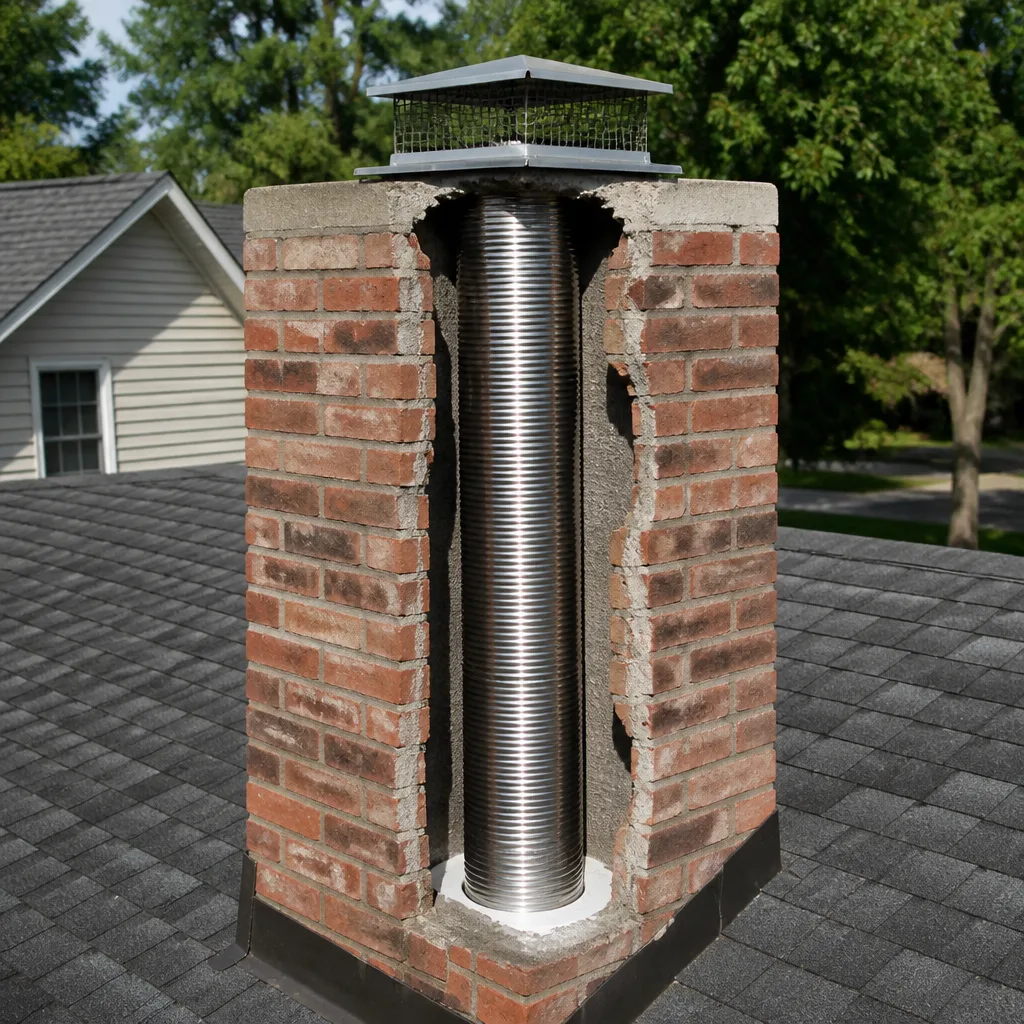
Flue relining, which is replacing the inner liner that channels smoke safely out of the house, is the big-ticket item on any chimney maintenance schedule and a topic we cover in Chimney Repair Troubleshooting: Common Problems and How to Fix Them. In Los Angeles, with moderate use, a clay tile liner can last 30 to 50 years if the chimney was built well and swept regularly. But homes built in the 1950s through the 1980s, which is a large share of the LA housing stock, often have liners that are undersized for modern appliances or cracked from decades of thermal cycling. The five-to-ten-year interval is when a camera inspection either confirms the liner is still serviceable or identifies the kind of deterioration that means relining should be scheduled, not ignored.
A stainless steel reline using DuraFlex or Olympia Chimney components typically costs $2,800 to $6,000 in Los Angeles depending on flue height, roof pitch, and access. A Heatshield cerfractory reline, which resurfaces a damaged clay liner without a full replacement, costs less, typically $1,800 to $3,500, but it’s not appropriate for every chimney. The difference matters. A stainless liner is structural and rated for all fuel types. Heatshield is a surface repair for clay liners with hairline cracks, not for liners with missing tiles or significant gaps. A proper inspection tells you which one your chimney needs, and you should insist on seeing the camera footage yourself before approving either. No one should be asked to approve a reline on a verbal description alone.
What You Can Do Yourself vs. What Needs a Technician
There’s a clear line between homeowner maintenance and technician work, and staying on the right side of it saves money without creating risk.
Tasks you can do yourself:
- Cap check from the ground. Walk to the street and look at the cap. Is it straight? Does it look rusted through? Can you see daylight through the mesh? You can’t fix it, but you can spot the problem early and call before water gets in.
- Damper test. Open the damper handle or knob fully. Does it move smoothly? Does it hold its position, or does it drop? A sticky damper is a repair call, but the test is yours to do.
- Visible crack survey. Stand at each corner of the house and look at the chimney. Look for white staining, which is efflorescence, the mineral deposit that signals moisture moving through masonry. Look for cracks wider than a credit card edge. Take photos with your phone, same angles every time, so you can compare year over year.
- Inside firebox check. Look at the back wall of the firebox. Are the firebricks cracked or spalling, which means crumbling in layers? Are gaps opening between bricks? This is where a $15 tube of refractory caulk is a legitimate homeowner fix, but if the gaps are wide enough to see the metal behind, call a professional.
Tasks that need a technician, no exceptions:
- Anything on the roof. Steep-pitch LA hillside roofs are not a place for a homeowner with a ladder and good intentions. Falls from roofs are the leading cause of homeowner injury in chimney work, and the risk is not worth the $200 you’d save.
- Flue liner inspection or repair. The tools are specialized, and the interior of a flue is not visible without a camera.
- Chimney crown repair or rebuild. The materials and the cure times require trade knowledge. A badly mixed crown fails in one season.
- Flashing repair. This is roofing work, and it’s the most common source of chimney leaks in Los Angeles. Done wrong, it leaks worse.
How Los Angeles Weather and Usage Change the Timeline
Los Angeles homeowners burn 20 to 30 fires a year on average, not the 100 plus that a Midwest or Northeast chimney sees. That has a specific effect on the maintenance schedule, and it’s not the effect most people assume. Lower fire volume means less creosote, which means sweeps can stretch from annual to every other year. But the LA climate has its own costs. The wet-dry cycling that opens crown cracks is more aggressive here than in consistently wet climates, because the change in moisture content is sharper and faster. In a rainy climate, a chimney stays damp for months, and masonry expands. In LA, it gets soaked, then bakes dry in the sun, then soaked again, and it’s the contrast that does the damage.
The practical result for an LA homeowner is a schedule that looks like this:
- Sweep: every 50 fires, which for most LA homes means every 18 to 24 months.
- Inspection: every year, timed for September, before the burn season starts.
- Masonry survey: every three years, timed for spring, after the rains have exposed whatever the water found.
- Relining or crown rebuild: every five to ten years only if the camera and the masonry survey show deterioration. Many LA chimneys go 20 years between these big items. The point is to check on schedule, not to replace on schedule.
Timing matters for another LA-specific reason. Chimney companies in Southern California book solid from October through January. If your September inspection finds a cracked crown or a failed damper, you can get the repair done before the rush. If you wait until the first cold night in December, you’re calling a company that’s already out six weeks, and you’re paying a premium or waiting out the season with no fire.
What Your Insurance Company Expects You to Keep
Homeowner’s insurance policies in California generally cover chimney fires as sudden, accidental losses, but the claims process gets difficult fast when the adjuster asks for a maintenance history. If you say you’ve never had the chimney inspected and the adjuster’s report shows a flue with three seasons of creosote glaze, the claim can be denied on neglect grounds. The standard is that a homeowner has a duty to maintain the property, and a chimney with no paper trail is hard to defend.
What you want in writing:
- The inspection report, with the date, the technician’s name, and the findings. Digital photos of the flue interior are strong evidence, and most equipment saves them automatically.
- The sweep receipt, with the date and the amount of creosote removed. If you can show a sweep 14 months before a fire, the claim moves fast.
- Any repair invoice, with the specific work, the materials used, and the warranty term. A repaired chimney with a paper trail is close to unassailable.
- Your own fire tally, if you keep one. It’s not a formal document, but it shows diligence.
The written guarantee matters here too. Every repair at Flint Chimney Sweep carries a written guarantee valid for one full year, and if a covered repair fails inside that year, we return at no charge. That’s the Garrison Standard, the same code every Garrison Partners location follows, and it’s the kind of documentation an adjuster takes seriously. A verbal promise from a guy with a brush is worth nothing in an insurance dispute. A written guarantee with a service date and a signature is evidence.
What Each Scheduled Service Should Cost
You should know the ballpark before you call, so you can spot a quote that’s padded. These are Los Angeles market ranges for a standard single-flue masonry chimney as of 2025:
- Chimney sweep: $189 to $340. Higher end for steep roofs, second-story access, or heavy glaze requiring chemical treatment.
- Level 1 inspection (visual, no camera): $129 to $200. Often bundled with a sweep.
- Level 2 inspection (camera scan, full interior): $200 to $400. This is what you want for a real maintenance record.
- Damper repair: $180 to $400 for a top-sealing damper replacement. A full cast-iron damper rebuild runs higher.
- Chimney cap replacement: $250 to $600 including parts and roof access.
- Crown repair: $400 to $900 for crack sealing and resurfacing. A full rebuild with proper overhang and expansion joints runs $1,200 to $2,500.
- Flashing repair: $350 to $800 for typical LA roof pitches.
- Flue relining: $2,800 to $6,000 for stainless steel using DuraFlex or Olympia Chimney components. Heatshield resurfacing runs $1,800 to $3,500 where appropriate.
Every one of these numbers should be delivered in writing before any work begins. If a company won’t put a price on paper before they put a tool on the roof, call someone else. The number on the invoice should be the number you approved, and that’s a non-negotiable part of how Flint Chimney Sweep operates in Los Angeles. A written price is the one thing that protects you from door-step upsells, and there’s no defensible reason for a company to refuse one.
Common Mistakes to Avoid
- Using the annual inspection as a substitute for a sweep. An inspection tells you what’s there. A sweep removes what shouldn’t be. They’re not the same service, and skipping the sweep because the inspection looks fine is how glaze builds up silently.
- Waiting for smoke to back up before calling. By the time a chimney is smoking into the room, the draft has failed and the restriction is significant. The repair is always more expensive at that point.
- Assuming a cap is optional. In Los Angeles, a missing cap means embers exit the flue during fire season and rain enters during the wet months. Both cause real damage. A $300 cap is cheaper than a $900 crown repair.
- Taking a quote over the phone without a written breakdown. Oral estimates are how the door-step upcharge happens. Get the number in writing or don’t book the job.
- Ignoring the damper because you never see it. A seized damper leaks conditioned air year-round. In Los Angeles, that means a hot house in August and a drafty one in January. The repair is cheap compared to a year of higher energy bills.
- Approving a reline without seeing the camera footage. A liner recommendation should come with images you can see yourself. If a company says the liner is shot and won’t show you the proof, get a second opinion.
- Burning unseasoned wood to save money. Wet wood burns cool and produces creosote fast. Seasoned hardwood in LA costs more per cord but you’ll sweep half as often and the fire burns better. The math works in favor of the dry wood.
When to Call a Professional
Call a chimney professional when you see white staining on the chimney exterior, when the damper won’t seal, when water appears in the firebox after rain, when you smell smoke from the fireplace when it’s cold, or when you hear animals in the flue. Any of these means the chimney has moved from routine maintenance to active repair, and none of them resolve on their own. If you’re in the greater Los Angeles area and you’re not sure what you’re looking at, Flint Chimney Sweep offers free estimates – call (830) 251-4560 and we’ll take a look.
Frequently Asked Questions
Every year, per the NFPA 211 standard, regardless of how often you burn. In Los Angeles, the best time is September, before the burn season starts and before the chimney companies book out for winter. A Level 2 camera inspection every year is the strongest maintenance record for insurance purposes, and it runs $200 to $400 in the LA market.
A standard chimney sweep in Los Angeles runs $189 to $340. The factors that move the price are roof pitch, second-story access, and creosote level. A heavier glaze requires more time and chemical treatment, which pushes toward the top of that range. Every sweep at Flint Chimney Sweep comes with a written price before any work starts, so the quote you approve is the number you pay. Call (830) 251-4560 for an exact quote.
Only if the camera shows cracks that go through the tile, missing sections, or gaps that let heat reach the surrounding structure. A liner with minor hairline cracks can sometimes be resurfaced with Heatshield, which costs half or less of a full reline. If someone tells you the liner needs to be replaced, ask to see the camera footage. A legitimate recommendation comes with images, not just a verbal description.
You extend the time between when a problem starts and when you find it. A hairline crown crack found at inspection costs $400 to $900 to repair. The same crack left for two more seasons becomes a structural gap, soaks the chimney chase, and costs $1,200 to $2,500 to rebuild. The inspection isn’t a profit center; it’s the cheapest insurance on the schedule.
Fifty, as a general rule. In Los Angeles, where a typical season is 20 to 30 fires, that means a sweep every 18 to 24 months for most homes. Track the number with a tally mark. It’s more accurate than trying to remember when the last fire was, and it keeps you from sweeping a clean chimney or skipping one that’s loaded.
Most policies cover sudden, accidental damage like a chimney fire, but not wear-and-tear or neglect. The key is maintenance documentation. An adjuster will ask for inspection reports and sweep receipts. If you can show an annual inspection and a sweep within the prior two years, a fire claim processes cleanly. If you can’t, the claim can be denied on the grounds that the chimney wasn’t maintained. Keep the paperwork in a folder. That folder is your policy’s best friend.
The Bottom Line
A chimney maintenance schedule is not one annual task. It’s a four-tier calendar: sweep after every 50 fires, inspect and check the cap and damper every year, survey the masonry every three years, and evaluate the liner and crown every five to ten. In Los Angeles, the fire volume is lower but the wet-dry climate is harder on masonry than most homeowners realize. Track the fires, keep the paperwork, get prices in writing, and don’t approve a big repair without seeing the camera footage. Do those four things and a chimney will last the life of the house without a five-figure surprise.
Written by Hank Delano, Owner at Flint Chimney Sweep, serving Los Angeles since 2002.