
Last updated October 9, 2026
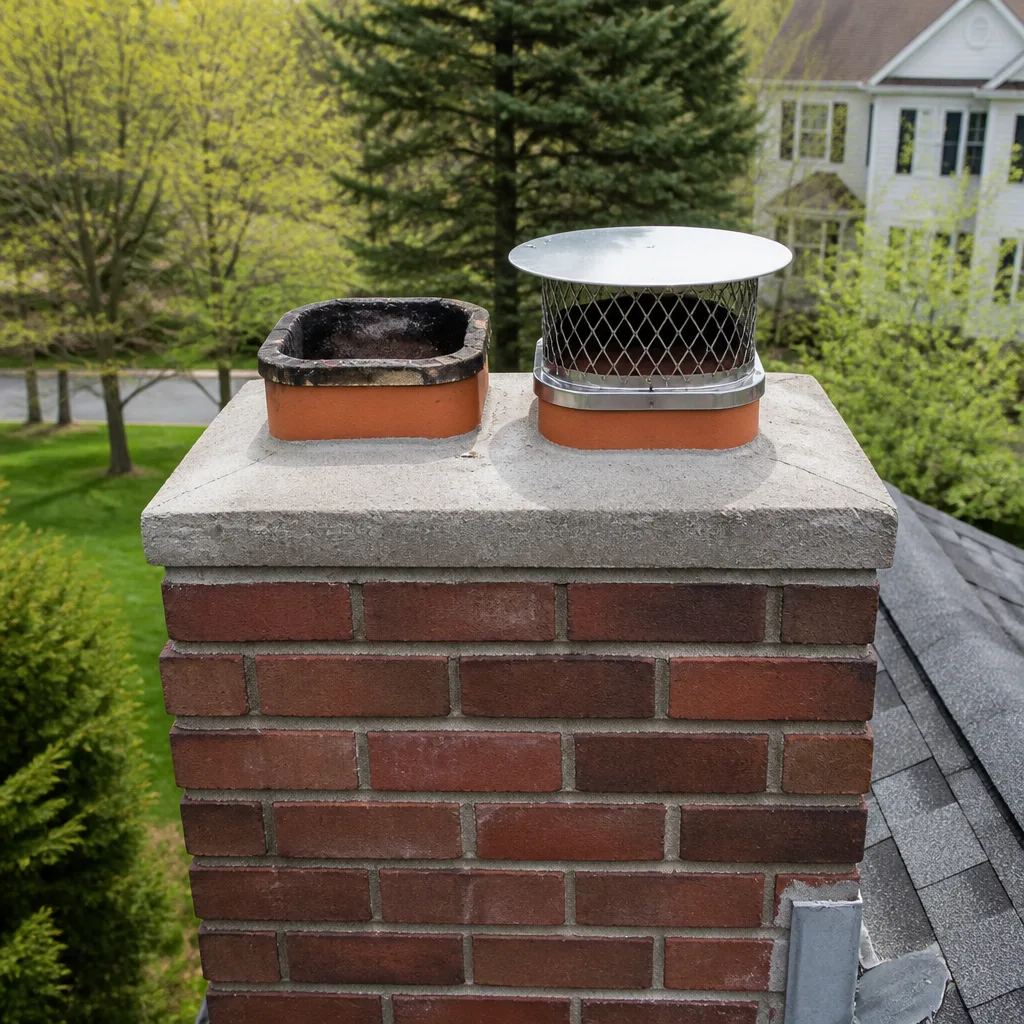
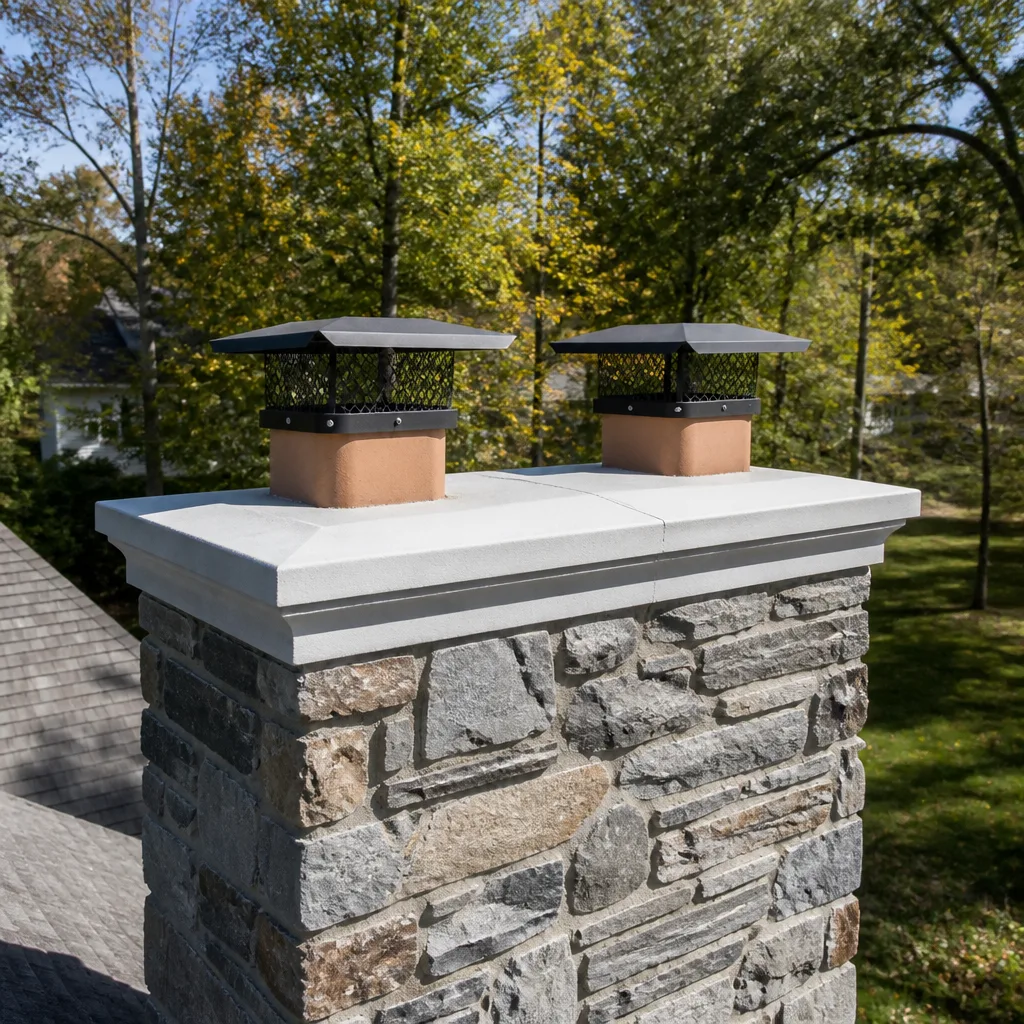
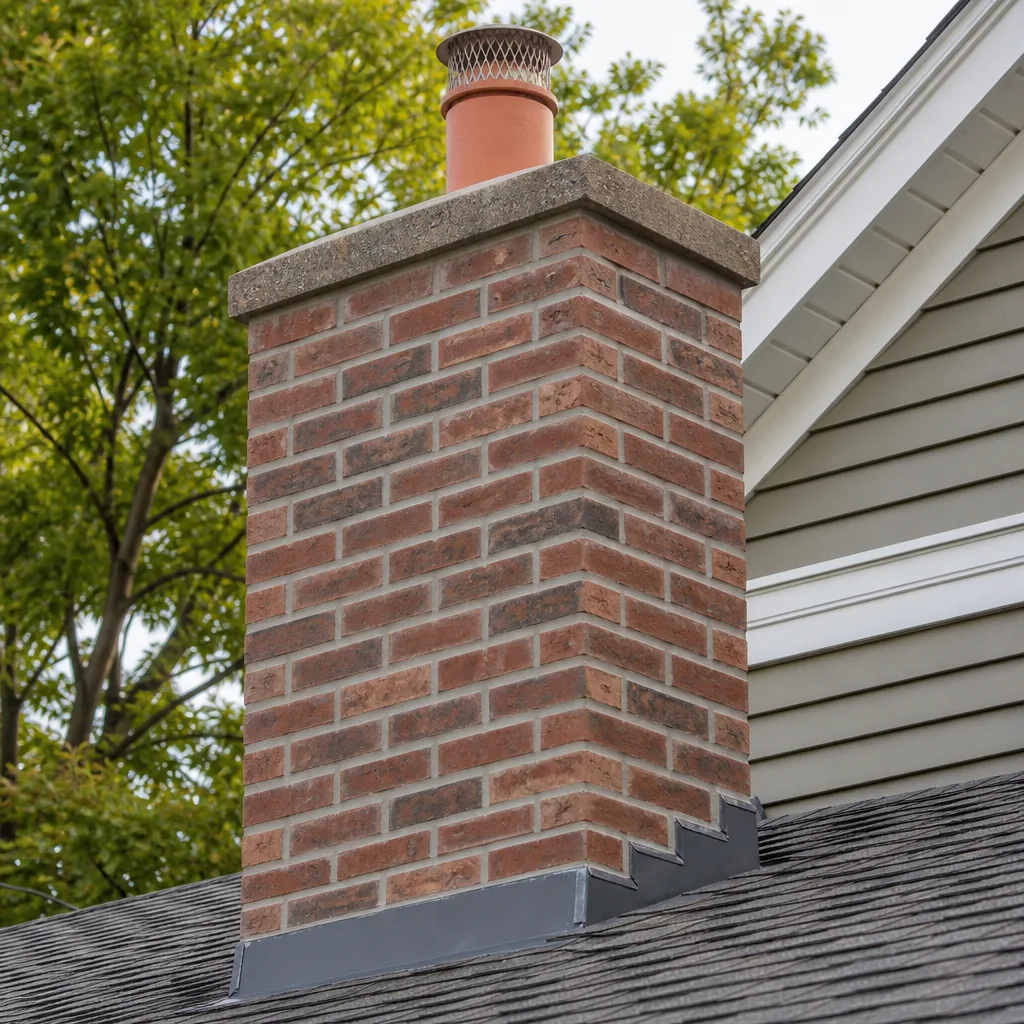
Level 1 sweep and inspection to the NFPA 211 annual standard - flue, crown, cap, and flashing checked and photographed
Chimney sweep logs do not sweep chimneys. They loosen some creosote - which then falls where a brush and vacuum still have to collect it.
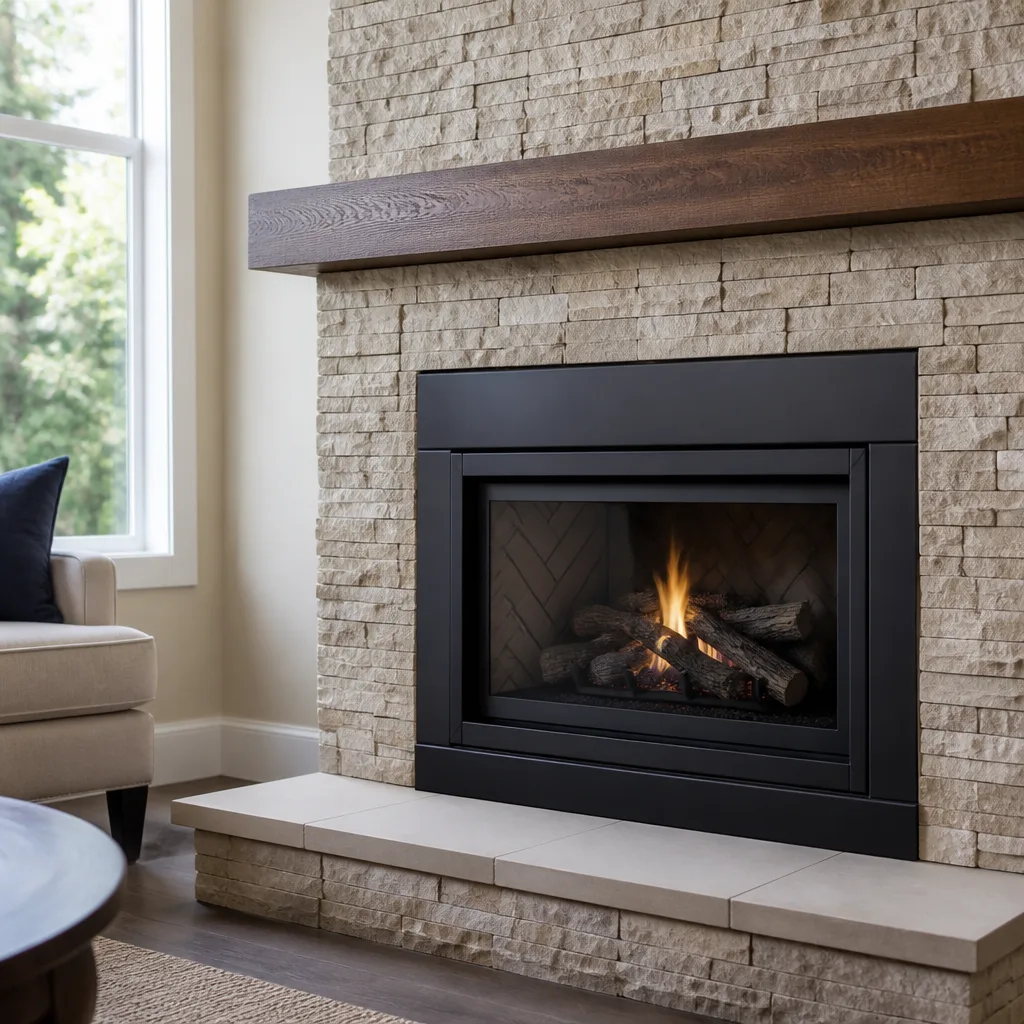
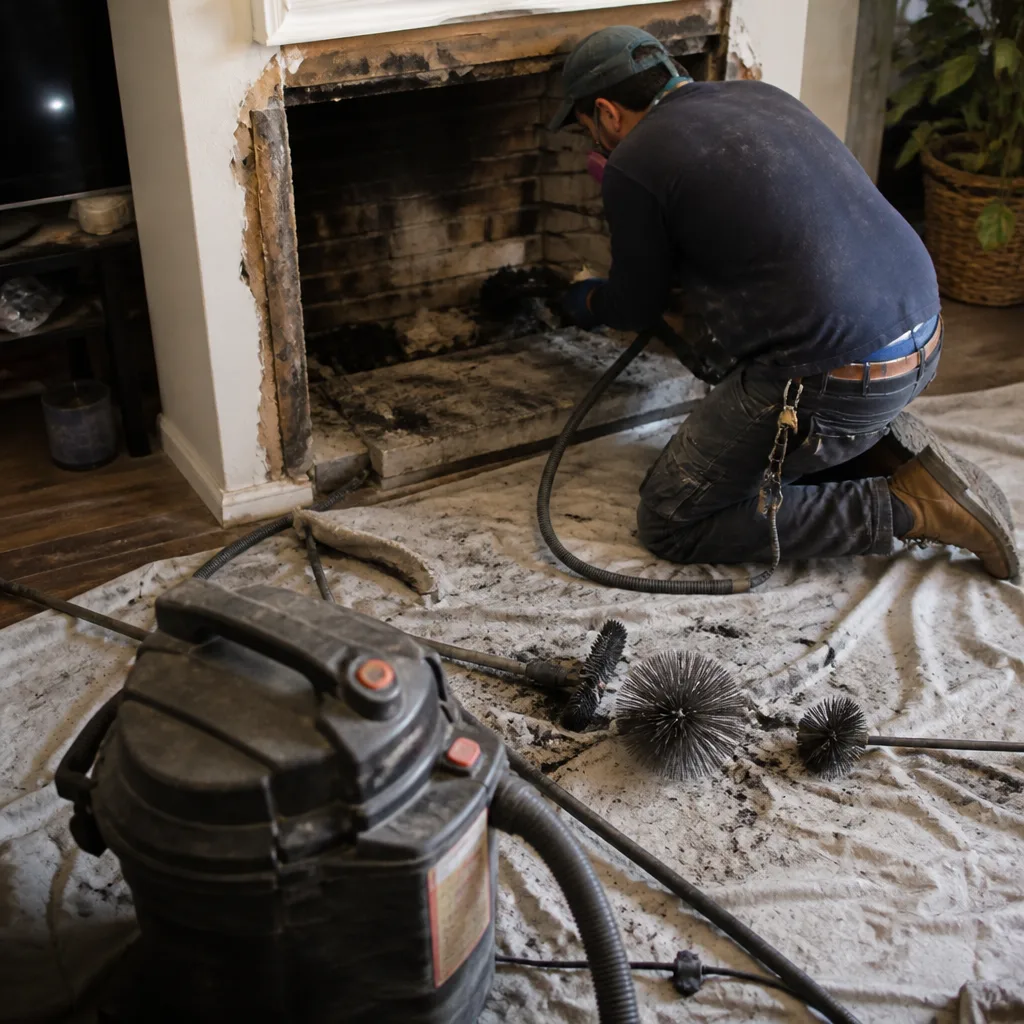 Before
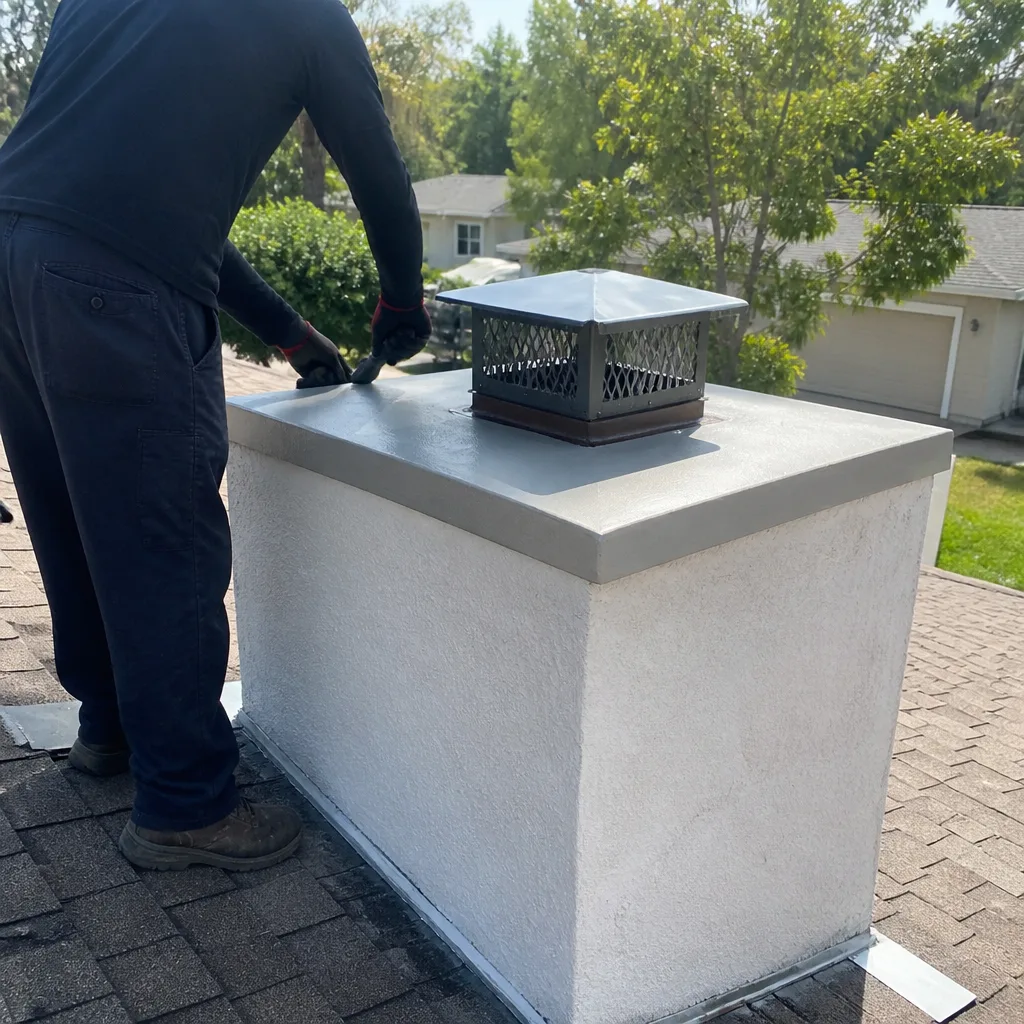 After
After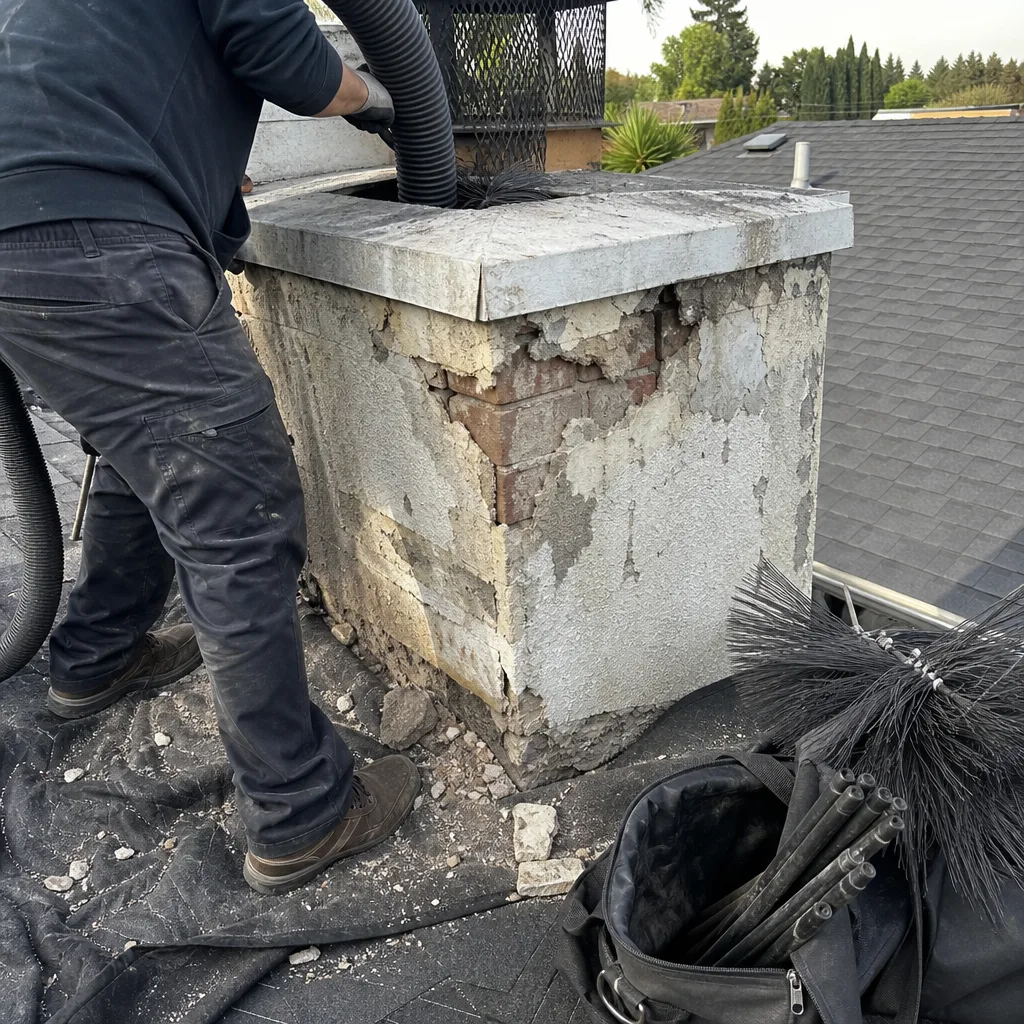 Before
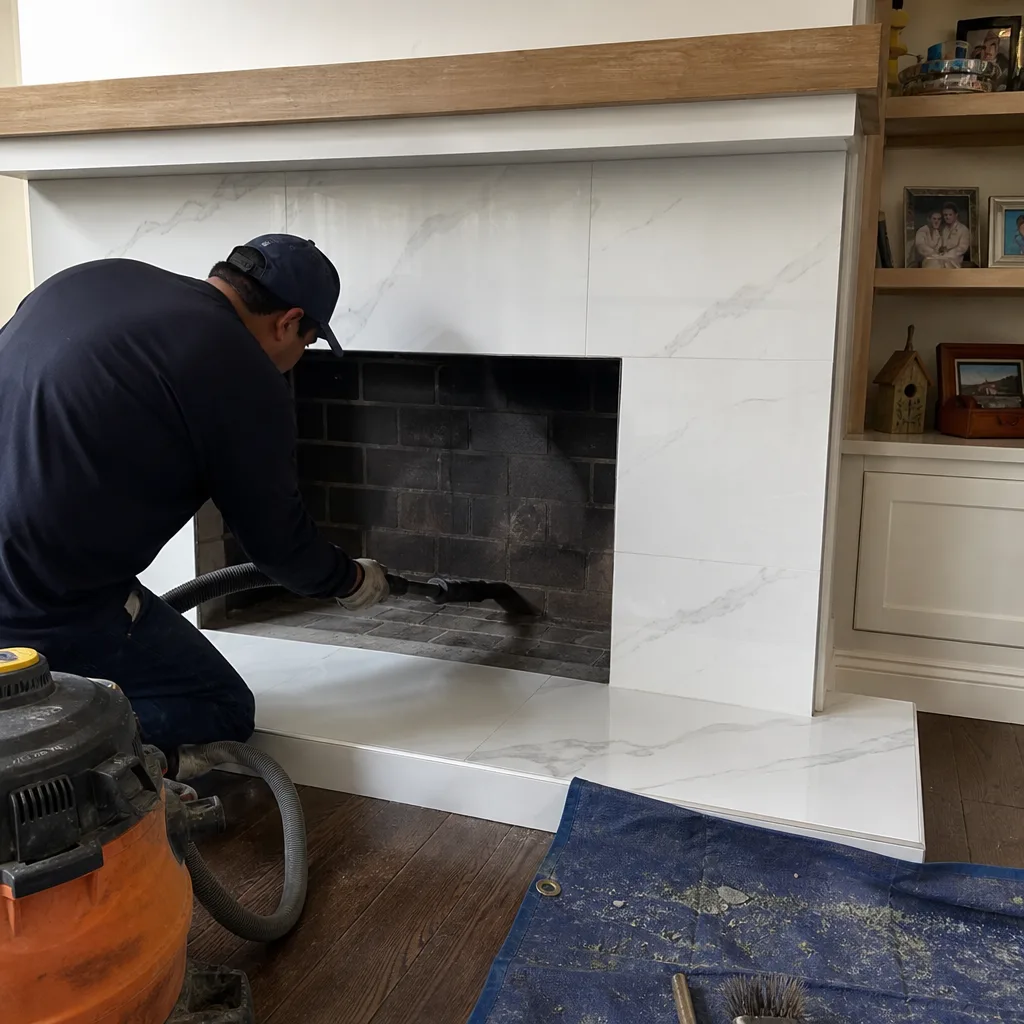 After
After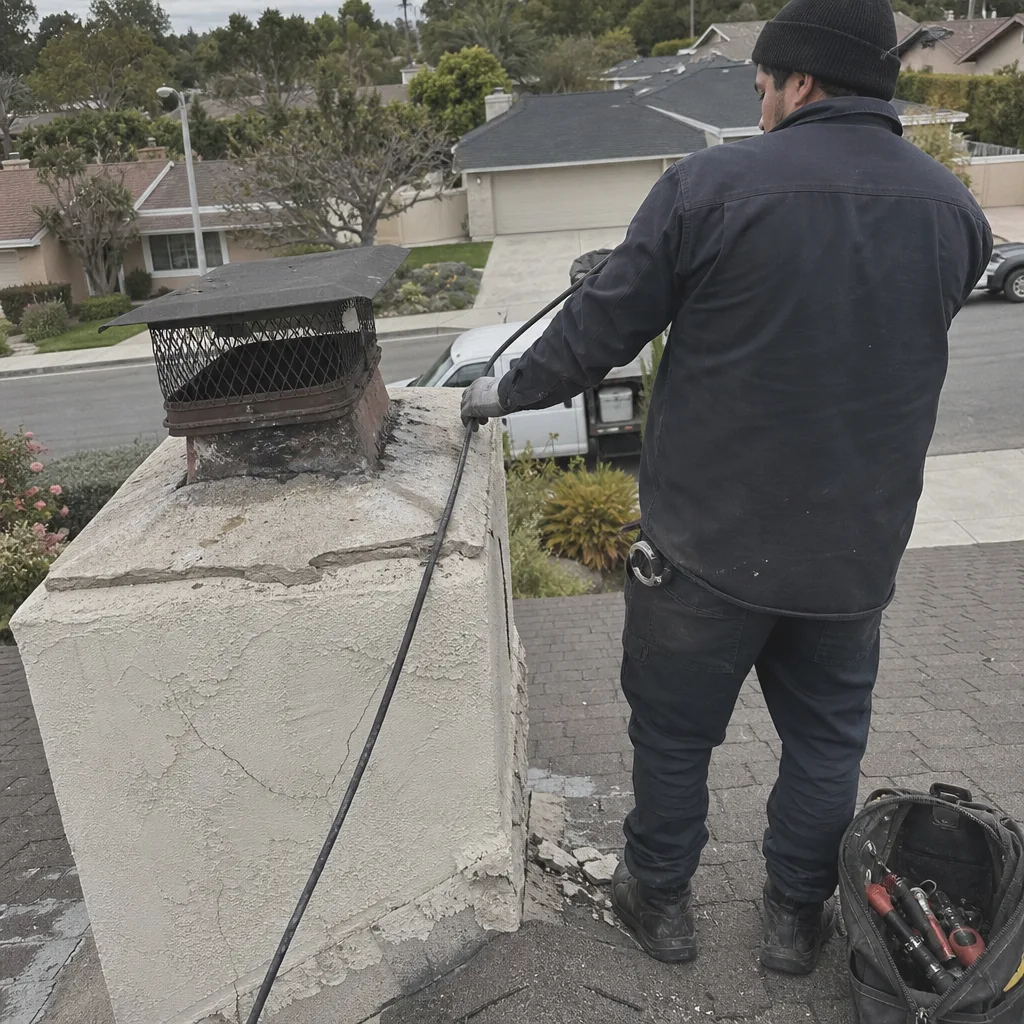 Before
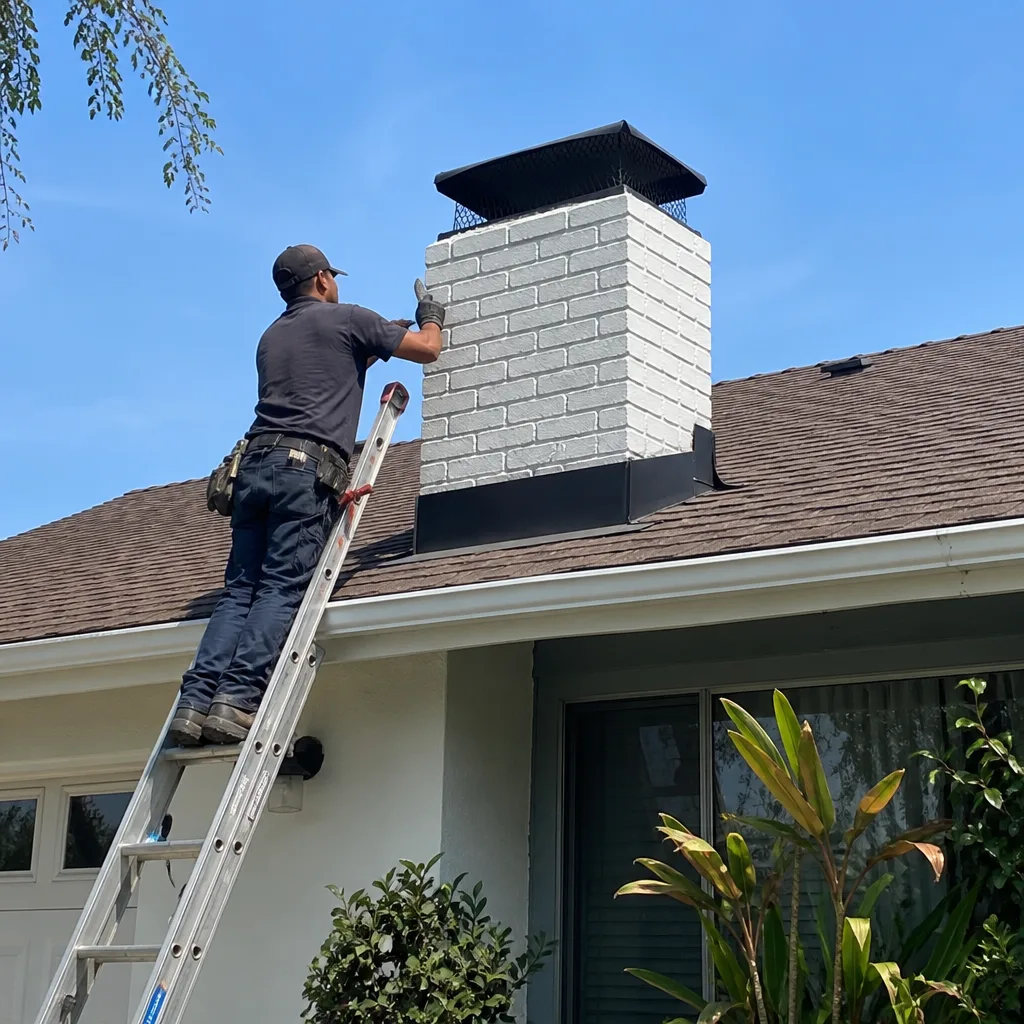 After
AfterChoosing the Right Chimney Cleaning Brand: A Buyer’s Guide for Los Angeles
A five-star Google rating tells you that past customers were satisfied. It tells you nothing about what happens when something goes wrong on your job, which is the only scenario where a company’s actual commitments matter. Los Angeles has hundreds of chimney companies competing for the same call, and most of them look identical from the outside: trucks, uniforms, websites with smiling technicians. This guide will teach you how to tell the difference between a company that documents its obligations and one that relies on a friendly handshake, because when creosote buildup or a cracked flue tile turns into a dispute, the only thing standing between you and a bill you never approved is a piece of paper. For more guides & resources on protecting your home, see our blog.
Quick Answer
The right chimney cleaning brand in Los Angeles is one that puts a fixed price, a defined scope of work, and a written guarantee with stated terms in your hands before any tools come off the truck. In our experience serving Los Angeles since 2002, documented accountability beats star ratings every time, because a written agreement is the only thing that protects you if the job is disputed. Look for a company that answers “yes” to three questions: Will you put the price in writing before you start? What does your guarantee cover and for how long? Can I see a sample service agreement?
Table of Contents
- The Documented Accountability Framework
- Franchise Affiliations and What They Actually Mean
- How to Verify a Chimney Company’s Credentials in Los Angeles
- What “Satisfaction Guarantee” Really Means in LA Marketing
- The Three Questions That Reveal a Company’s True Commitments
- Why Materials Brands Matter in Chimney Repair
- Los Angeles-Specific Factors Most Guides Miss
- Common Mistakes to Avoid
- When to Call a Professional
- Frequently Asked Questions
The Documented Accountability Framework
Most chimney cleaning buyer’s guides tell you to check reviews, compare quotes, and ask for references. That advice is fine as far as it goes, but it skips the one factor that actually determines how a dispute resolves: whether the company’s commitments exist in writing. A review is a memory. A quote is a suggestion. A written service agreement with a fixed price, a defined scope, and guarantee terms is a legal document.
Here is the framework we recommend for evaluating any chimney company in Los Angeles:
- Fixed price in writing: Does the company commit to a specific dollar amount before work begins? If the number on the invoice can change at the door, the initial quote was marketing, not a commitment.
- Defined scope: Does the agreement state exactly what will be done? “Chimney cleaning” should specify whether it includes the flue, the smoke chamber, the firebox, and the cap. Vague scope is where surprise charges hide.
- Guarantee with stated terms: Is there a written guarantee? Does it say what is covered, for how long, and what happens if the work fails? “We stand behind our work” is a slogan. “Repairs are covered for one full year, and if a covered repair fails, we return at no charge” is a commitment.
- Who performs the work: Are technicians background-checked and uniformed? Do you know who will be walking through your door before they arrive?
- Phone access: Can you reach a live person when you need to? Voicemail trees and callback forms are fine for cable companies, but a chimney fire in Los Angeles doesn’t wait until Monday.
Every company can say they do these things. The test is whether they will put it in writing before you book. Flint Chimney Sweep operates under The Garrison Standard, a code of conduct shared by every Garrison Partners location, which requires exactly this: a written price before work starts, a defined scope on every job, and a 365-Day Done Right Promise on every repair, valid for a full year from the service date. If a covered repair fails within that year, we return at no charge. No argument, no re-quote, no fine print.
Franchise Affiliations and What They Actually Mean
When a chimney company in Los Angeles operates under a franchise or network affiliation, it means one specific thing that matters to you: there is a named standard the company is contractually bound to follow. An independent operator can change how they do business whenever they want. A company operating under a network code of conduct has somebody above them who can be held accountable when the standard is not met.
Flint Chimney Sweep has been part of the Garrison Partners family of independently owned chimney service companies since 2002. That affiliation means our Los Angeles location operates under The Garrison Code, the same operating standard every Garrison Partners location follows. Here is what that means in practical terms:
- Consistency: The written price, defined scope, and guarantee terms you get from Flint Chimney Sweep are the same commitments a Garrison Partners location in any city would make. You are not betting on which technician shows up that day.
- Recourse: If a commitment is not honored, you have somewhere to escalate beyond the local office. The network standard gives you a named point of accountability.
- Material standards: The Garrison Code specifies that repairs use professional-grade materials from trusted chimney trade brands, not whatever is cheapest at the supply house that week. We work with DuraFlex, HeatShield, Gelco, and Copperfield products, specified by job requirement, not by margin.
None of this means every franchise chimney company is automatically better than every independent. It means you should ask the independent operator the same questions and see whether they can answer in writing. A good independent can. A bad franchise can hide behind a logo. The affiliation is only as good as the standard it enforces, which is why you should always ask to see the service agreement before you book.
How to Verify a Chimney Company’s Credentials in Los Angeles
You can verify a chimney company’s legal standing and trade credentials in under five minutes using two public resources: the California Contractors State License Board (CSLB) license lookup and the Chimney Safety Institute of America (CSIA) certification registry. Here is the step-by-step process:
- Go to the CSLB website and search for the company by name. The license lookup will show you whether the license is active, how long it has been held, and whether there are any disciplinary actions or complaints on record.
- Check the CSIA registry for certified chimney sweeps. CSIA certification is the industry’s primary trade credential, and the registry lists certified professionals by location. A company that employs CSIA-certified sweeps is making a verifiable claim, not a marketing one.
- Cross-reference the two. A valid CSLB license proves the company can legally work in California. CSIA certification proves the technicians have passed the industry’s trade exam. Either one alone is incomplete.
- Ask for proof at the time of booking. The company should be able to provide their CSLB license number and confirm CSIA certification when you call. If they hesitate or deflect, that tells you something.
This process takes less than five minutes and eliminates the companies that are not legally permitted to work on your chimney in Los Angeles. It will not tell you whether the company will honor a guarantee, which is why the credentials check is step one and the written agreement check is step two.
What “Satisfaction Guarantee” Really Means in LA Marketing
Walk through the marketing language of chimney companies in Los Angeles and you will see the phrase “satisfaction guarantee” everywhere. It sounds reassuring. It commits to nothing. Here is the difference between a satisfaction guarantee and a written, time-bounded guarantee:
- Satisfaction guarantee: Unspecified remedy. What happens if you are not satisfied? The company decides, on a case-by-case basis, what they feel like doing. There is no defined process, no time limit, and no coverage statement. In practice, a satisfaction guarantee means the company might redo the work if you complain loudly enough.
- Written, time-bounded guarantee: Stated coverage. It says what is covered, for how long, and exactly what happens if the work fails. The 365-Day Done Right Promise at Flint Chimney Sweep is this type: every repair carries a written guarantee valid for one full year from the service date, and if a covered repair fails within that period, we return at no charge. No charge, no argument, no re-negotiation.
The distinction matters because chimney repairs fail for reasons that are not always the company’s fault: old masonry shifts, moisture intrudes, a previous owner’s repair gives out. A satisfaction guarantee leaves you arguing about fault. A written guarantee with stated terms tells you exactly what happens, and the only question is whether the failure falls within the covered scope.
When you call a Los Angeles chimney company, ask them to email you a copy of their guarantee before you book. If the guarantee is real, they will send it. If it is a slogan, you will get a vague paragraph about how much they care about doing good work. One of those documents protects you. The other is words.
The Three Questions That Reveal a Company’s True Commitments
Before you book any chimney cleaning in Los Angeles, call the company and ask these three questions. The answers will tell you everything you need to know:
- “Will you put the price in writing before you start?” The correct answer is yes, every time, no exceptions. Not “we can probably give you a ballpark.” Not “it depends on what we find.” A written price before work begins is the baseline of documented accountability. At Flint Chimney Sweep, every job gets a written price before any work starts, on every job, no exceptions.
- “What does your guarantee cover and for how long?” The correct answer includes a specific term and a defined remedy. “One year, and if a covered repair fails, we return at no charge” is an answer. “We stand behind our work” is not. Our repairs carry a written guarantee valid for one full year, with a free return visit if a covered repair fails within that period.
- “Can I see a sample service agreement?” The correct answer is yes. A company that documents its commitments will have no problem showing you the document. A company that operates on verbal promises will change the subject. The service agreement is where the fixed price, defined scope, and guarantee terms all appear in one place, and if you cannot see it before you book, you are booking on faith.
These three questions take thirty seconds to ask and they separate documented accountability from marketing language. In our experience serving Los Angeles homeowners since 2002, companies that answer all three cleanly are the ones that resolve disputes cleanly too.
Why Materials Brands Matter in Chimney Repair
When a chimney repair is recommended, the material used determines how long the repair lasts and whether it meets modern safety standards. Cheap materials fail sooner, which means you pay for the same repair twice. Professional-grade materials from established chimney trade brands are specified by job requirement, not by margin.
Here are the brands we work with and what they are used for:
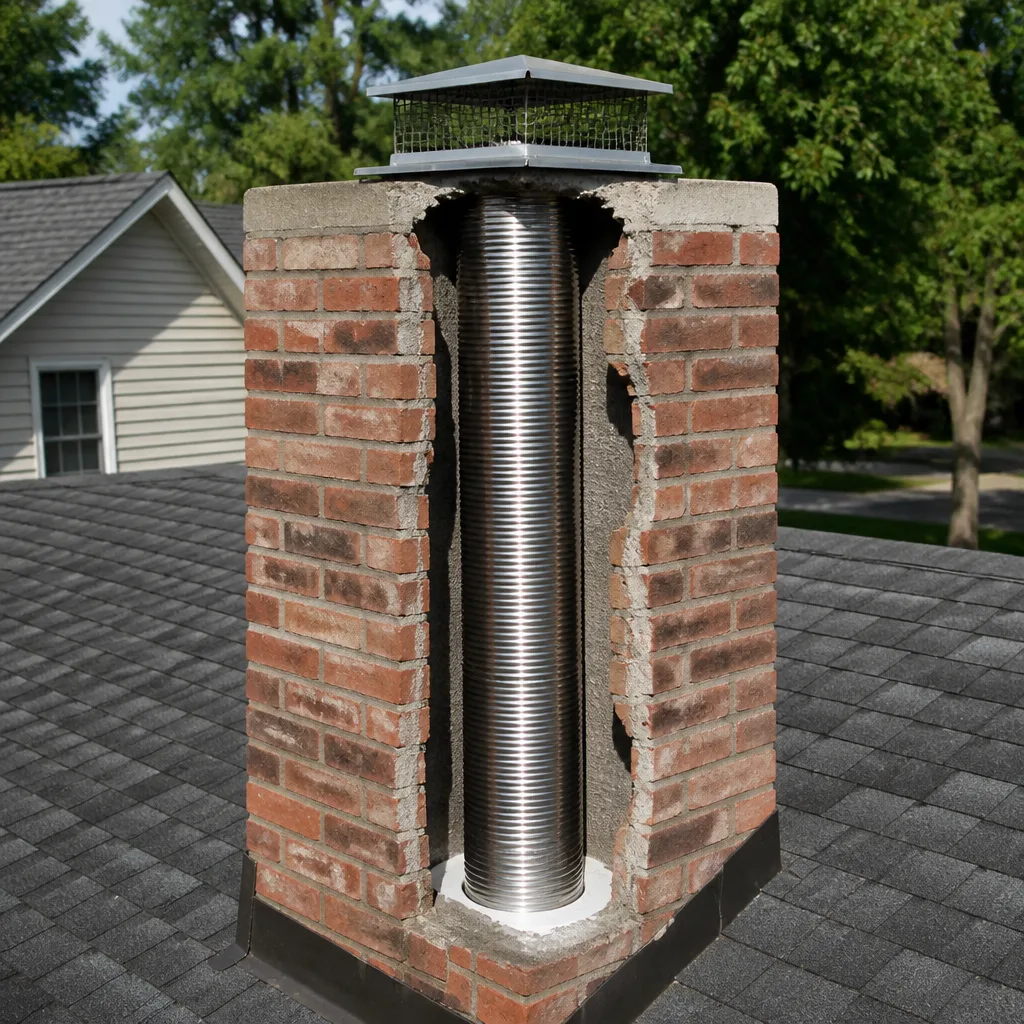
- DuraFlex: A flexible stainless steel liner system used for flue relining (replacing the inner liner that channels smoke safely out of the house). It is a UL-listed product designed for long-term use with gas, oil, and wood-burning appliances.
- HeatShield: A cerfractory sealant system used to repair cracked flue tiles without a full relining. When the original clay liner tiles have cracked but the structure is otherwise sound, HeatShield can restore the flue to safe operating condition.
- Gelco: Chimney caps and termination products that prevent rain, animals, and debris from entering the flue. A properly fitted Gelco cap extends the life of the entire chimney system.
- Copperfield: A full line of chimney components including caps, dampers, and chase covers. Copperfield products are specified when the job requires a precise fit or a specific termination type.
You do not need to become a materials expert. You do need to ask what materials will be used and whether the company can tell you why. A company that specifies materials by job requirement can explain the reasoning. A company that uses whatever is cheapest cannot. The material brand is a proxy for whether the repair is being done correctly or being done to hit a price point.
Los Angeles-Specific Factors Most Guides Miss
Chimney cleaning is chimney cleaning, but Los Angeles has its own conditions that affect how often you should clean, what you are likely to find, and why some houses need more frequent service than others. See The Complete Chimney Sweep Guide for Los Angeles Homeowners for a full breakdown of the sweep process.
The marine layer and coastal moisture. Homes within a few miles of the coast in Los Angeles, from San Pedro up through the South Bay and into the Palisades, get regular marine layer moisture. Moisture accelerates creosote buildup and creates the conditions for flue tile spalling, where the inner surface of the clay liner cracks and flakes off. Coastal Los Angeles chimneys often need inspection more frequently than inland ones, even with the same usage level.
Wood-burning restrictions and seasonal use. Los Angeles County has some of the strictest wood-burning regulations in the country, including no-burn days enforced by the South Coast Air Quality Management District. Many Los Angeles homes use their fireplaces only in winter and only on days when burning is permitted. That intermittent use pattern means chimneys sit dormant for months at a time, which allows creosote to harden and debris to accumulate. A chimney that has not been used since March is not cleaner than one used weekly; it is just dirty in a different way.
Older housing stock. A significant portion of Los Angeles single-family homes were built before 1980, and many chimneys from that era have original clay tile liners. Clay liners crack over time due to thermal cycling, moisture, and seismic activity. A pre-1980 chimney in Los Angeles has likely never had its flue liner inspected with a camera unless a previous owner specifically requested it, which is why we find cracked flue tiles on a meaningful percentage of inspections.
Seismic shifts. Los Angeles sits in seismically active territory, and even minor earthquakes can shift chimney structure enough to create hairline cracks in mortar joints and flue tiles. A chimney that was sound before the 2019 Ridgecrest sequence may have developed cracks since. This is one reason chimney inspection is more than a formality in Los Angeles: the ground moves, and the chimney moves with it.
Common Mistakes to Avoid
- Booking on star rating alone. A five-star rating reflects past satisfaction, not documented commitments. A company with a 4.8 rating and a written guarantee will protect you better than a 5.0 company with a verbal promise.
- Accepting a verbal quote. If the price is not in writing before work starts, the quote is not a quote. In Los Angeles, a verbal estimate has no binding force, and you will discover this exactly when it matters most: when the invoice arrives.
- Skipping the CSLB check. An unlicensed contractor cannot legally perform chimney work in California. The CSLB lookup takes two minutes and eliminates the most dangerous category of operator.
- Confusing a satisfaction guarantee with a real guarantee. “Satisfaction” has no defined remedy. A written guarantee with a stated term and a defined claim process is a contractual obligation. Ask for the document.
- Choosing the cheapest bid without checking materials. The cheapest chimney repair is often cheapest because the liner material, cap, or sealant is not rated for your application. Ask what materials will be used and who manufactures them.
- Deferring an inspection because the fireplace “seems fine.” Cracked flue tiles and creosote buildup are not visible without a camera inspection, and both are fire hazards. The cost of an inspection in Los Angeles is a fraction of the cost of a chimney fire.
- Assuming all chimney companies carry insurance. Ask for a certificate of insurance. If a worker is injured on your property and the company is uninsured, your homeowner’s policy absorbs the claim.
When to Call a Professional
Chimney cleaning and inspection are not DIY projects. Creosote removal requires specialized brushes, rods, and in many cases camera equipment to verify the flue is clean and crack-free. A visual check of the firebox will not tell you whether the flue liner is compromised, and a compromised flue liner is a genuine fire hazard. If you see smoke entering the room instead of drafting up the flue, smell a strong creosote odor, or notice white staining on the exterior masonry, call a professional. If your chimney has not been inspected in over a year, schedule one. Chimney Sweep in Los Angeles from Flint Chimney Sweep includes a full sweep and a visual inspection of the accessible flue, and every job comes with a written price before work begins. Flint Chimney Sweep offers free estimates in Los Angeles – call (830) 251-4560.
Frequently Asked Questions
A standard chimney sweep in Los Angeles typically runs $180 to $340, depending on the height of the chimney, the degree of creosote buildup, and whether the flue requires special access equipment. The written price you approve before work starts is the price you pay, with no door-knock adjustments. Call (830) 251-4560 for an exact quote – estimates are free.
The Chimney Safety Institute of America recommends cleaning once per year or after each cord of wood burned, whichever comes first. In Los Angeles, where many homes burn seasonally and coastal moisture accelerates creosote buildup, an annual sweep and inspection is the minimum safe interval. If you burn more than a cord per season, schedule twice annually.
A cracked flue liner is a fire hazard because it allows heat and combustion gases to reach combustible materials in the chimney structure. The way to verify the condition of your liner is a camera inspection, and at Flint Chimney Sweep, nothing is recommended without camera evidence you can see for yourself. If the liner is intact, a sweep is all you need. If the camera shows cracks, the repair is necessary, not optional. Chimney Repair in Los Angeles service includes the camera inspection and a written report.
Creosote accumulates with every fire, and creosote is highly combustible. A thick enough layer can ignite, causing a chimney fire that reaches temperatures hot enough to crack flue tiles and spread to the house structure. Even without a fire, built-up creosote creates a drafting obstruction that can push carbon monoxide back into the living space. The risk is real and cumulative, not hypothetical. Call (830) 251-4560 if your chimney is overdue.
We book our sweeps and inspections on a scheduled basis, so same-day service is not something we promise. What we do promise is a live person on the phone 24 hours a day, 7 days a week, so you can get a firm booking date without waiting through a voicemail tree. Call (830) 251-4560 and a person will answer.
A chimney sweep removes creosote and debris from the flue. An inspection examines the condition of the entire chimney system: flue liner, mortar joints, crown, cap, and damper. At Flint Chimney Sweep, every sweep includes a visual inspection of the accessible flue, and a full Chimney Inspection in Los Angeles adds camera verification of the liner condition. Call (830) 251-4560 to book either service.
The Bottom Line
The chimney cleaning company you choose in Los Angeles matters less for the quality of the brush they use and more for the quality of the commitments they make in writing. A fixed price before work starts, a defined scope that tells you exactly what will be done, and a written guarantee with a stated term are the three commitments that protect you when something goes wrong. Star ratings tell you about the past. A written service agreement tells you what will happen on your job and what recourse you have if the work fails. Ask the three questions. Verify the credentials. Demand the document. Flint Chimney Sweep home is where you can learn more about how we work, and the phone number is (830) 251-4560 when you are ready to book.
Written by Hank Delano, Owner at Flint Chimney Sweep, serving Los Angeles since 2002.