
Last updated October 9, 2026
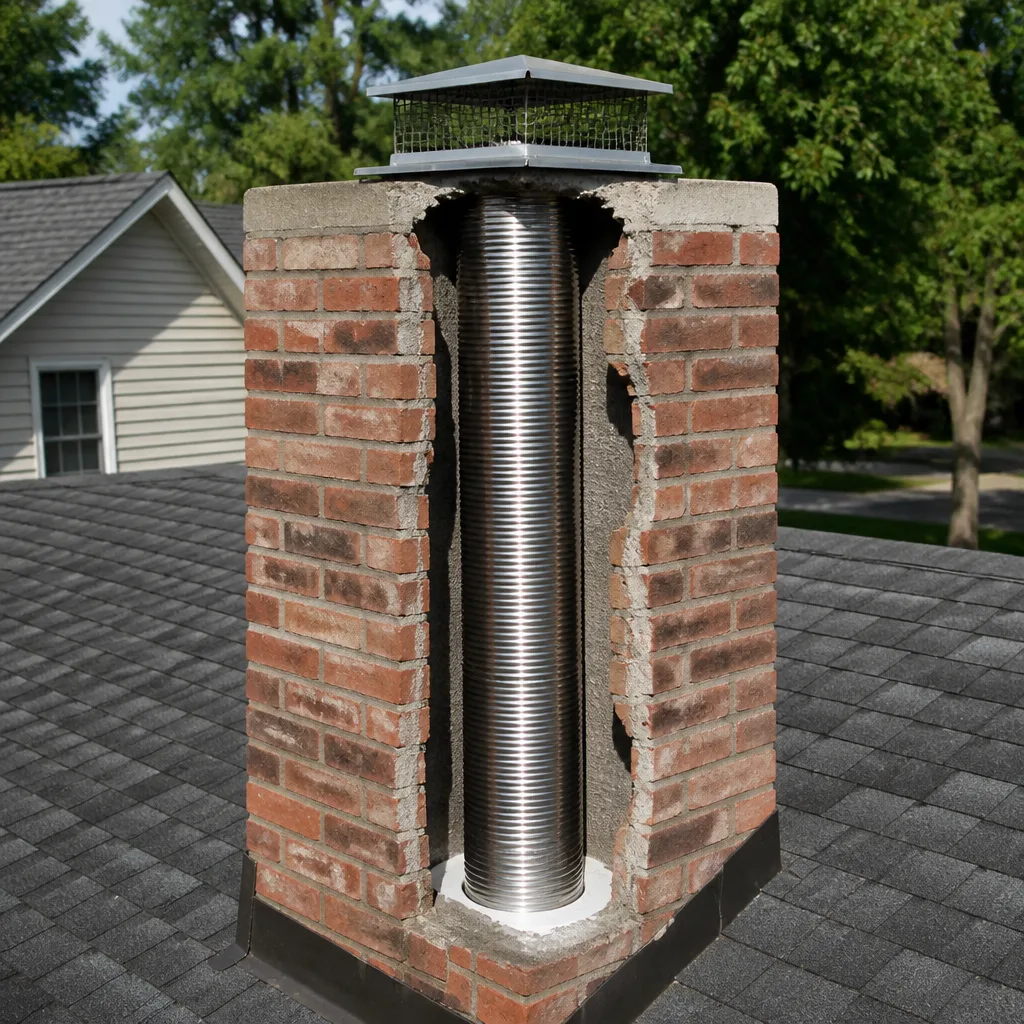
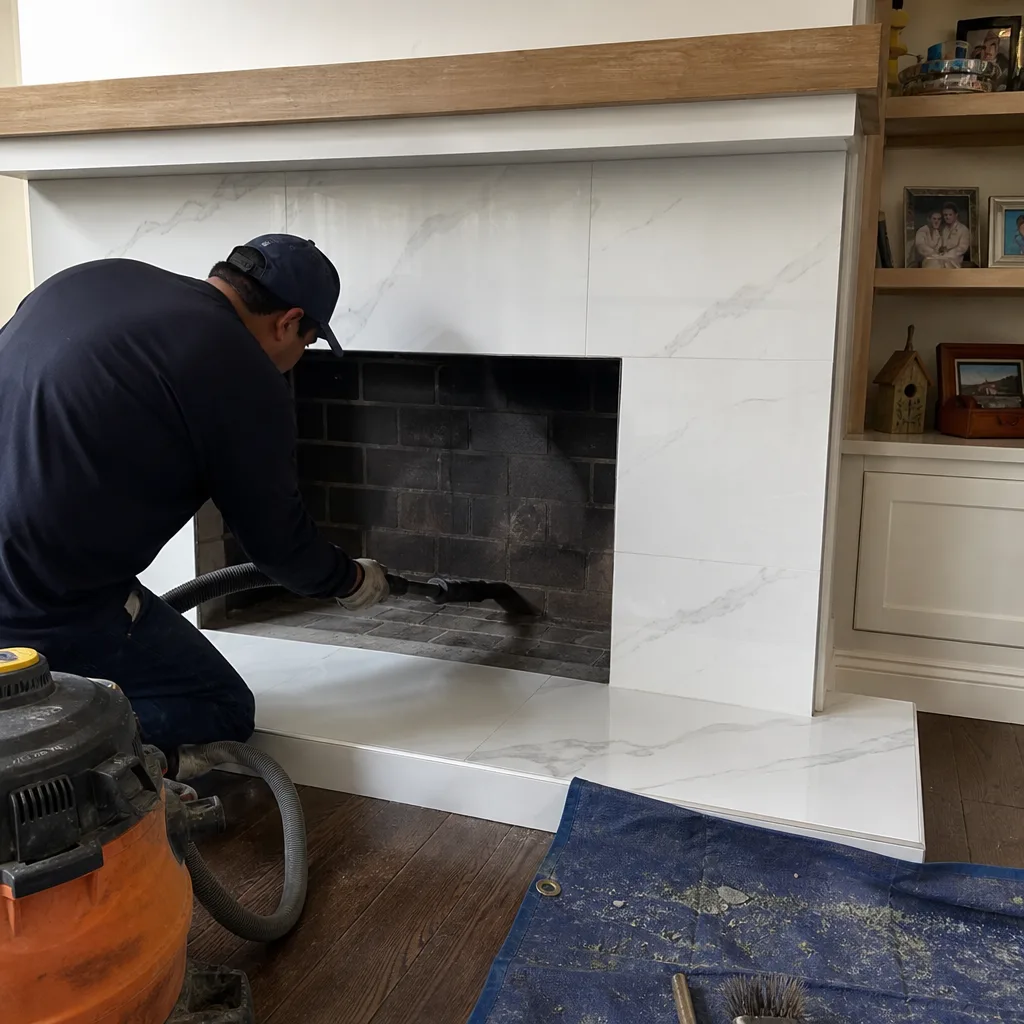
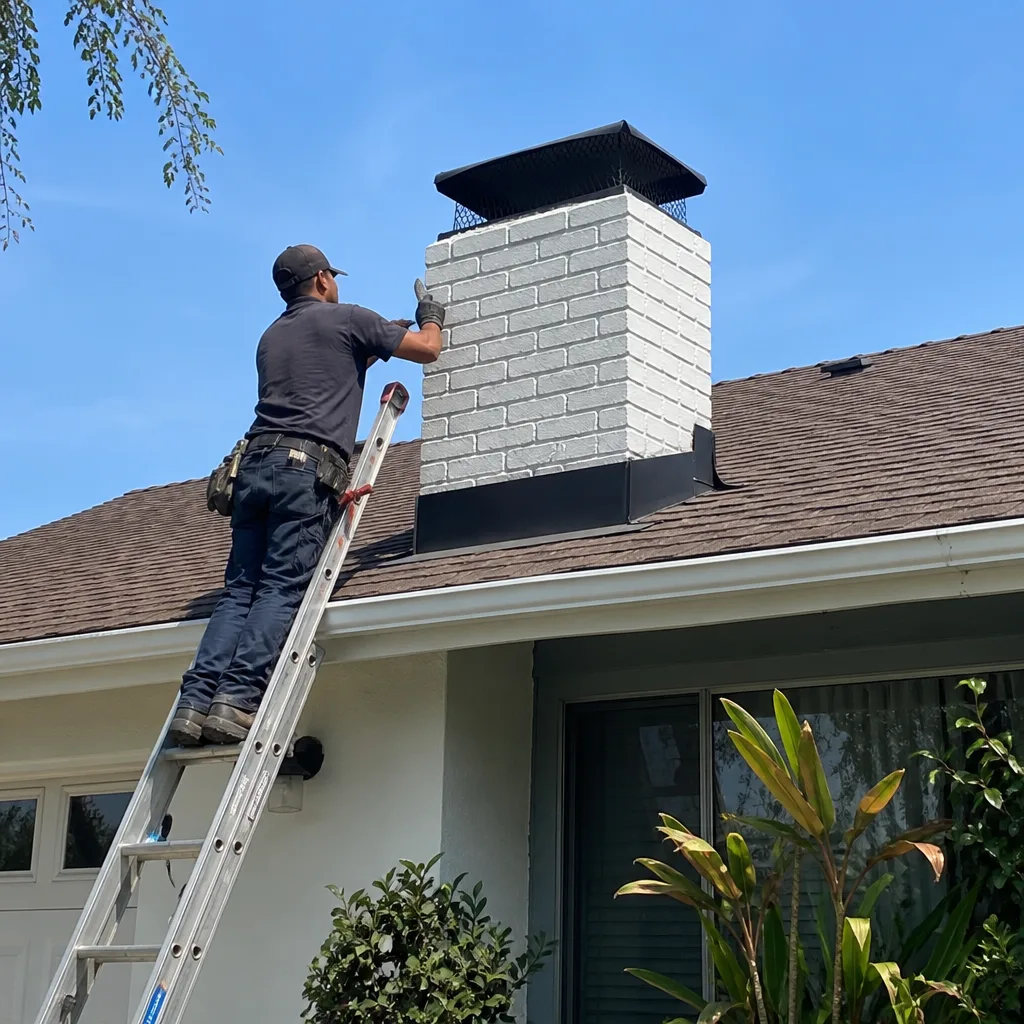
Level 1 sweep and inspection to the NFPA 211 annual standard - flue, crown, cap, and flashing checked and photographed
Chimney sweep logs do not sweep chimneys. They loosen some creosote - which then falls where a brush and vacuum still have to collect it.
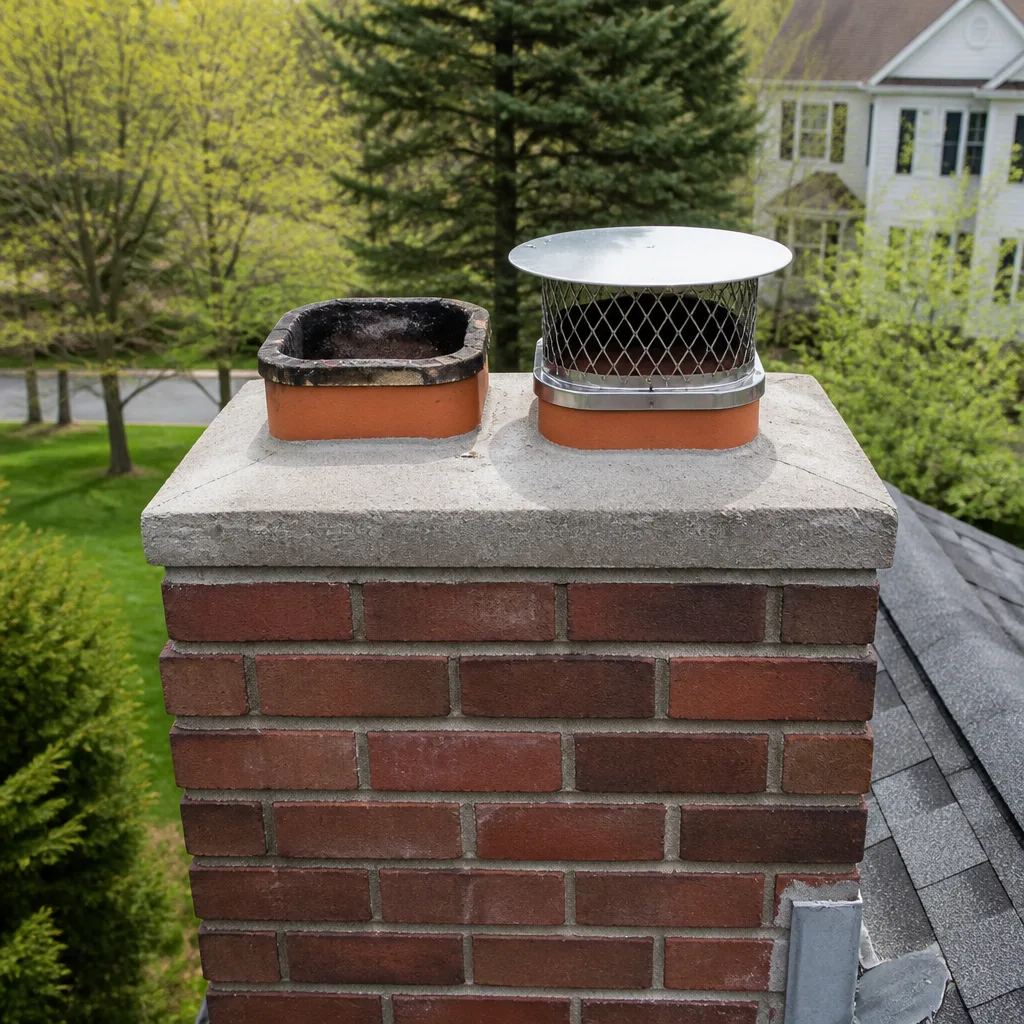
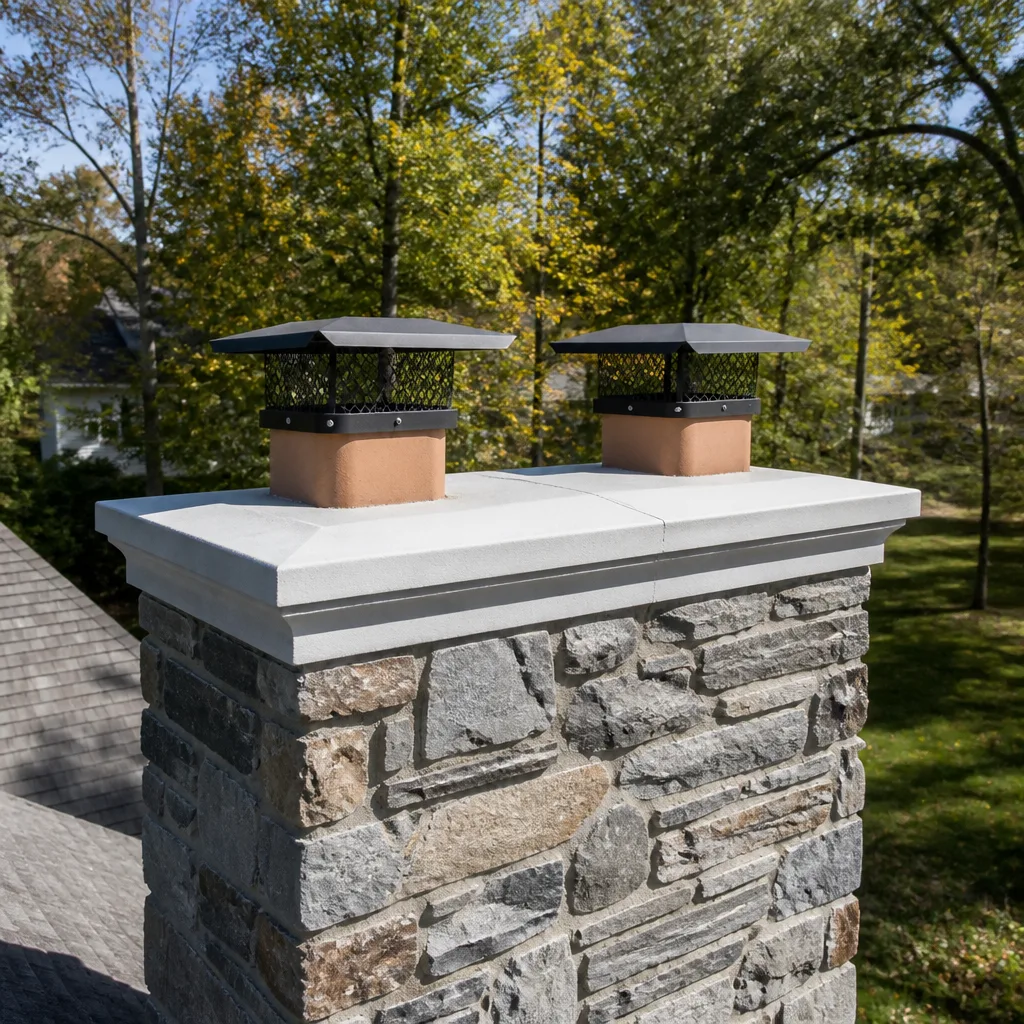
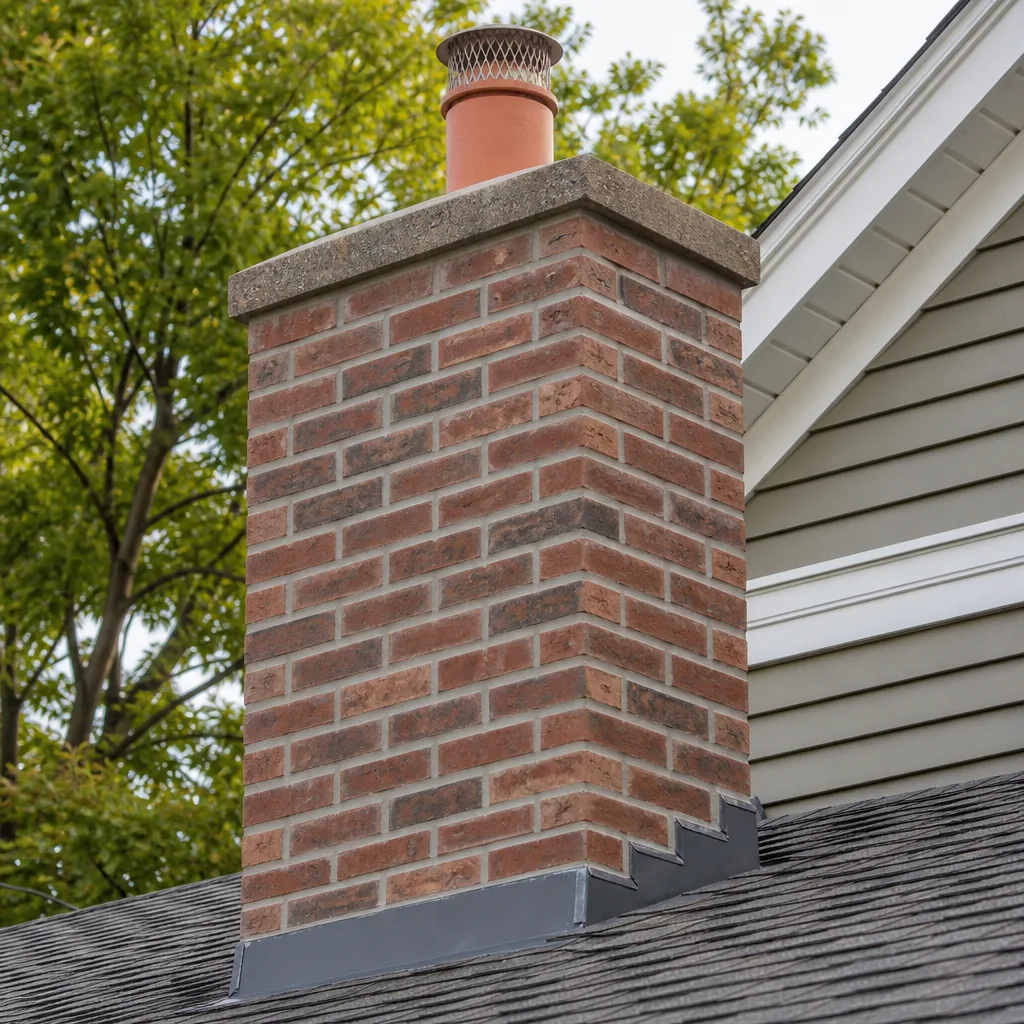
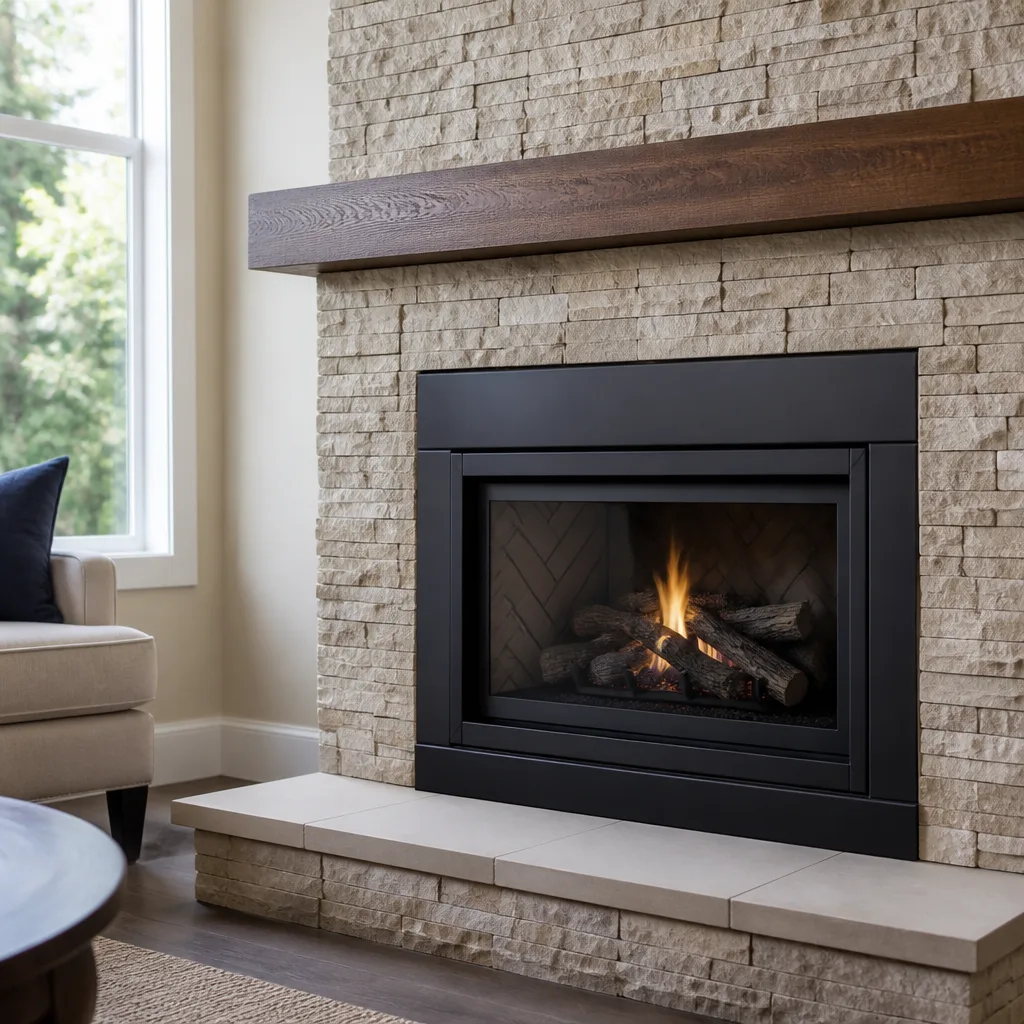
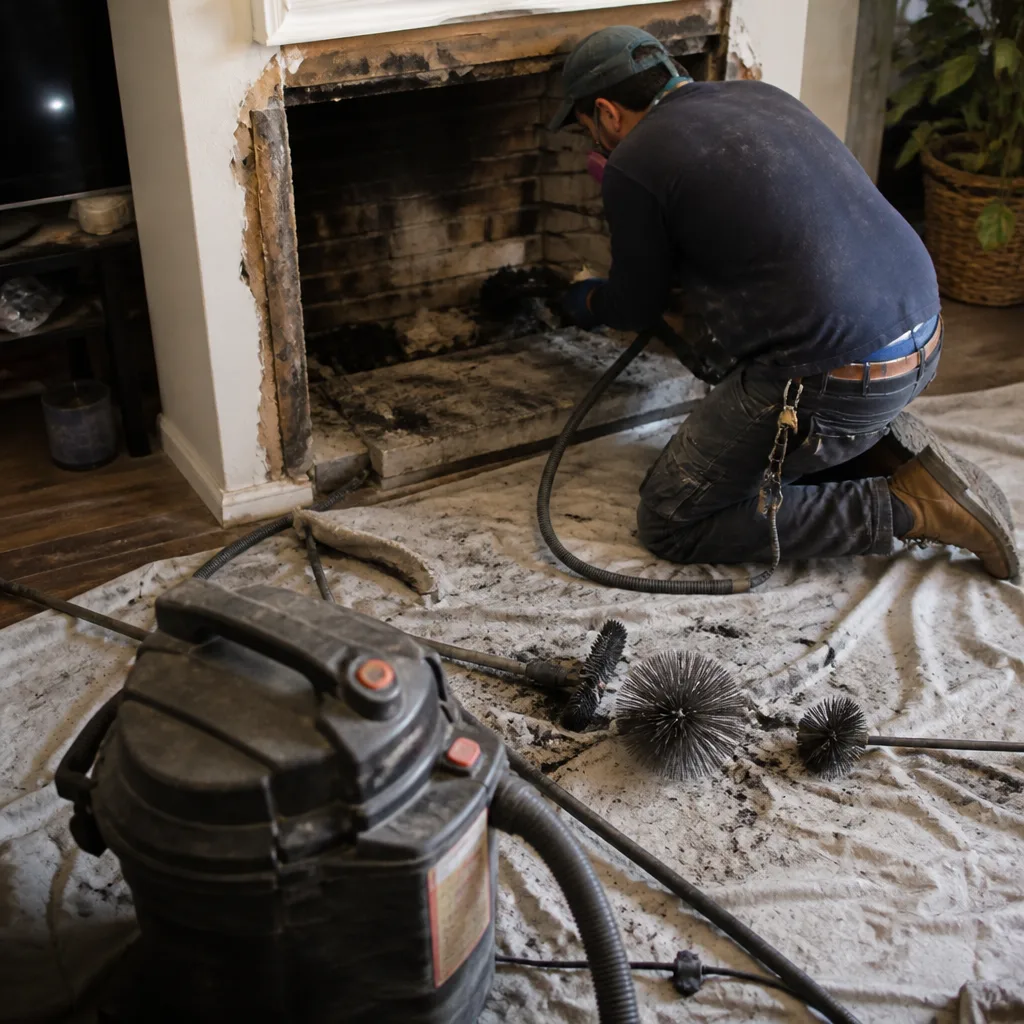 Before
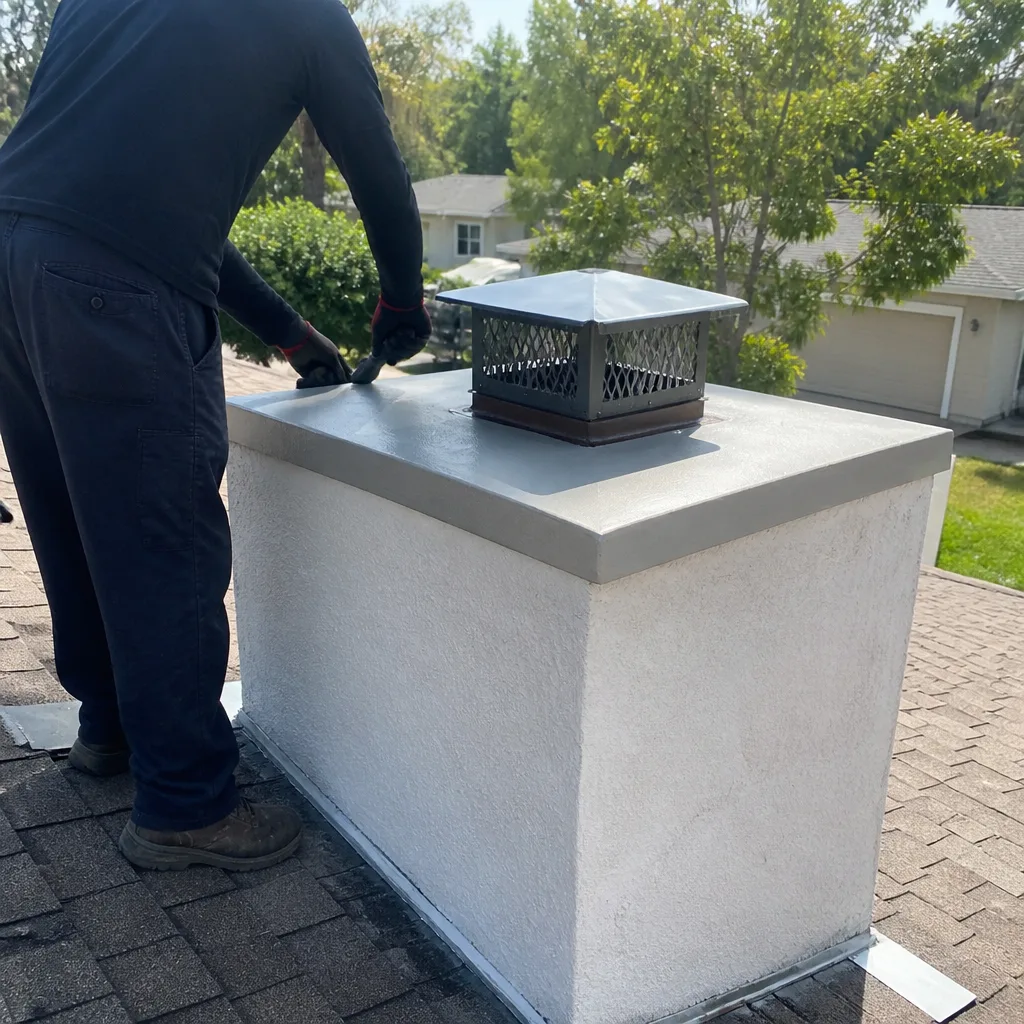 After
After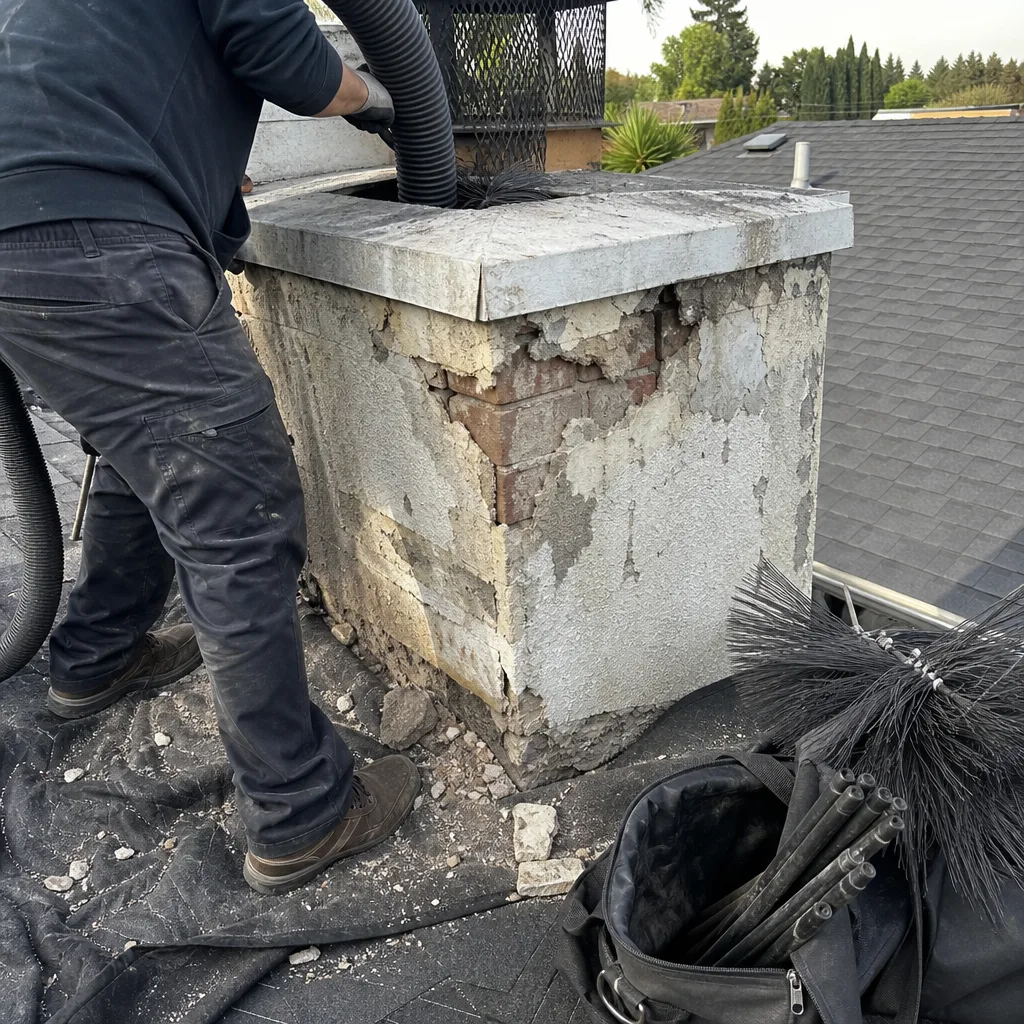 Before
 After
After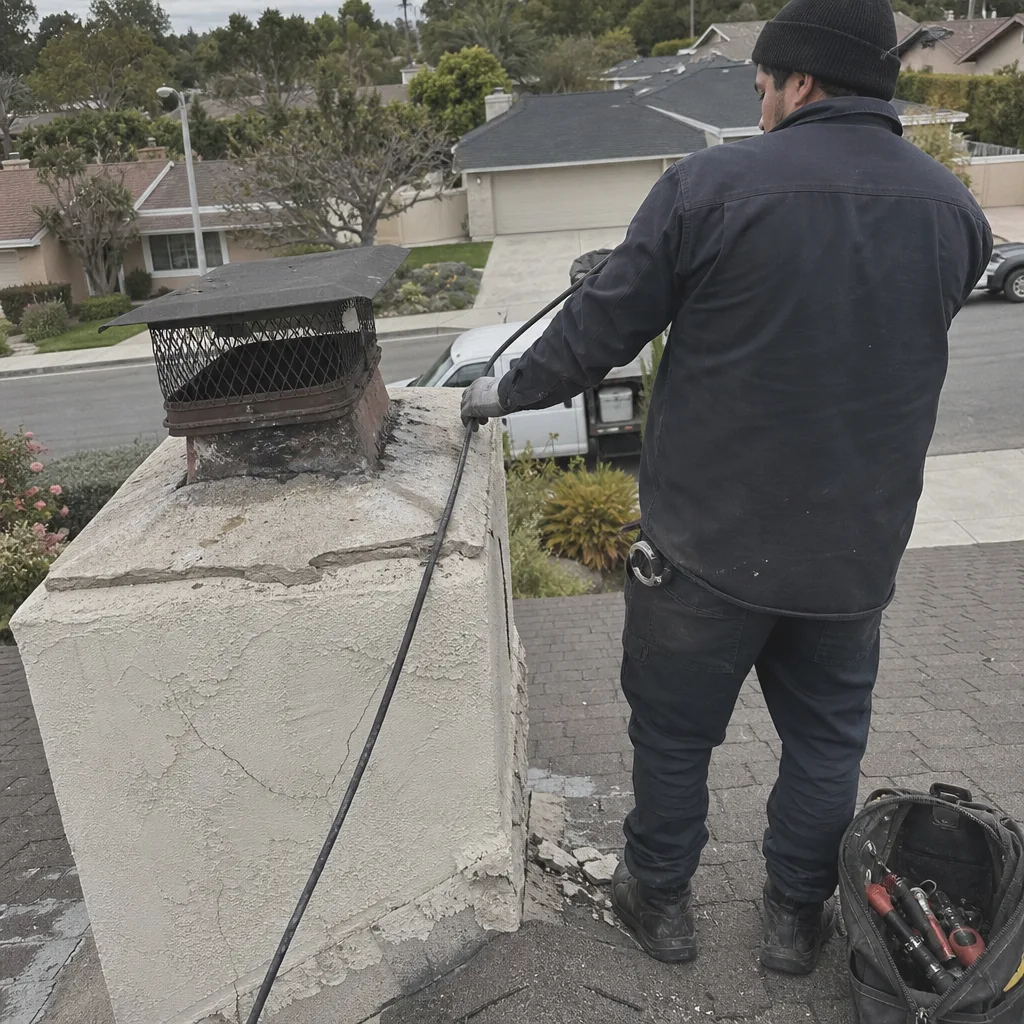 Before
 After
AfterDIY vs Professional Chimney Inspection: What’s Safe to Do Yourself
You can walk outside, look up at your chimney cap, scan for spalling bricks, and open the damper to check for daylight. What you’re doing is a homeowner visual check. What you’re not doing is our Chimney Inspection services, and that distinction matters the moment you sell your house in Los Angeles or file an insurance claim after a chimney fire. This guide explains exactly where the safe DIY territory ends and where professional eyes and equipment have to take over, so you don’t pay for an inspection you didn’t need, and don’t skip one you did.
Quick Answer
A homeowner in Los Angeles can safely perform a basic visual check of the exterior chimney, cap, flashing, firebox, and damper, plus test for obvious airflow problems. What you cannot do yourself is assess the flue liner, smoke chamber, or any concealed portion of the chimney, because that requires a camera and trained interpretation. A professional inspection produces a signed, dated report that carries weight with insurers and home buyers; a DIY check produces peace of mind only. If you see staining, spalling, or suspect anything inside the flue, call a professional before you burn again.
Table of Contents
- What a Homeowner Visual Check Actually Is
- Six Things You Can Safely Check Yourself
- Where DIY Ends and Professional Inspection Begins
- What a Professional Inspection Report Carries
- Los Angeles Specific Factors: Earthquakes, Salt Air, and Real Estate Disclosure
- How to Use Your DIY Check to Make the Professional Visit Sharper
- Common Mistakes to Avoid
- When to Call a Professional
What a Homeowner Visual Check Actually Is
A homeowner visual check is a deliberate, structured look at the parts of your chimney you can see without climbing onto the roof, removing components, or inserting tools. It is not a substitute for the three levels of inspection defined by the National Fire Protection Association (NFPA). NFPA 211 is the standard that governs chimney inspection in the United States, and it draws a hard line: a Level 1 inspection is the minimum for any chimney that has not changed in use or performance, a Level 2 inspection is required any time a property changes hands or the system has been modified, and a Level 3 inspection involves opening concealed areas when a serious hazard is suspected. Even a Level 1 inspection involves a professional examining accessible portions of the interior and exterior of the appliance and the flue.
Your visual check is upstream of that process. Think of it as triage: you’re looking for obvious signs that say “book an inspection now” versus “this looks stable, keep an eye on it.” In our experience across Los Angeles, the homeowners who get the most value from inspection day are the ones who have already walked the perimeter, seen the staining, noticed the cap tilt, and can point us straight at the concern. That’s the real function of a DIY check, and it works well. What it cannot do is replace the report, and we’ll get to why that report matters legally and financially in a moment.
Six Things You Can Safely Check Yourself
Here is the exact scope of what we consider a legitimate homeowner visual check. None of these steps require tools beyond a flashlight, a pair of binoculars if you have them, and a phone camera. None of them require you to get on the roof. If any step feels uncertain or you find something that worries you, stop and book a professional chimney inspection in Los Angeles.
- Cap and crown from the ground. Stand far enough back to see the entire chimney top. Use binoculars if you have them. Look for a missing or tilted cap, cracks in the concrete crown (the flat slab that seals the top of the chimney around the flue), or vegetation growing out of the masonry. Any of those three means water has a route in, and water is the number one cause of chimney deterioration in Los Angeles because the rainy season is short but intense when it comes.
- Flashing at the roofline. Walk around the house and look at where the chimney meets the roof. You’re checking for lifted flashing, visible gaps, rust, or caulk lines that have cracked and pulled away. Flashing failure does not always announce itself indoors; sometimes it leaks slowly into the attic for months before you see a stain on the ceiling.
- Brick and mortar condition. Look for spalling, which is the term for brick faces flaking or popping off due to trapped moisture, and for mortar joints that have eroded to leave a recessed gap between bricks. Run your hand over accessible lower masonry if you can safely reach it. If the mortar feels sandy and comes away on your fingers, that’s repointing territory, and it will not get better on its own.
- Firebox interior. With the damper open and a flashlight, look inside the firebox (the chamber where the fire burns). You’re checking for cracked firebrick, gaps in the refractory mortar, and any white, powdery efflorescence on the walls, which indicates water is moving through the masonry. You are not, at this stage, trying to look up the flue. That’s a professional task with professional lighting and mirrors or a camera.
- Damper operation. Open and close the damper a few times. It should move freely and seal reasonably well when closed. A damper that’s seized, rusted, or doesn’t fully close is a sign that water and combustion gases have had a pathway into the living space, and it directly affects how efficiently your fireplace drafts.
- Evidence of animal activity. Shine your light into the firebox and look for nesting material, droppings, feathers, or a distinct ammonia smell. Los Angeles has a robust population of birds, squirrels, and raccoons that find uncapped or poorly capped chimneys to be attractive real estate. A bird nest or squirrel cache inside the flue is both a fire hazard and a carbon monoxide risk, and it has to come out before you burn again.
That’s the complete list. If you do these six things once a year, ideally in late summer before the first cool evening in September or October, you are doing more than most homeowners ever do. But notice what’s not on the list: the flue liner, the smoke chamber, the concealed offsets, the exterior of the flue above the roof line from close up. Those require equipment and, frankly, training to read correctly, and that’s the next section.
Where DIY Ends and Professional Inspection Begins
The cleanest way to say it: a homeowner visual check sees what the sun can see. A professional inspection sees what only a camera can see. The distinction is not about how careful you are. It’s about physical access and optical access. The flue liner, which is the inner pipe or clay tile channel that carries smoke and combustion gases safely out of your house, runs the full height of the chimney and around bends you cannot see from the firebox or the roof. In our work across Los Angeles, we find cracked clay tile liners, gaps between tile sections, and sometimes missing sections entirely, behind an exterior that looks perfectly sound from the street.
Specifically, here is what a professional inspection addresses that you cannot:
- Flue liner condition. For a masonry chimney, this means examining every accessible inch of the clay tile liner through camera feed for cracks, spalling, misalignment, missing sections, or heavy creosote glaze. For a prefab metal chimney, it means checking the stainless or galvanized liner for corrosion, separation, or warping.
- Smoke chamber integrity. The smoke chamber is the inverted funnel of masonry directly above the firebox that guides smoke into the flue. It’s a hidden area, and a camera inspection will show gaps, missing parging (the smooth mortar coating), and heat damage to surrounding combustible framing.
- Concealed offsets and elbows. Many chimneys change direction inside the house structure. Every change of direction is a place where debris accumulates, animals nest, and liners separate. Only a camera or direct physical access can see these.
- Clearances to combustibles. Building codes require specific distances between the chimney and any wood framing. Those clearances are behind walls and above ceilings, not visible from outside or from the firebox. Inspection tools and sometimes small access ports are the only ways to verify them.
- Structural attachment. In an earthquake zone like Los Angeles, the way the chimney is attached to the house, the condition of the footing, and any shear weakness from past seismic events are part of what a professional evaluates. A homeowner check can’t assess any of that.
None of this is gatekeeping. It’s the same reason you don’t self-diagnose structural foundation movement with a level from the hardware store. The equipment and the trained eye exist because the failure modes are not visible under normal conditions.
What a Professional Inspection Report Carries
Here’s the part that matters most in Los Angeles specifically, and it has nothing to do with fire safety. It has to do with money and legal exposure. California Civil Code requires sellers to disclose known material facts about a property, and chimney condition sits squarely inside that duty. A seller who claims “I inspected the chimney myself and it looked fine” has given a buyer no documentation to rely on, and has given themselves no defensible position if a problem emerges after close. An undocumented homeowner visual check has exactly zero legal weight in a California real estate transaction, in an insurance claim, or in a post-loss investigation. Zero.
What does carry weight is a written inspection report, dated and signed, with specific findings and condition notes, prepared to a recognized standard like NFPA 211. That document:
- Establishes the chimney condition on a specific date for real estate disclosure purposes.
- Provides the paper trail an insurer may request after a chimney fire or water intrusion claim.
- Confirms whether the chimney was safe to operate at the time of inspection, which matters if a previous owner’s use is later questioned.
- Supports any warranty claim on a repair or relining, because the pre-installation condition and the post-installation condition are both documented.
- Gives you, the owner, a factual baseline against which future changes are measured.
At Flint Chimney Sweep, every inspection includes a signed, dated report with findings in plain language. We do not do “verbal estimates” or “quick looks” that vanish into memory. Under The Garrison Standard, the price, scope, and written report are documented before and after the work, so you leave the appointment with something you can hand to a buyer, an insurer, or your own file. That’s the entire difference in a city where homes change hands constantly and disclosure disputes are common.
Los Angeles Specific Factors: Earthquakes, Salt Air, and Real Estate Disclosure
Chimney condition in Los Angeles is shaped by three local forces that homeowners elsewhere often don’t face, and all three are relevant to the DIY vs Professional Chimney Sweep: What’s Safe to Do Yourself decision.
Seismic movement. Los Angeles sits in one of the most seismically active regions in the country. Even minor quakes and the frequent micro-tremors that pass without notice add cumulative stress to masonry chimneys. Hairline cracks in the crown, mortar joints inching open, flashing losing its seal – these things happen gradually, not catastrophically, and the homeowner standing on the ground can’t always see them from 20 feet away. The professional inspection, particularly after any significant quake, is about establishing whether the chimney is still sound enough to operate safely.
Coastal salt air. Homes within a few miles of the Pacific, from the Palisades down through the South Bay and across into Long Beach, face accelerated corrosion of metal components: caps, dampers, flashing, and in prefab units, the liner itself. Salt-laden fog and onshore breeze eat galvanized steel and cheap stainless faster than the same materials would corrode inland. If you live west of the 405, an annual visual check of metal parts is the absolute floor, and a professional check with close inspection of cap and damper is worth building into your routine.
Disclosure-driven transactions. Los Angeles has one of the most robust real estate markets in the country, with pre-sale inspections happening thousands of times a year. Buyers here routinely request chimney-specific inspection because they’ve been trained by disclosures to check everything. If you are within a couple years of selling, the inspection report is not an optional expense; it’s the document that removes the chimney as a negotiation point in the sale.
How to Use Your DIY Check to Make the Professional Visit Sharper
The smartest way to use your homeowner visual check is as preparation, not a conclusion. When you call to book a professional inspection, you’ll get more value from the visit if you can tell the technician exactly what you saw. Here’s how to set that up:
- Take phone photos of anything you flagged. A picture of the cracked cap, the lifted flashing, or the staining in the firebox lets the technician look at the concern before they’ve even stepped through the door, and it becomes part of the conversation.
- Write down three specific questions. Since you’ve done the visual check, you know where your uncertainty is. “Is that staining on the firebox wall a liner leak or condensation?” is a sharper question than “is my chimney okay?” and it produces a more specific answer in the report.
- Note what you couldn’t see. If you couldn’t access one side of the chimney from the ground, say so. The technician will prioritize that area during the inspection rather than assuming you had full visibility.
- Ask for the scope before work begins. A professional inspection should state in advance what standard it’s being conducted to, whether the flue is camera-scanned, and what the report will include. If the company won’t put that in writing before they arrive, call someone else. At Flint Chimney Sweep, the written scope and price comes before any tool comes off the truck, every time.
You’re not being asked to become an inspector. You’re being asked to be a better-informed client, and that’s the difference between a generic inspection visit and one that actually addresses your specific chimney in your specific house on your specific street in Los Angeles.
Common Mistakes to Avoid
- Treating a curb-level glance as an inspection. Looking up at the chimney from the driveway and concluding “it looks fine” is not a visual check, and it’s certainly not an inspection. The visual check we described has six deliberate steps; a glance has none.
- Sticking a phone camera up the flue and trusting what you see. Your phone camera was not designed for the high-heat, soot-obscured, curved interior of a chimney flue. The image you get will be misleading, and you’ll draw a false conclusion from a bad picture. Professional cameras and lighting exist for this exact reason.
- Using a chimney sweep to “skip” the inspection. A sweep removes creosote and debris; it does not assess liner integrity, clearances, or structural condition. You can sweep a chimney that is still unsafe to use. In our experience in Los Angeles, the most surprising findings often come from chimneys that were swept regularly but never inspected.
- Assuming a new house means a healthy chimney. We’ve inspected chimneys in homes less than five years old in Los Angeles and found installation defects, missing insulation around the flue, and liners that were never correctly connected. Age is not a warranty; documentation is.
- Deferring the post-earthquake check. After a quake of any meaningful size, even 4.0, the chimney takes load in ways the rest of the house doesn’t. Waiting until the first fire of the season to discover the earthquake damage is a recurring pattern in this region.
- Ignoring water because the fire still works. Your fireplace can draft fine while water is slowly destroying the liner and the interior masonry. A working fire is not proof of a sound chimney. The two systems, water handling and combustion gas handling, fail independently.
When to Call a Professional
Call a professional if your visual check turned up any of the following: cracked or missing cap, water staining in the firebox, spalling brick you can see from the ground, damper that doesn’t open or close fully, animal sounds or debris in the flue, a recent earthquake of magnitude 4.0 or greater, a history of unexplained smoke or odor inside the house, or a real estate transaction on the horizon. Any one of those crosses the line from “I can watch this” to “I need a documented inspection” - read more in our guide to DIY vs Professional Chimney Repair: What’s Safe to Do Yourself. Flint Chimney Sweep offers free estimates in Los Angeles, and we put the price in writing before any work starts. Call (830) 251-4560.
Frequently Asked Questions
You can perform a homeowner visual check of the exterior, firebox, damper, and visible masonry, but you cannot inspect the flue liner, smoke chamber, or any concealed component of the system. Those areas require a camera and trained interpretation for the findings to mean anything. In Los Angeles, a professional inspection with a signed report is the only document that carries weight in a real estate sale or insurance claim.
A Level 1 professional chimney inspection in Los Angeles typically runs between $100 and $250 depending on the company, accessibility, and whether a camera scan is included. A Level 2 inspection, which includes camera assessment of the flue interior and is required for real estate transactions, generally falls between $250 and $500. A Level 3 inspection, which involves opening concealed areas, is rare and quoted case-by-case. At Flint Chimney Sweep, the written price is delivered before any work starts, so you never discover a higher number after the fact. Call (830) 251-4560 for a free estimate.
The NFPA recommends annual inspection, and in Los Angeles the local factors reinforce that frequency: seismic activity adds stress, coastal salt accelerates corrosion, and the rainy season alternates with intense dry periods that crack masonry. If you burn regularly, inspect yearly. If you burn rarely but live within a few miles of the coast, inspect every year to catch cap and damper corrosion before water works its way into the flue.
If you skip inspection, you’re relying on visible cues to detect problems that are, by design, invisible until they’re advanced. The failure sequence typically runs: cracked liner gap allows heat and gases into the masonry, creosote accumulates, a fire in the chimney ignites, and the structure is damaged. That sequence can unfold over several seasons with no visible exterior warning. The inspection is the only way to interrupt it early, and the report is the only way to prove you tried.
Not automatically. Some sweep services include a basic visual check while they’re cleaning, but a true inspection with a documented report and camera assessment of the flue is a separate service. We recommend treating them as two distinct tasks: sweep for cleanliness, inspect for condition. A clean chimney can still be an unsafe chimney, and an inspection report is what tells you which you have.
Yes, and the NFPA standard is explicit on this: any change to the appliance or the system requires a Level 2 inspection before the new unit is installed. In Los Angeles, this comes up constantly as homeowners convert open fireplaces to sealed inserts and discover the existing liner was sized or damaged in ways that make the conversion unsafe without relining. Getting the inspection before the install is cheaper than discovering the problem after the stove is already in place.
The Bottom Line
A homeowner visual check in Los Angeles is a legitimate, repeatable first step that can catch obvious problems early and make a professional visit more productive. Some of those problems, like a missing cap or lifted flashing, are visible from the ground to anyone who takes five minutes to look. But the flue liner, smoke chamber, and concealed offsets are not visible, and never will be, from the curb or the firebox. That’s where the professional inspection starts, and it’s the only thing that produces a documented record you can use in a sale, a claim, or a warranty. Do your own visual check every year. Get a professional inspection when the flags appear, when the house changes hands, or when the ground shakes. For more guides & resources, visit our blog. The two approaches aren’t rivals. They’re sequential steps in the same sound owner’s routine.
Written by Hank Delano, Owner at Flint Chimney Sweep, serving Los Angeles since 2002.