
Last updated October 9, 2026
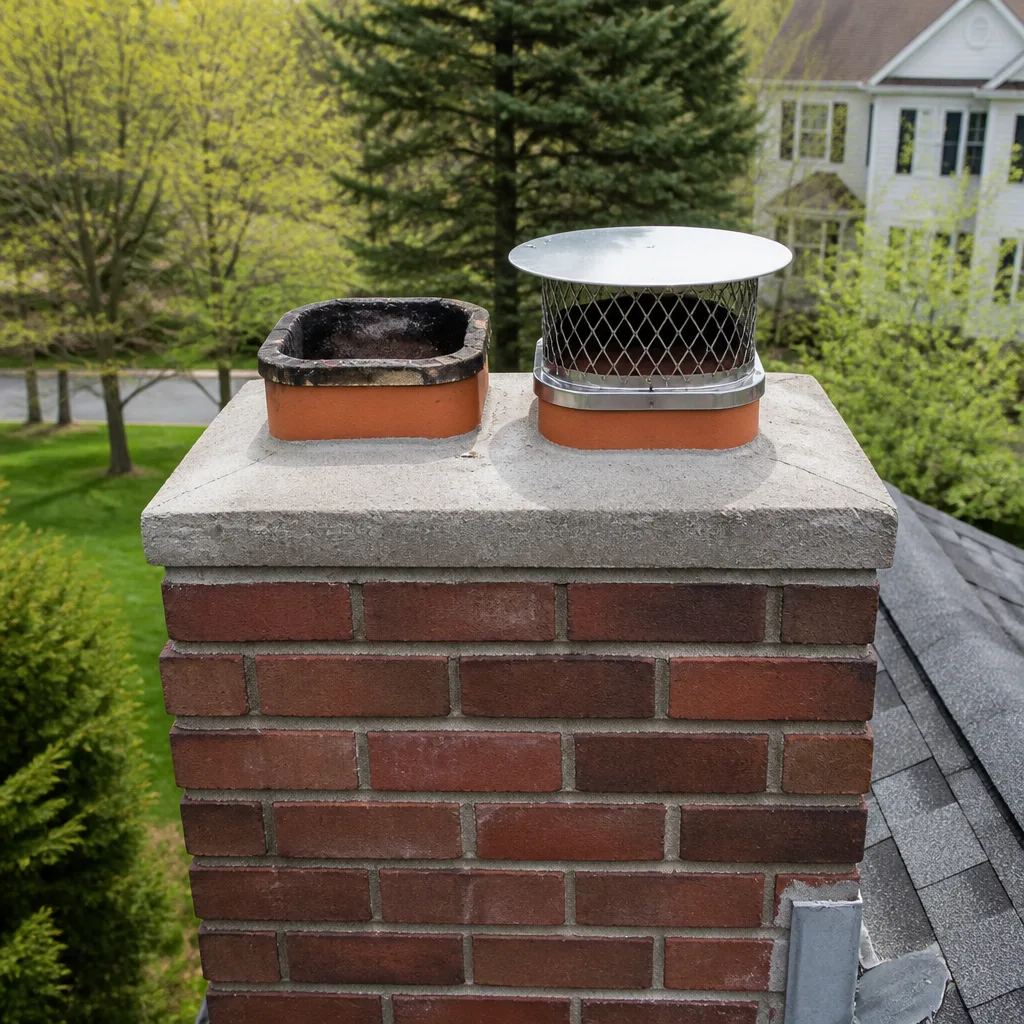
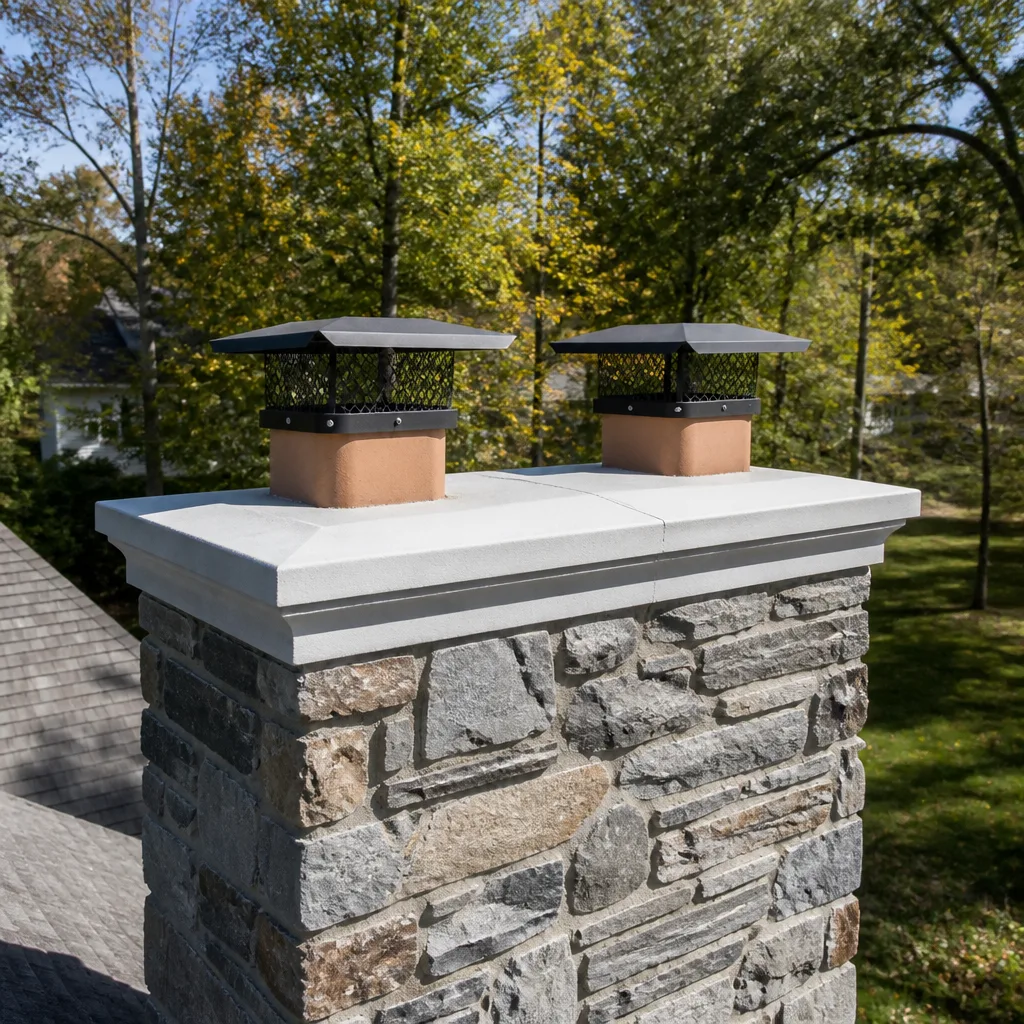
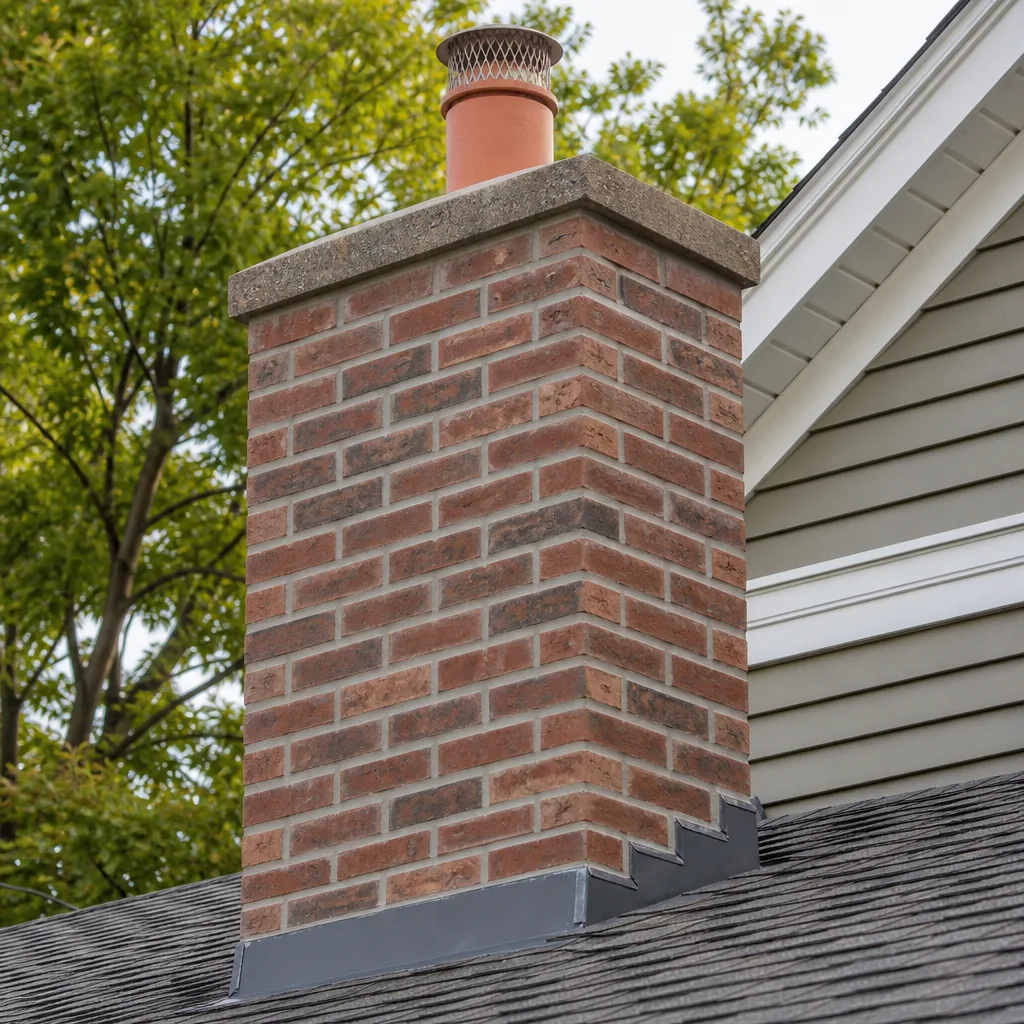
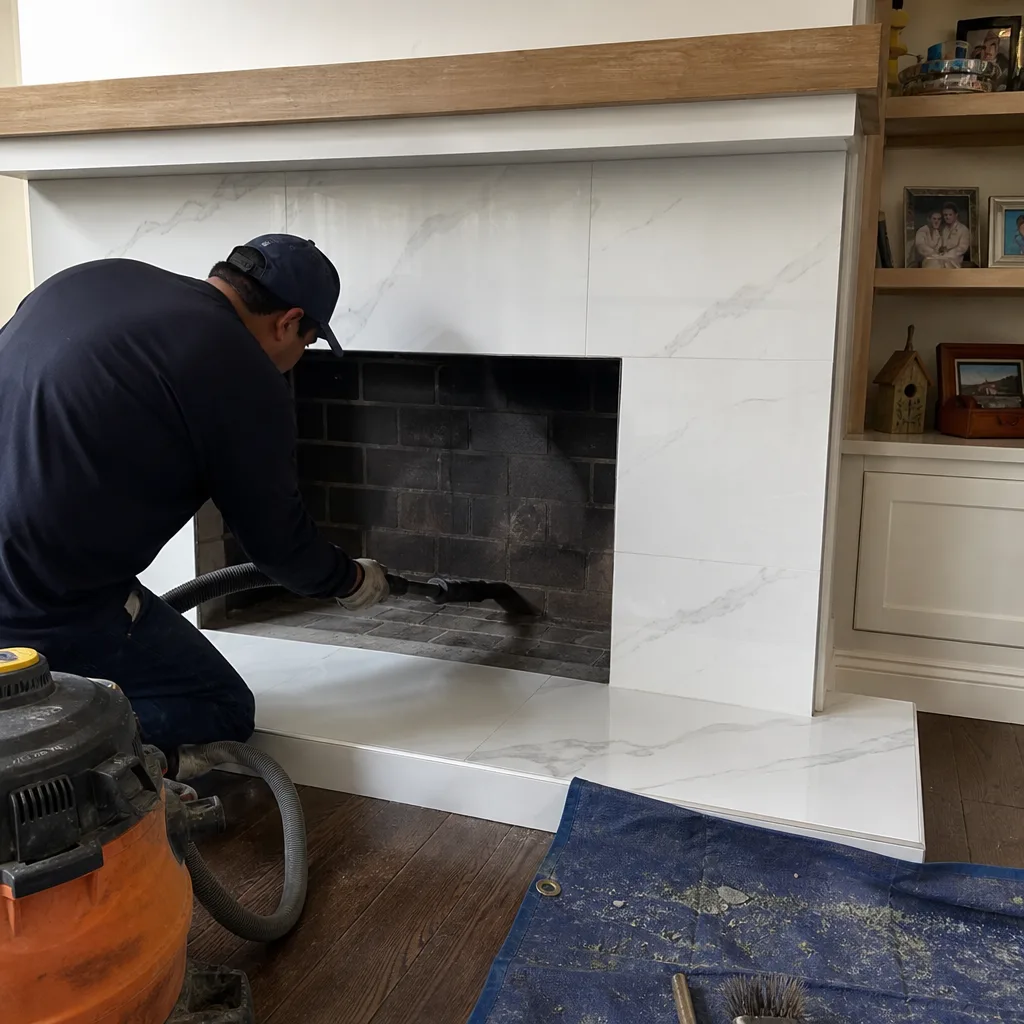
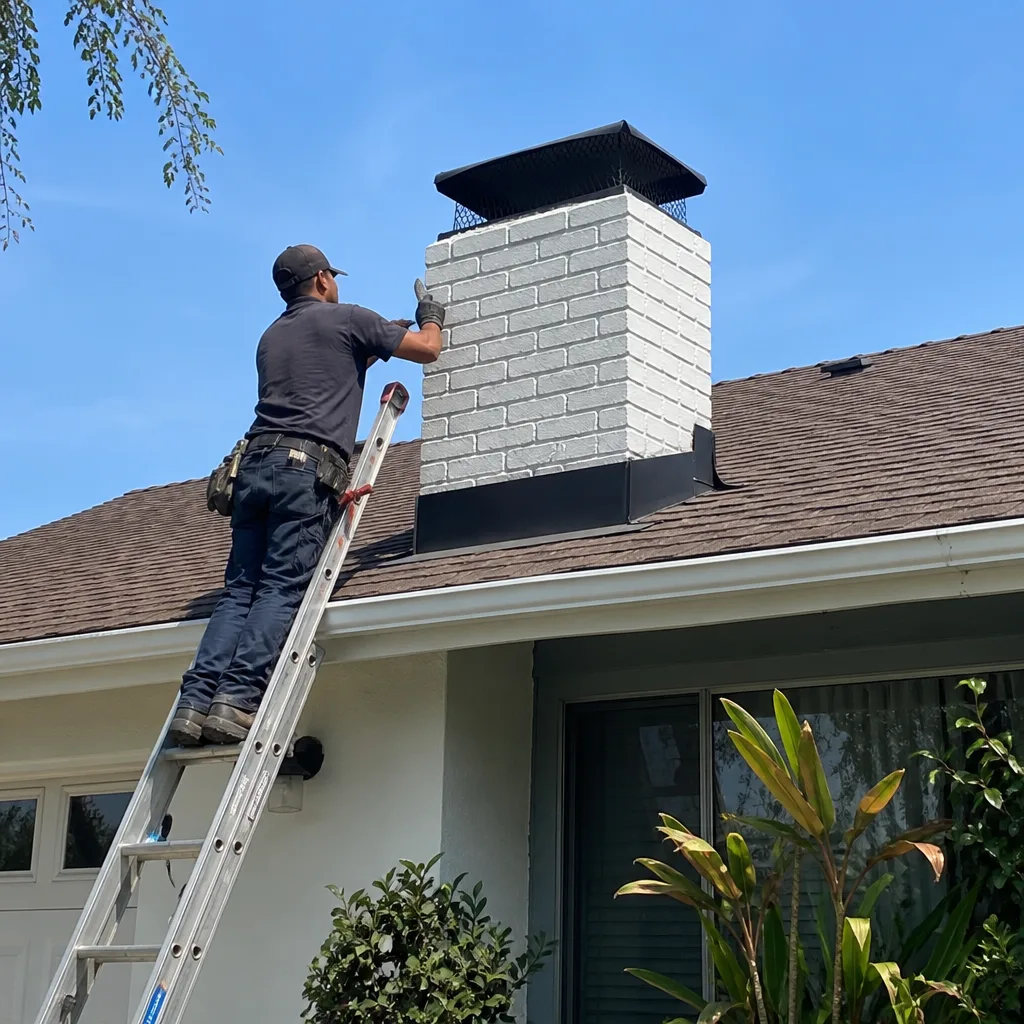
Level 1 sweep and inspection to the NFPA 211 annual standard - flue, crown, cap, and flashing checked and photographed
Chimney sweep logs do not sweep chimneys. They loosen some creosote - which then falls where a brush and vacuum still have to collect it.
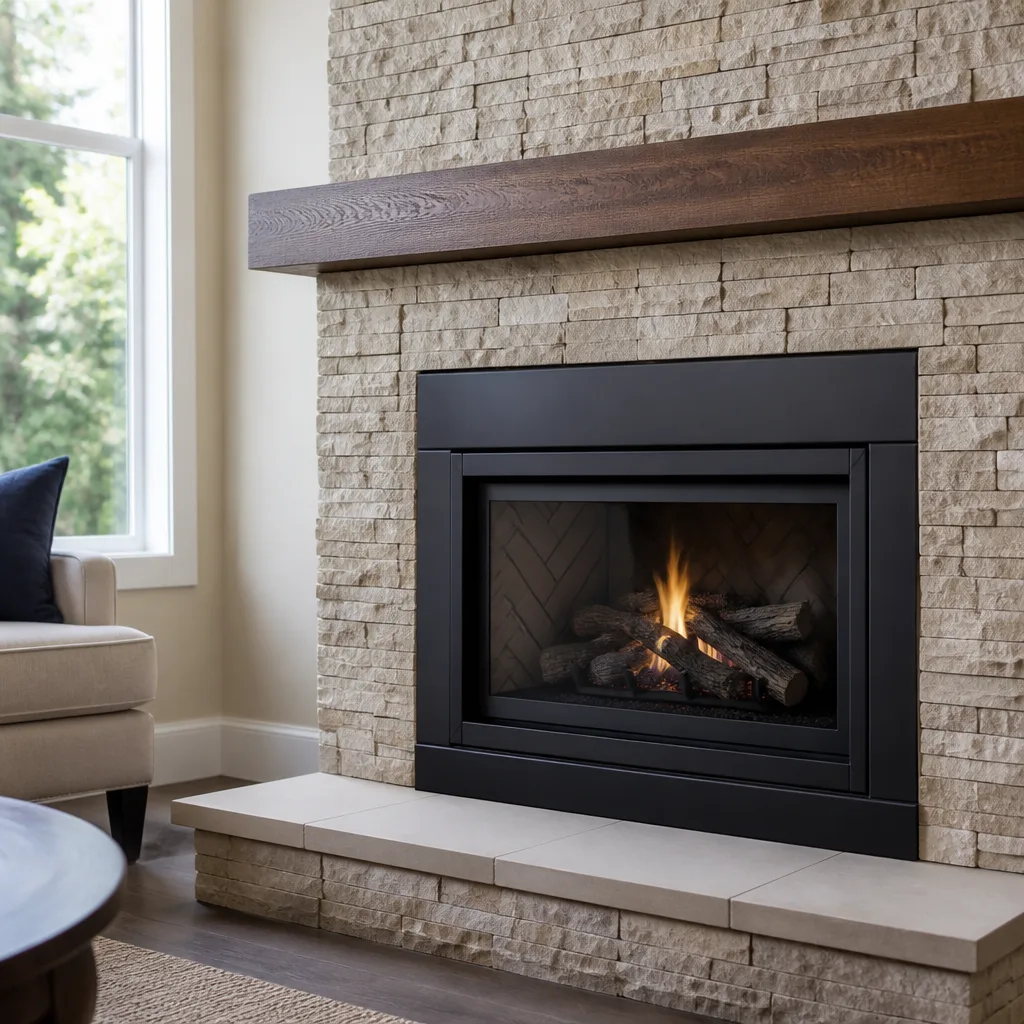
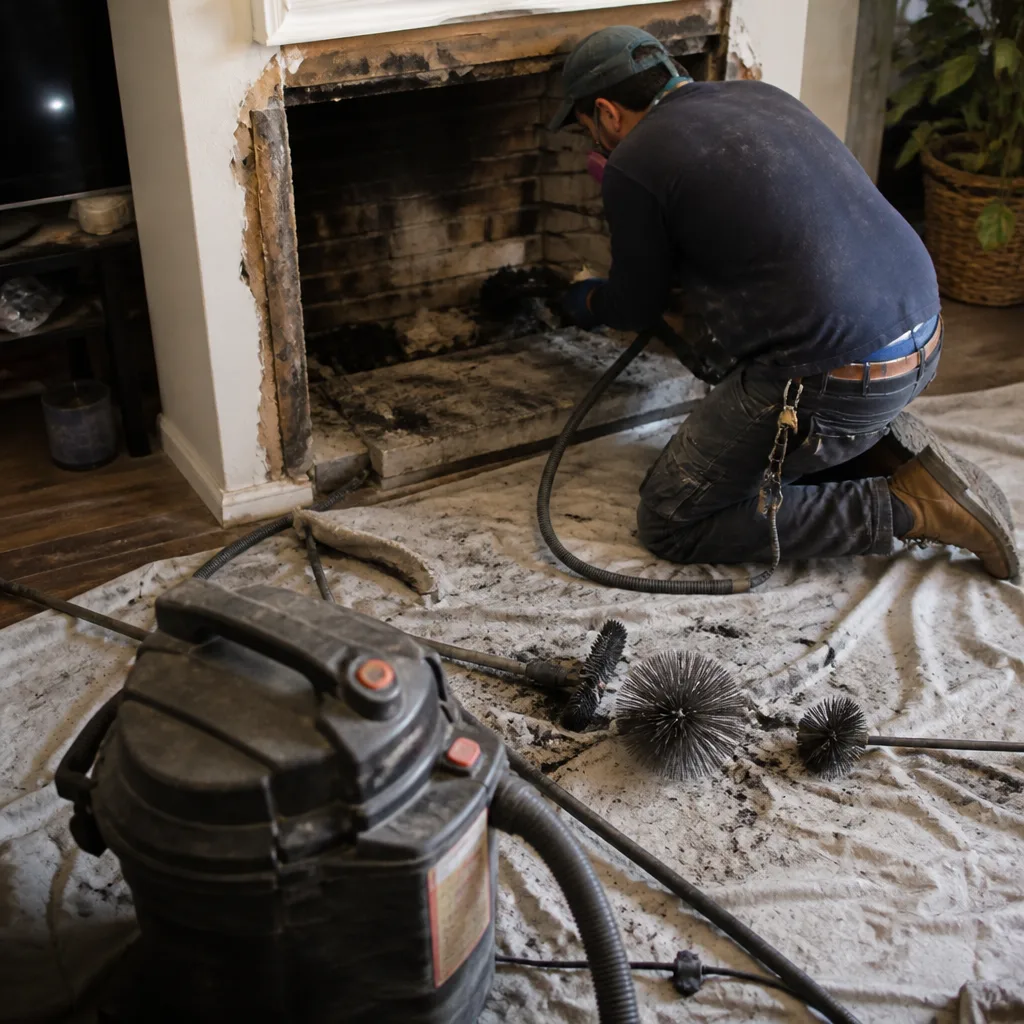 Before
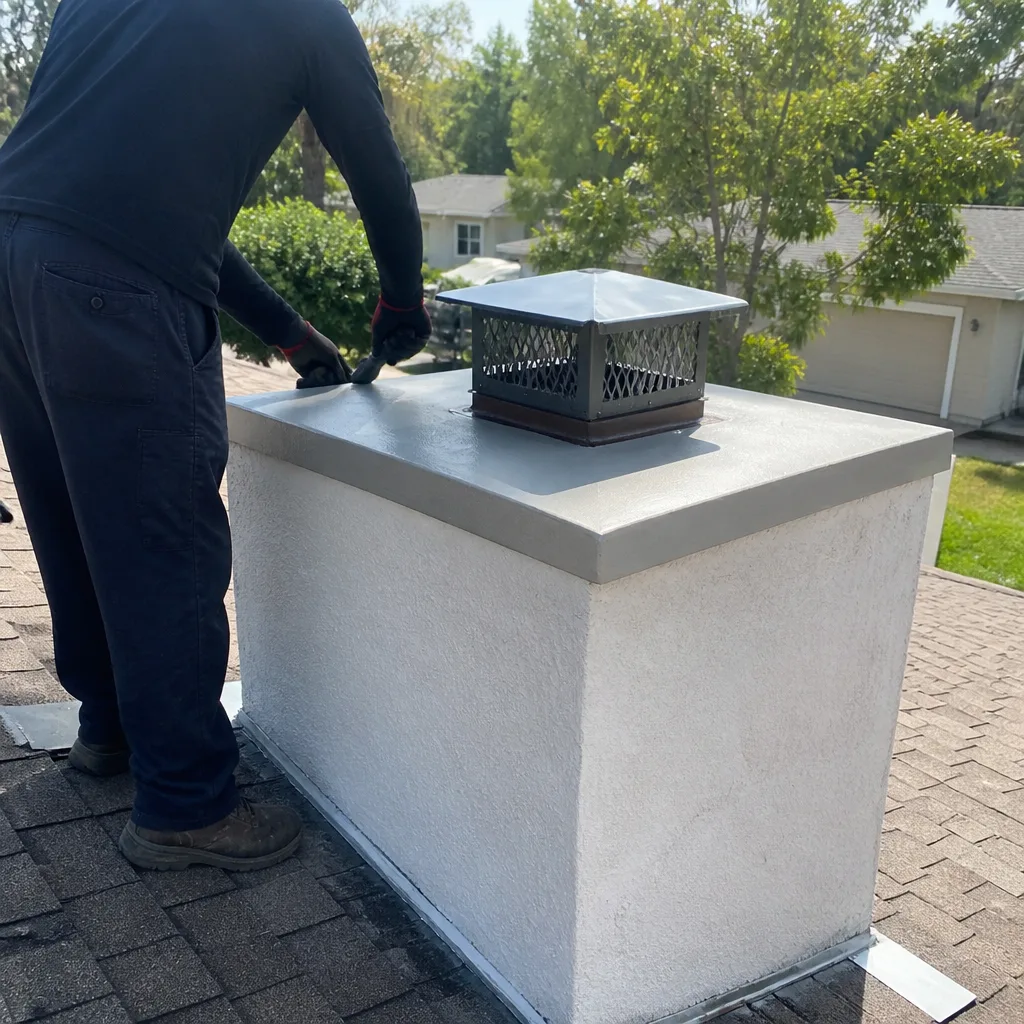 After
After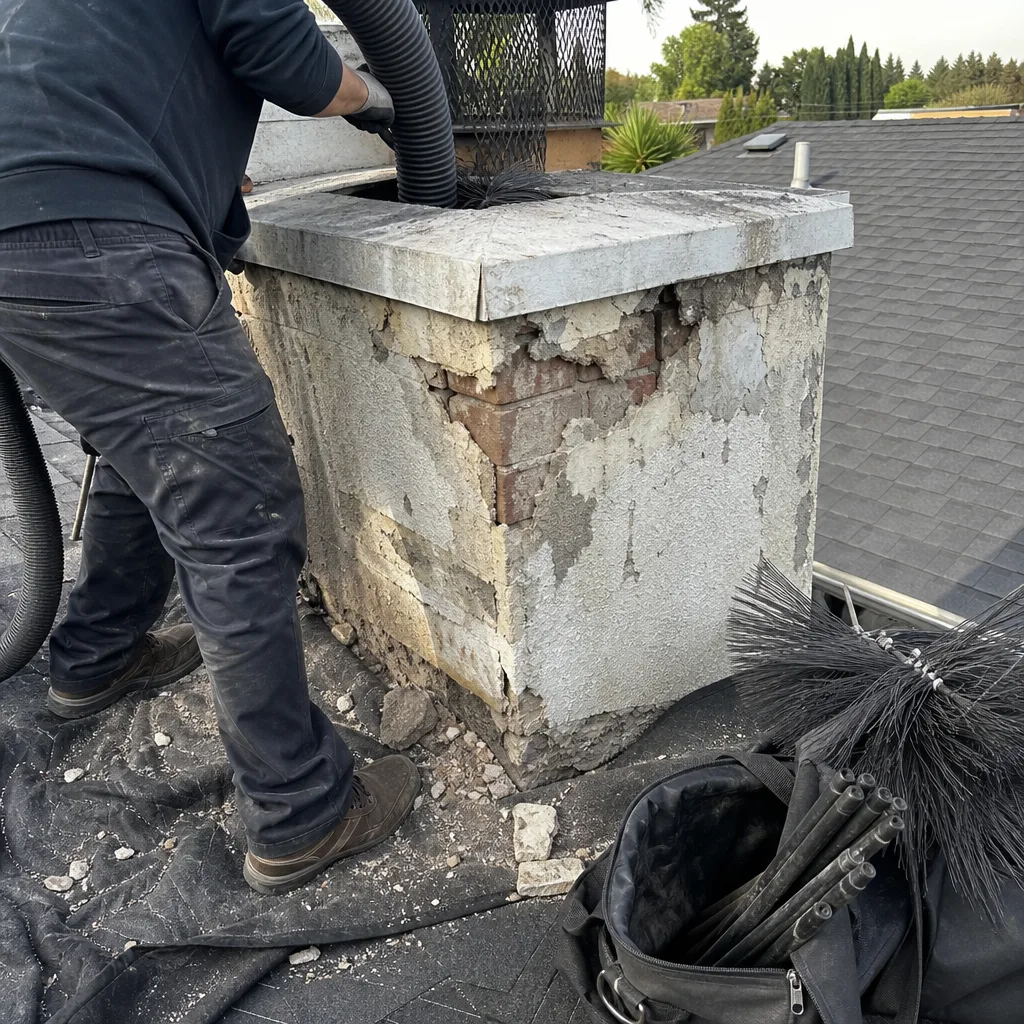 Before
 After
After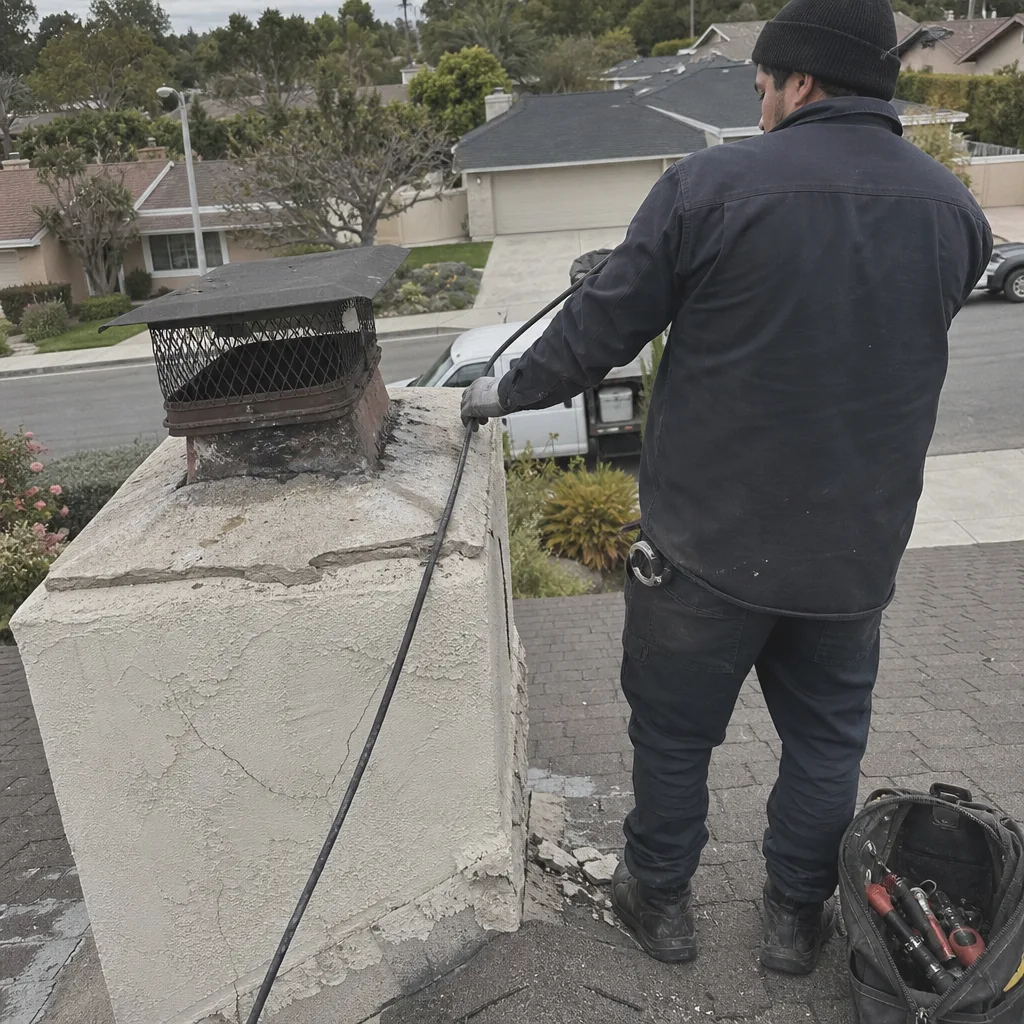 Before
 After
AfterDIY vs Professional Chimney Repair: What’s Safe to Do Yourself
The wrong mortar mix can destroy a chimney faster than neglect ever will. Most hardware store mortar sold as “chimney repair” is Type S: harder than the soft clay brick used in most Los Angeles chimneys built before 1985. Within two winters, that hard mortar locks the brick face into a rigid crust, and the brick spalls, cracking off in sheets. What looked like a $40 weekend repair becomes a $3,000 rebuild. This guide draws the DIY line precisely, not by how hard a repair looks, but by what it costs you if you get it wrong, including the three jobs that can void your homeowner’s insurance. For a deeper look at where that line falls, see our DIY vs Professional Chimney Sweep: What’s Safe to Do Yourself. We’ve swept and repaired chimneys across Los Angeles since 2002, and we’ll tell you plainly which jobs to leave alone.
Quick Answer
You can safely repoint minor mortar erosion, patch small cracks with the correct flexible sealant, replace a rain cap, and apply waterproofing, but you should never attempt flue relining, firebox rebuilding, crown repair, or structural repointing with pre-mixed mortar. The line is drawn at three specific tasks: modifying the flue, altering the firebox, and any structural work that changes how the chimney performs. Those three jobs void your insurance coverage in Los Angeles.
Table of Contents
- The DIY Line: Liability, Not Difficulty
- The Mortar Problem: Type S vs. Type N and O
- Safe DIY Chimney Tasks in Los Angeles
- Risky DIY: Tasks That Look Simple and Are Not
- Professional-Only Repairs: California Code and Insurance
- Flashing Repair: What Real Work Looks Like vs. a Patch
- Common Mistakes to Avoid
The DIY Line: Liability, Not Difficulty
Chimney repair is a category where “how hard is it” has almost nothing to do with “should you do it.” Replacing a rusted rain cap takes one screwdriver and fifteen minutes. Relining a flue takes a drill, a stainless steel liner, and about four hours. Neither is intellectually difficult. But one is safe DIY and the other is not, because the second one changes how your chimney draws air and contains heat.
Here’s the distinction we run into constantly in our Los Angeles work: a chimney is a part of your home’s fire containment system. When you modify a component of that system, you take on legal and insurance liability for how it performs. Not how well it works. How it fails. If a homeowner-installed flue liner cracks during a chimney fire and the fire spreads to the attic, the insurance adjuster will look at who modified the flue last. Not the original mason who built it. Not the previous owner. The person who touched it last.
That is the line. The following sections assign every common chimney task to one of three categories:
- Safe DIY: You can do this without changing how the chimney performs, and a mistake is recoverable.
- Risky DIY: You can technically do this, but the most common mistakes cost more to fix than hiring a pro would have cost originally.
- Professional-only: Doing this yourself voids your insurance, violates Los Angeles code, or both.
Three tasks fall into that last category and they are specific: flue modification (relining or changing the flue diameter), firebox alteration (rebuilding the floor or walls where the fire actually burns), and structural alteration (any work that changes how the chimney bears weight or terminates). Two of these look deceptively simple, which is why we’re writing this guide.
The Mortar Problem: Type S vs. Type N and O
The single most expensive DIY mistake in Los Angeles is repointing a brick chimney with the wrong mortar. Here’s the plain numbers. Mortar is graded by compressive strength in pounds per square inch (PSI). Type S mortar has a compressive strength of about 1,800 PSI. Type N is around 750 PSI. Type O is about 350 PSI. Older Los Angeles chimneys, those built before 1985, are almost always made of soft clay brick with a compressive strength between 600 and 1,200 PSI.
The rule: mortar must be softer than the brick it surrounds. This is not chimney trade opinion. It is basic masonry engineering. Mortar is designed to be the sacrificial layer. It absorbs movement, water, and temperature stress so the brick does not. When you put Type S mortar (1,800 PSI) against soft clay brick (800 PSI), you invert the entire system. The mortar becomes a rigid cage. The soft brick inside it takes all the stress and fractures along the mortar line. Within one or two Los Angeles winters, with our wet-dry-wet cycling and the occasional freeze above 2,000 feet, the brick faces crack off in flat sheets. The technical term is spalling. The practical term is a teardown.
And the problem is silent. It does not happen the week after you repoint. It happens the second year, after you have painted or moved furniture or sold the house. The new owner’s inspector finds the spalling and the buyer asks for a structural repair or a huge concession.
The hardware store problem: Most pre-mixed “mortar repair” and “tuckpointing” products sold in Los Angeles hardware stores are Type S or an unspecified high-PSI blend, because Type S is what they sell for retaining walls and block work. The bag rarely lists compressive strength on the front. If it does not say Type N or Type O on the front, assume it is Type S. Even if it says “for chimneys.” We have seen bags with a brick graphic and the words “chimney repair” whose fine print specified Type S. The marketing says chimney. The engineering says tombstone.
Professional chimney repointing in Los Angeles uses Type N mortar for most residential brick, and Type O for older soft brick homes in neighborhoods like Angelino Heights, West Adams, and Highland Park, where the brick dates to the 1910s and 1920s and is likely rated below 800 PSI. The right mortar also needs the right joint profile: full-depth replacement, not a skim coat. Skim coating mortar over soft brick is like putting a cast on a broken arm without setting the bone. It hides the problem and makes it worse underneath.
Safe DIY Chimney Tasks in Los Angeles
Three chimney tasks are safe for a diligent homeowner with a ladder, a screwdriver, and a Saturday afternoon. None of them change how the chimney performs. All of them are recoverable if you make a mistake.
- Replacing a rain cap. A rusted or missing rain cap lets rain pour straight down the flue. Rain plus Los Angeles’s airborne salt from the coast accelerates flue tile erosion. A replacement cap costs $40 to $120 at any Los Angeles hardware store. It attaches with sheet metal screws to the flue tile or with a clamp to the crown. You are not modifying the flue. You are covering it. This is safe.
- Patching hairline cracks in the crown with a flexible sealant. Small surface cracks, under 1/8 inch wide, can be sealed with a polymer-based chimney sealant (not patching cement, not silicone caulk). The crown is the concrete slab on top of the chimney that slopes water away from the flue. Los Angeles’s sun-baked summer heat expands the crown, and winter rains contract it. Hairline cracks open and close. Flexible sealant accommodates that movement. Rigid patching cement cracks within a season.
- Applying a breathable waterproofing treatment. Brick is porous. Water soaks in, and when it evaporates or freezes, it damages the brick. A breathable masonry water repellent, typically a siloxane-based product, stops water penetration while allowing vapor to escape. Do not use paint, and do not use “waterproofing paint.” Paint traps moisture inside the brick and creates a greenhouse for spalling. Apply the siloxane with a garden sprayer on a dry day. This is a coating, not a structural change, and it is safe DIY.
Why these are safe: none of them alter the structural or performance characteristics of the chimney. None of them require you to access the flue interior or the firebox. If you mess up a rain cap install, water gets in and you hire a sweep to fix it, and the repair is cheap. If you mess up a flue reline, you have a house fire and the insurance company denies the claim. The line is clear.
Risky DIY: Tasks That Look Simple and Are Not
Three tasks fall into the risky category. You might be able to do them. The failure mode is asymmetric: a small mistake becomes a large bill.
1. Repointing mortar joints with pre-mixed mortar. As covered above, the most common pre-mix is Type S, which is too hard for Los Angeles’s soft clay brick. Even if you source the correct Type N mortar, the joint preparation matters. You must grind or chip out the old mortar to a depth of at least 3/4 inch, ideally full-depth to the back of the brick face. Most DIY jobs remove only the surface 1/4 inch. The new mortar has nothing to bond to, and it falls out within months. And you’ve spent a weekend on your roof.
2. Sealing the chimney crown with patching cement. The instinct is to buy a bag of quick-set concrete patch, trowel it over the cracked crown, and call it done. The problem: the crown is not a sidewalk. It is a slab that sits on top of a brick chimney and expands and contracts every day with Los Angeles’s 30-degree daily temperature swings. Patching cement is rigid. It cracks almost immediately. Worse, if you cover the existing crown with a 1/4-inch layer, you’ve now trapped the original cracks underneath. Water gets in, freezes, expands, and you have spalling concrete pieces falling onto your roof. A proper crown repair uses a flexible crown sealant or a cast-in-place crown system (like Gelco, which we install professionally) designed for the thermal movement of a chimney top.
3. Removing a stuck damper or cleaning creosote from the smoke chamber. A damper that is rusted shut is a nuisance, and a homeowner with a wire brush might think they can free it. The risk: creosote buildup in the smoke chamber (the area above the damper) can ignite if disturbed, and a stuck damper that suddenly opens can dump creosote down into the firebox and onto your floor. Beyond the mess, creosote ignition is a real chimney fire risk, and you’d be working in a confined space with old metal and creosote dust. This is why a chimney sweep uses drop cloths, a HEPA vacuum, and tools designed for the job. You can do it. It is not worth what a hospital bill or a fire call costs.
Professional-Only Repairs: California Code and Insurance
Three repairs are professional-only in Los Angeles, and the reason is not because they are hard. It is because doing them yourself voids your insurance and violates California code.
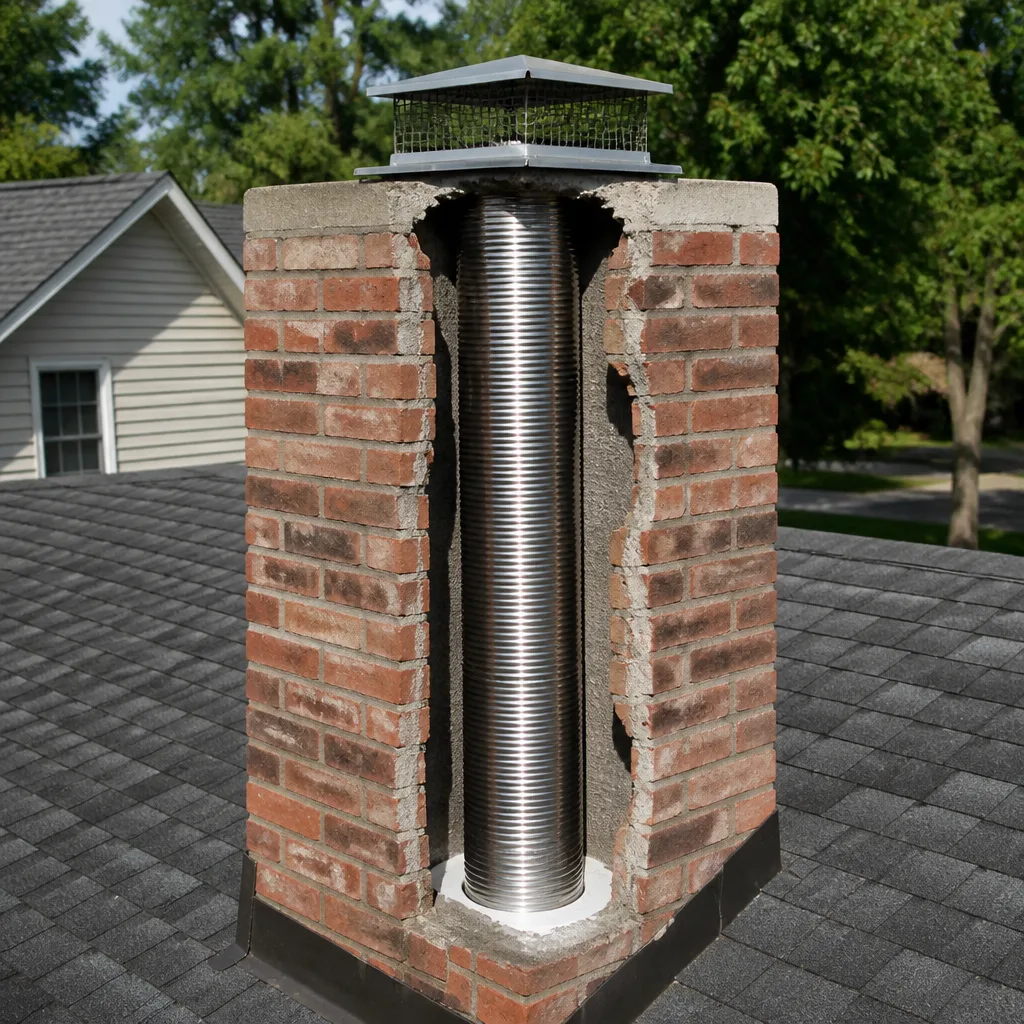
1. Flue relining (replacing the inner liner that channels smoke safely out of the house). If your flue tiles are cracked, missing, or deteriorated, the chimney no longer contains the heat and gases it is designed to. Relining involves inserting a stainless steel liner, typically a DuraFlex product in our work, sized precisely to the flue diameter and the appliance it serves. The liner must be sealed, insulated, and terminated properly. A DIY liner install changes how the flue draws, how it handles heat, and how it performs in a chimney fire. Under California Building Code, flue modifications must be done by a contractor with a masonry license (C-29) and inspected. But the more immediate issue is insurance: if your home burns due to a flue failure after a homeowner-modified liner install, your insurance policy’s exclusions for unlicensed modifications likely apply. The claim is denied. You are left with the house and the medical bills.
2. Firebox rebuilding. The firebox is the floor and walls where the fire actually burns. Firebrick and refractory mortar are designed to withstand direct flame temperatures of 1,800°F to 2,000°F. Home Depot brick and Type S mortar are not. A DIY firebox rebuild using the wrong materials spalls and cracks within a season of regular use, and a cracked firebox lets heat radiate directly into the wood framing behind the chimney. But the code issue is clear: firebox repairs in Los Angeles require a licensed contractor and must meet the city’s residential code for fire containment. This is not a handyman task. This is a burn-your-house-down task.
3. Structural alteration. This includes rebuilding a chimney crown from scratch, repairing a leaning chimney stack, rebuilding the chimney above the roofline, or changing the chimney’s height or termination. Structural work changes how the chimney bears weight, how it sheds water, and how it performs in wind and seismic events, and Los Angeles is a seismic zone. The city of Los Angeles requires a permit for structural chimney work. Unpermitted structural work is a red flag on a home sale inspection, and a buyer’s inspector will flag it, requiring you to pull the work out or get it retroactively permitted, often at 2 to 3 times the cost of doing it properly the first time.
The insurance reality in plain terms: your homeowner’s policy covers sudden, accidental damage. It does not cover the consequences of unlicensed, unpermitted, or non-compliant modifications you made yourself. The adjuster will ask who did the work. When the answer is “I did,” the next question is “do you have a C-29 masonry license?” When the answer is “no,” the denial letter is already in the mail.
Flashing Repair: What Real Work Looks Like vs. a Patch
Flashing is the metal that seals the gap where the chimney passes through the roof. It is the single most common leak point in Los Angeles homes, because our roofs are often steep, and the flashing takes direct water from every storm. A homeowner who sees a water stain on the ceiling near the chimney often calls a roofer or a chimney company and gets a quote to “repair the flashing.” Sometimes that quote is $200 and 30 minutes of work. Sometimes it’s $1,500 and a day of work. Both quotes say “flashing repair.” Here is how to tell the difference.
A surface patch means the contractor applies roofing cement or a flashing sealant over the existing metal. That is it. No metal is removed. No new flashing is cut. The problem with a patch: water has already gotten behind the existing flashing, and the wood underneath is wet. Patching over it seals the water in. The leak returns within a year, usually worse. A patch is worth maybe $150 to $250 in Los Angeles, and it is a temporary stopgap at best.
Real flashing repair involves:
- Removing the shingles around the chimney base to expose the existing flashing.
- Cutting out the old flashing and inspecting the wood sheathing underneath for rot.
- Replacing rotted wood if present.
- Installing new step flashing (metal pieces woven between each shingle course), counter-flashing, and a cricket (a peaked metal diverter on the high side of the chimney).
- Sealing all joints with a high-quality polyurethane sealant, not roofing cement.
A cricket is the important piece most Los Angeles homeowners do not know to ask about. If your chimney is wider than 30 inches, water pooling on the high side of the chimney against the flashing will eventually find a way through. A cricket deflects that water around the chimney. A quote that includes a cricket is doing real work. A quote that omits it is cutting corners.
Materials matter too. We specify Copperfield flashing products, which are copper and stainless steel, because they last 30 years in Los Angeles’s coastal air and sun. Aluminum flashing corrodes in salt air and fails early. Ask any contractor doing flashing work to name the product they are installing. “Flashing” is not an answer. “Copperfield stainless steel step flashing with a copper cricket” is an answer. If they can’t name the product, they’re buying whatever is cheapest at the supply yard.
What does real flashing repair cost in Los Angeles? A proper flashing replacement with a cricket runs $1,200 to $2,500 depending on roof pitch, chimney size, and access. A patch runs $200 to $400. The difference is a full year of no leaks versus another call in February when the next atmospheric river comes through.
Common Mistakes to Avoid
- Using Type S mortar on a pre-1985 brick chimney. This is the most expensive mistake we see in Los Angeles, because the damage takes two winters to appear, and by then the repair is a rebuild, not a repoint.
- Sealing the crown with concrete patching compound instead of a flexible crown sealant. In Los Angeles’s daily thermal cycling, rigid patches crack within weeks and trap the original water damage underneath. That turns a $300 crown seal into a $1,800 crown rebuild.
- Painting a brick chimney with waterproofing paint. Brick needs to breathe. Paint traps moisture inside, and Los Angeles’s rainy winters combine with spring sun to pop the brick faces off in sheets. This is spalling, and it is caused by your paint job, not by age.
- Hiring a handyman with no masonry license for a flue reline. A handyman can hang drywall and replace a faucet. He cannot legally modify a flue in Los Angeles, and if something goes wrong, you have no license, no permit, and no insurance coverage.
- Skipping the cricket during flashing replacement. A chimney wider than 30 inches needs a cricket on the high side. Without it, water pools against the flashing every storm and the leak returns within a season or two.
- Assuming the bag’s picture means the mortar is right for chimneys. A bag with a chimney drawing and the words “mortar repair” can still contain Type S. Read the fine print. If it does not specify Type N or Type O, do not use it on a brick chimney. We have seen too many homeowners in neighborhoods like Silver Lake and Echo Park learn this the hard way.
- Disturbing years of creosote buildup with a DIY cleaning. Creosote is flammable, and the smoke chamber is tight. One spark from a wire brush against a metal edge, one dropped clump of creosote, and you have a chimney fire. The cost of a professional sweep is always less than the cost of a fire response.
When to Call a Professional
Call a professional when the repair changes how the chimney performs, bears weight, or contains heat. That means flue relining, firebox rebuilding, crown reconstruction, structural repointing, and any flashing replacement that goes beyond a surface patch. Call when you see spalling brick faces, cracking in the flue tiles (visible from the roof), a chimney that leans or pulls away from the house, or water stains on the ceiling near the chimney that recur after rain. Call when the repair involves a ladder on a steep Los Angeles roof, and we mean any roof with a pitch steeper than 6/12. Hospital bills cost more than chimney repairs. Flint Chimney Sweep offers free estimates in Los Angeles, call (830) 251-4560, and we’ll give you a written price before any work begins.
Frequently Asked Questions
A standard chimney sweep in Los Angeles typically runs $180 to $300 depending on access and buildup. A crown seal runs $250 to $500. Flashing replacement with a cricket runs $1,200 to $2,500. A flue reline runs $2,500 to $6,000 depending on liner length and access. A full rebuild from the roofline up can run $5,000 to $12,000. These are ballpark ranges, not quotes. Call (830) 251-4560 for a written price on your specific chimney.
No, not in most cases. The standard pre-mixed mortar sold in Los Angeles hardware stores is Type S, which is too hard for the soft clay brick in older local chimneys. You need Type N or Type O mortar, and you need to grind out the old joints to full depth, not skim-coat the surface. If you’re not sure what type of mortar your chimney needs, it is safer to call a professional. Call (830) 251-4560 and we’ll tell you what we’d use for your specific brick.
It depends on what is broken. A missing rain cap eventually causes flue tile erosion, but that is slow. A cracked flue tile or damaged firebox is different: heat can radiate directly into the framing, and the next fire can start a structure fire. Creosote buildup ignited by a fire can also start a chimney fire. If you know something is wrong, do not burn until it is addressed. Call (830) 251-4560 for an honest assessment of what needs attention and what can wait.
The National Fire Protection Association (NFPA) standard is to sweep when creosote reaches 1/8 inch of buildup, or annually if you use the fireplace regularly. In Los Angeles, where many homeowners use fireplaces seasonally from November to February, an annual sweep before winter is the practical standard. If you burn unseasoned wood or have a wood-burning stove, you may need more frequent sweeps. Call (830) 251-4560 to schedule a sweep and we’ll document the creosote level in writing.
Your insurance covers sudden, accidental damage, like a chimney struck by lightning or damaged by a falling tree. It does not cover normal wear, such as cracked flue tiles, eroded mortar, or rusted flashing, those are maintenance items. And it does not cover damage caused by unlicensed, unpermitted, or non-compliant repairs you made yourself. If you do a DIY flue reline and it fails, the insurance company will likely deny the resulting claim. That is the liability line.
The 365-Day Done Right Promise is the written guarantee Flint Chimney Sweep includes on every repair. It states that if a covered repair fails within one year from the service date, we return and fix it at no charge. No argument, no re-inspection fee, no fine print about “acts of God.” It is part of the Garrison Standard, the operating code followed by every Garrison Partners location. If you’re comparing chimney companies in Los Angeles, ask them what their guarantee says in writing. If they hesitate, that tells you something. Call (830) 251-4560 and ask us directly.
The Bottom Line
The DIY line in chimney repair is not about how hard the job looks. It is about liability. Replacing a rain cap is safe. Patching a hairline crown crack is safe. Repointing with the right mortar is possible but risky, and most homeowners get the mortar type wrong. Flue relining, firebox rebuilding, and structural alteration are professional-only, because they affect how the chimney performs and carry insurance consequences that most homeowners do not think about until it is too late. The mortar rule: softer than the brick. The flashing rule: demand metal that is named, not a patch. And the documentation rule: get everything in writing. For more guides & resources on keeping your chimney safe, visit our blog. If you’re in Los Angeles and want a written price before any work starts, call Flint Chimney Sweep at (830) 251-4560 for a free estimate. We’ll tell you what needs doing, what can wait, and what it will cost, in writing, before a tool comes off the truck.
Related services: Chimney Sweep in Los Angeles | Chimney Inspection in Los Angeles | Chimney Repair in Los Angeles | Flint Chimney Sweep home
Written by Hank Delano, Owner at Flint Chimney Sweep, serving Los Angeles since 2002.